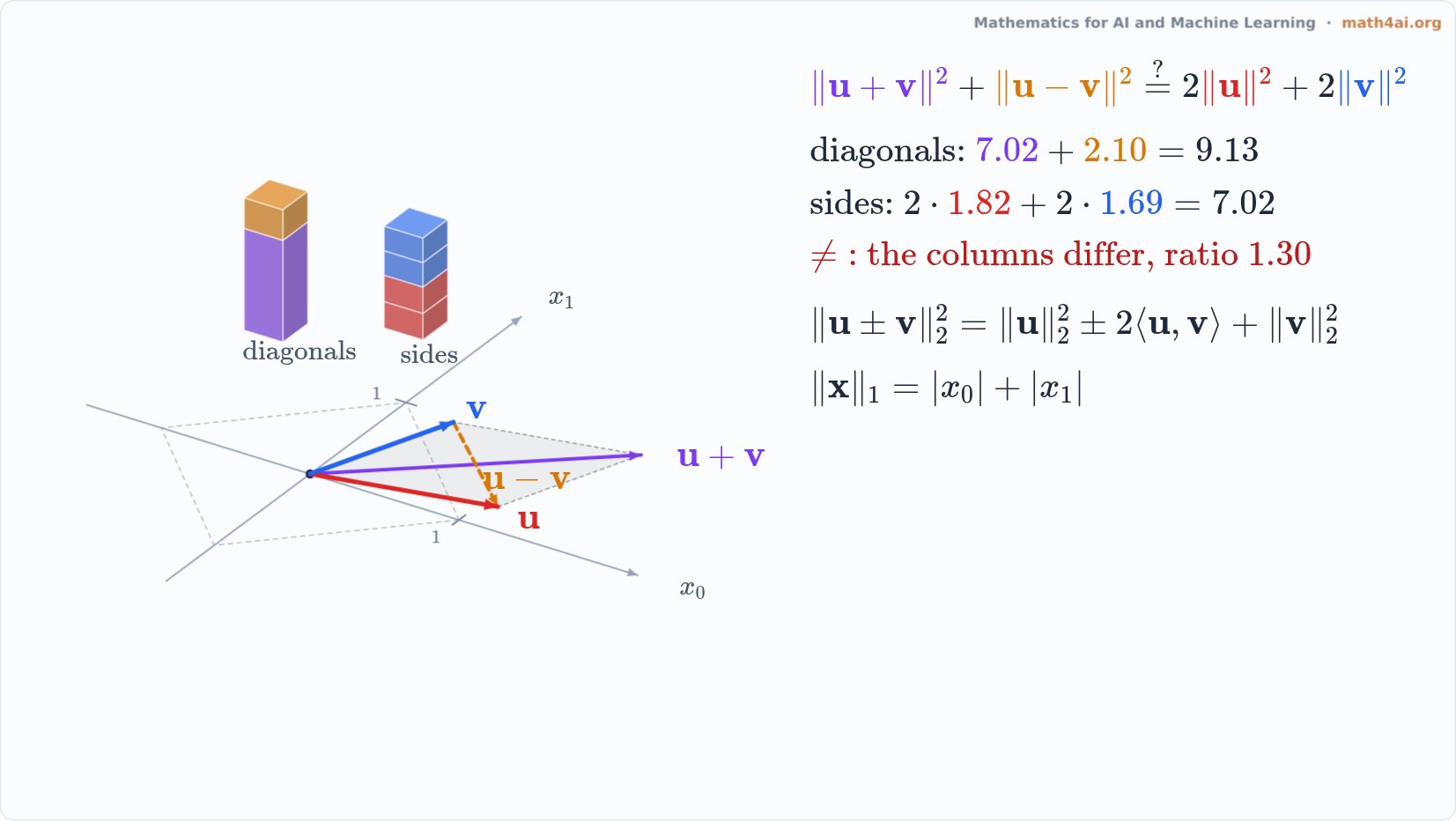
The Parallelogram Law: Which Norms Come from an Inner Product
An interactive live film: two columns compare the squared diagonals of a parallelogram with its squared sides; under the ℓ₂ norm they always match, under ℓ₁ and ℓ∞ they come apart, so those norms come from no inner product.
Narration
Two arrows on the floor, the red u and the blue v, make a parallelogram. Its two diagonals are the purple u plus v and the orange u minus v.
With the usual length, the squared diagonals add up to the squares of all four sides: two times u squared plus two times v squared. This is the parallelogram law.
The rest of the narration is in the book's Companion.
More from Chapter 1
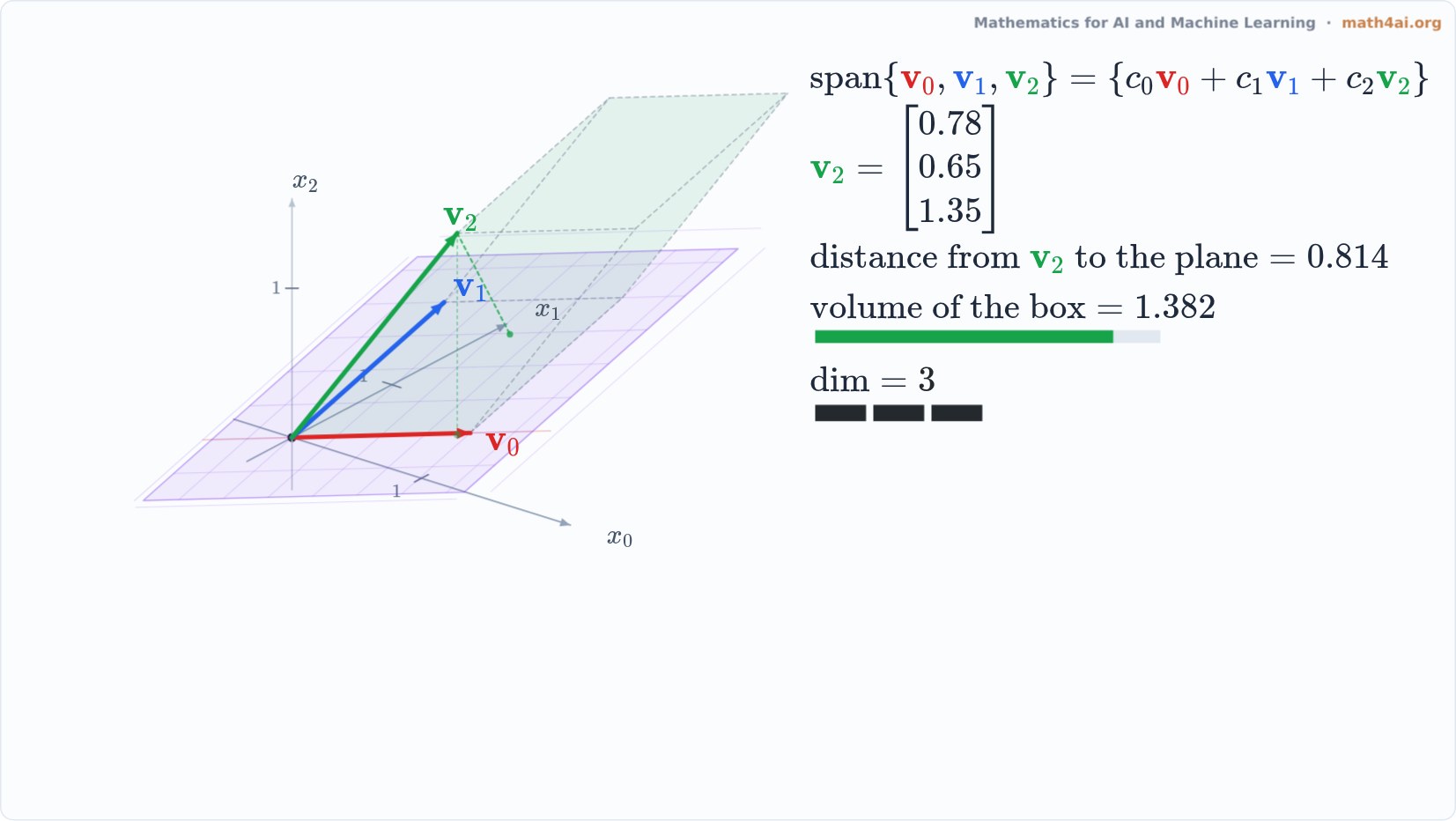 Interactive1:30Span and Independence: When the Dimension JumpsChapter 1
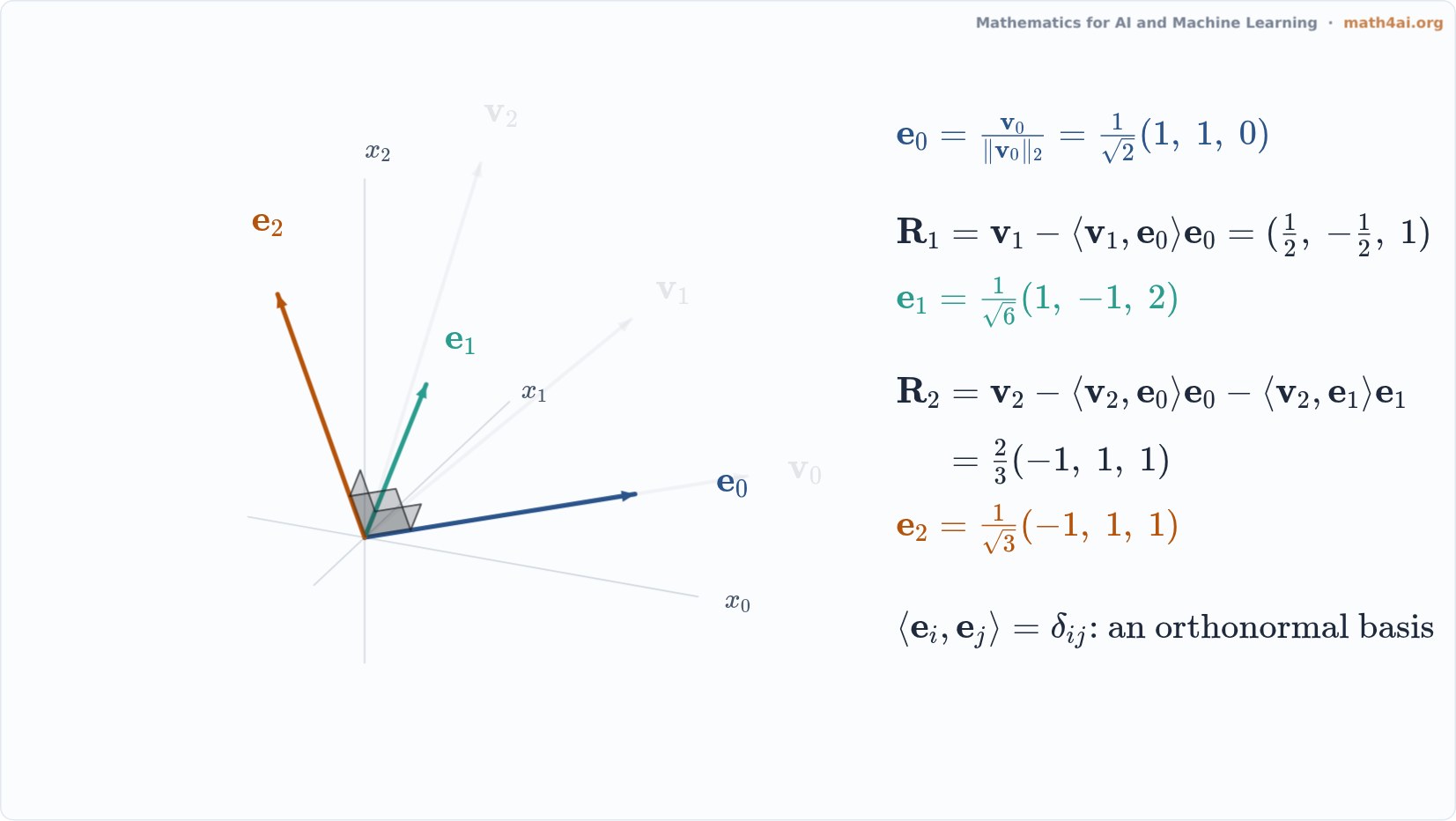 Preview1:31Gram–Schmidt, One Vector at a TimeChapter 1
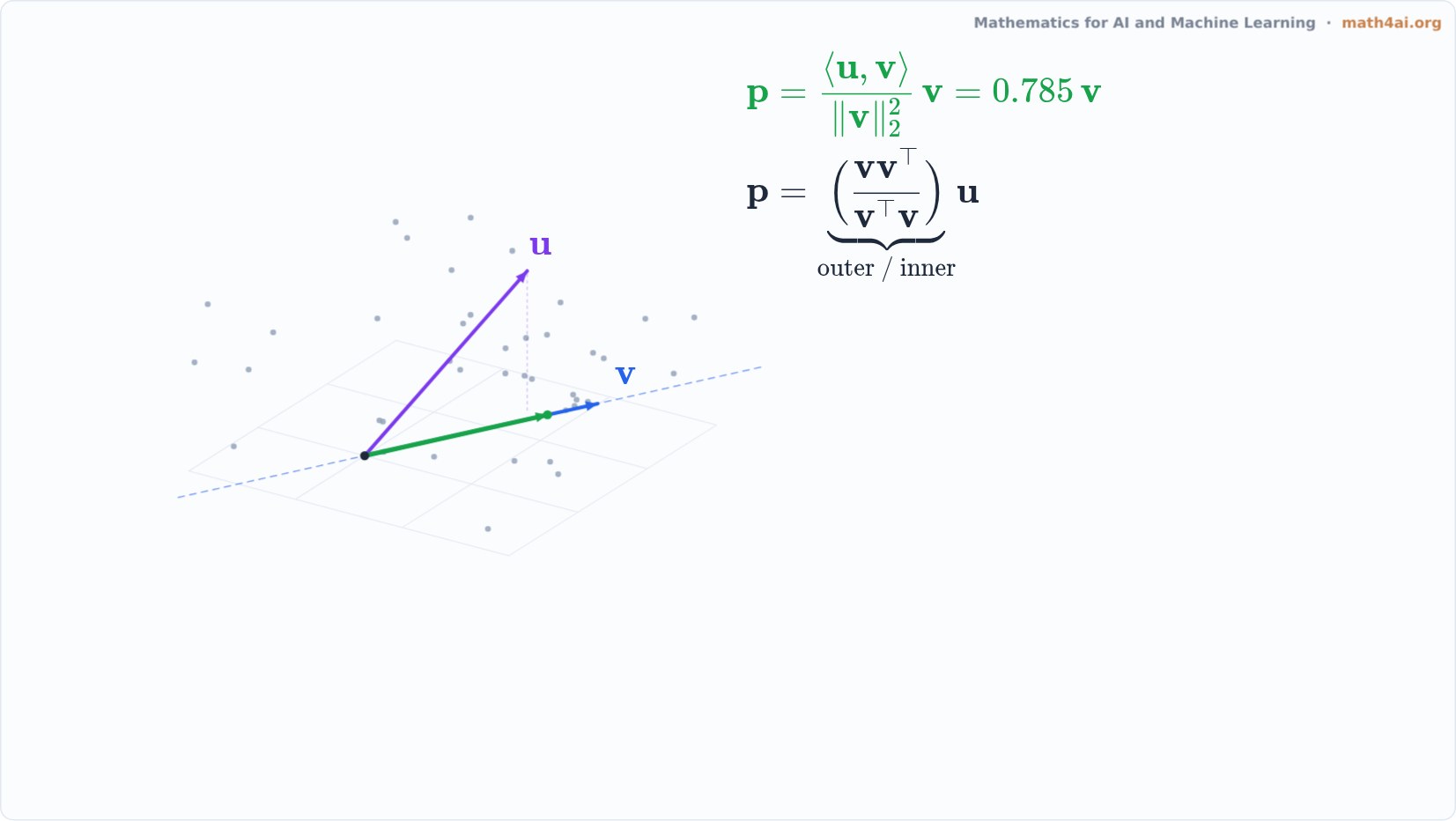 Preview1:42Projection onto a Line: the Closest PointChapter 1
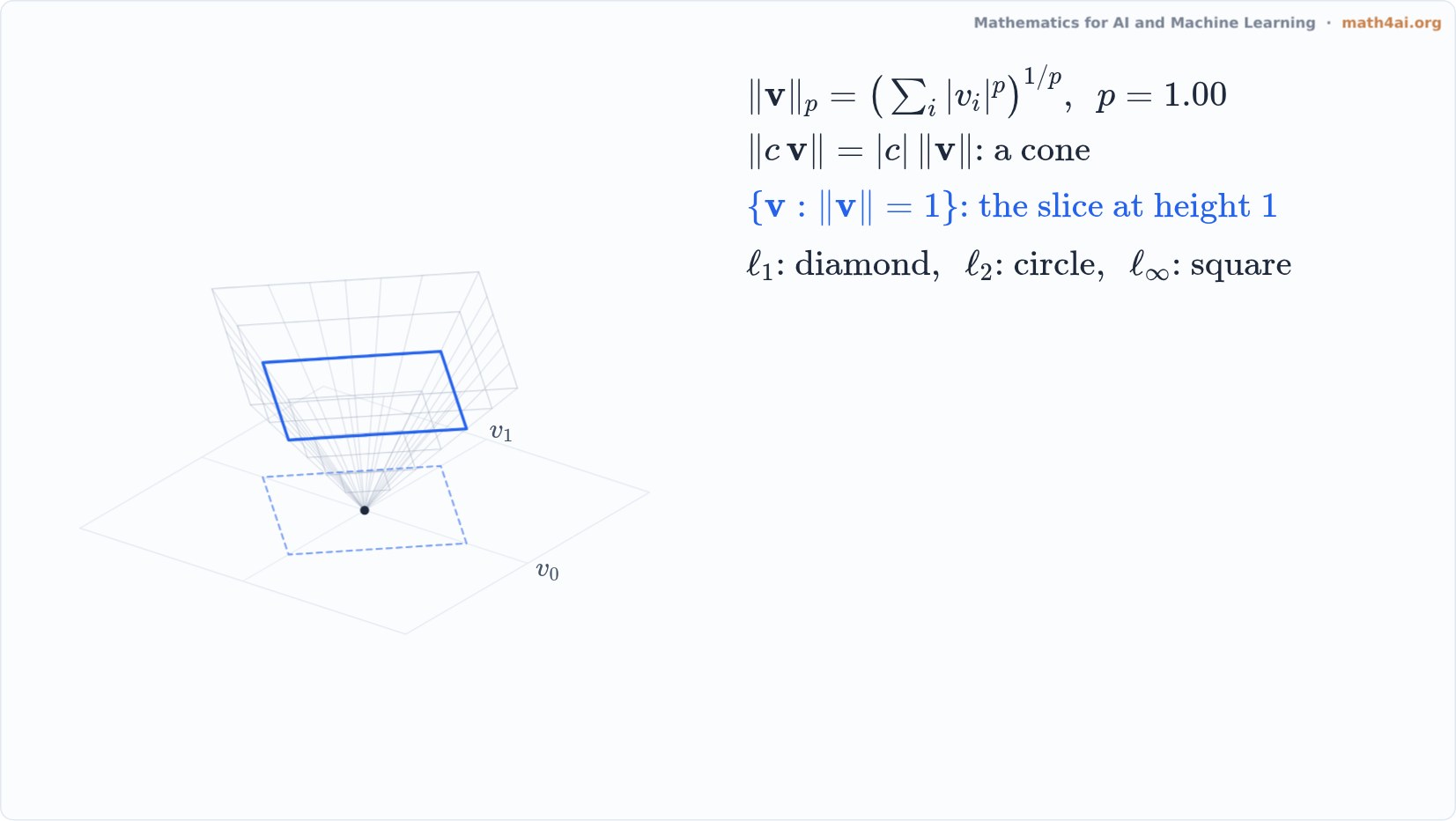 Preview1:42Norms as Cones: the Unit Ball Is a SliceChapter 1
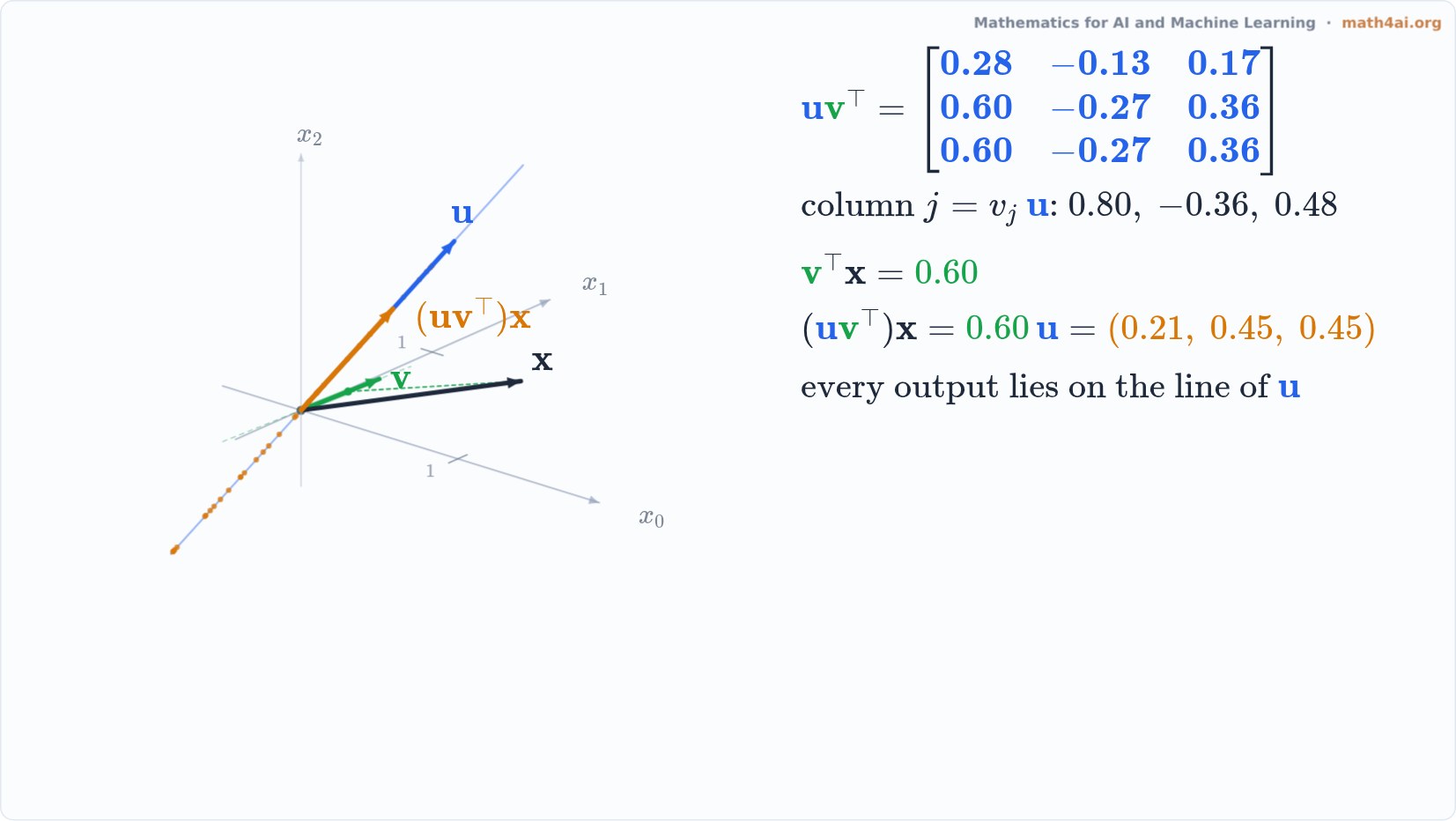 Preview1:31The Outer Product: All of Space onto One LineChapter 1
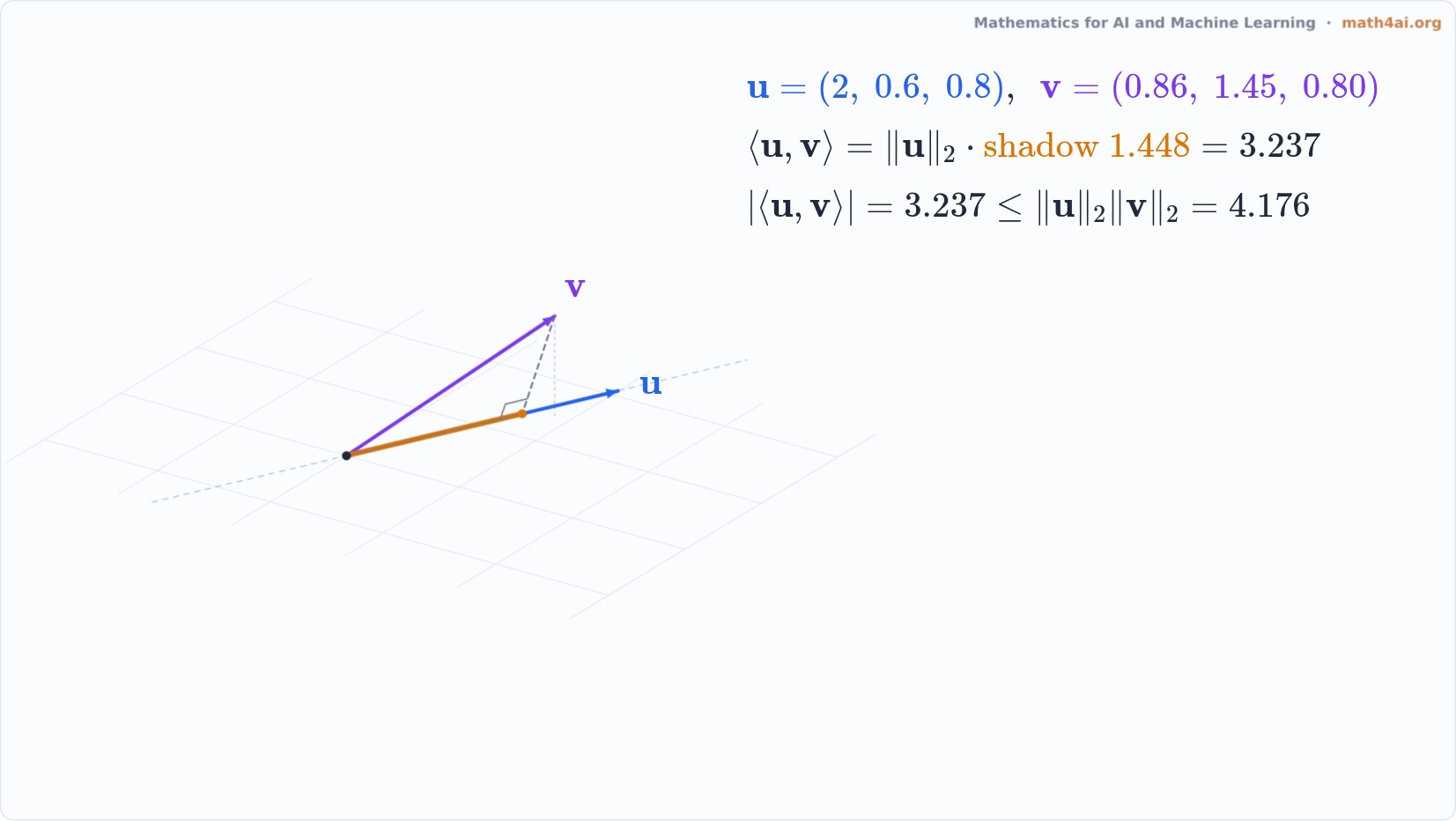 Preview1:29Cauchy-Schwarz: a Shadow Is Never Longer than the StickChapter 1
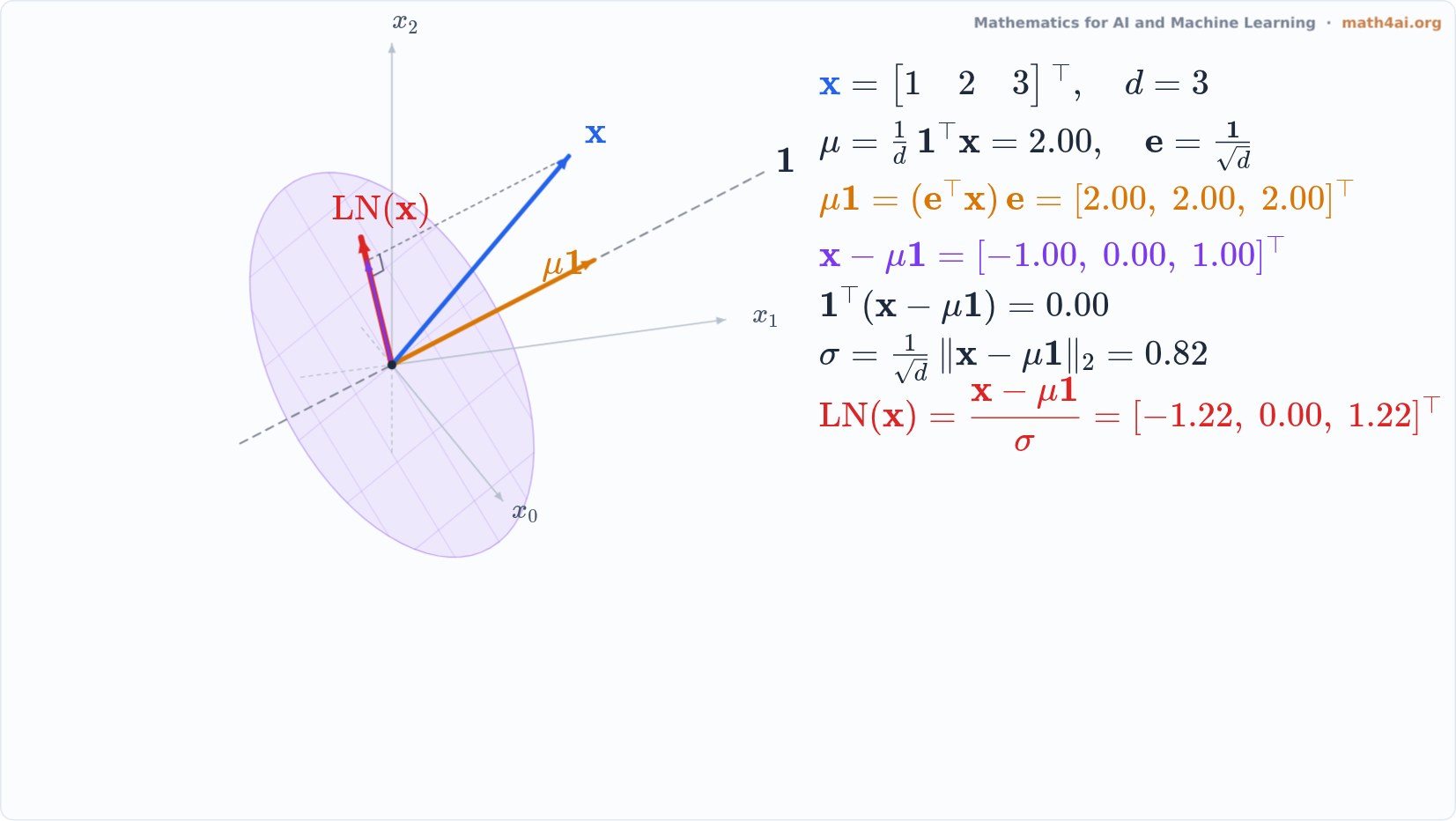 Preview1:43Layer Normalization: Project, Then RescaleChapter 1