Change of Basis: One Vector, Two Sets of Coordinates
An interactive live film: a fixed vector x is a walk along the old basis and along a new one, the columns of V, so x = V z; tilt the new basis and only z changes, make it orthonormal and z = Vᵀx.
Narration
The black arrow x stays fixed for the whole film. In the grey original basis its coordinates are one, one half, and one: the grey path walks along e zero, e one and e two to its tip.
Here is a new basis: the red e zero prime, the blue e one prime, and the green e two prime. Their coordinates in the old basis are the three columns of the matrix V.
The same x is also a walk along the new arrows: z zero steps of red, z one of blue, z two of green. So x equals V times z, and z is x written in the new basis.
Now the new arrows tilt. The black x does not move at all. Only z changes, because the ruler changed, not the vector.
When the new arrows have length one and meet at right angles, V is orthonormal, and z is simply V transpose times x.
Your turn. Drag the tip of the red arrow until it points exactly along x, and watch z.
Along x, the blue and green steps vanish, and z has a single nonzero entry. Move any new arrow, or the numbers of V, and the walk follows.
More from Chapter 2
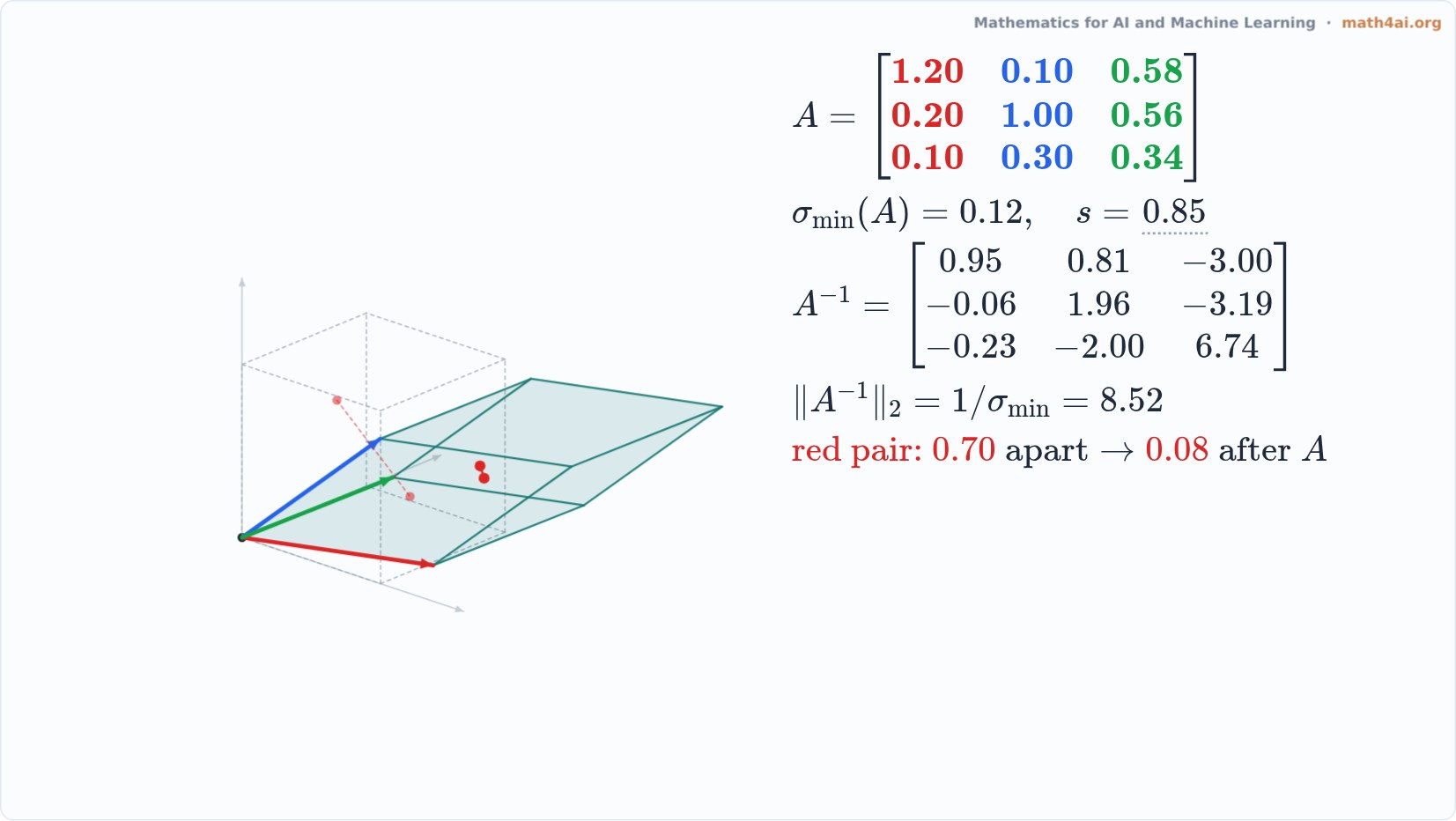 Preview1:29The Matrix Inverse: Squashed Means GoneChapter 2
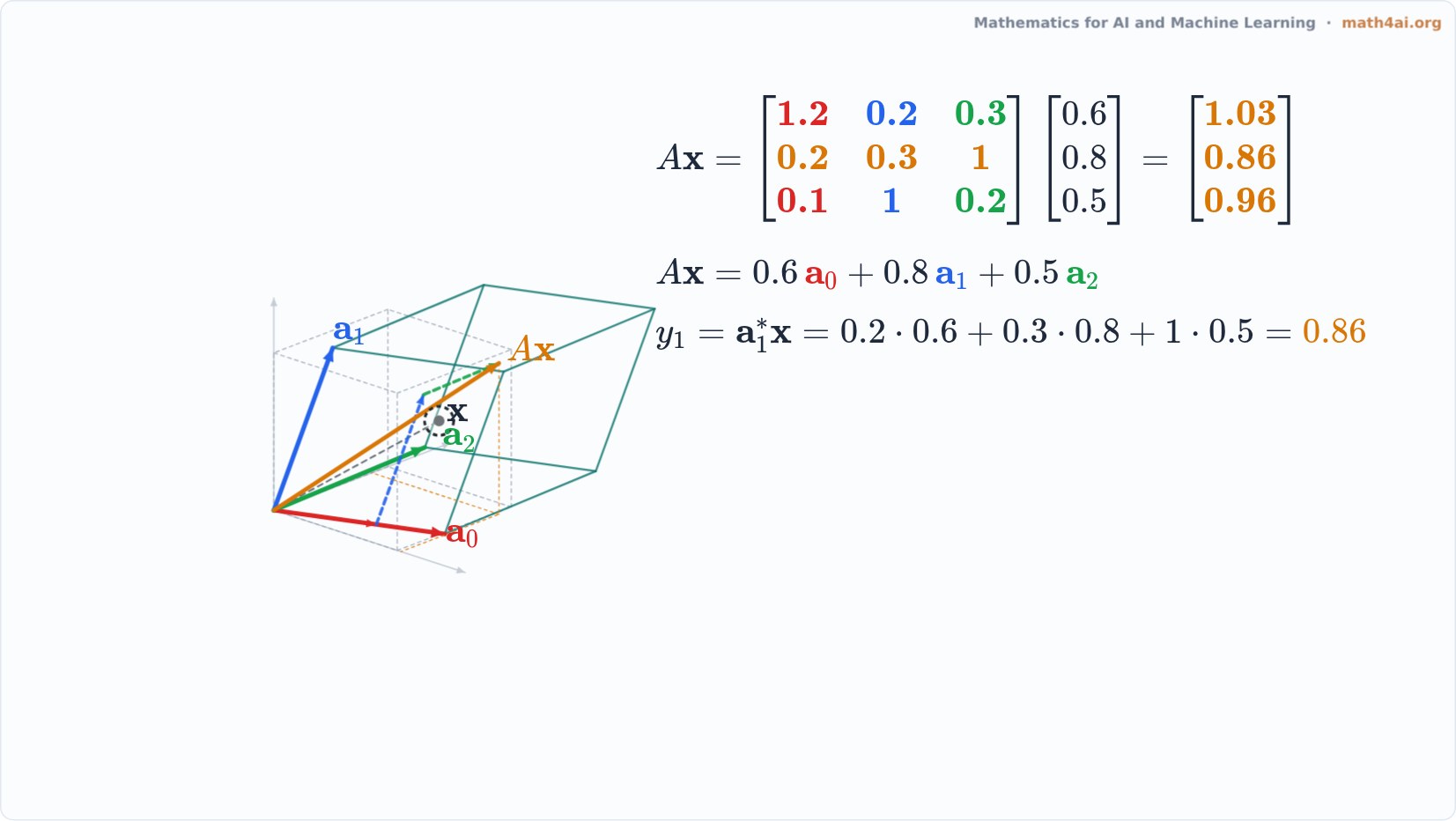 Preview1:53A Matrix Moves the CubeChapter 2
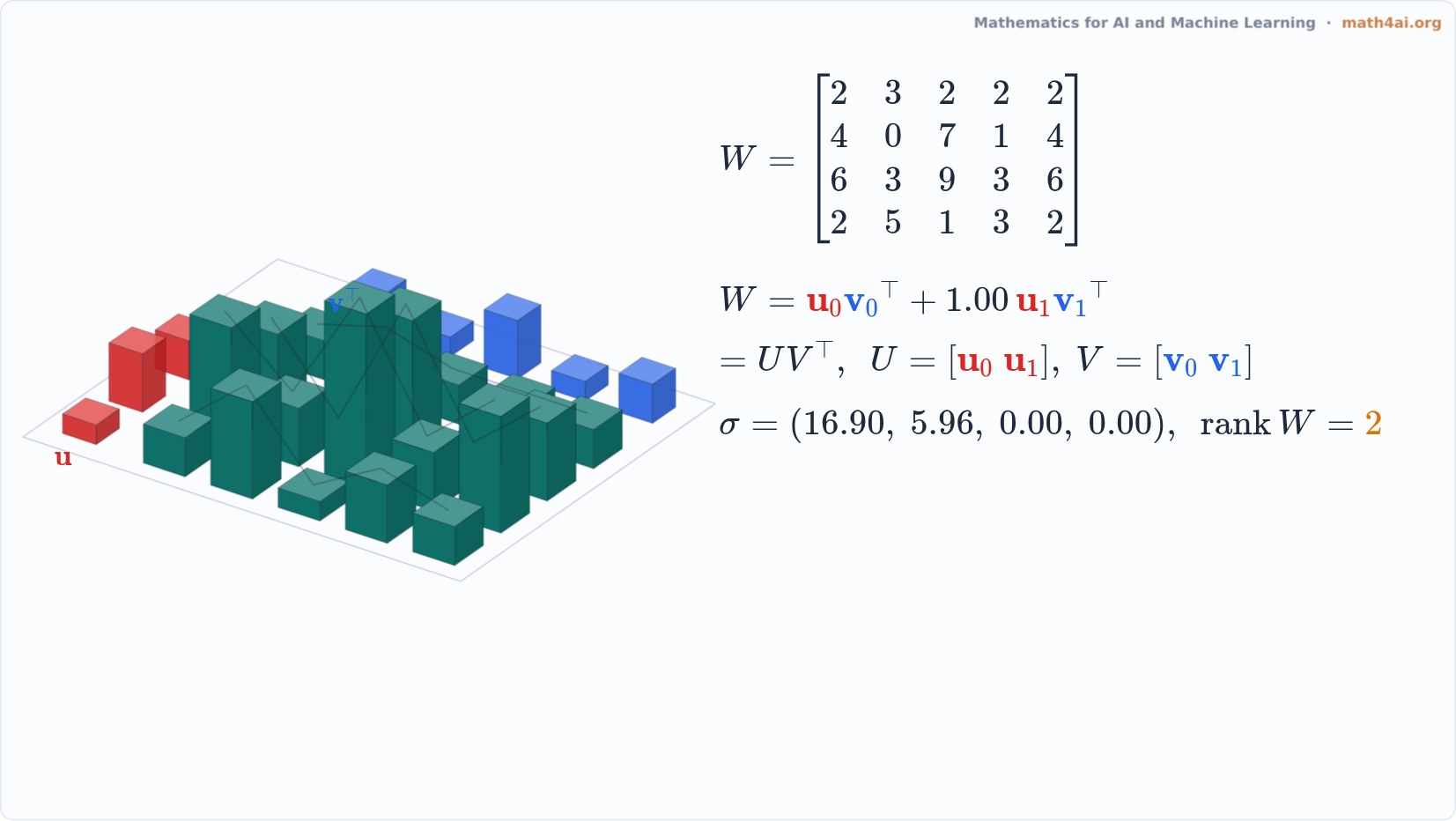 Preview1:49Rank One as a LandscapeChapter 2
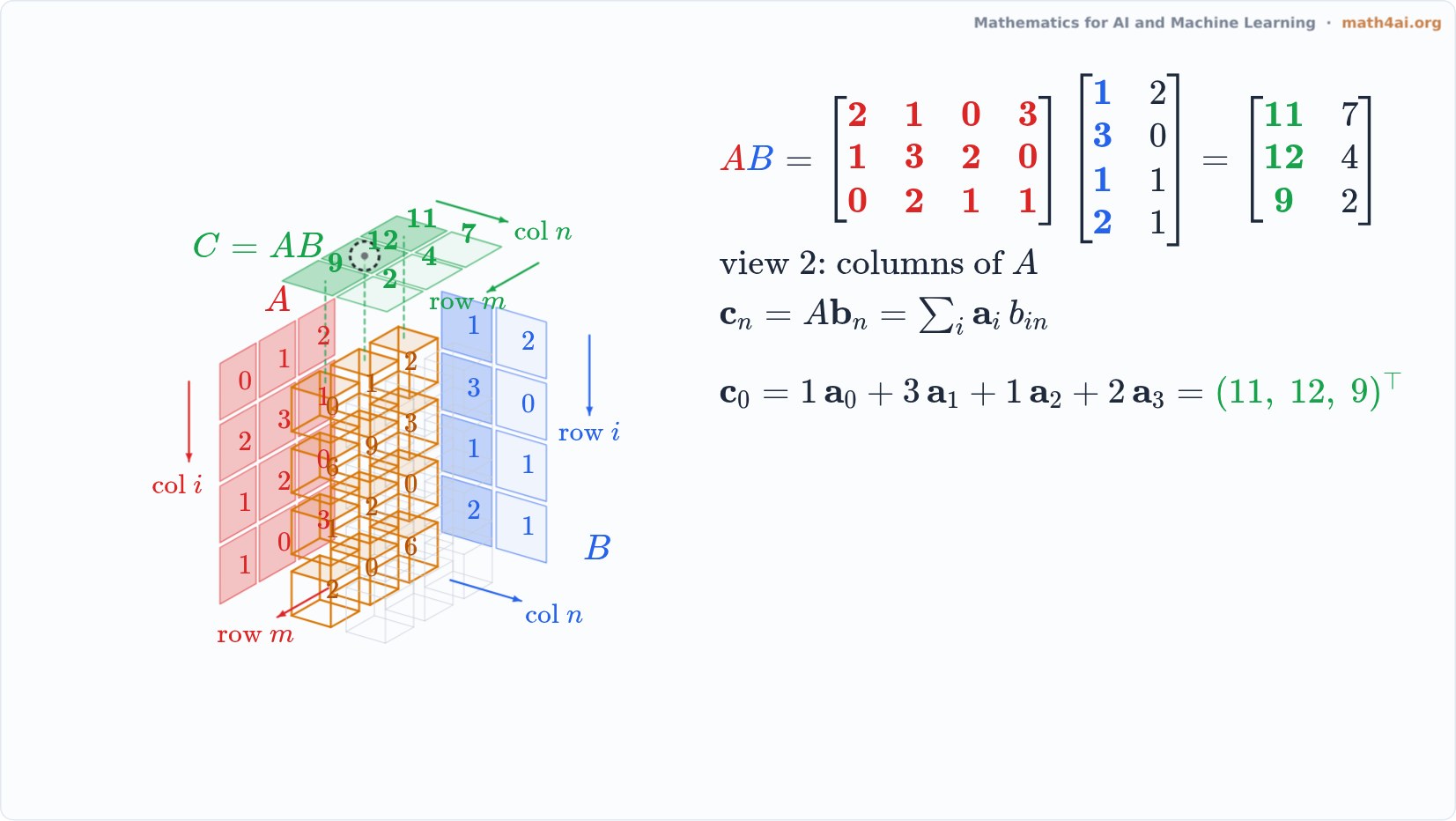 Preview2:29Four Views of Matrix MultiplicationChapter 2
 Preview1:44Column Space: Every Output Ax Lies on One PlaneChapter 2
 Preview1:37The Projection Matrix: Outer times Inverse InnerChapter 2
 Preview1:36Matrix Norm and Condition Number: the Largest StretchChapter 2