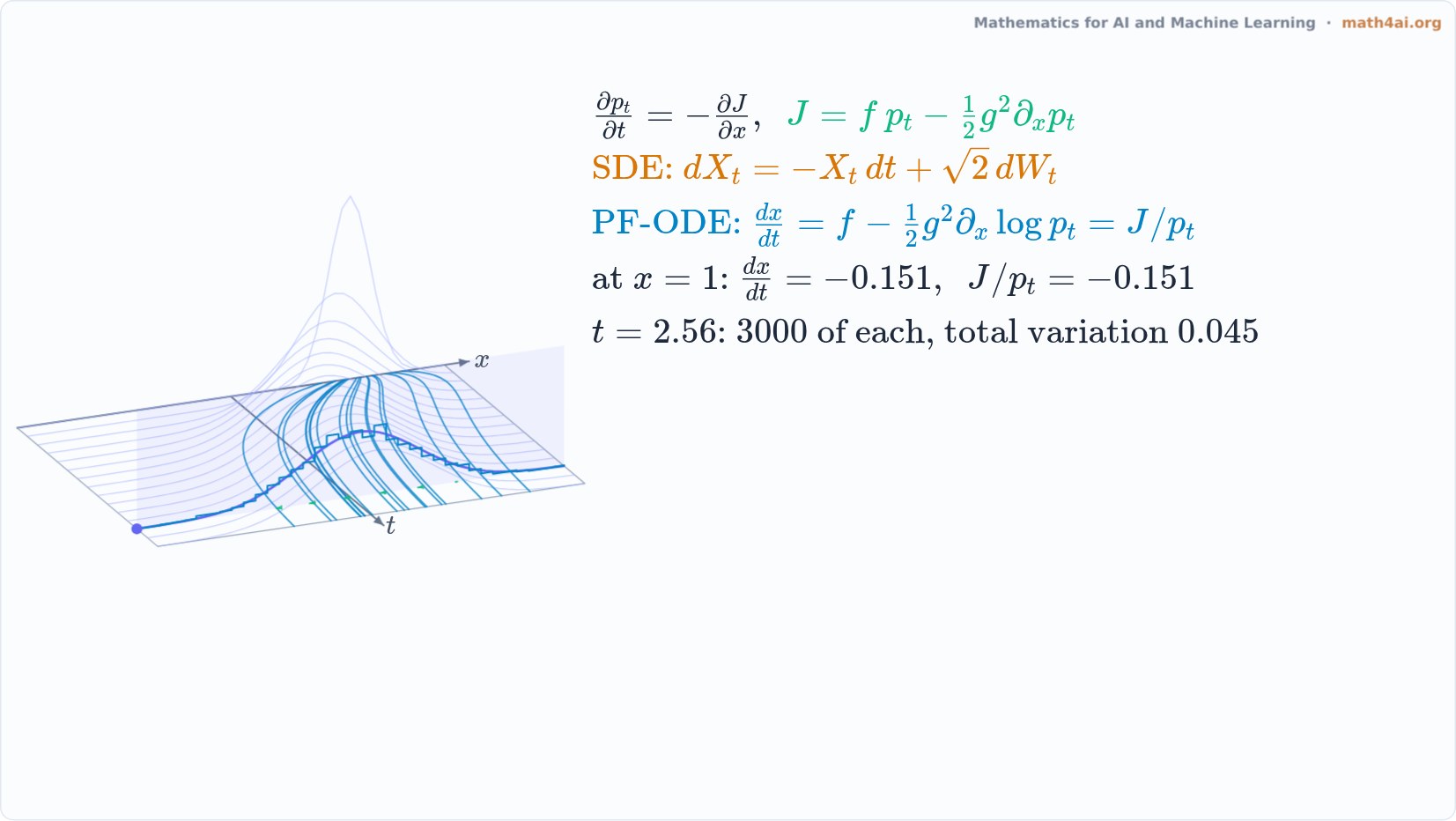
Unification: SDEs, Probability Flow ODEs, and Fokker-Planck Dynamics
An interactive live film: microscopic random SDE paths and smooth deterministic ODE streamlines are united by the macroscopic Fokker-Planck probability current, yielding identical density marginals at every moment.
Narration
We have seen three different languages for diffusion models: stochastic differential equations, probability flow ordinary differential equations, and the Fokker-Planck equation.
At the macroscopic level, the Fokker-Planck equation describes the conservation of probability mass. The rate of change of density equals minus the divergence of current.
The rest of the narration is in the book's Companion.
More from Chapter 21
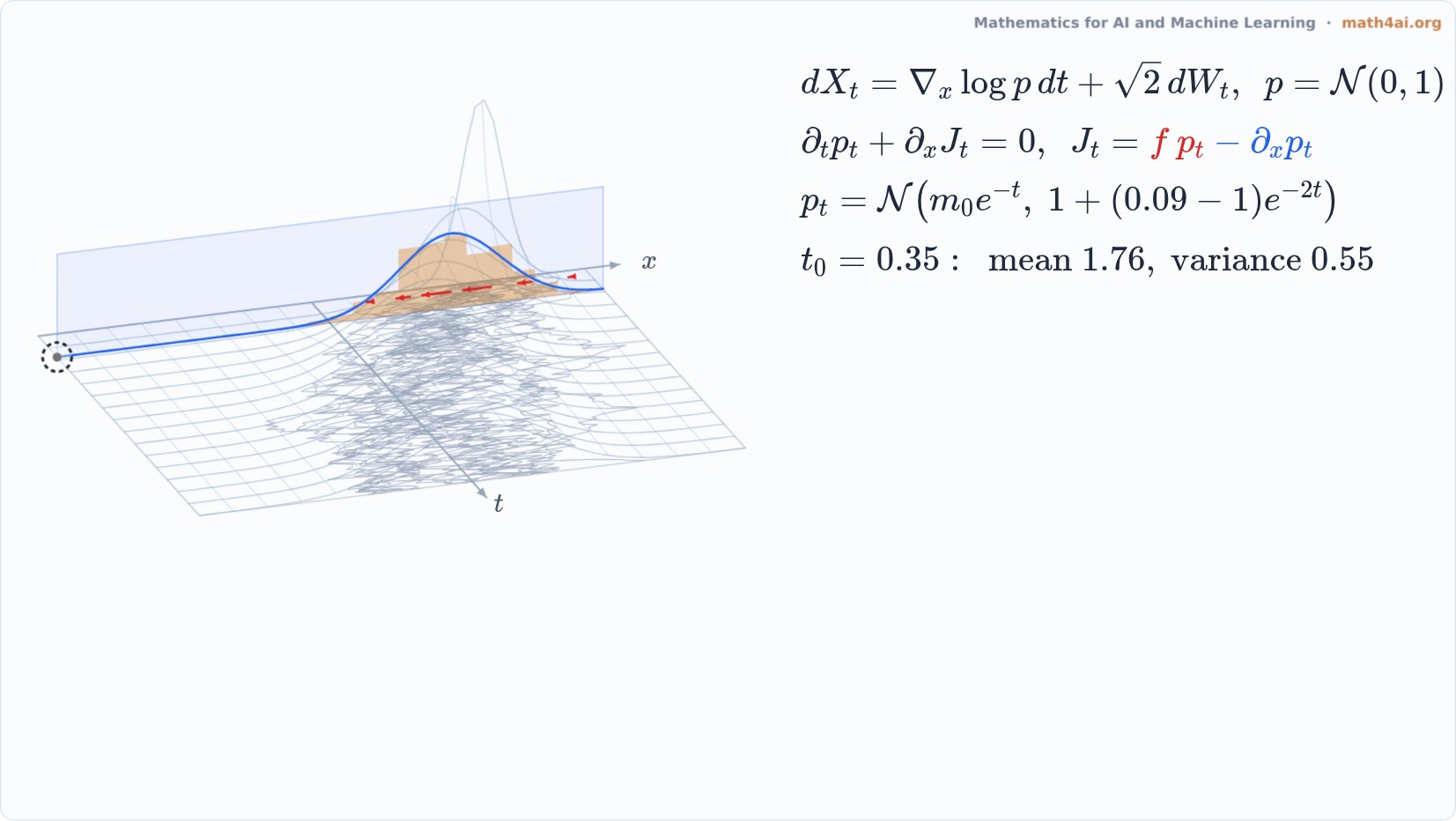 Interactive1:35Fokker-Planck: A Random Cloud, a Deterministic DensityChapter 21
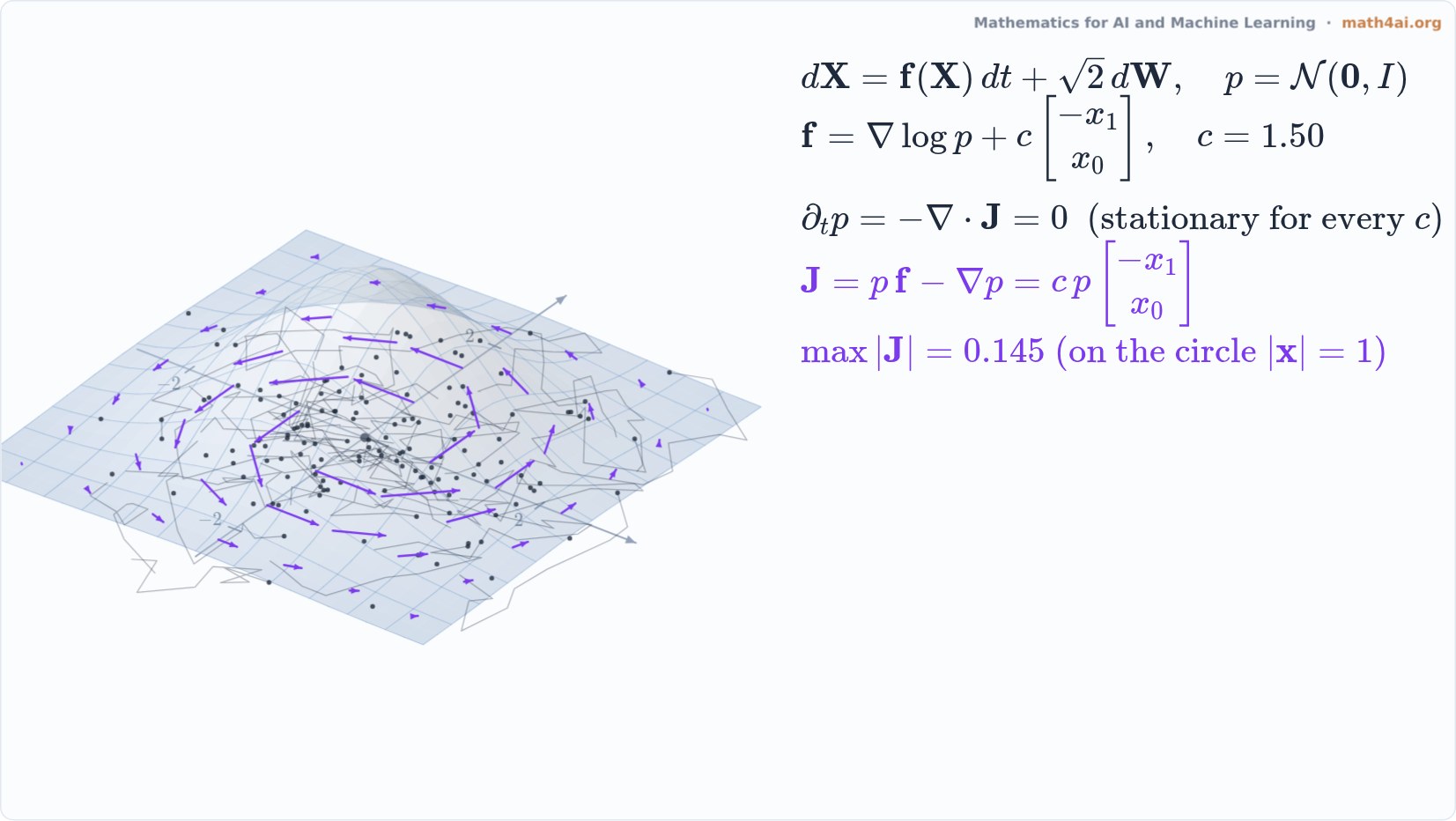 Preview1:29Detailed Balance: Stationary Is Not the Same as StillChapter 21
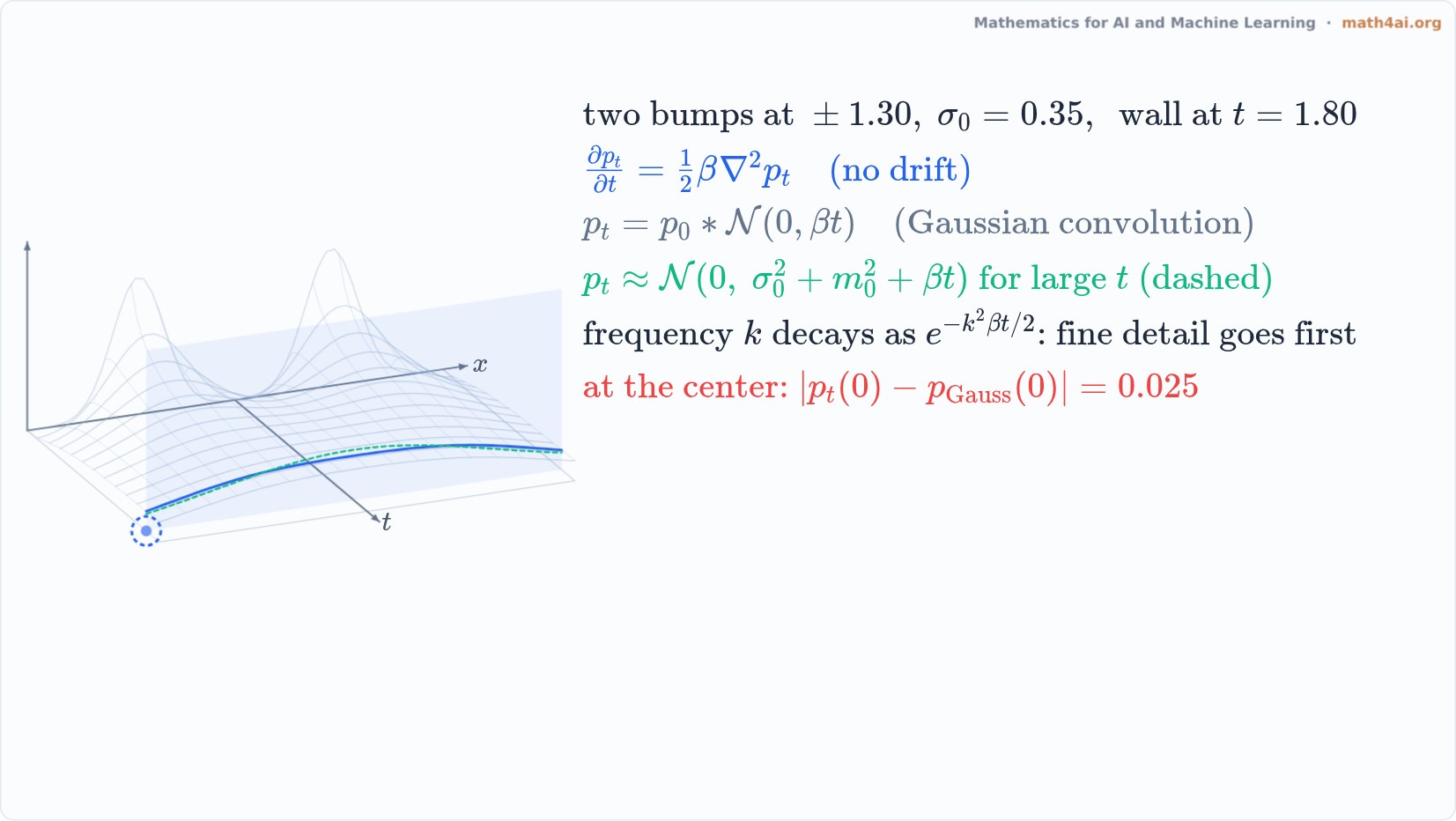 Preview1:28Forward Diffusion and the Heat Equation: All Distributions Become GaussianChapter 21
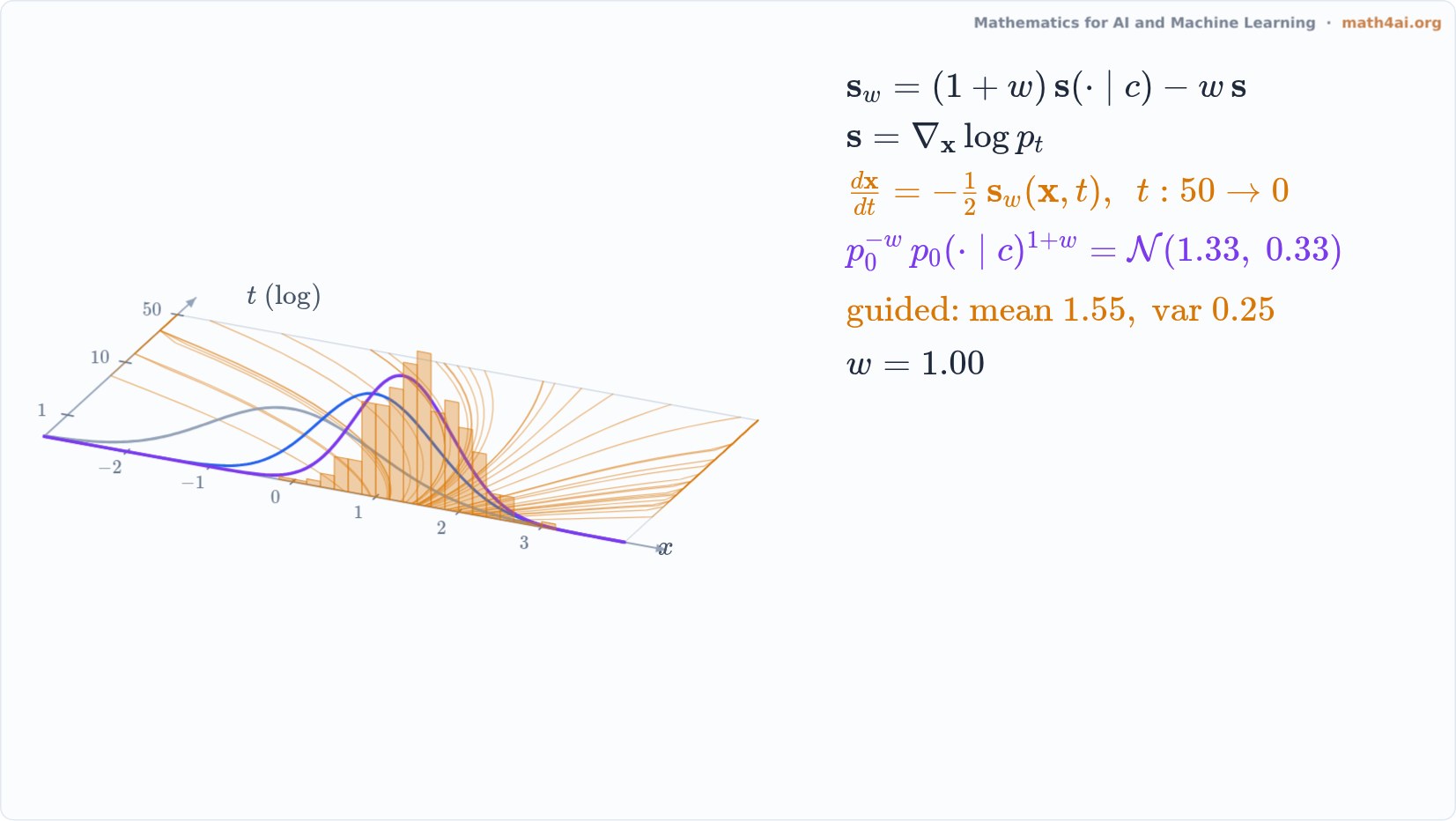 Preview1:27Guidance Does Not Sample the Sharpened DistributionChapter 21
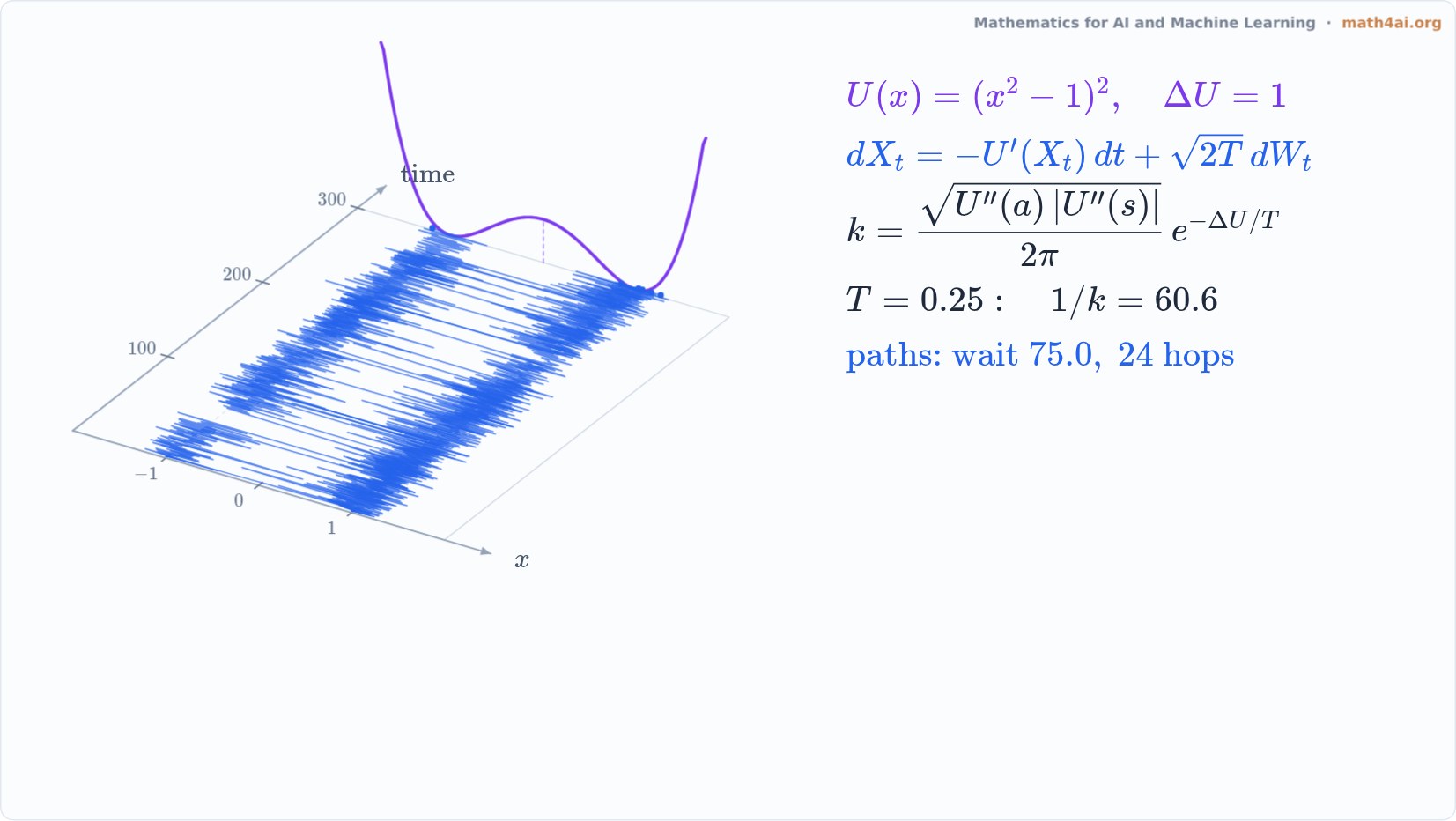 Preview1:50Metastability and the Kramers Escape RateChapter 21
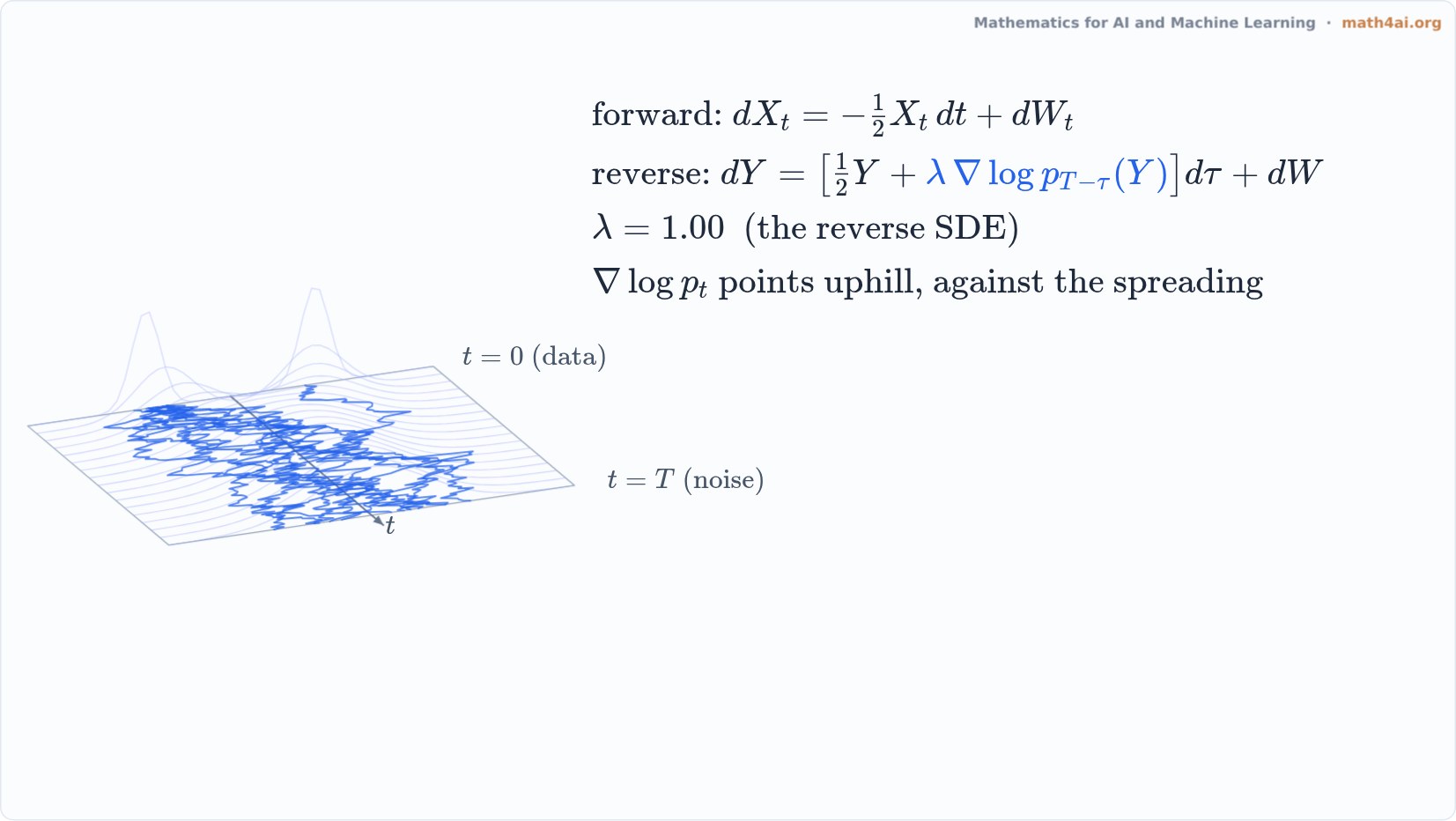 Preview1:26Reverse Time: Why We Must Learn the ScoreChapter 21
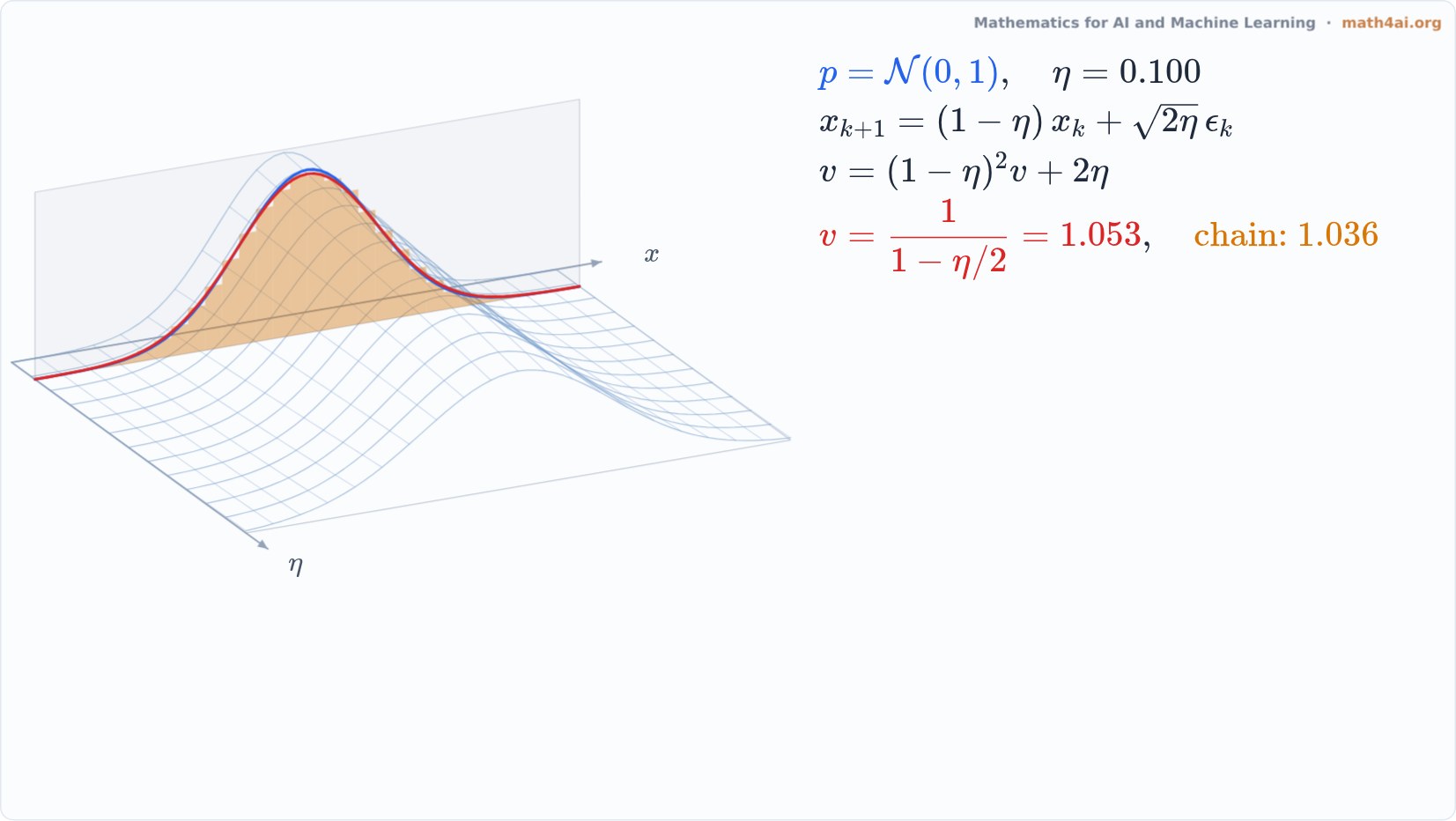 Preview1:52Discretization Changes the Stationary DistributionChapter 21
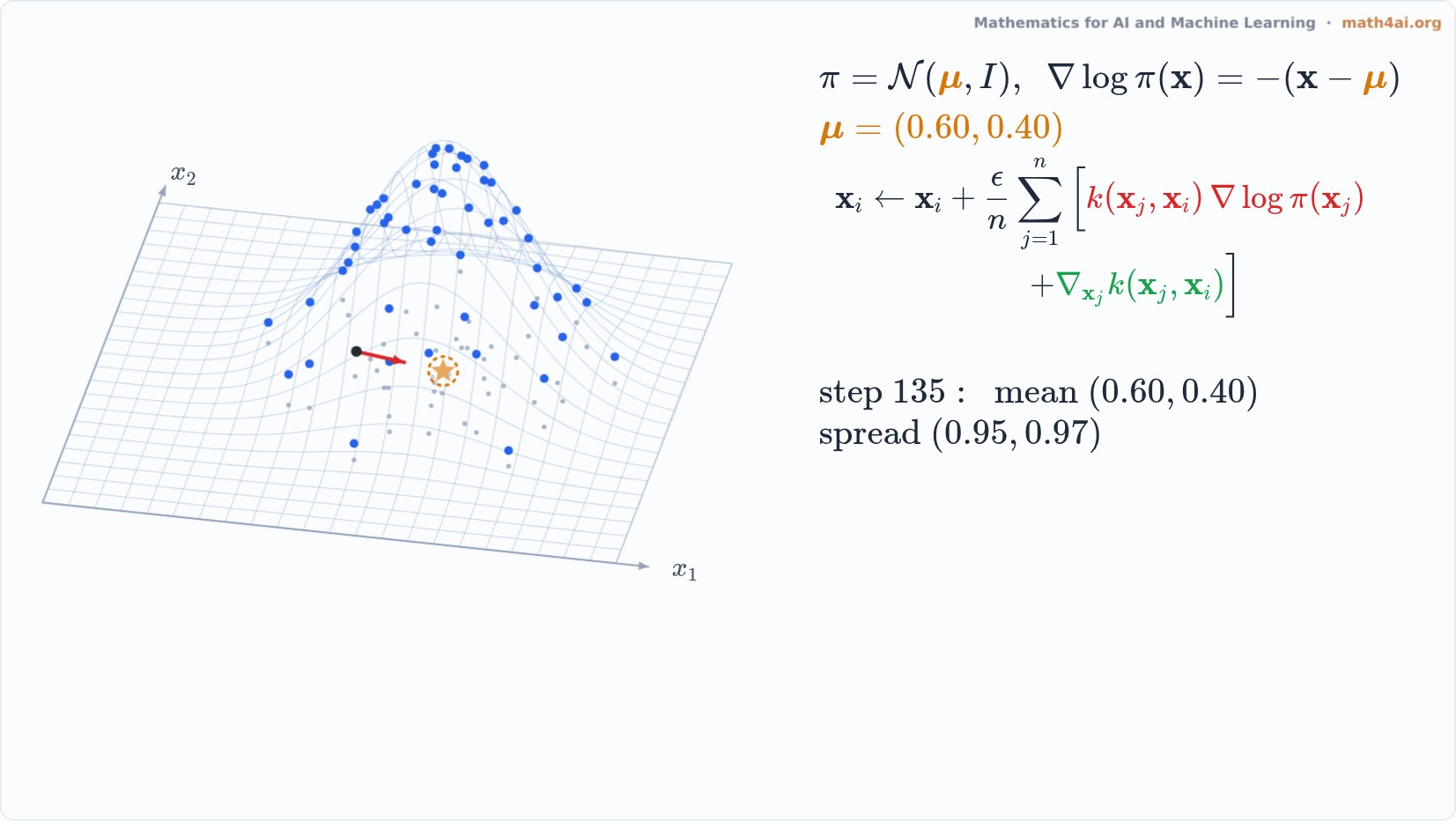 Preview1:29Stein Variational Gradient Descent: Pull and PushChapter 21