Eigenvectors: the Directions a Matrix Does Not Turn
An interactive live film: a 3 x 3 matrix sends a unit vector x to A x, almost always tilted away; turn x over the sphere and find a direction the matrix only stretches.
Narration
A three by three matrix A acts on a unit vector x, in blue, and sends it to A x, in red. In general A x points somewhere else entirely.
Sweep x over the sphere, and A x swings around with it, always tilted away. The grey arc measures the angle between them.
But for a few special directions the angle closes: A x lies on the same line as x. Those directions are the eigenvectors, and the stretch factor is the eigenvalue: A x equals lambda x.
This matrix has three of them, with eigenvalues two and a half, one, and one half. Along the first, A stretches; along the last, it shrinks.
Lambda is an eigenvalue exactly when A minus lambda I is singular, the characteristic equation; then x is a vector in its null space.
Your turn. Turn x with the pad. Find a direction that A does not turn, so that A x is parallel to x.
An eigenvector is a direction the matrix only stretches. The eigenvalues say by how much.
More from Chapter 6
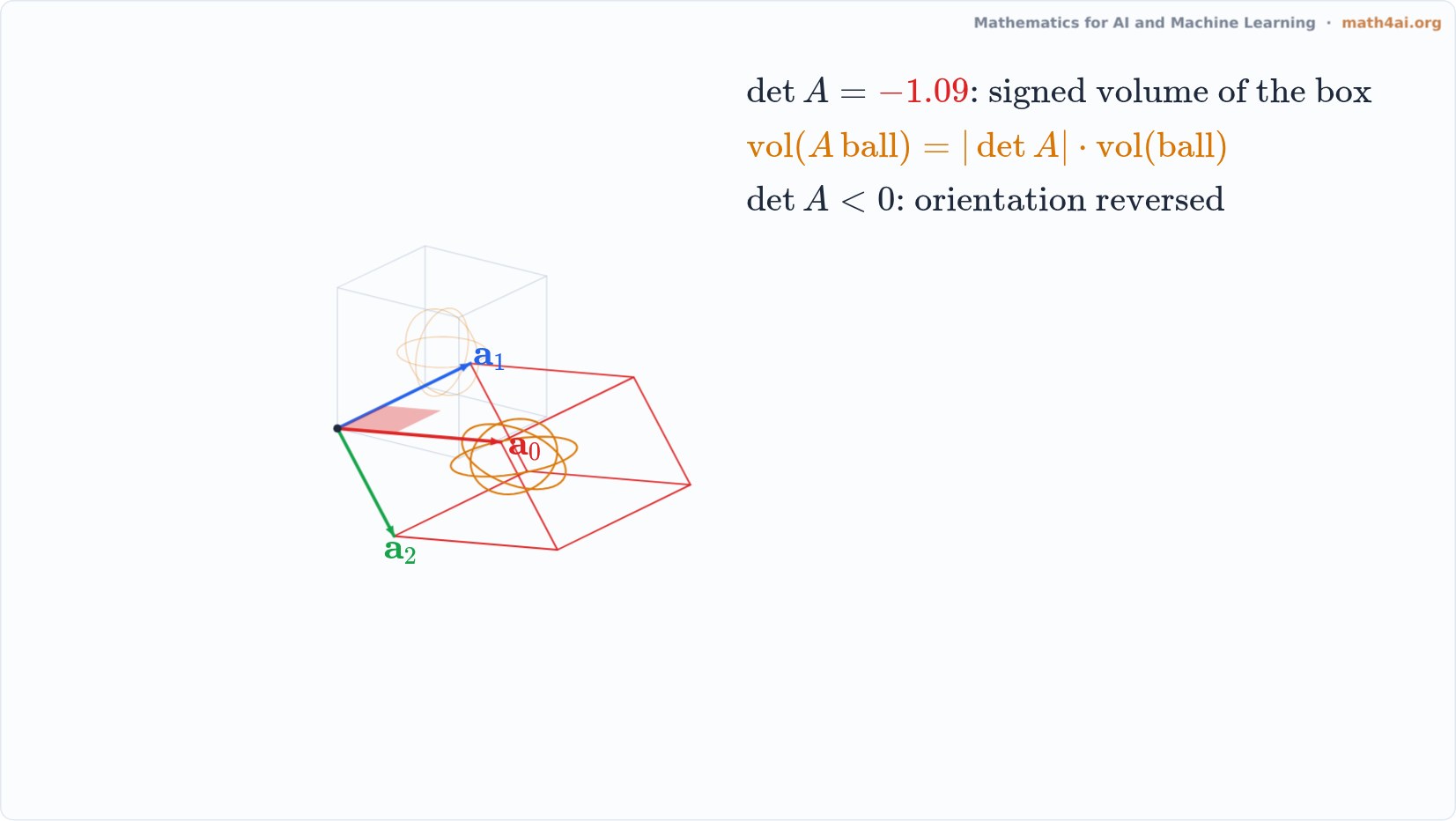 Preview1:42The Determinant as a Volume Factor, with a SignChapter 6
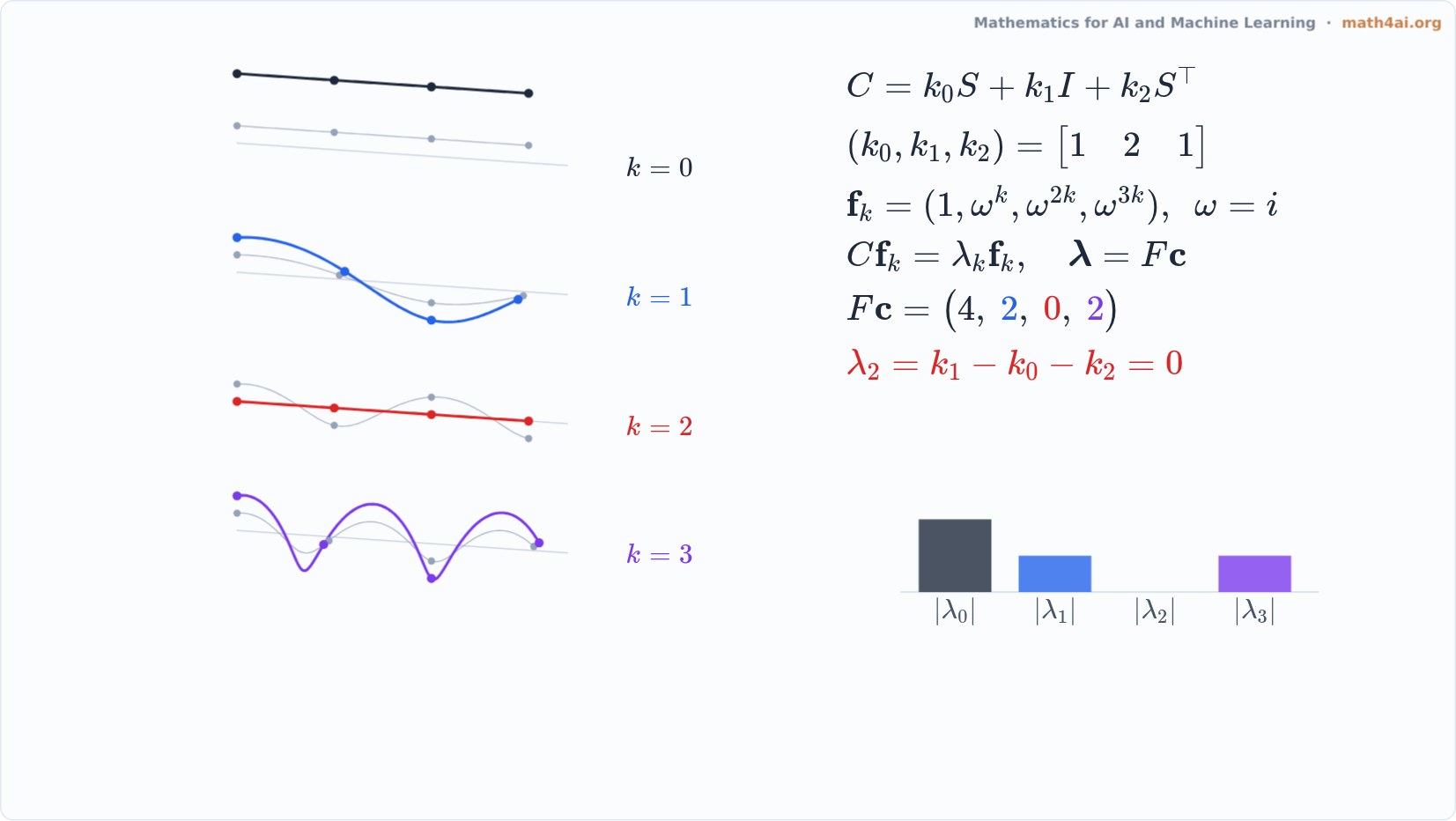 Preview1:43Convolution Is Multiplication in the Fourier BasisChapter 6
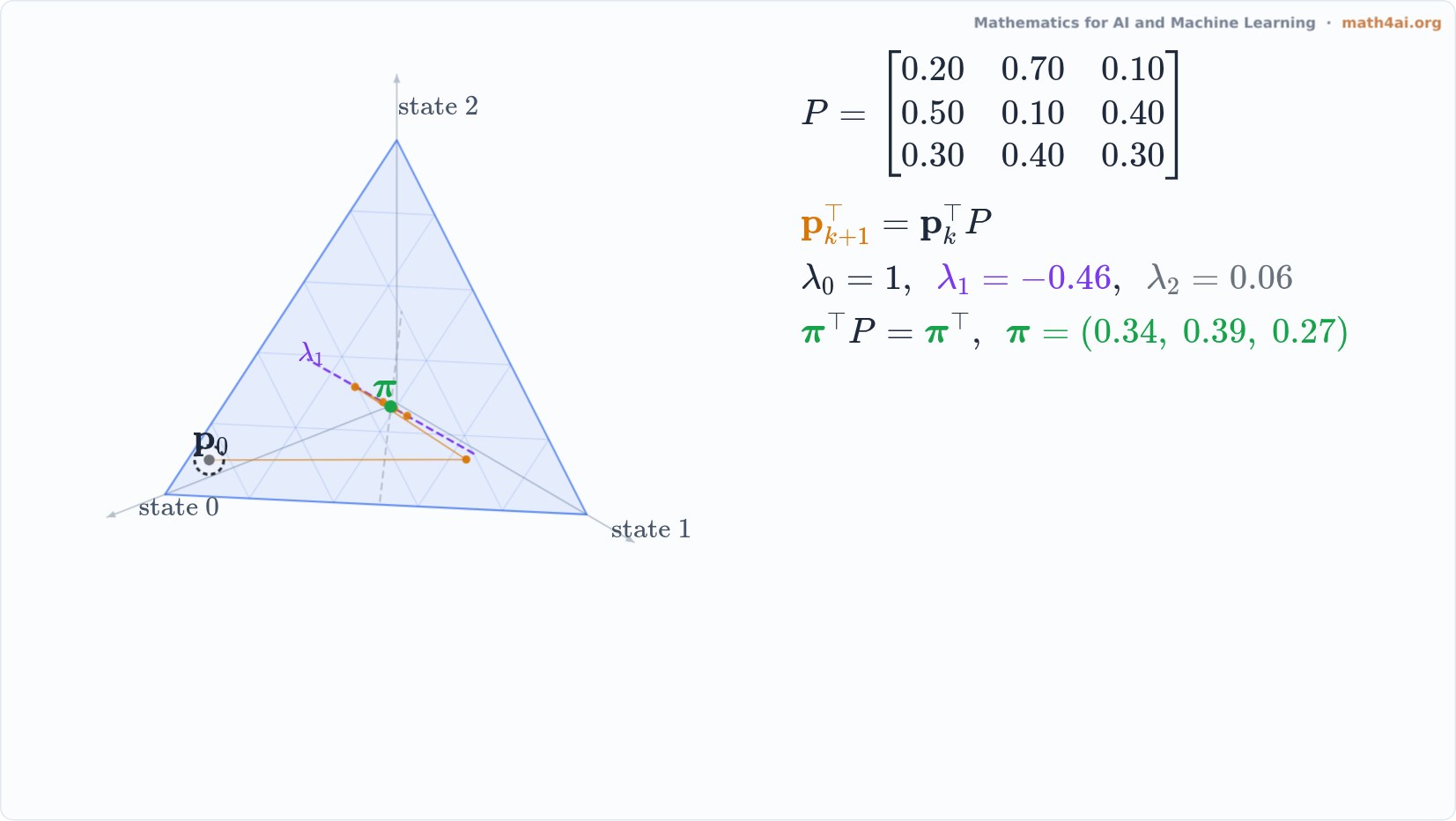 Preview1:46Power Method: A Markov Chain Finds Its EigenvectorChapter 6
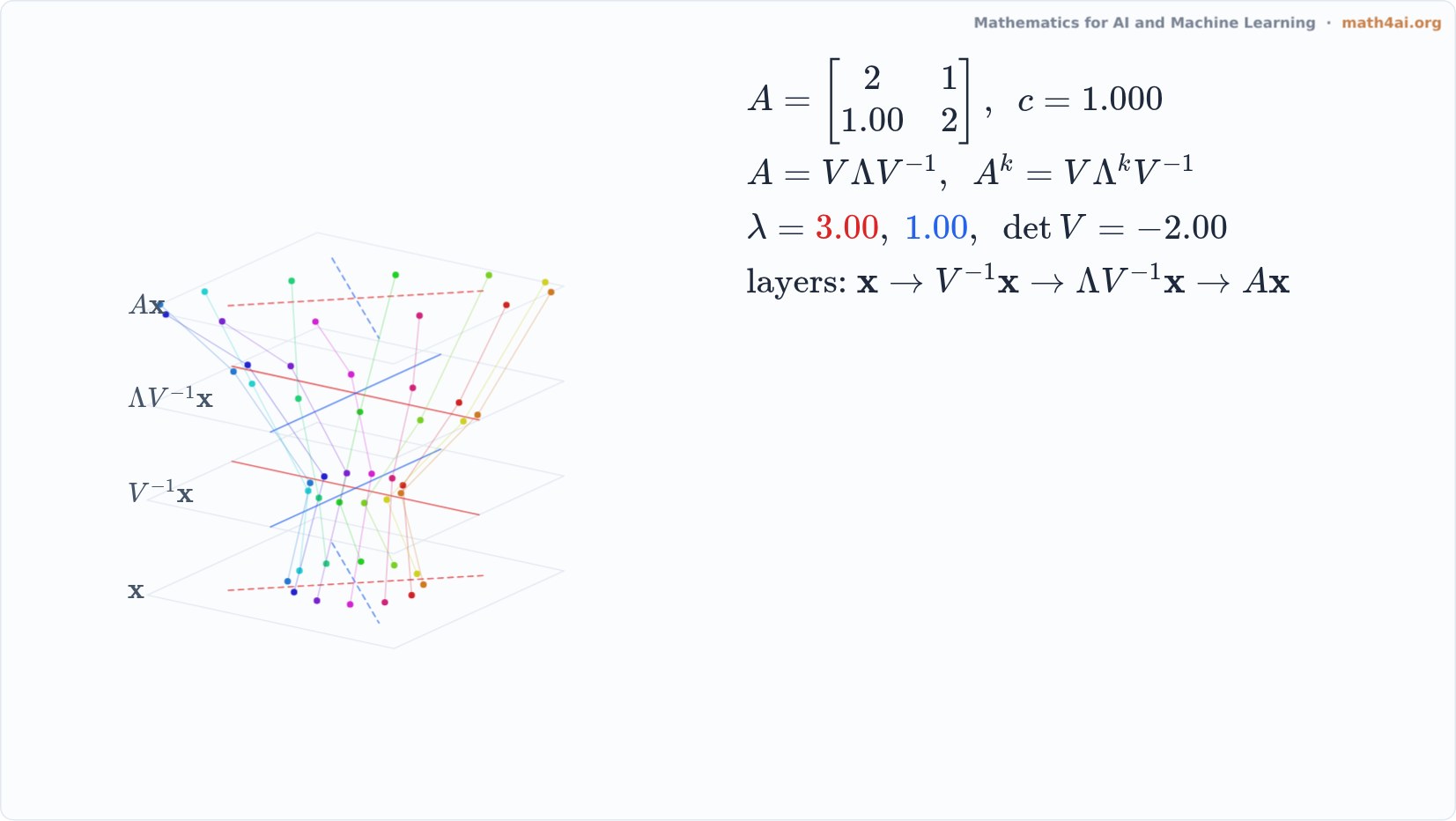 Preview1:44Diagonalization: Change Basis, Stretch, Change BackChapter 6
 Preview1:36The Matrix Exponential: a Flow Whose Area Grows like e to the TraceChapter 6