Quadratic Forms See Only the Symmetric Part
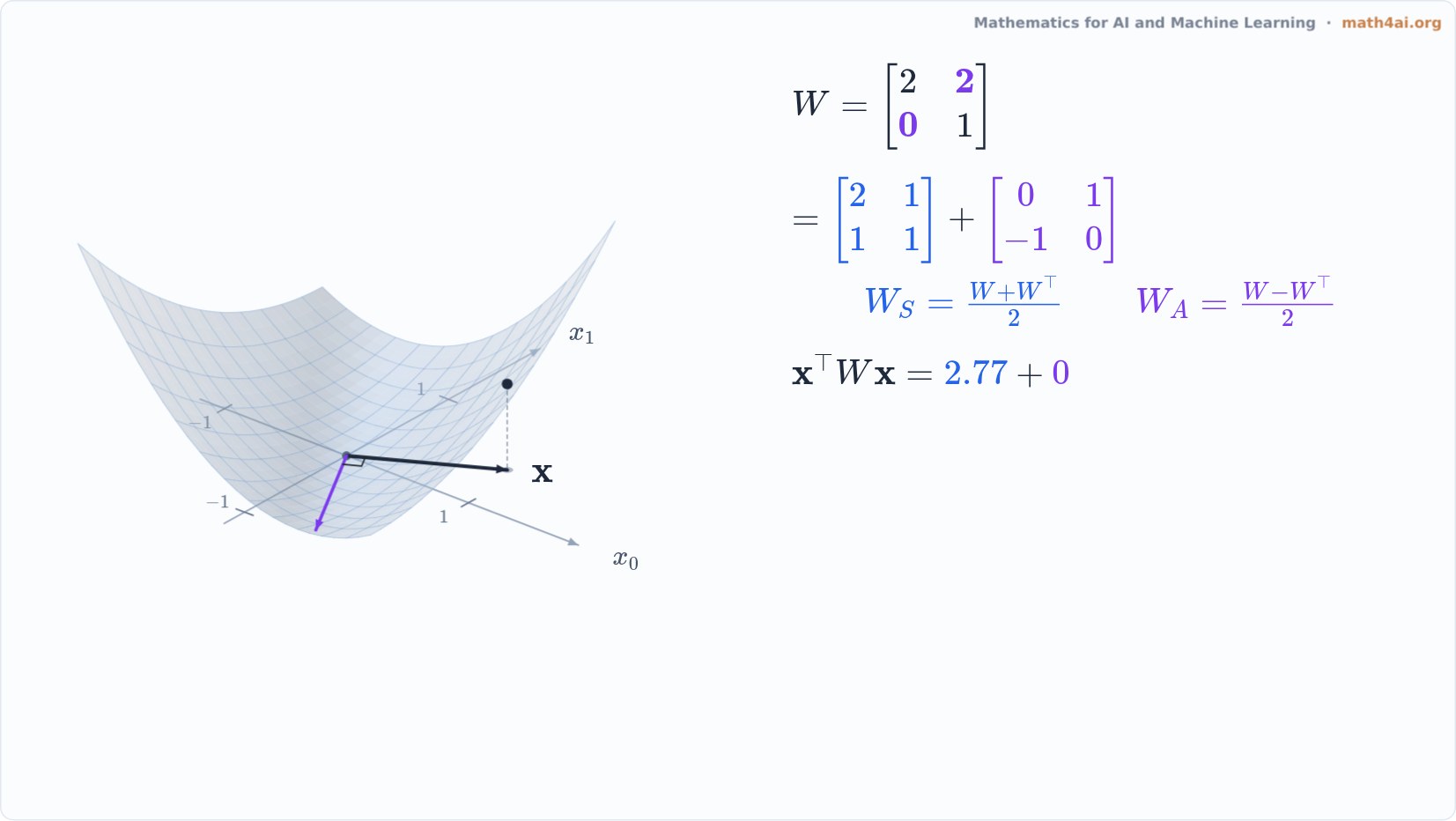
An interactive live film: W splits into a symmetric and a skew-symmetric part; the skew part turns x at a right angle, so it never changes the surface xᵀWx, and exactly one symmetric matrix gives each quadratic form.
Narration
The surface is the quadratic form x transpose W x, and the matrix W is on the right. This W is not symmetric: its corners off the diagonal are two and zero.
Every square matrix splits into two parts: a symmetric part, W plus W transpose over two, and a skew-symmetric part, W minus W transpose over two.
The rest of the narration is in the book's Companion.
More from Chapter 7
 Interactive1:44Rayleigh Quotient: The Height of a Quadratic Form on the Unit CircleChapter 7
 Preview1:29The Spectral Theorem: Symmetric Means Perpendicular EigenvectorsChapter 7
 Preview1:35Cholesky: a Square Root That Exists Only for Positive Definite MatricesChapter 7
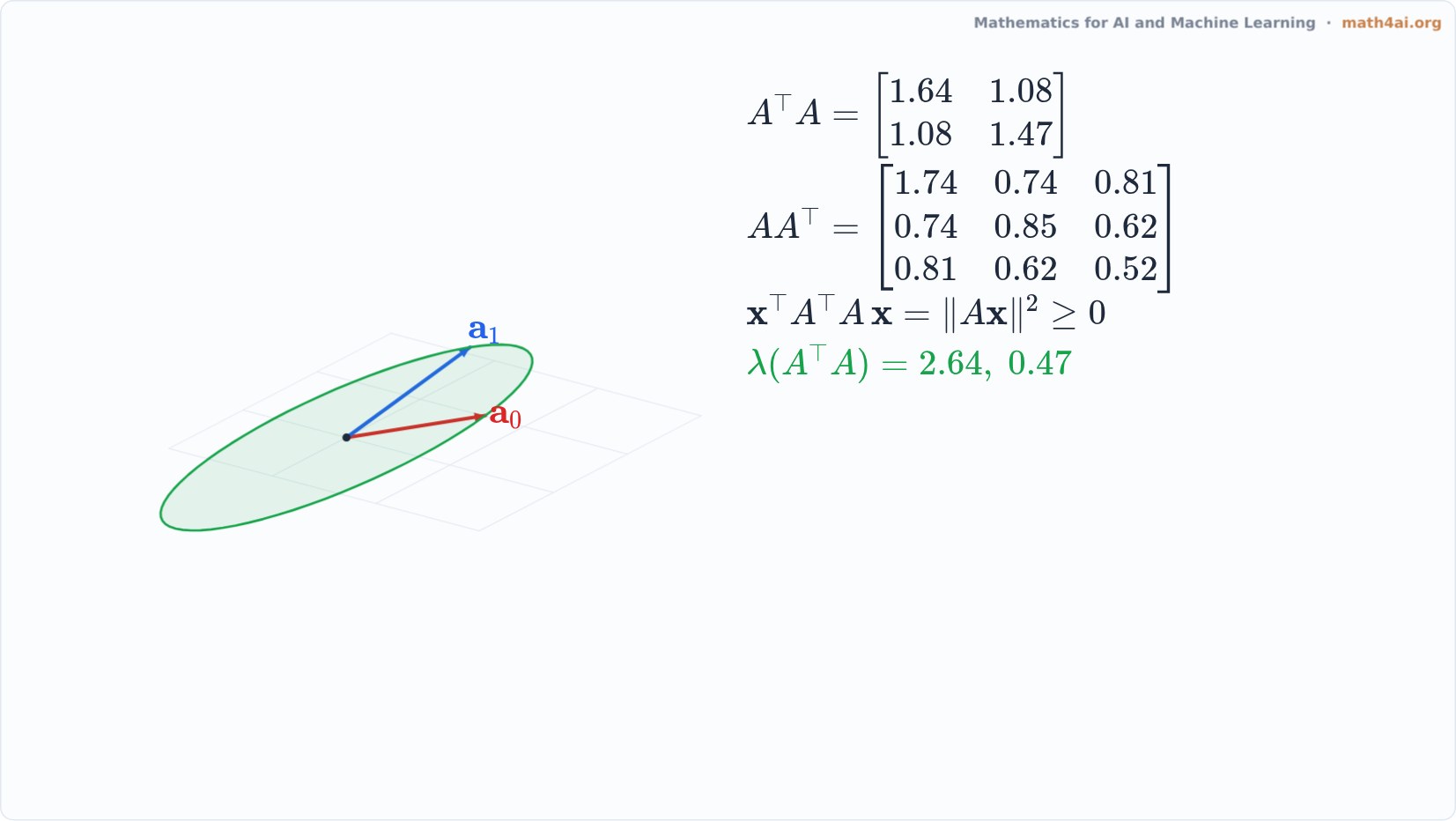 Preview1:40Gram Matrices: Two of Them, One Set of EigenvaluesChapter 7
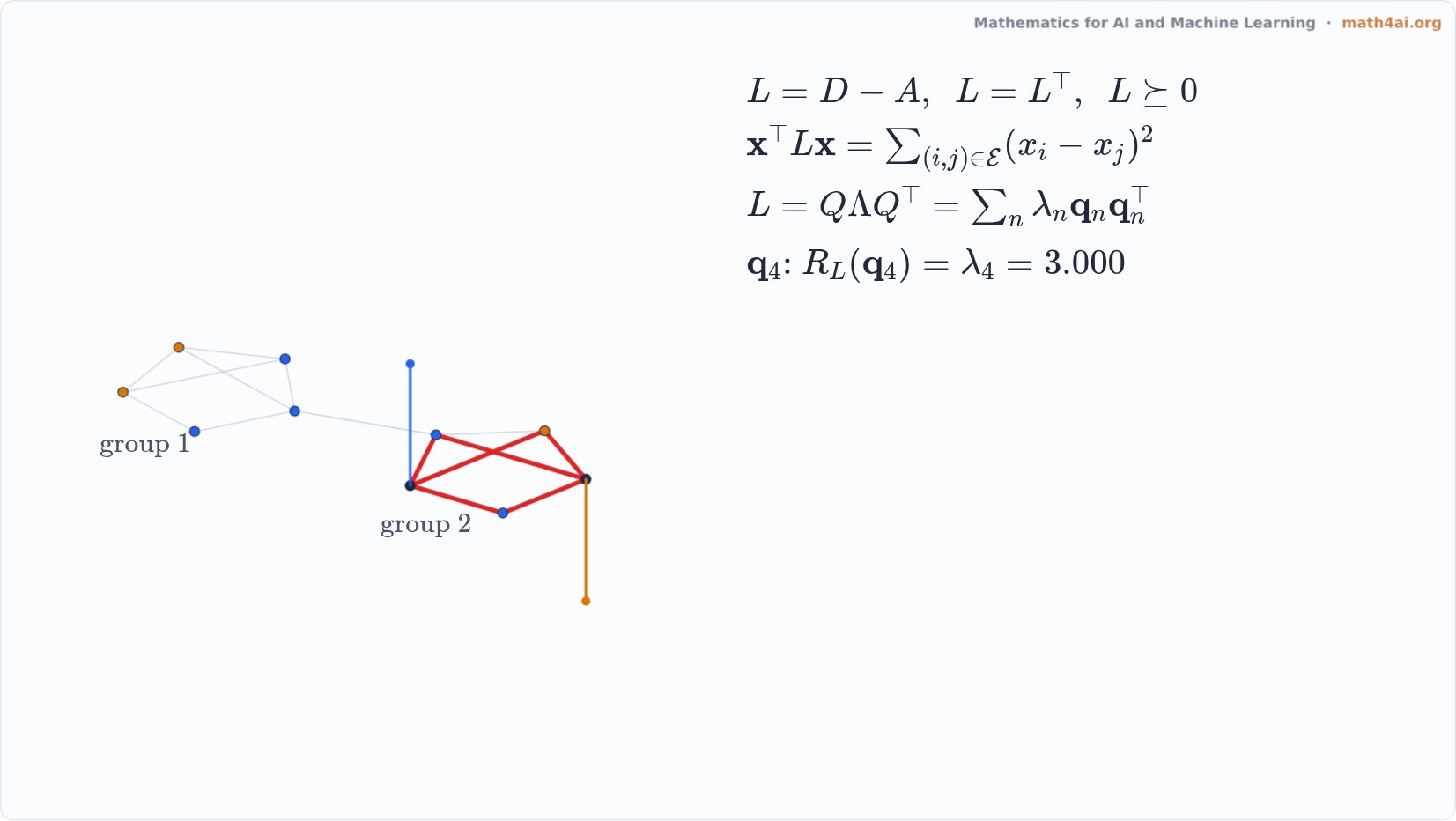 Preview1:26The Graph Laplacian: Smooth and Rough Signals on a GraphChapter 7
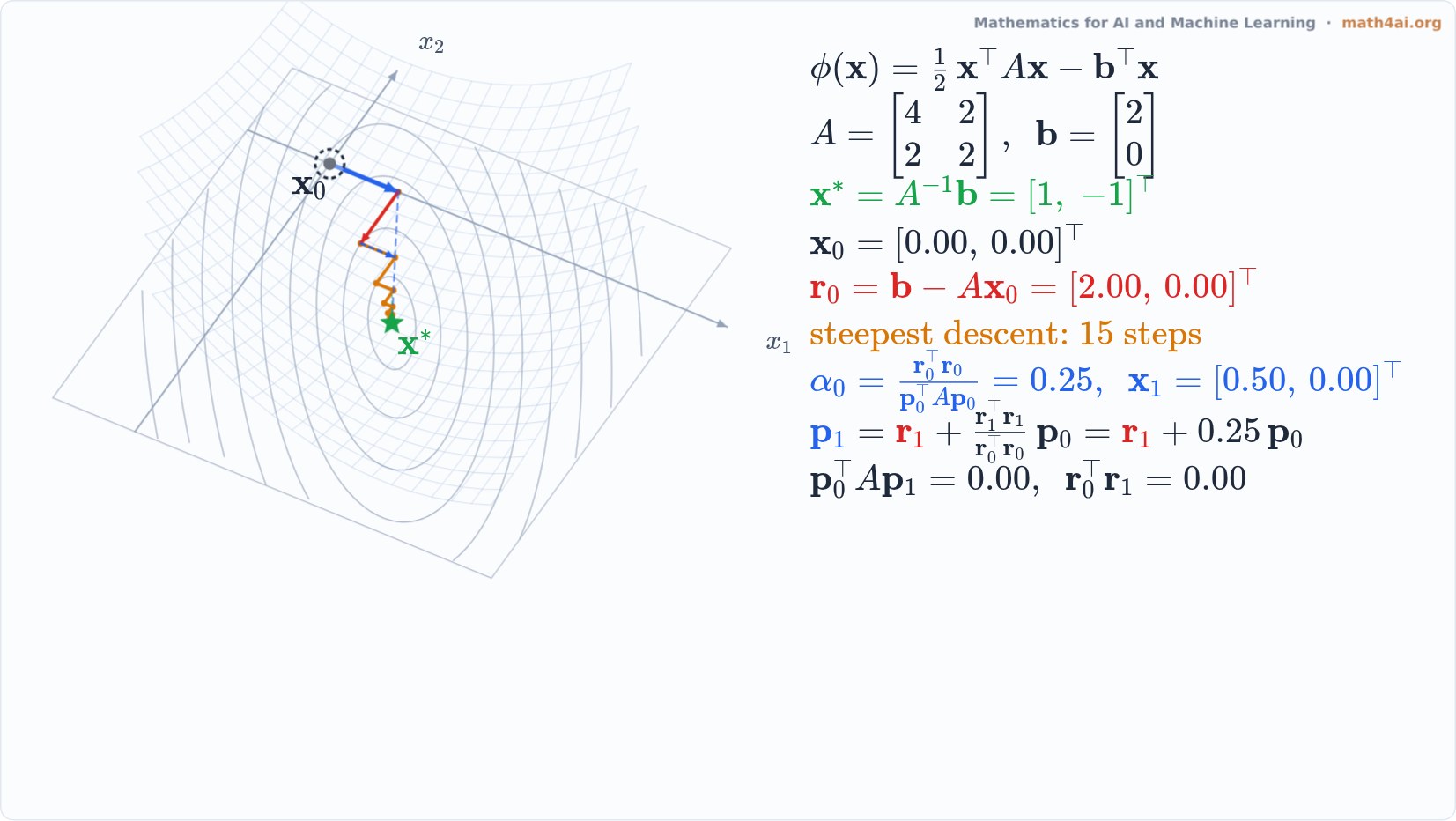 Preview1:58Conjugate Gradient: Two Steps to the BottomChapter 7