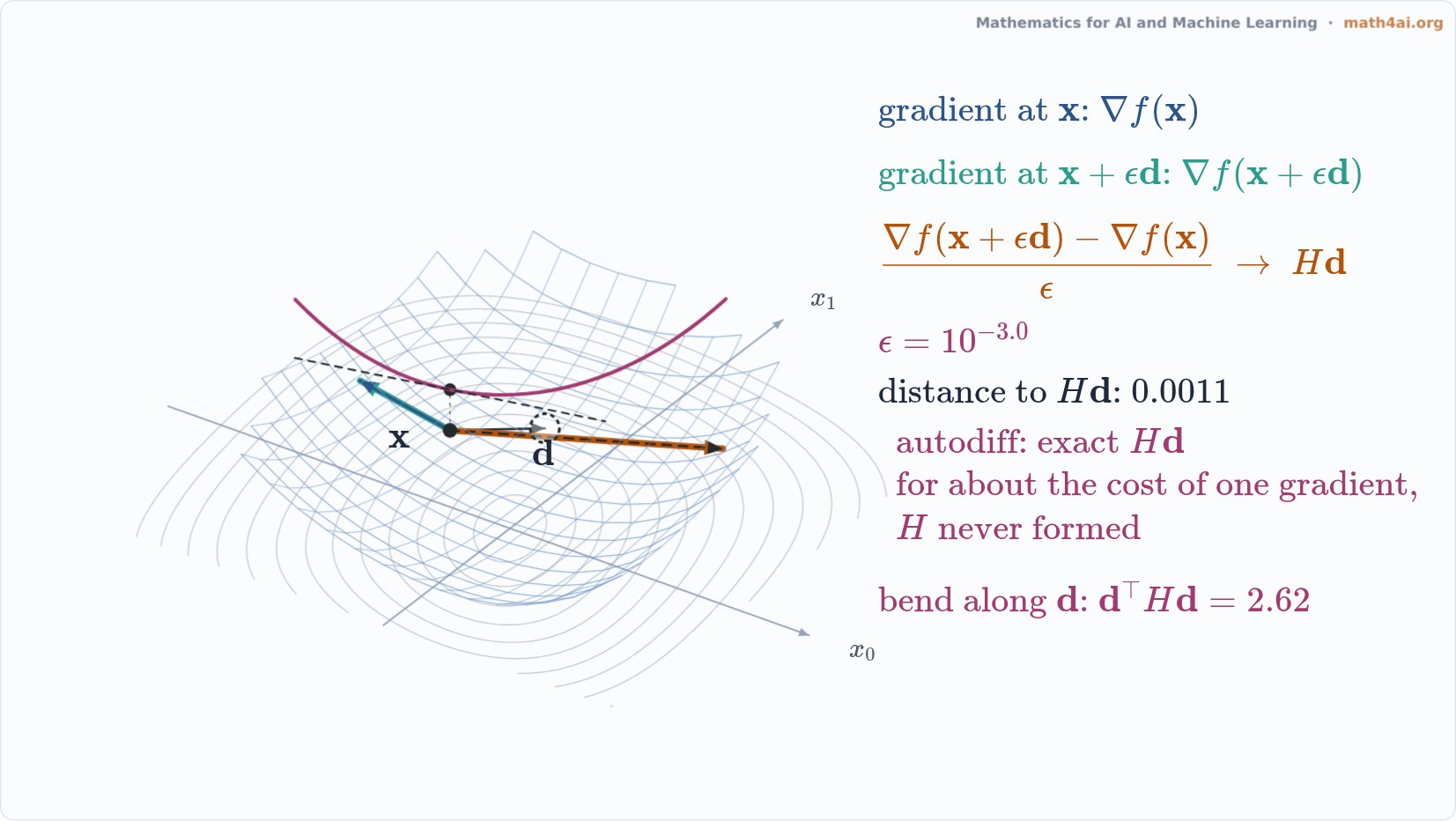
A Hessian-Vector Product from Two Gradients
A narrated live film: the difference of two gradients, divided by epsilon, closes in on H d as epsilon shrinks; scrub to replay it.
Narration
Here is a loss surface in two dimensions, a point x, and a direction d. The blue arrow is the gradient at x. Now nudge x by epsilon along d, and draw the gradient there: the teal arrow.
The change in the gradient, divided by epsilon, is the amber arrow. As epsilon shrinks, it settles onto H times d, the Hessian vector product, drawn as the dashed arrow. We never formed H.
The rest of the narration is in the book's Companion.
More from Chapter 11
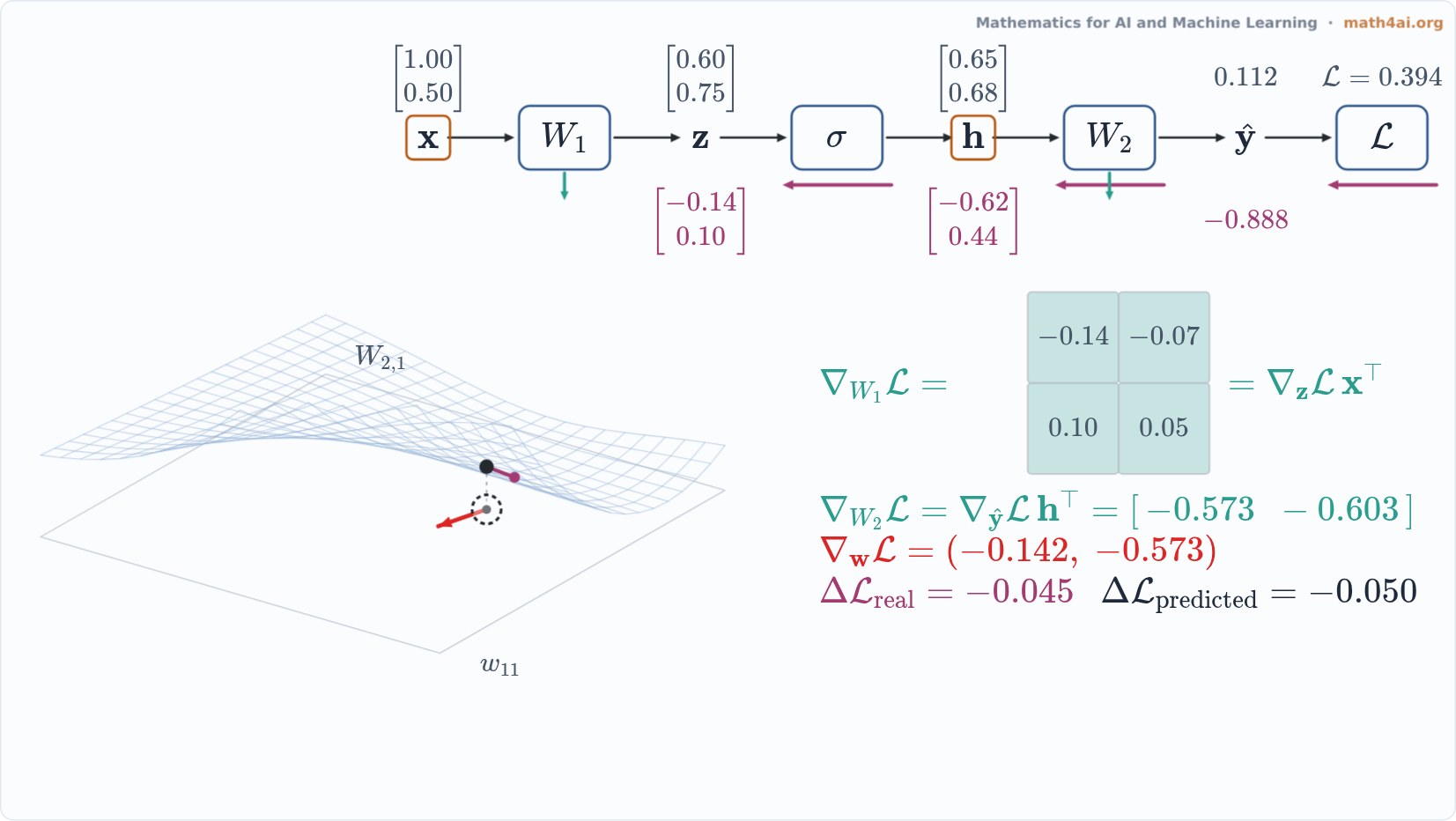 Interactive1:54Backpropagation, One VJP per LayerChapter 11
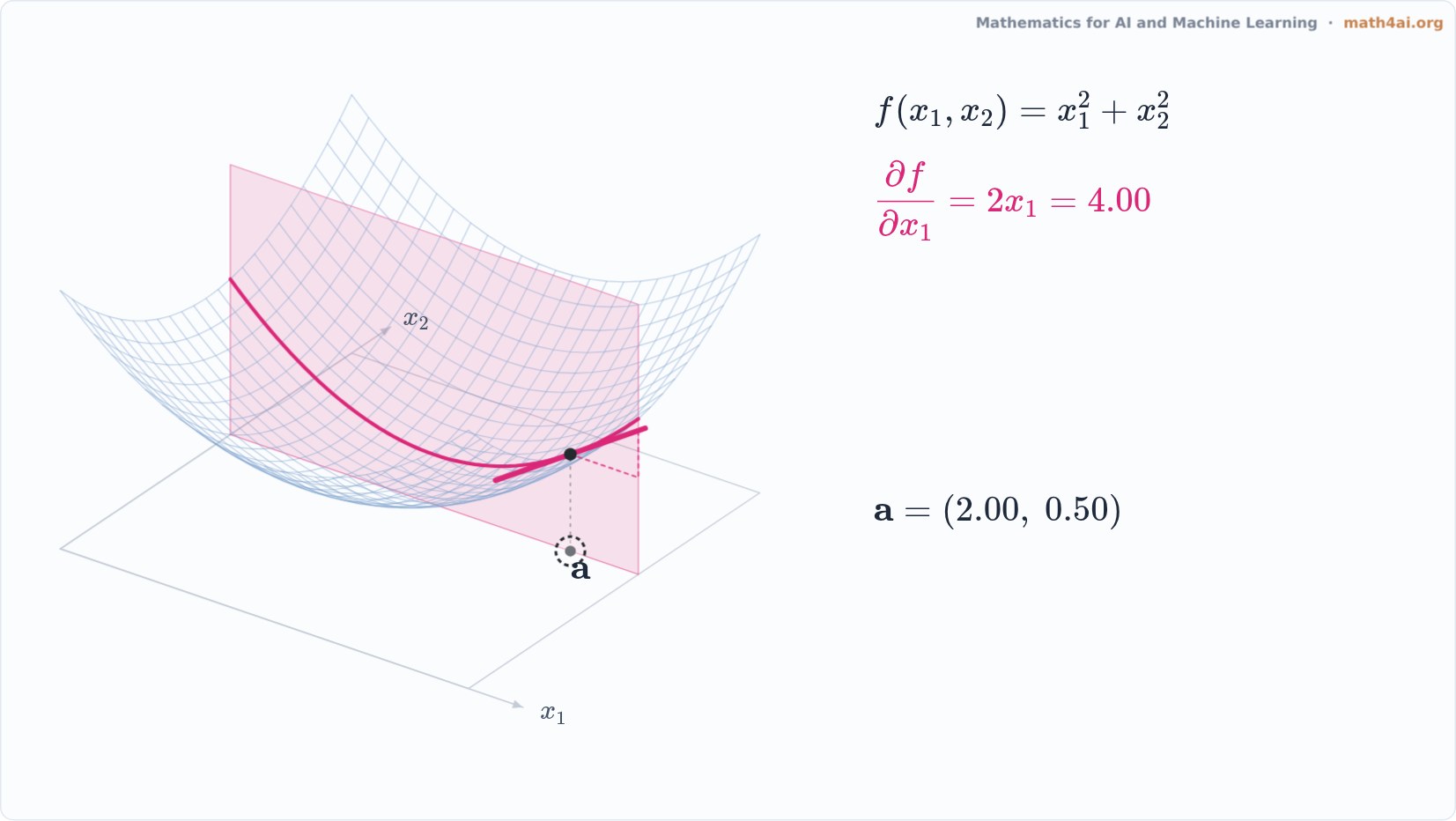 Preview1:27Partial Derivatives Are Two SlicesChapter 11
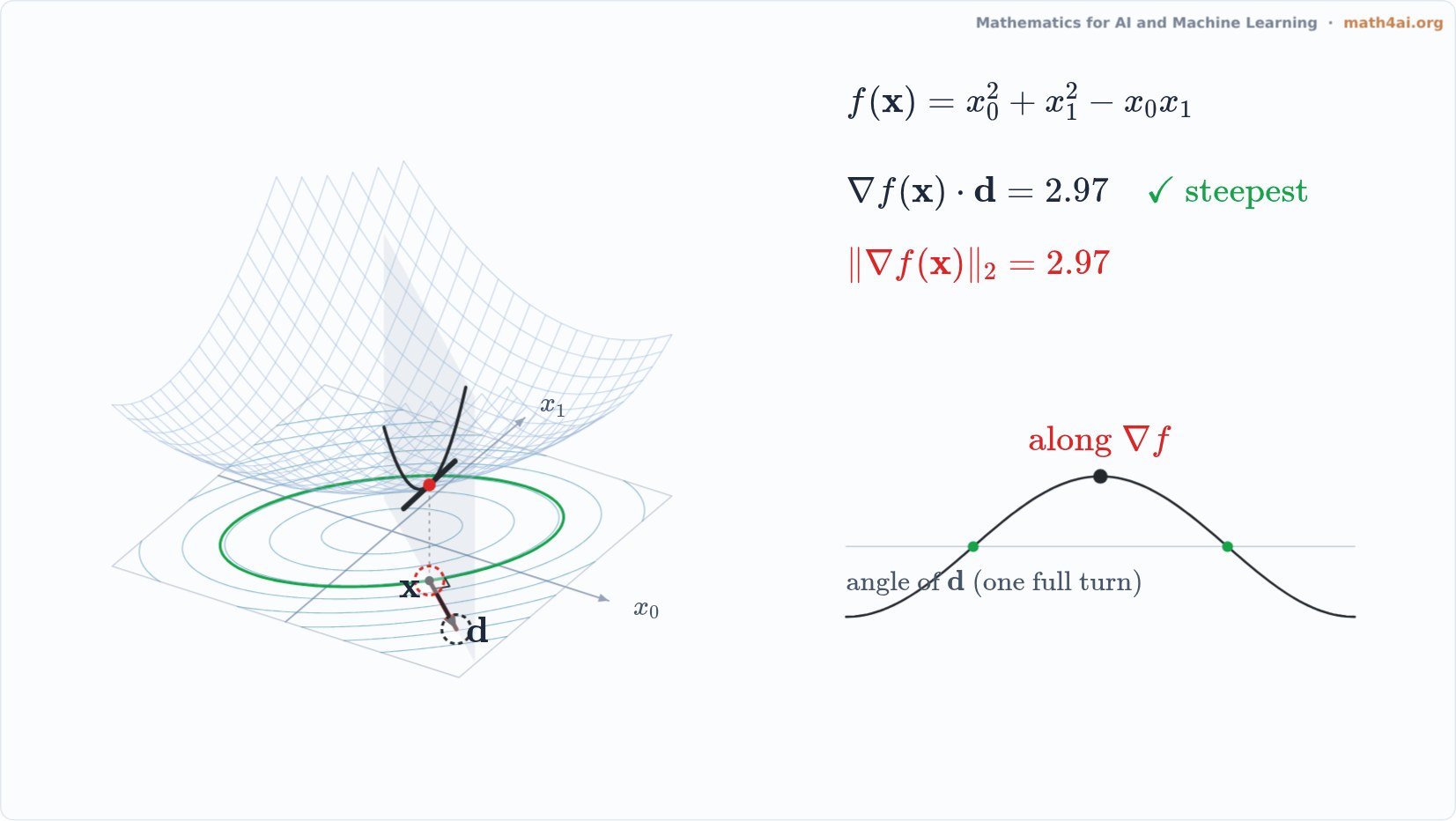 Preview1:34The Gradient Is the Steepest DirectionChapter 11
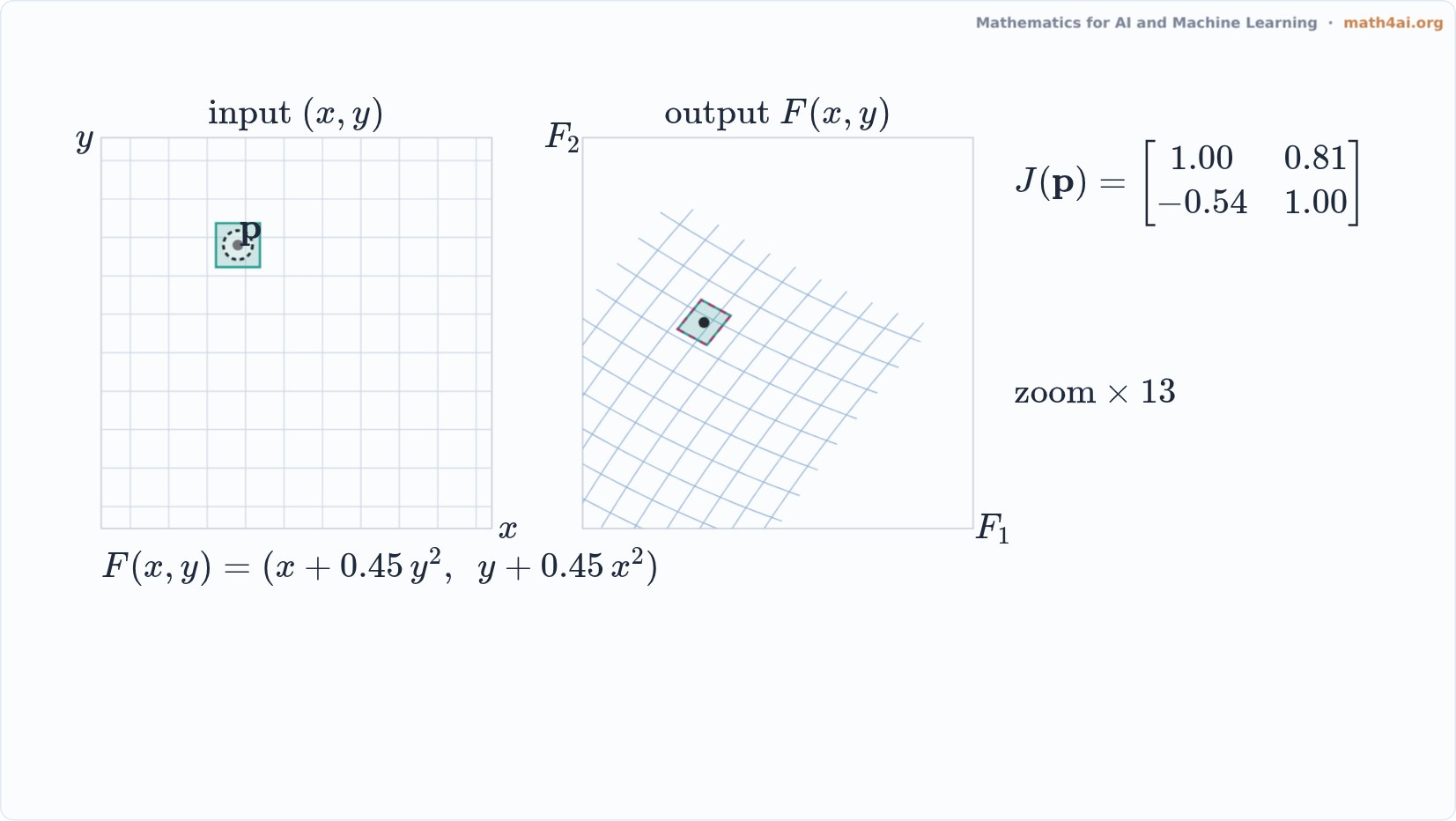 Preview1:42Jacobian Matrix: Linearizing a MapChapter 11
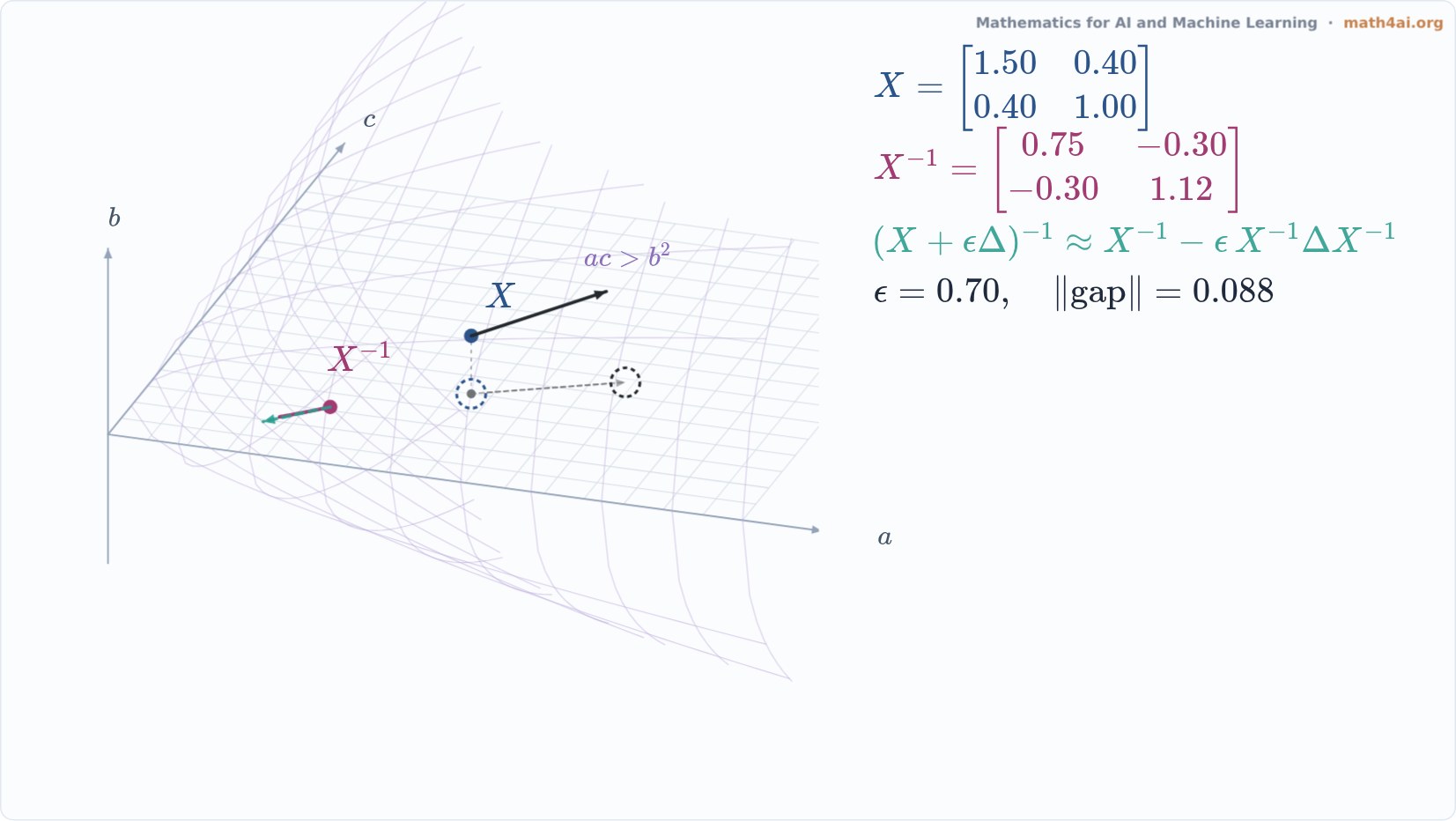 Preview1:43The Derivative of the Matrix InverseChapter 11
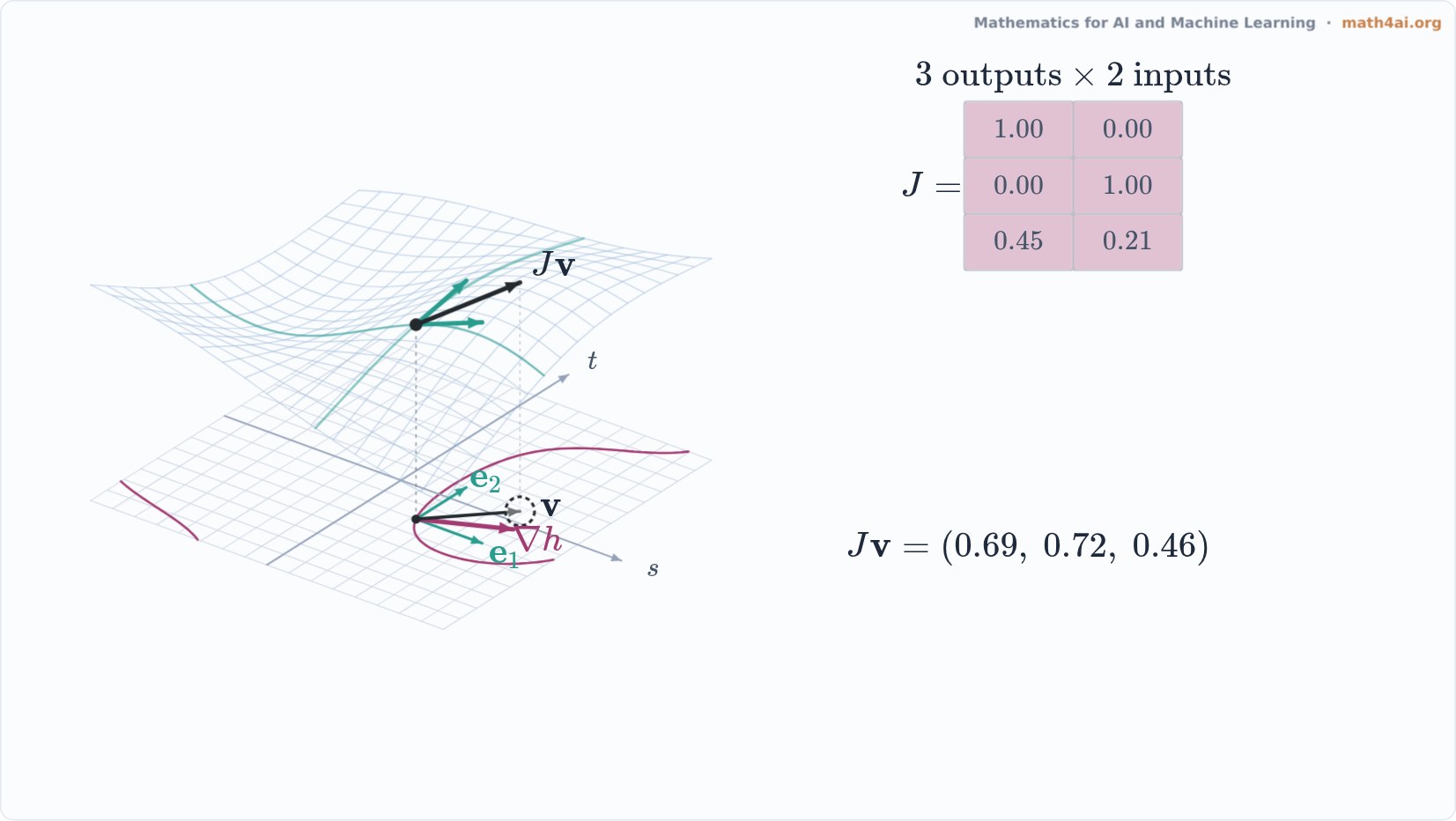 Preview1:54Forward or Reverse: Filling the JacobianChapter 11
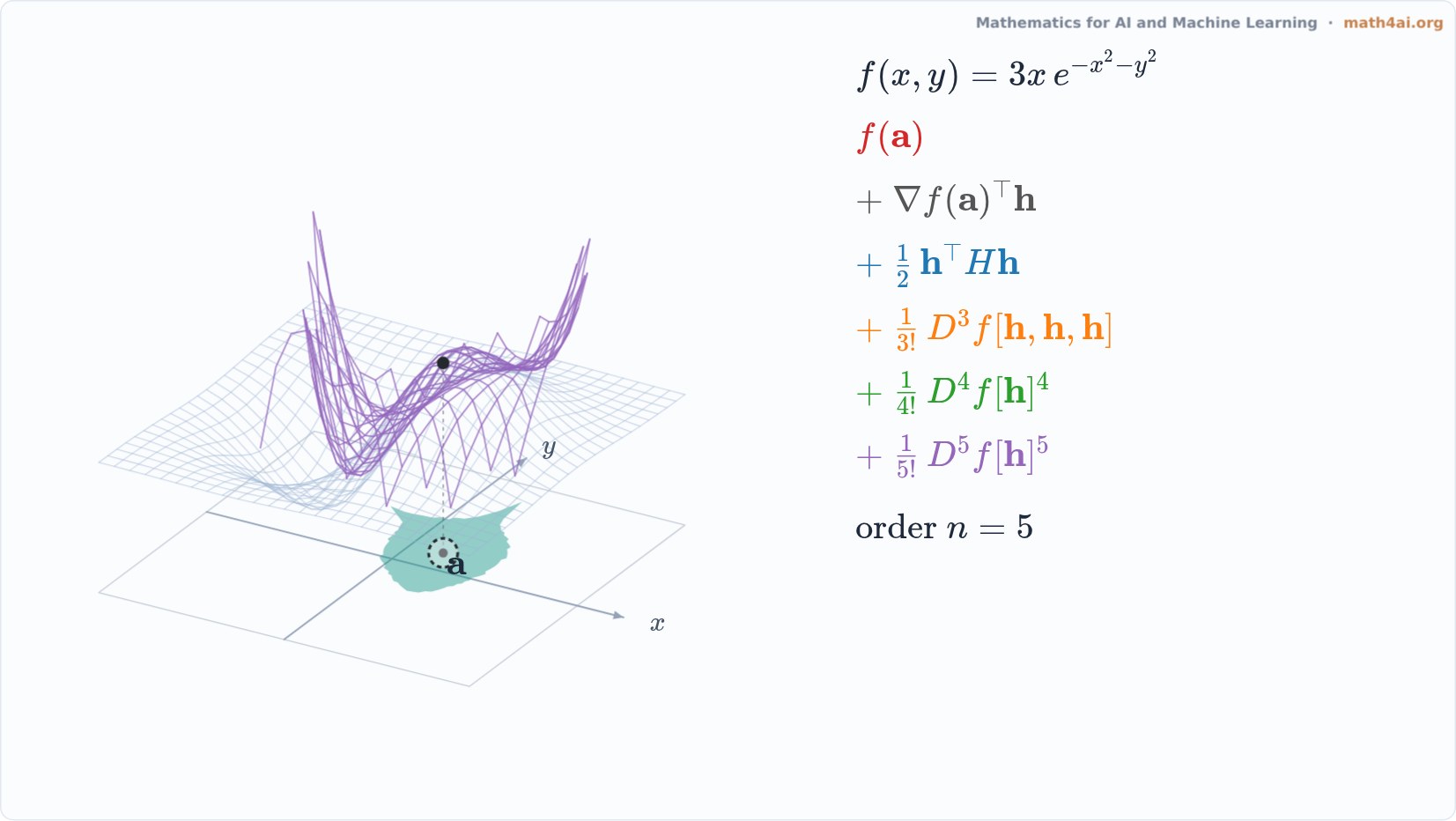 Preview1:32Taylor Expansion, One Term at a TimeChapter 11
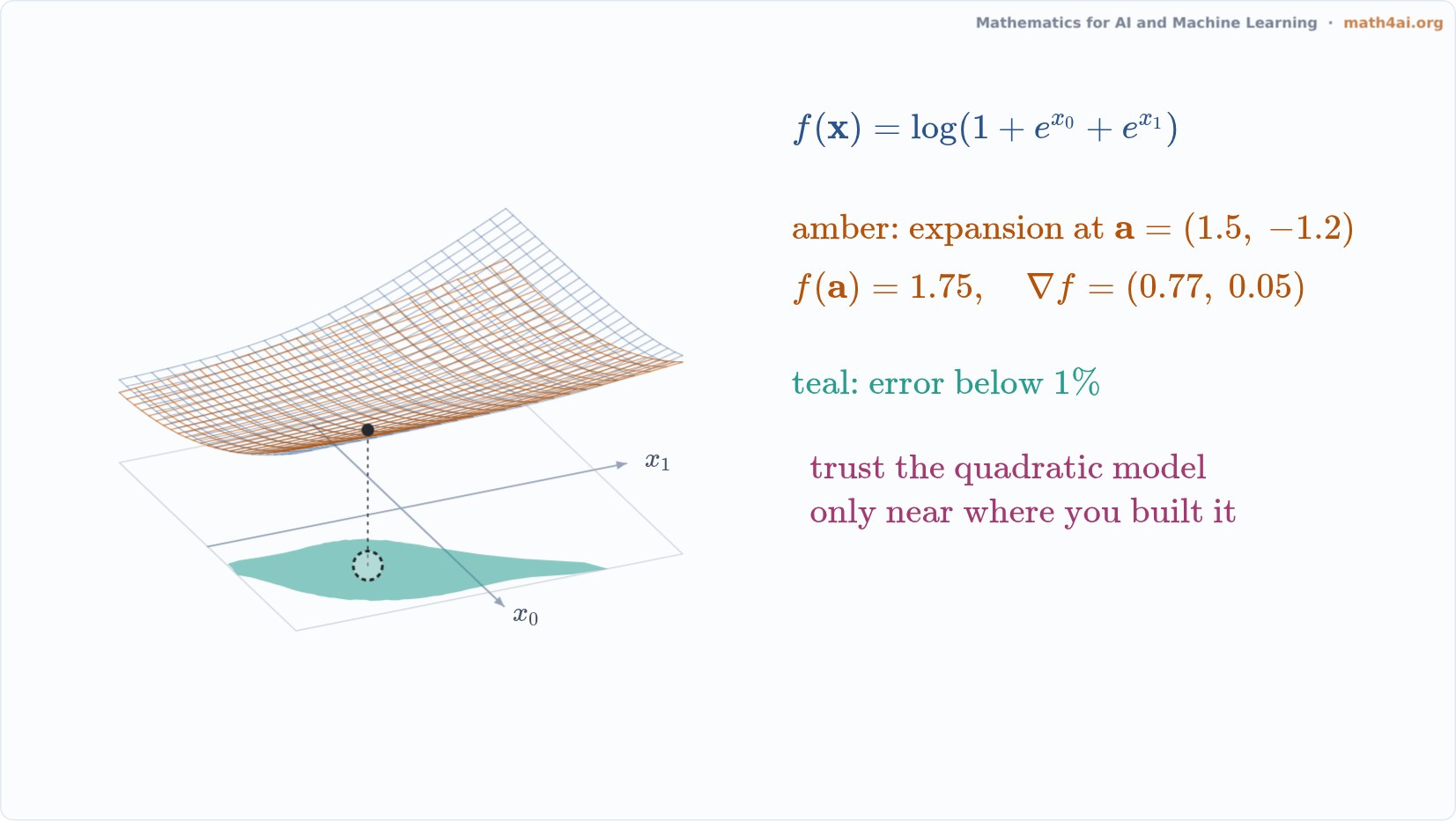 Preview1:30Second-Order Taylor: Where the Quadratic Model Can Be TrustedChapter 11
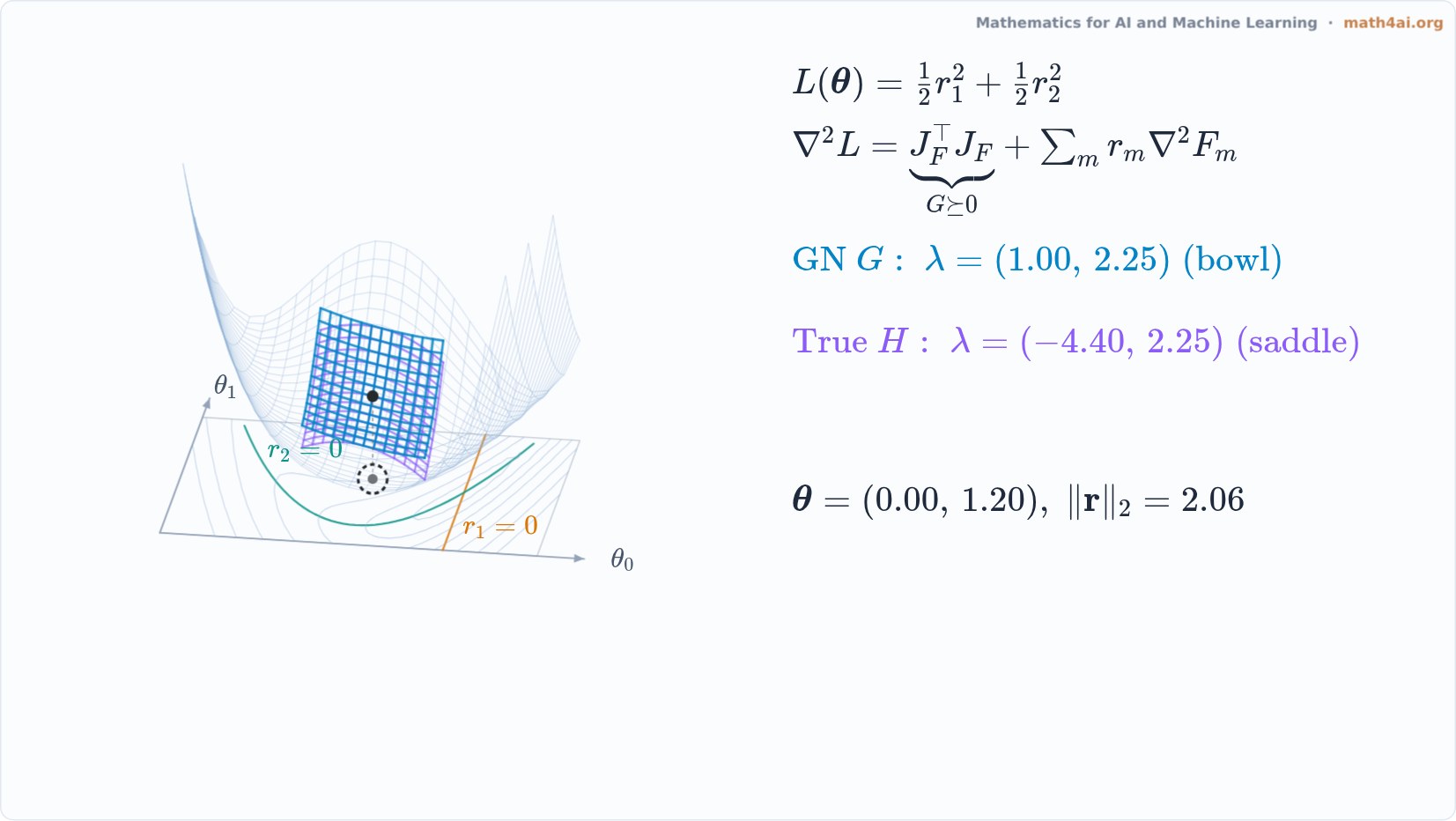 Preview1:34The Gauss–Newton MatrixChapter 11
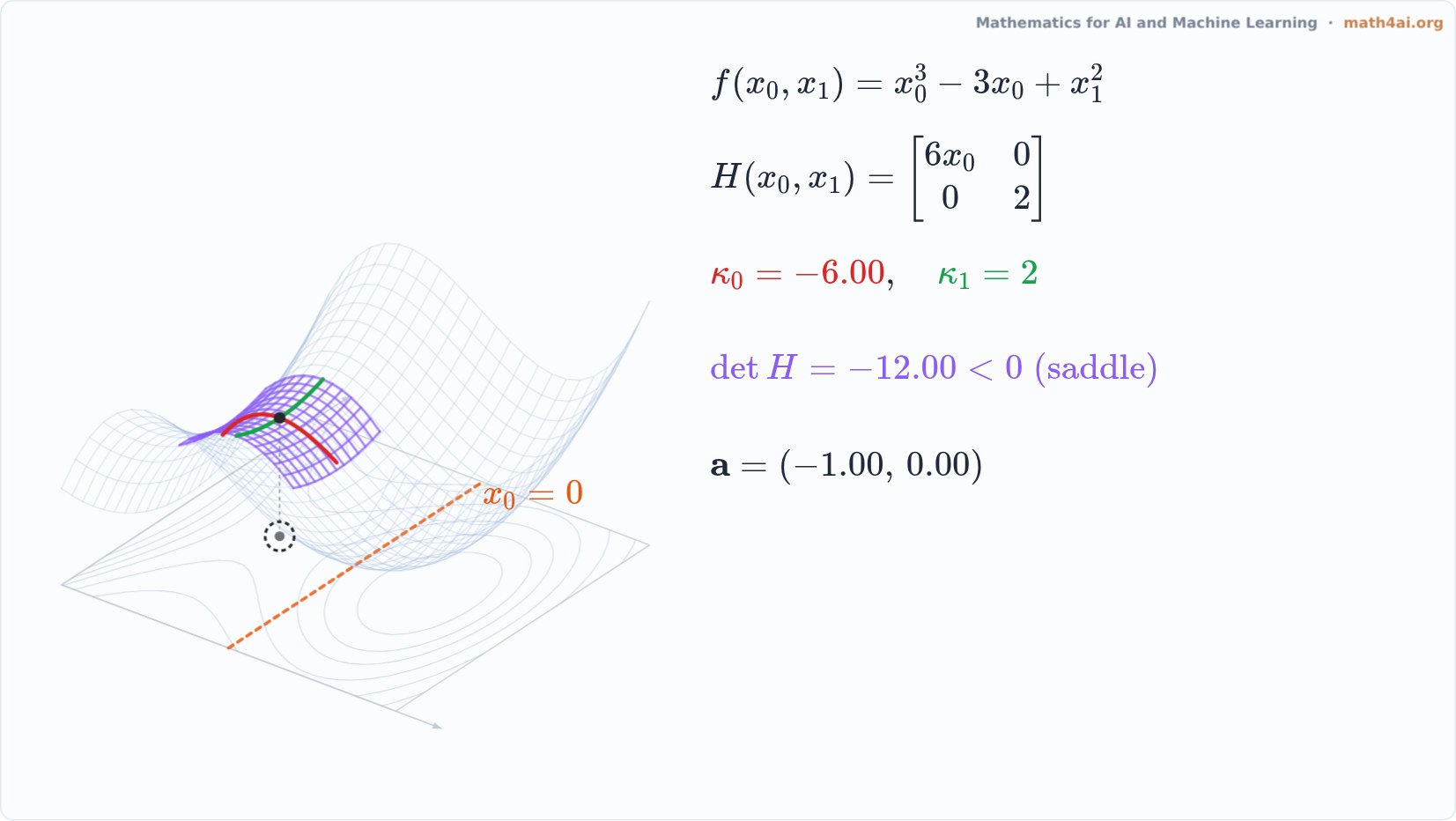 Preview1:44Hessian Matrix: Bowls, Saddles and Curvature DirectionsChapter 11
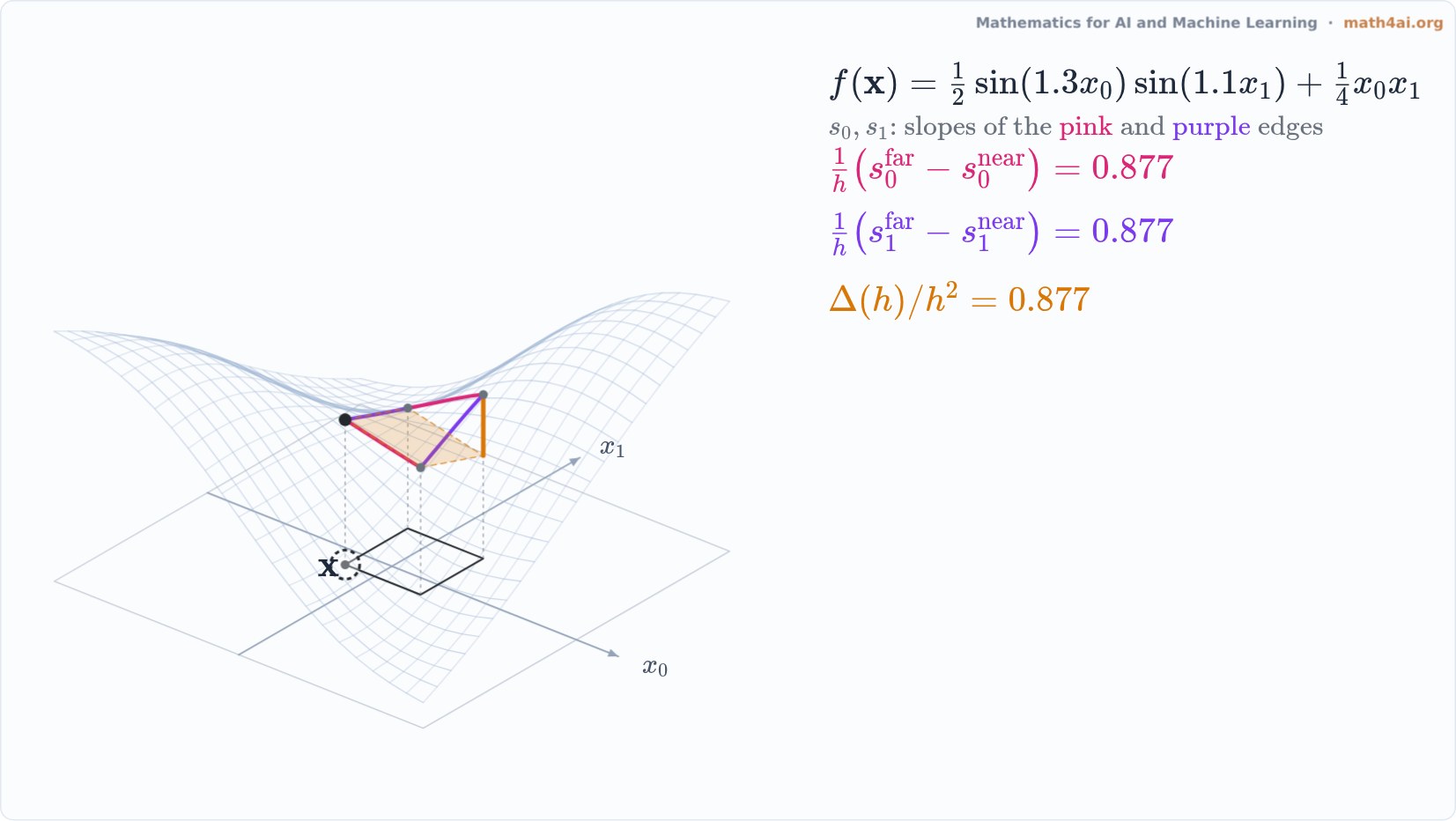 Preview1:37Why the Hessian Is SymmetricChapter 11
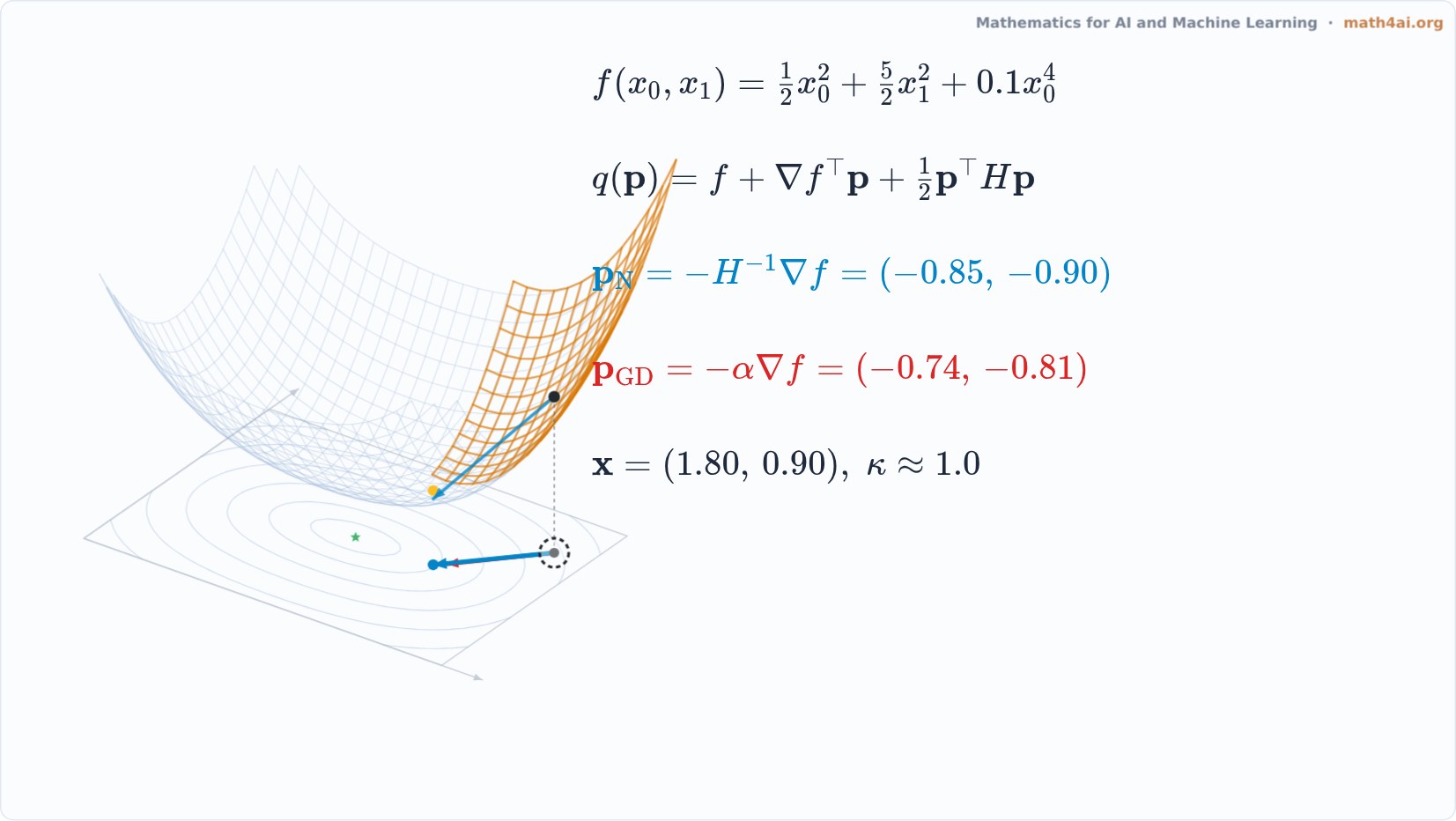 Preview1:26The Newton Step: Jumping to the Taylor Bowl's BottomChapter 11
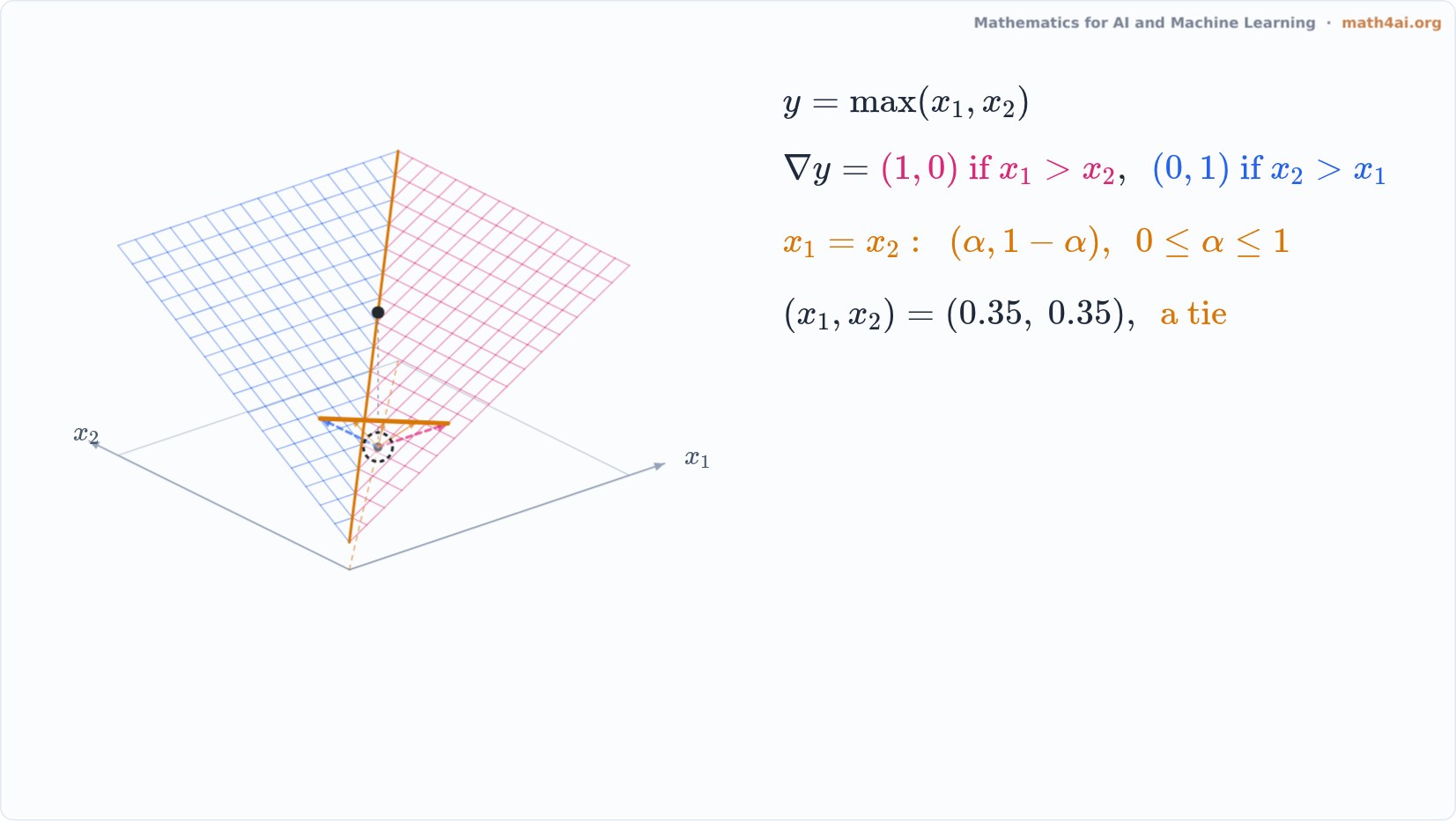 Preview2:36Corners, Maxima and Steps in the Chain RuleChapter 11
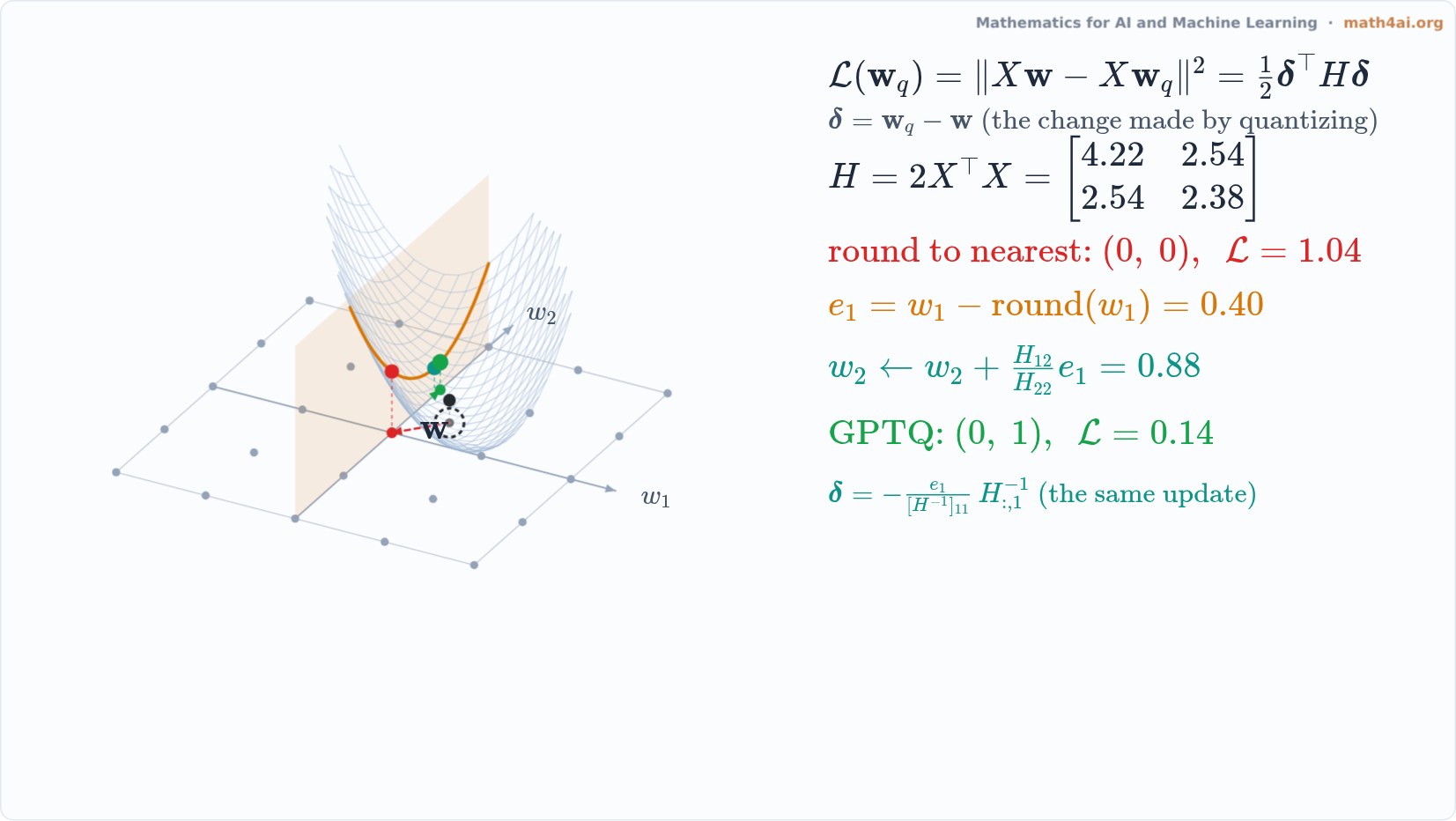 Preview1:59GPTQ: Rounding with the HessianChapter 11
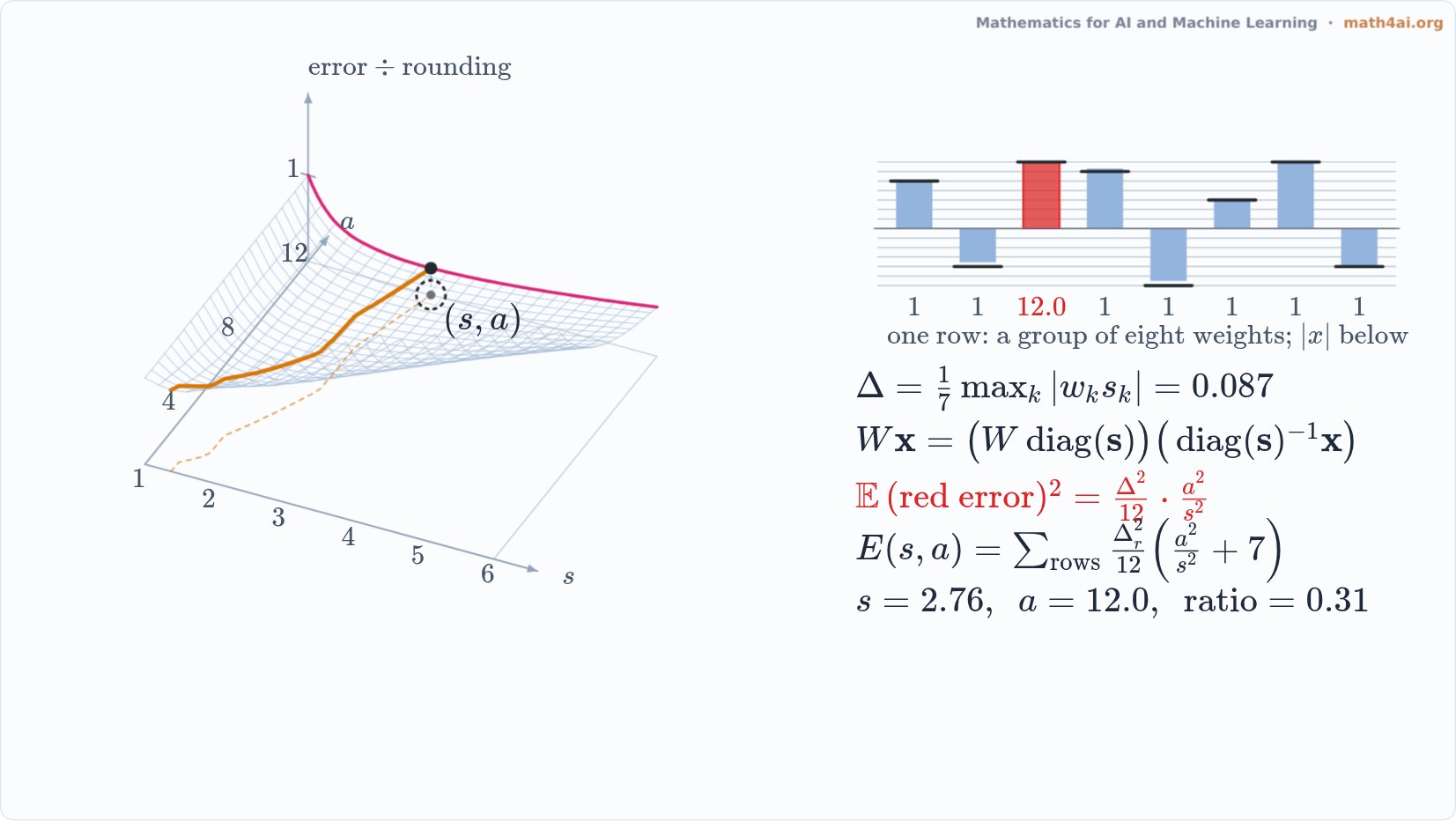 Preview2:12AWQ: Activation-Aware Weight QuantizationChapter 11
 Preview1:41The Implicit Function TheoremChapter 11