Corners, Maxima and Steps in the Chain Rule
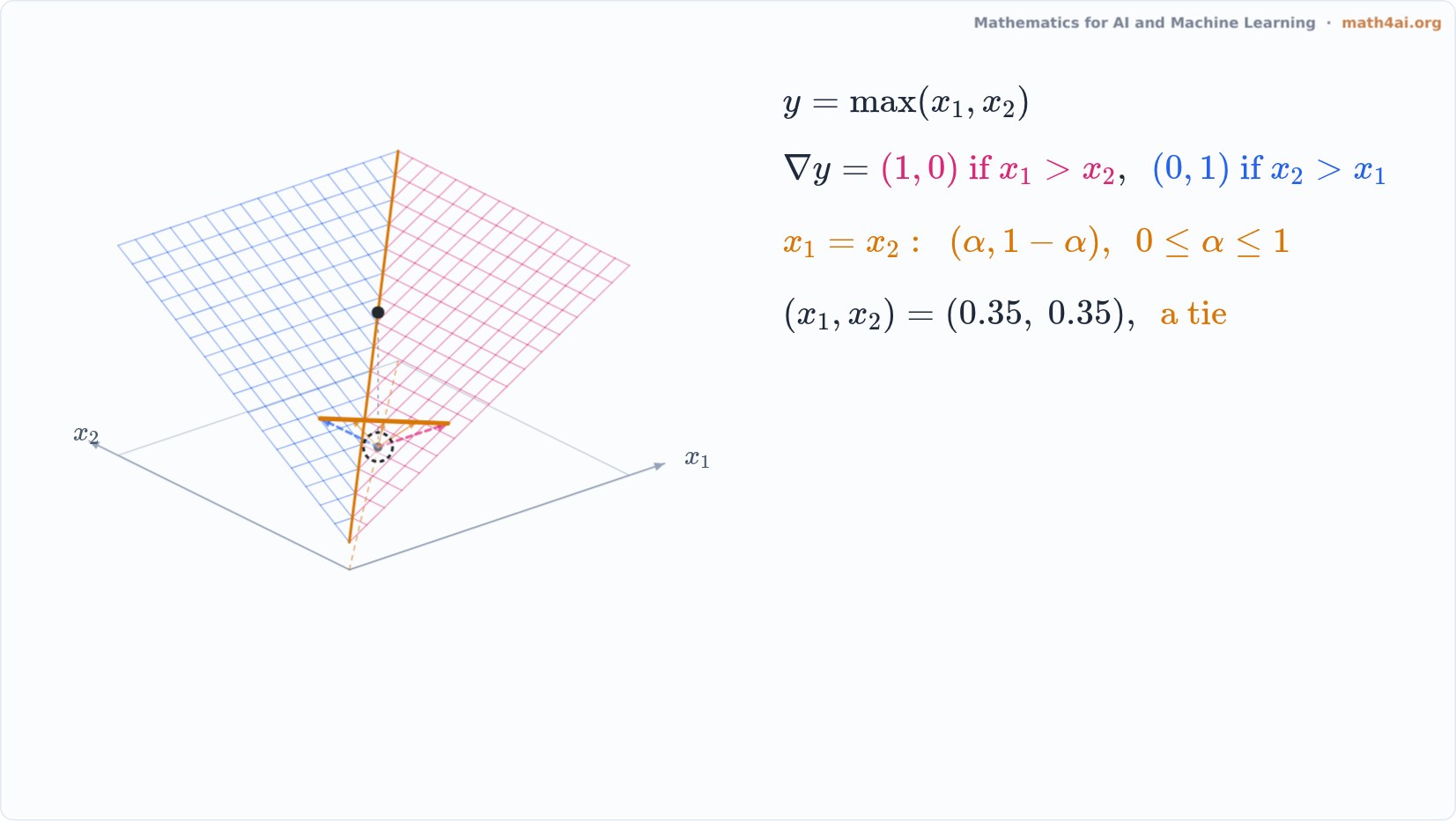
An interactive live film in three scenes: the ReLU corner and its fan of subgradients, the crease of max(x1, x2) as a 3D surface where the gradient switches axes, and a weight that only climbs the rounding staircase with the straight-through estimator.
Narration
Backpropagation multiplies local derivatives, but some layers have corners. Here is the rectified linear unit. For positive x its slope is one, for negative x it is zero, and the tangent line follows the point.
At zero there is a corner, and no tangent. Every line through the corner with a slope between zero and one stays below the graph. These slopes form the subdifferential, the interval from zero to one. Frameworks pick one of them, usually zero.
The rest of the narration is in the book's Companion.
More from Chapter 11
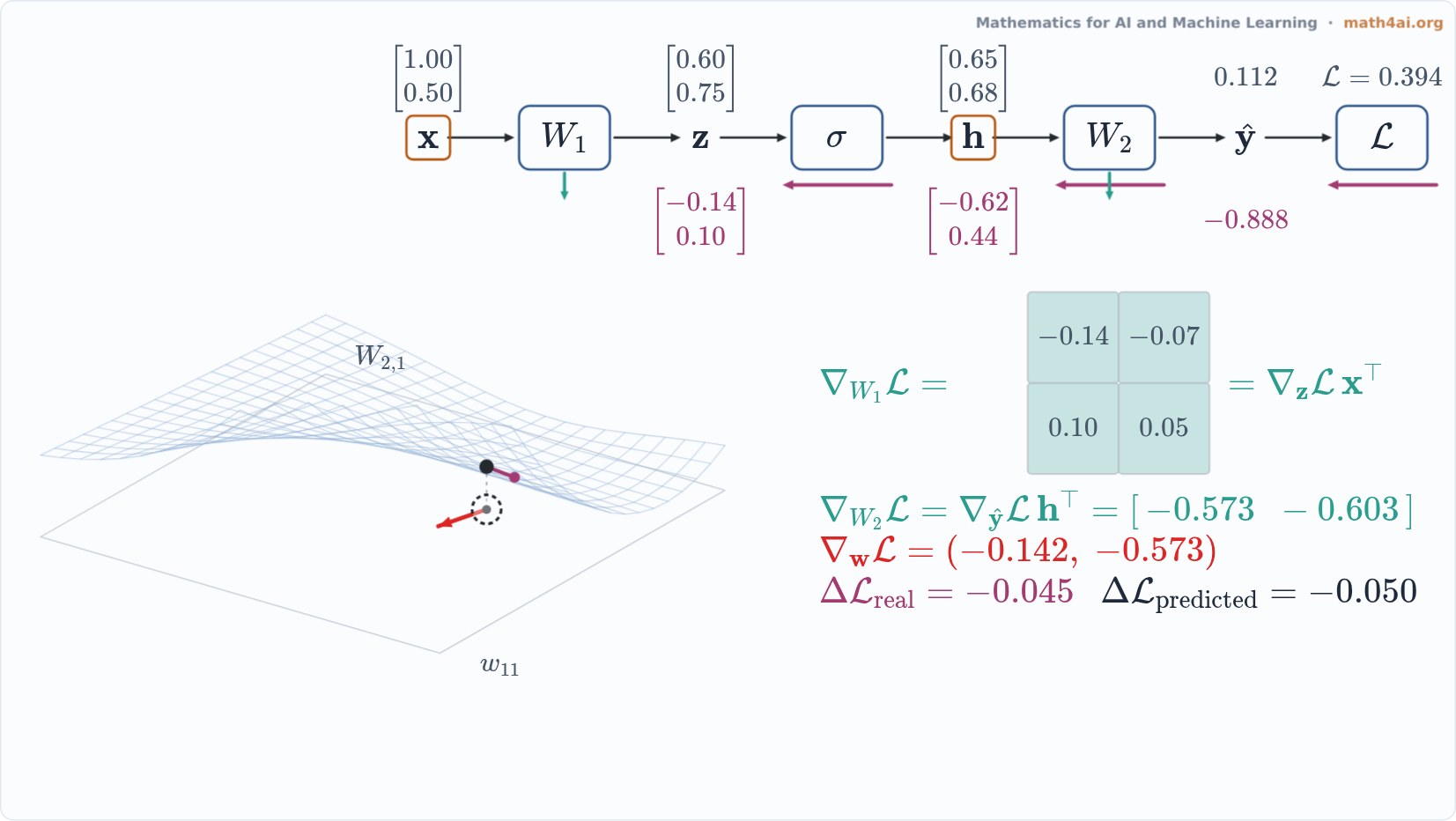 Interactive1:54Backpropagation, One VJP per LayerChapter 11
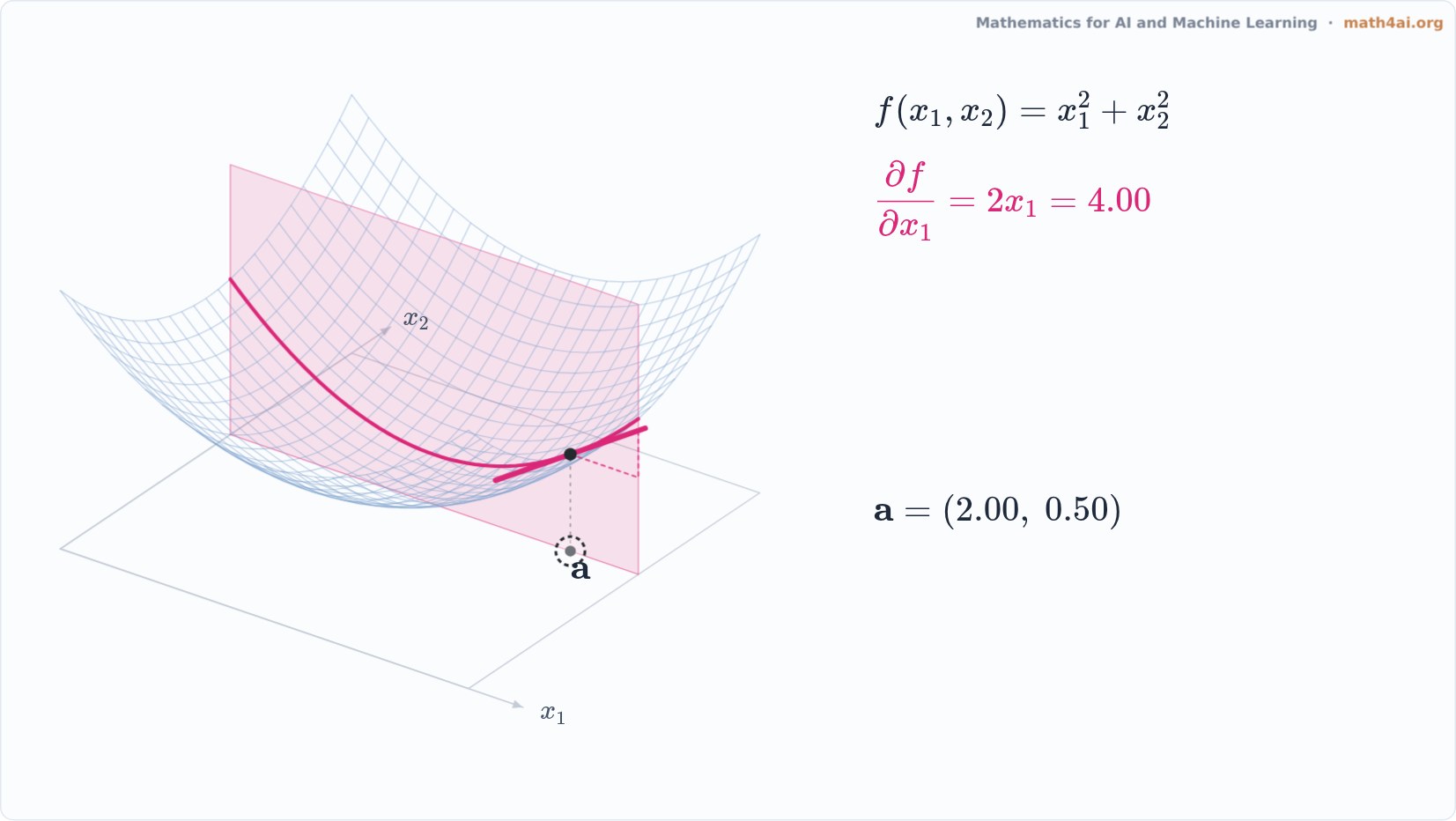 Preview1:27Partial Derivatives Are Two SlicesChapter 11
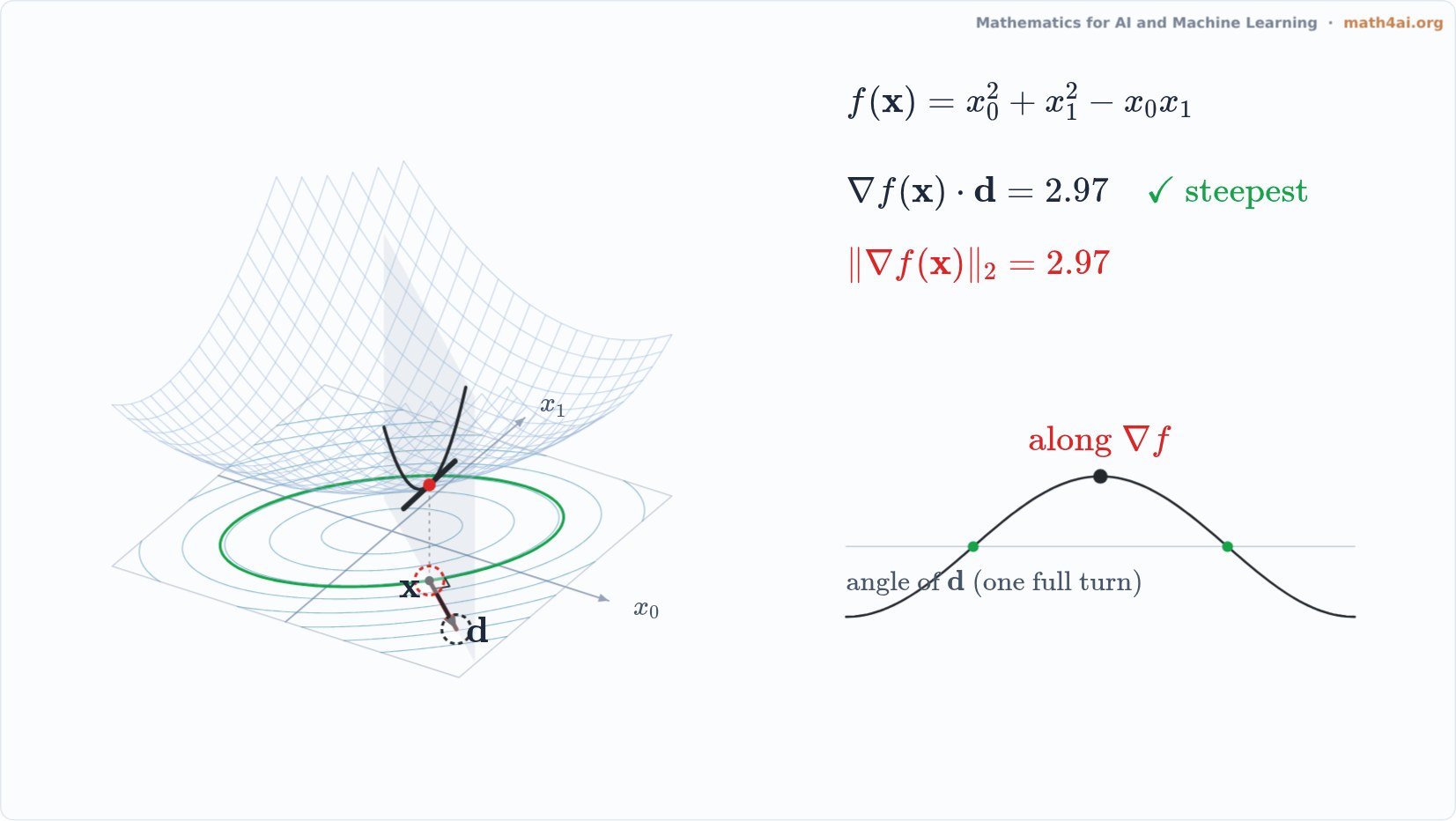 Preview1:34The Gradient Is the Steepest DirectionChapter 11
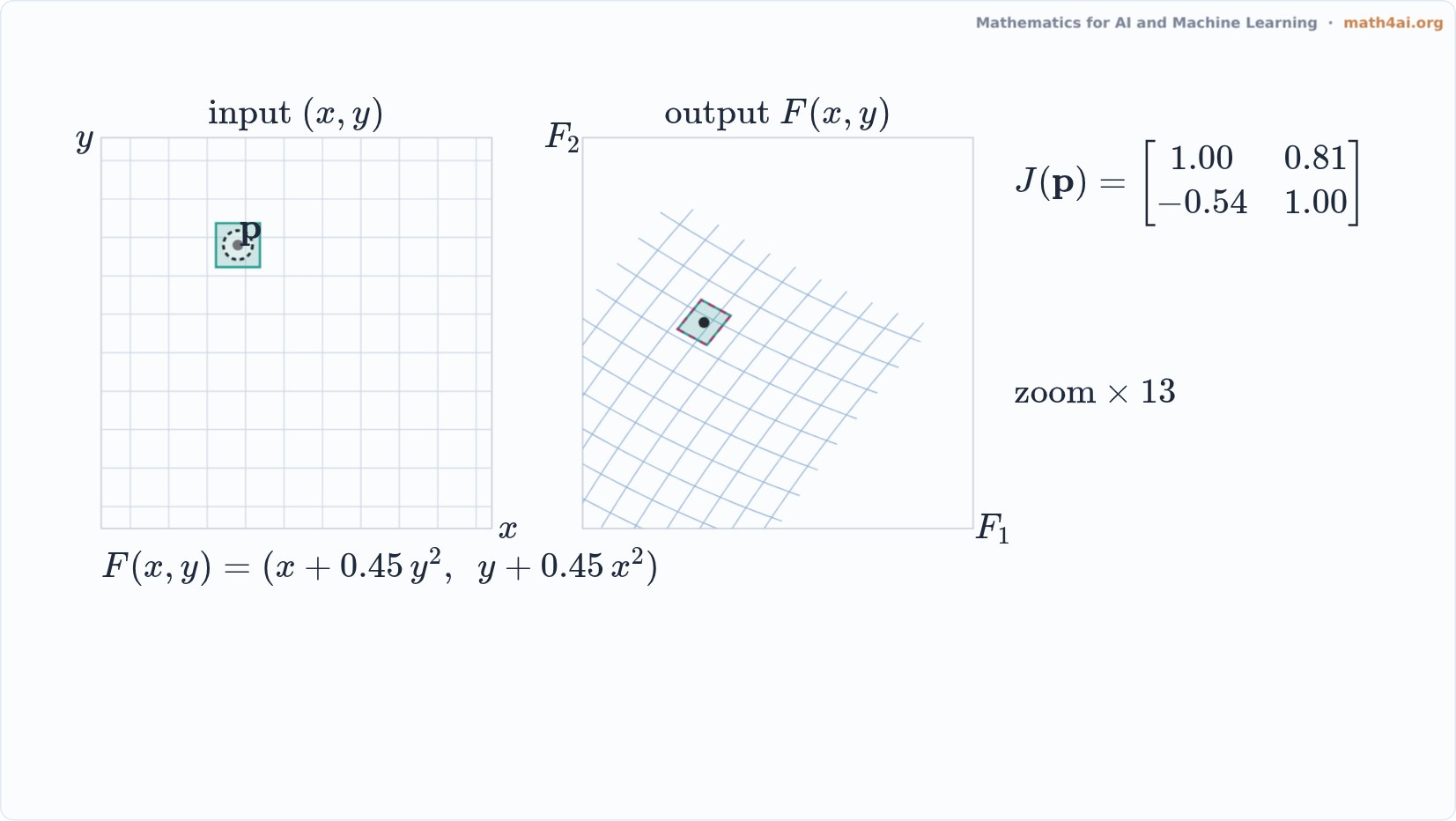 Preview1:42Jacobian Matrix: Linearizing a MapChapter 11
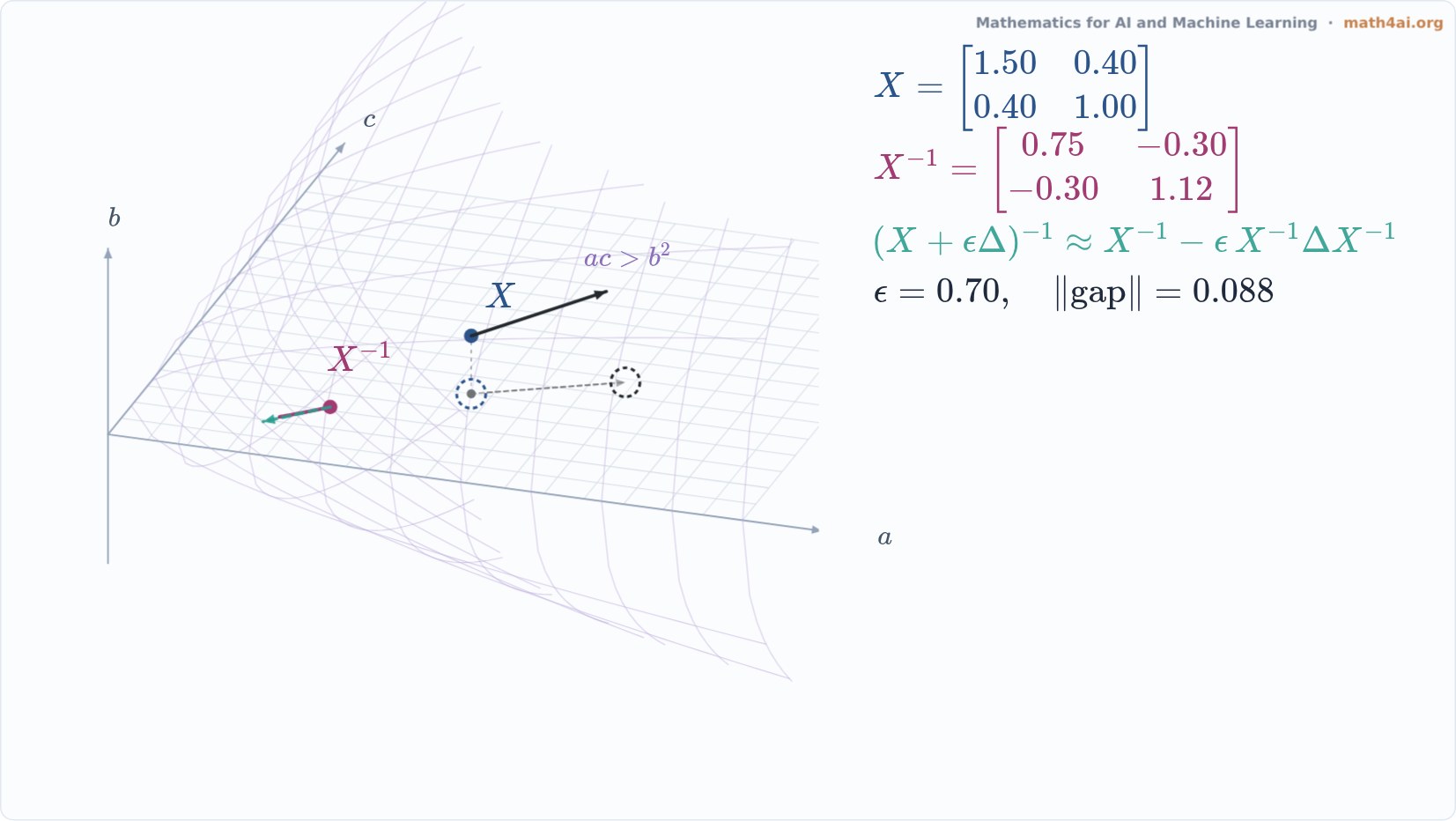 Preview1:43The Derivative of the Matrix InverseChapter 11
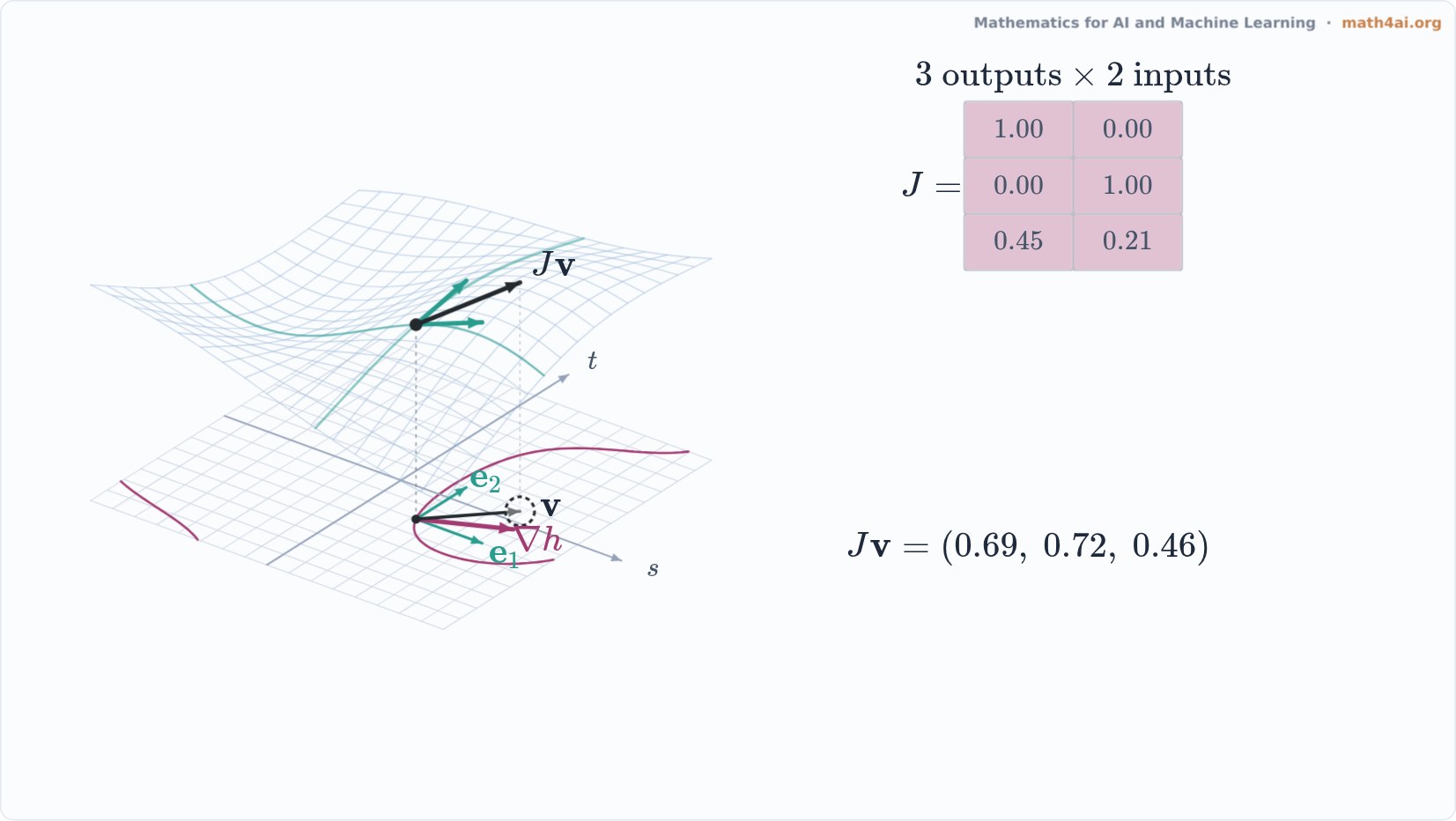 Preview1:54Forward or Reverse: Filling the JacobianChapter 11
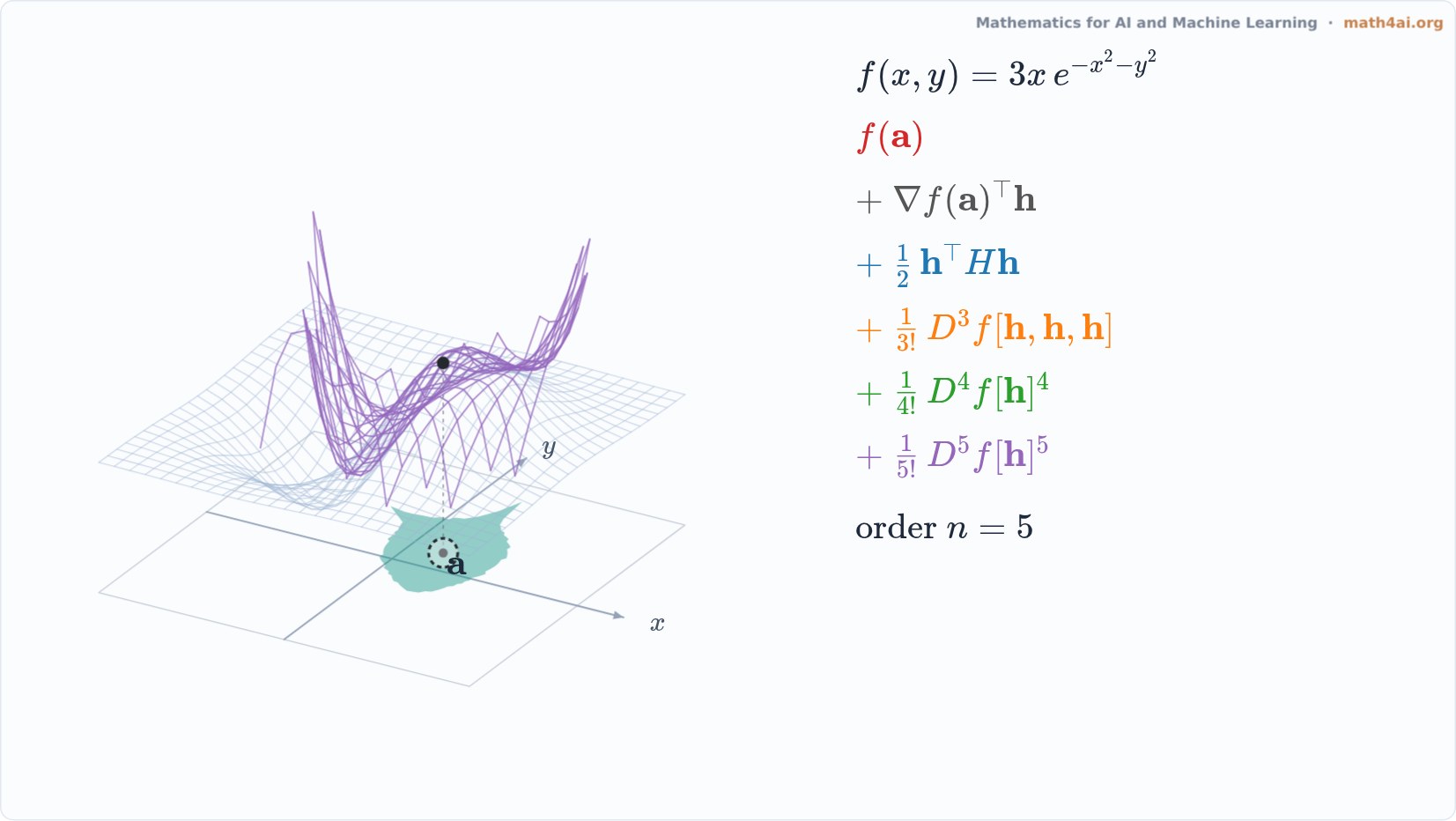 Preview1:32Taylor Expansion, One Term at a TimeChapter 11
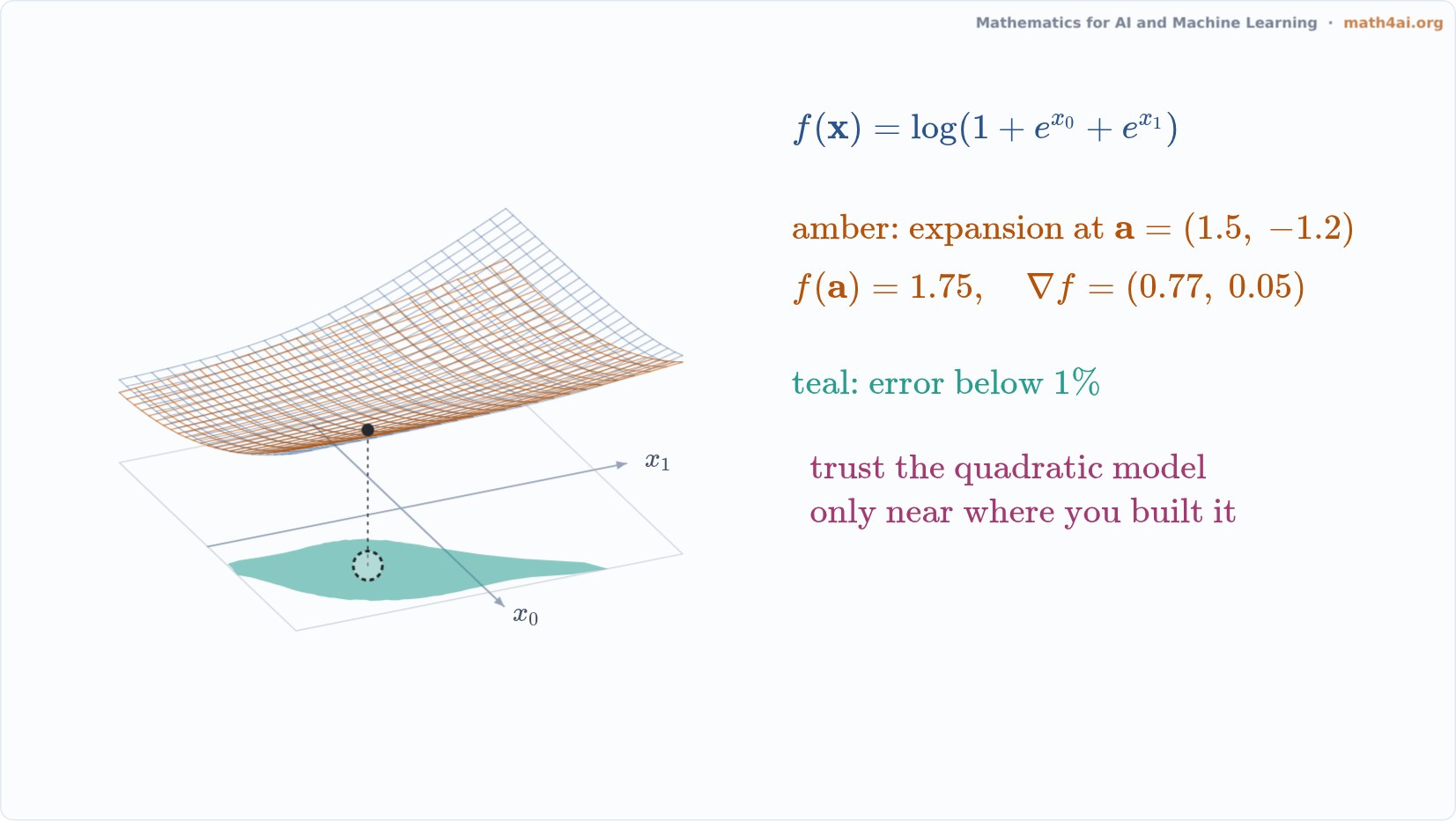 Preview1:30Second-Order Taylor: Where the Quadratic Model Can Be TrustedChapter 11
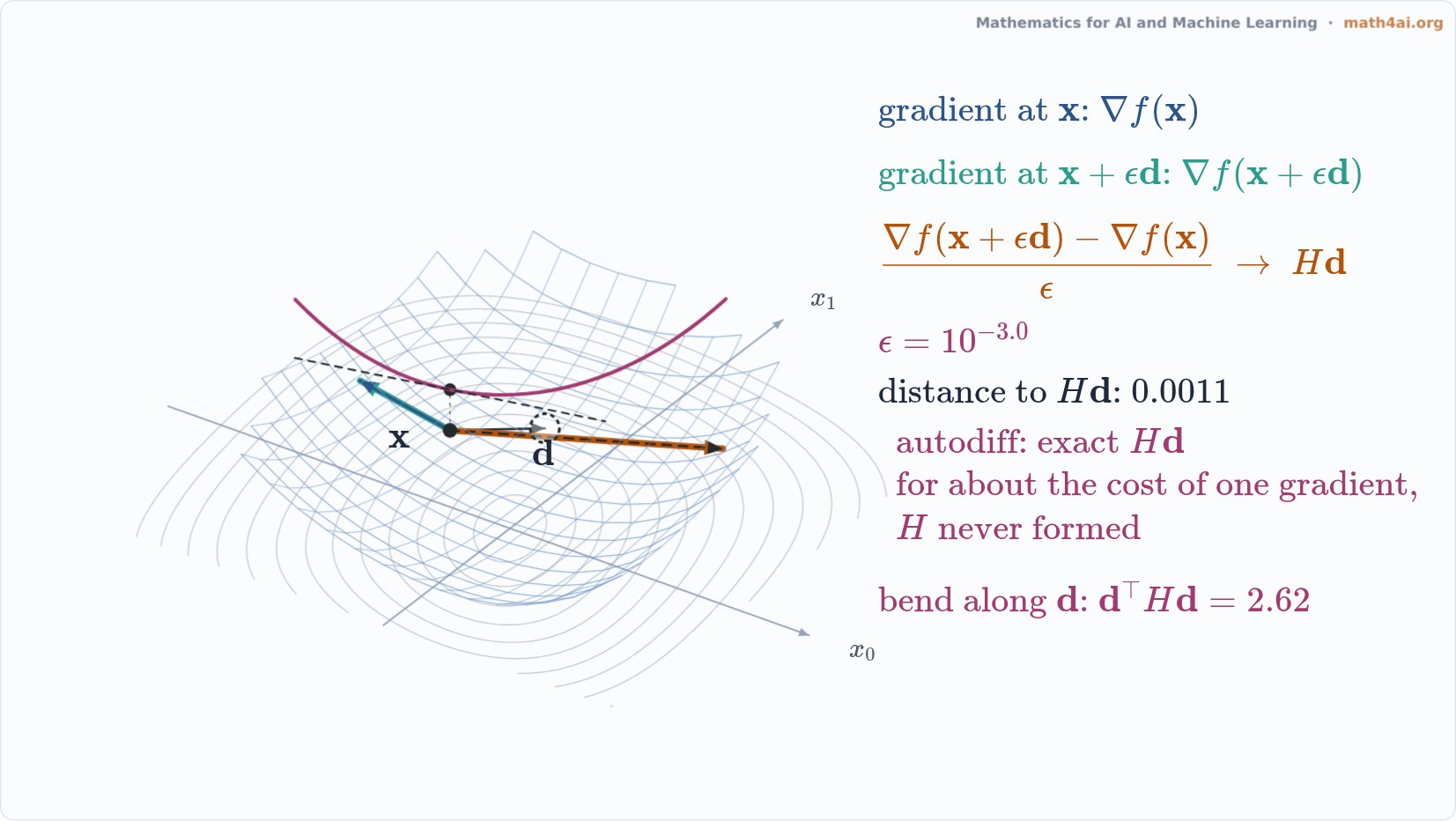 Preview1:38A Hessian-Vector Product from Two GradientsChapter 11
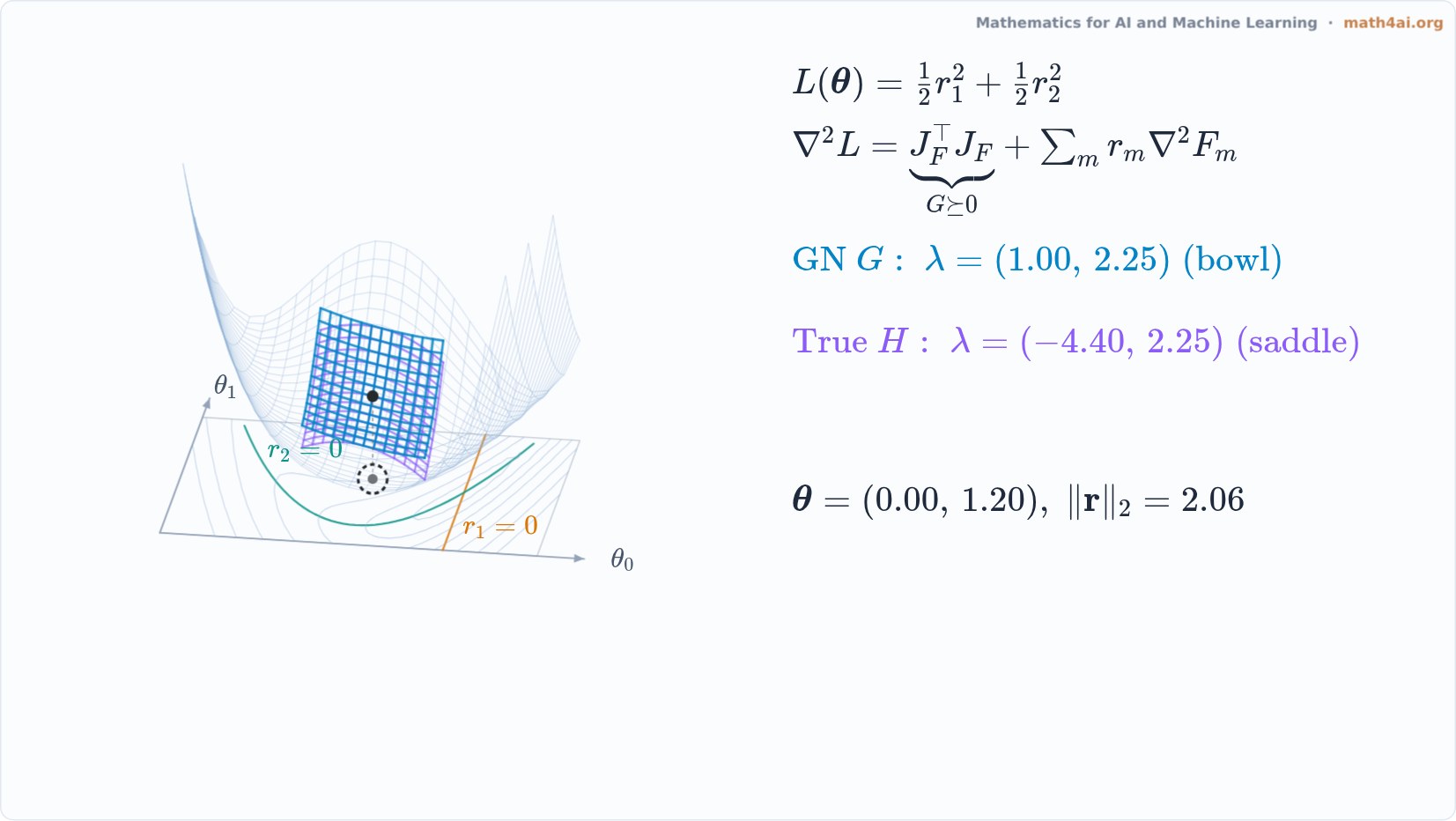 Preview1:34The Gauss–Newton MatrixChapter 11
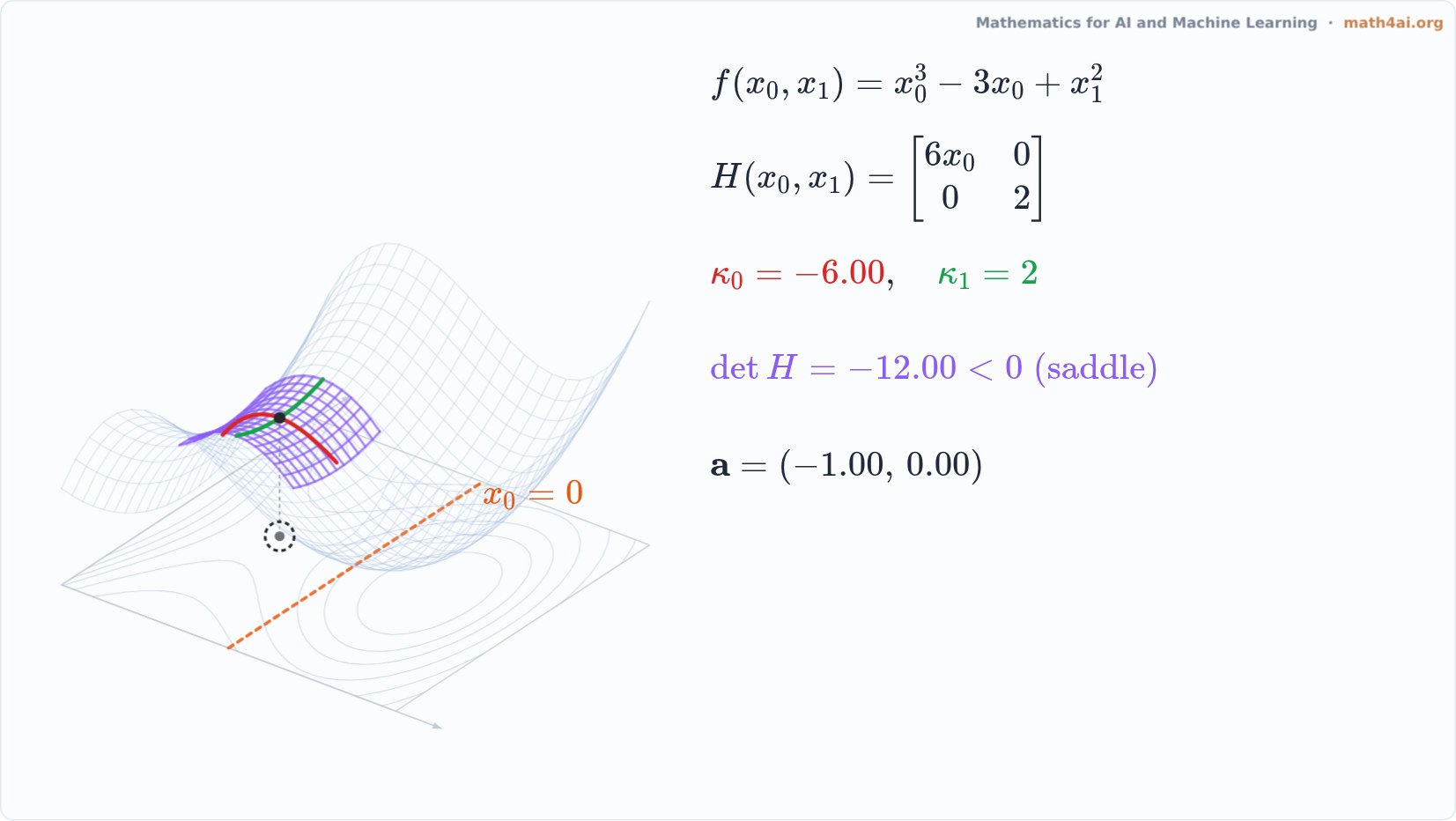 Preview1:44Hessian Matrix: Bowls, Saddles and Curvature DirectionsChapter 11
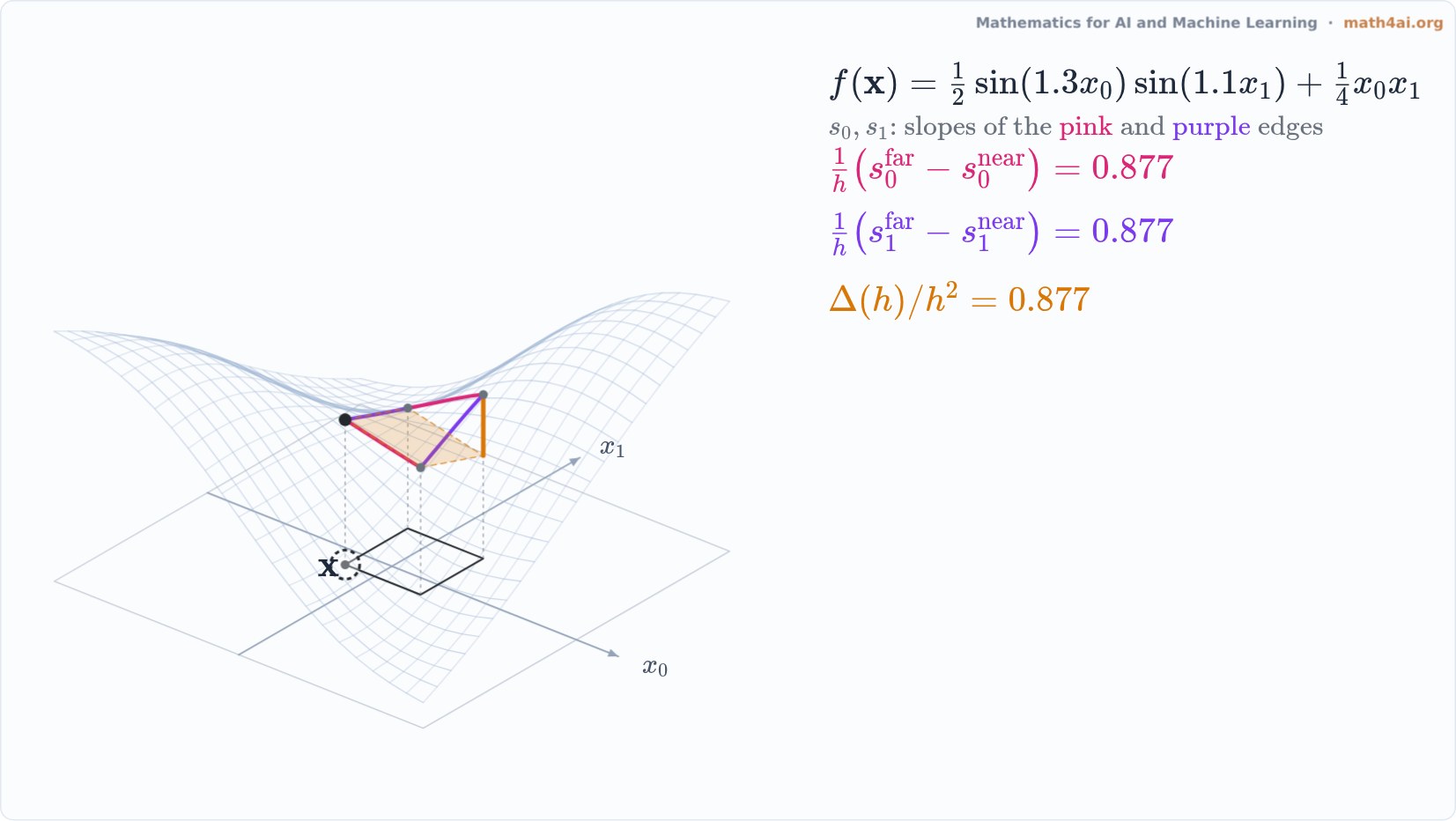 Preview1:37Why the Hessian Is SymmetricChapter 11
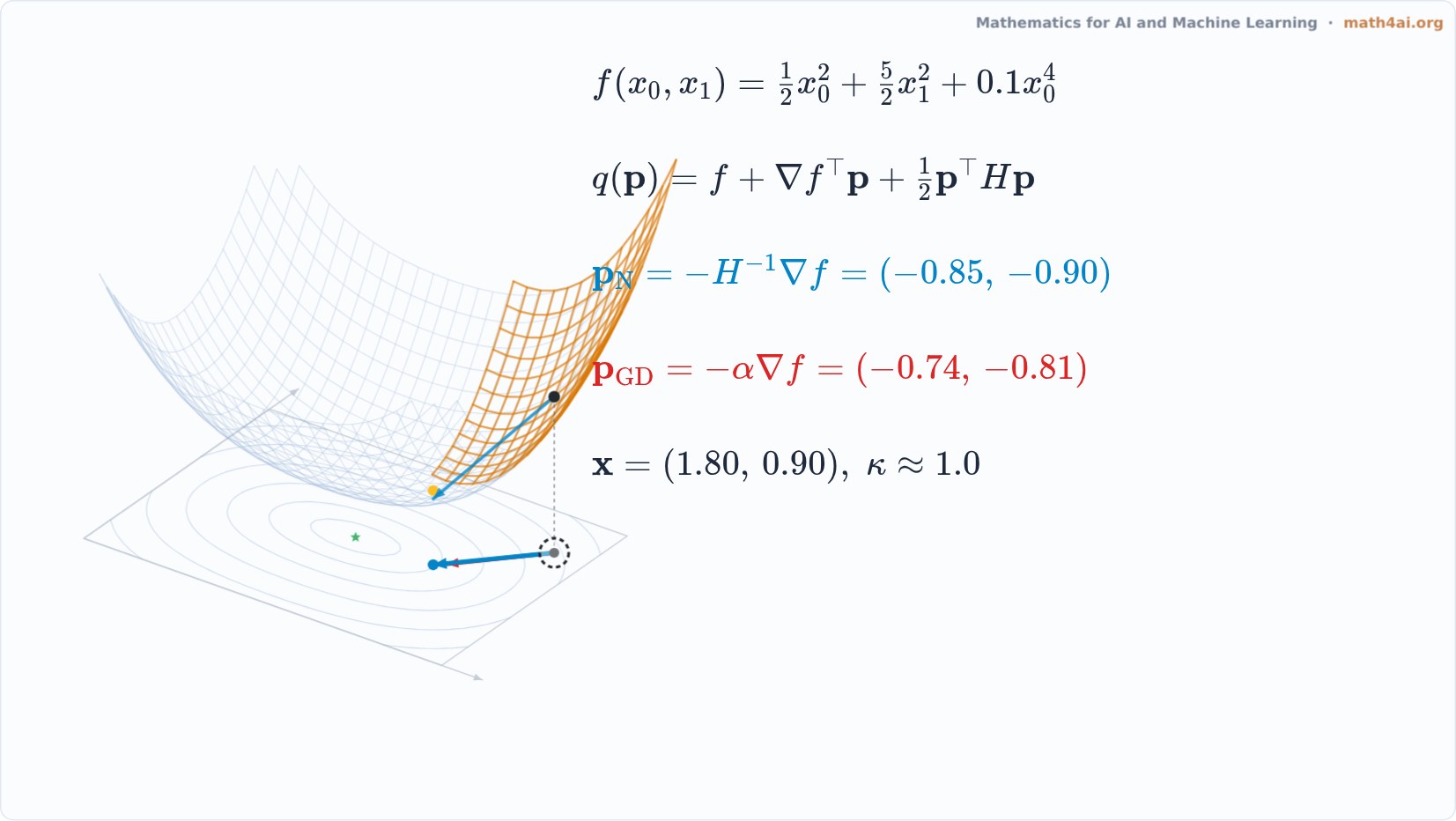 Preview1:26The Newton Step: Jumping to the Taylor Bowl's BottomChapter 11
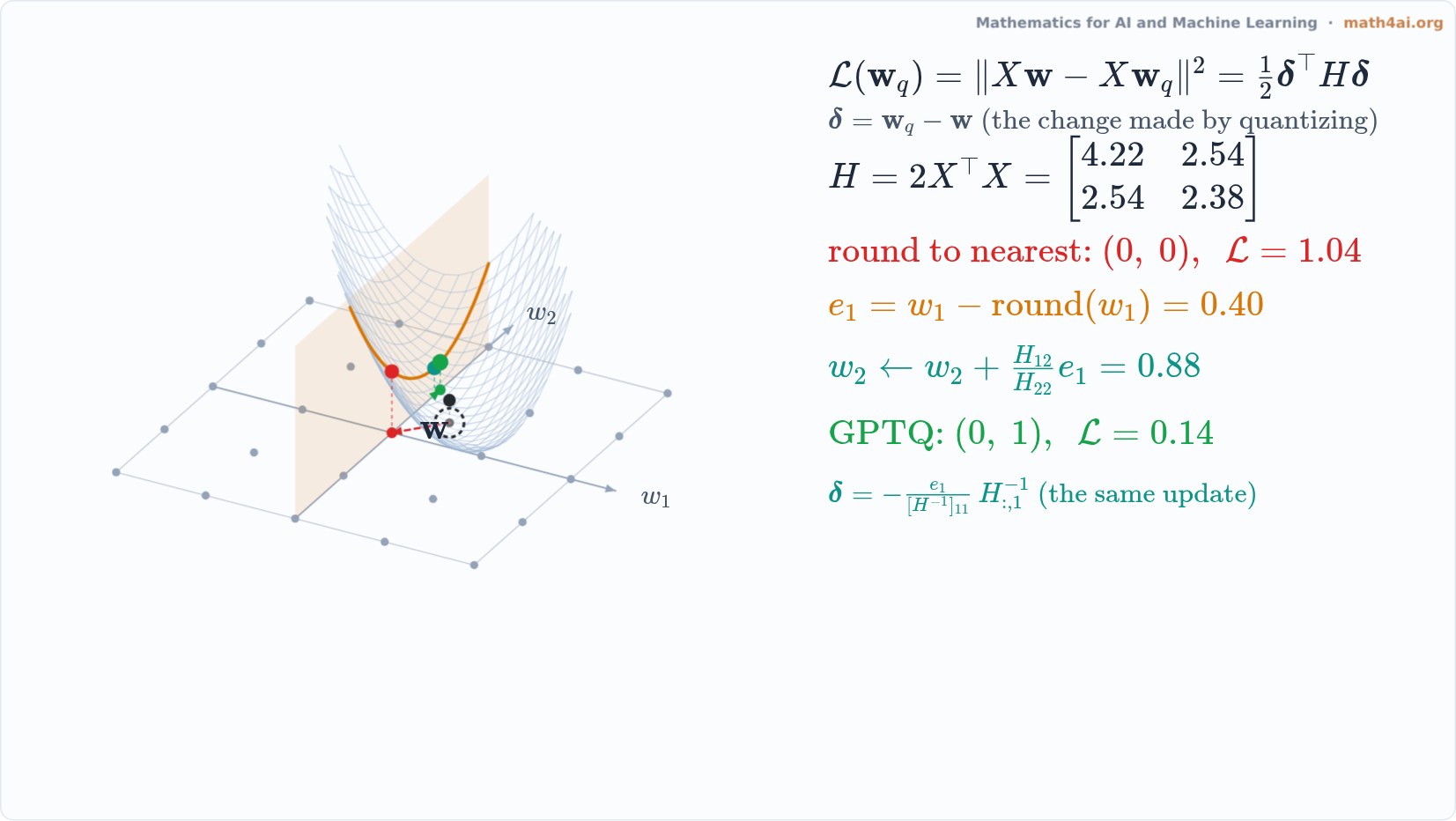 Preview1:59GPTQ: Rounding with the HessianChapter 11
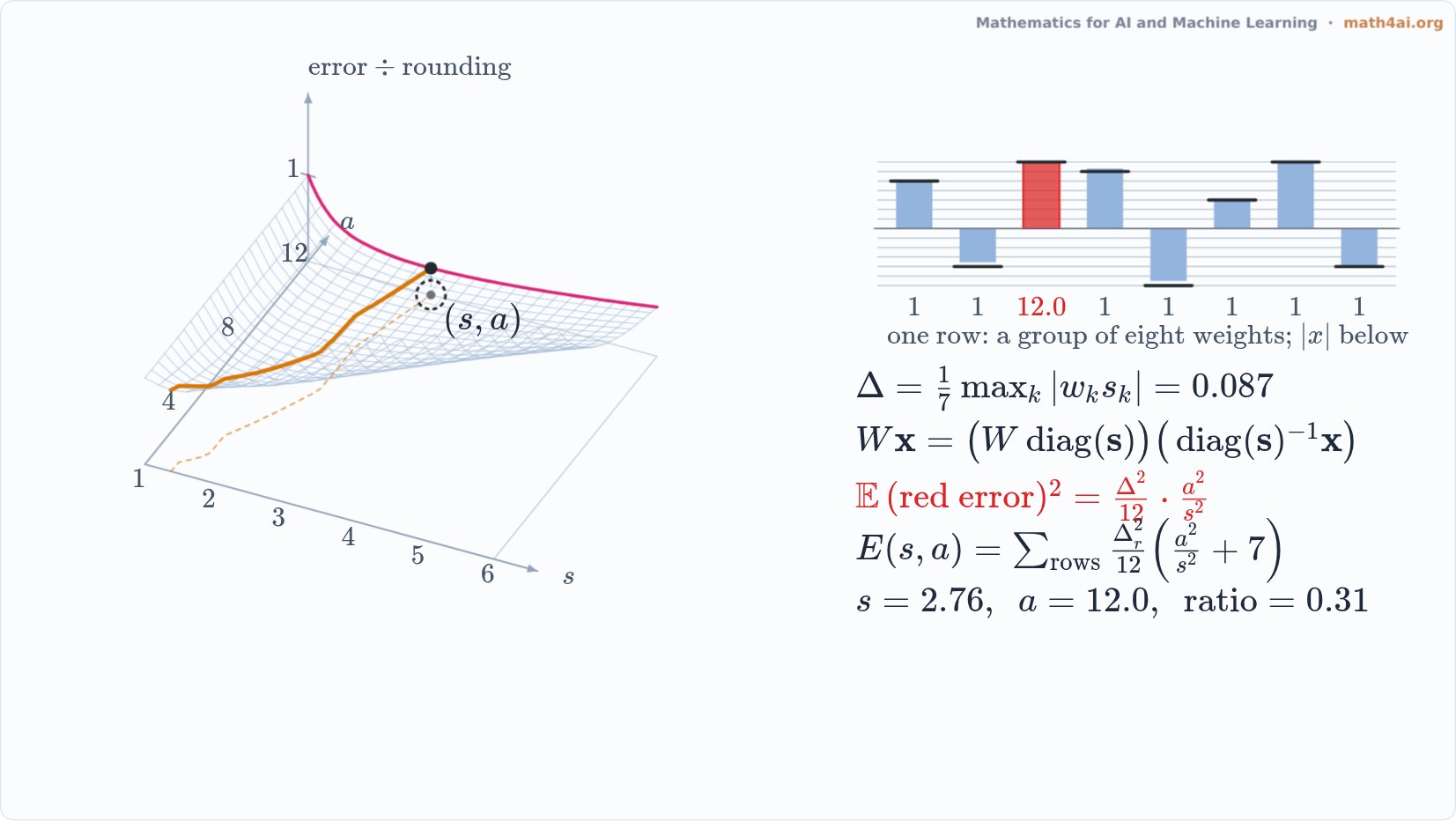 Preview2:12AWQ: Activation-Aware Weight QuantizationChapter 11
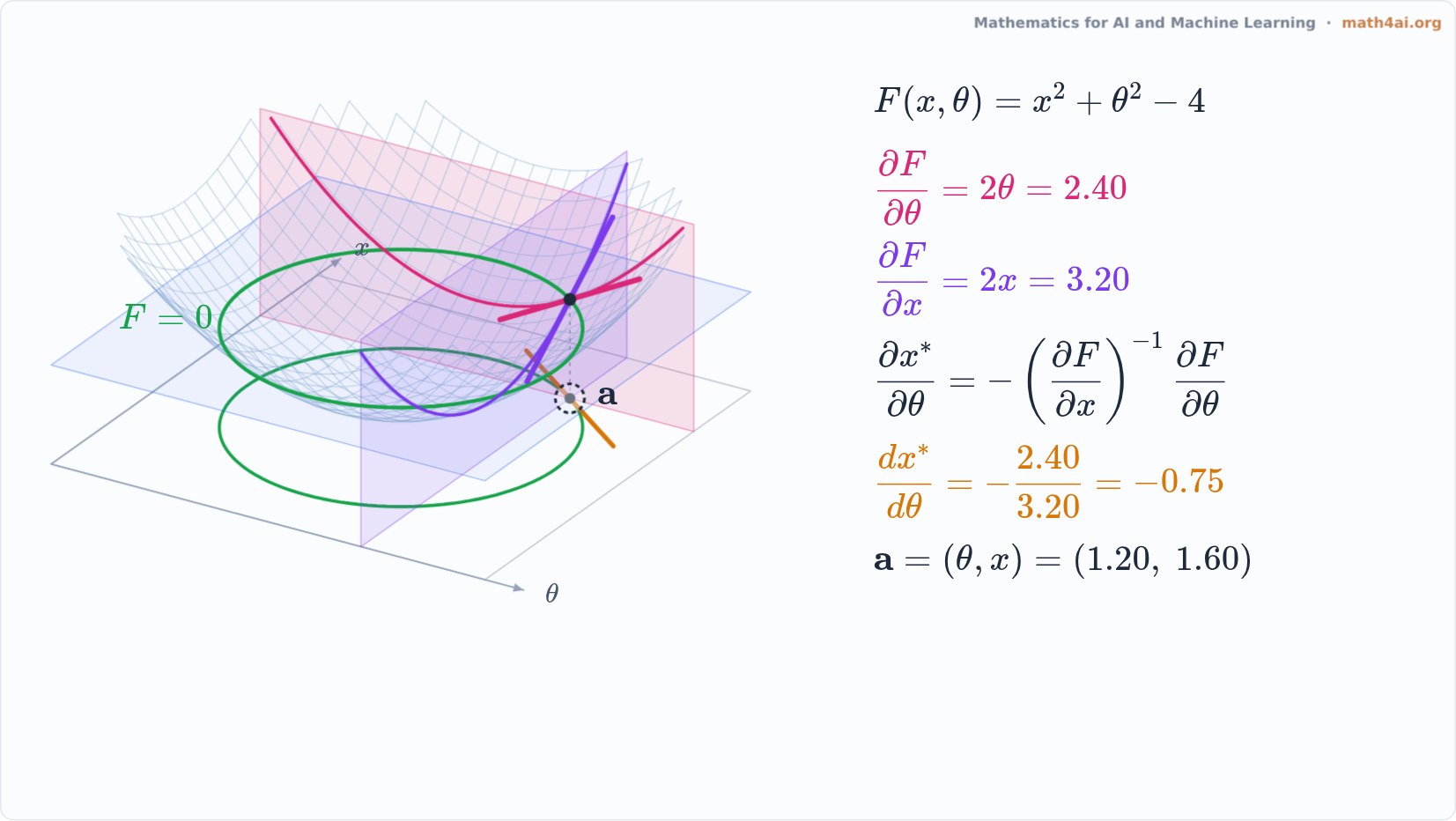 Preview1:41The Implicit Function TheoremChapter 11