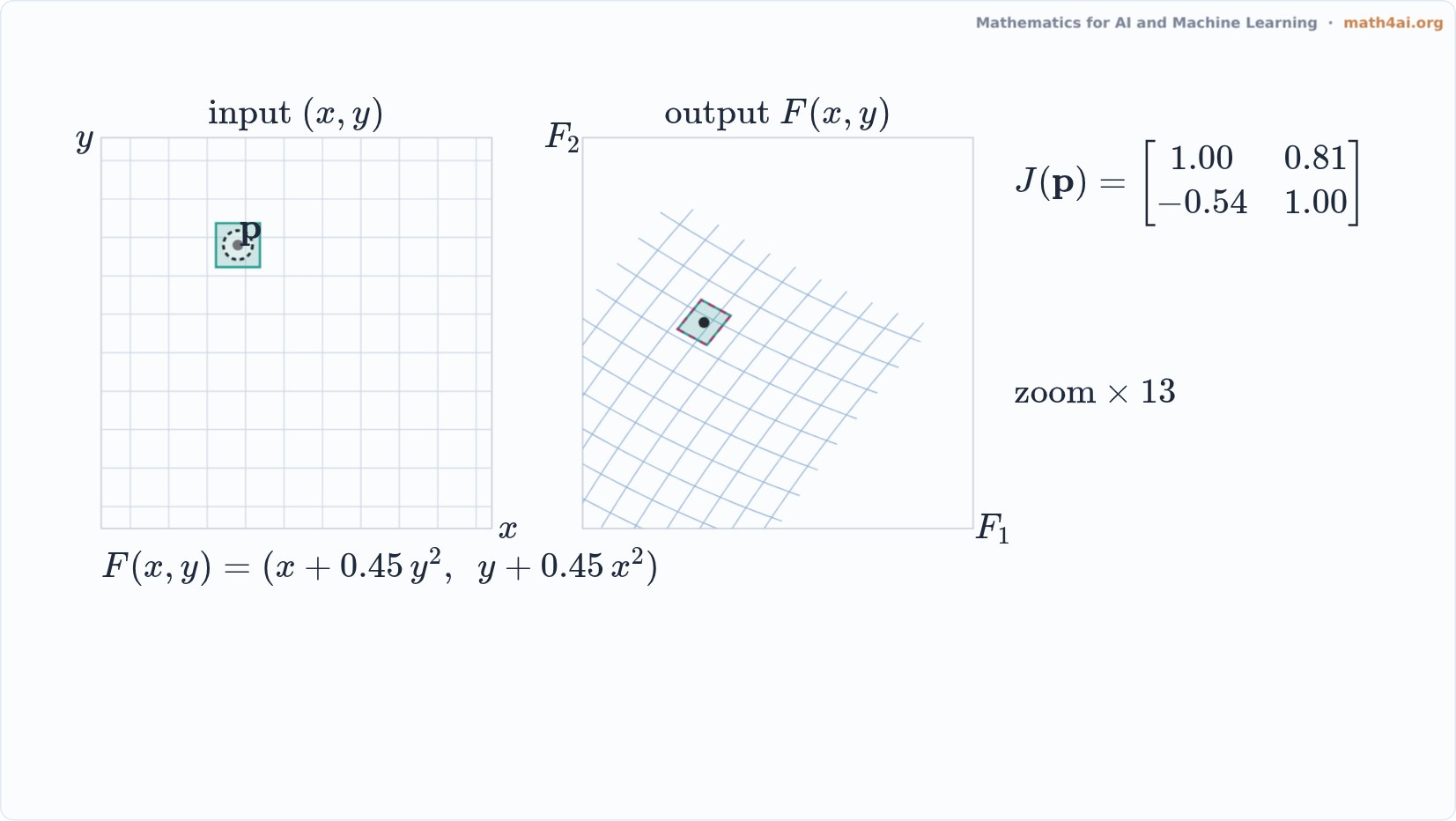
Jacobian Matrix: Linearizing a Map
An interactive live film: zoom in on a curved map until it becomes its Jacobian; drag the point onto the fold where det J = 0 and watch the square flatten.
Narration
Here is a curved map of the plane: F sends x and y to x plus a little y squared, and y plus a little x squared. On the left is the input grid, and on the right is where F sends it. Straight lines come out curved.
Take a point p and a small square around it, in teal. Its image on the right is a curved patch.
The rest of the narration is in the book's Companion.
More from Chapter 11
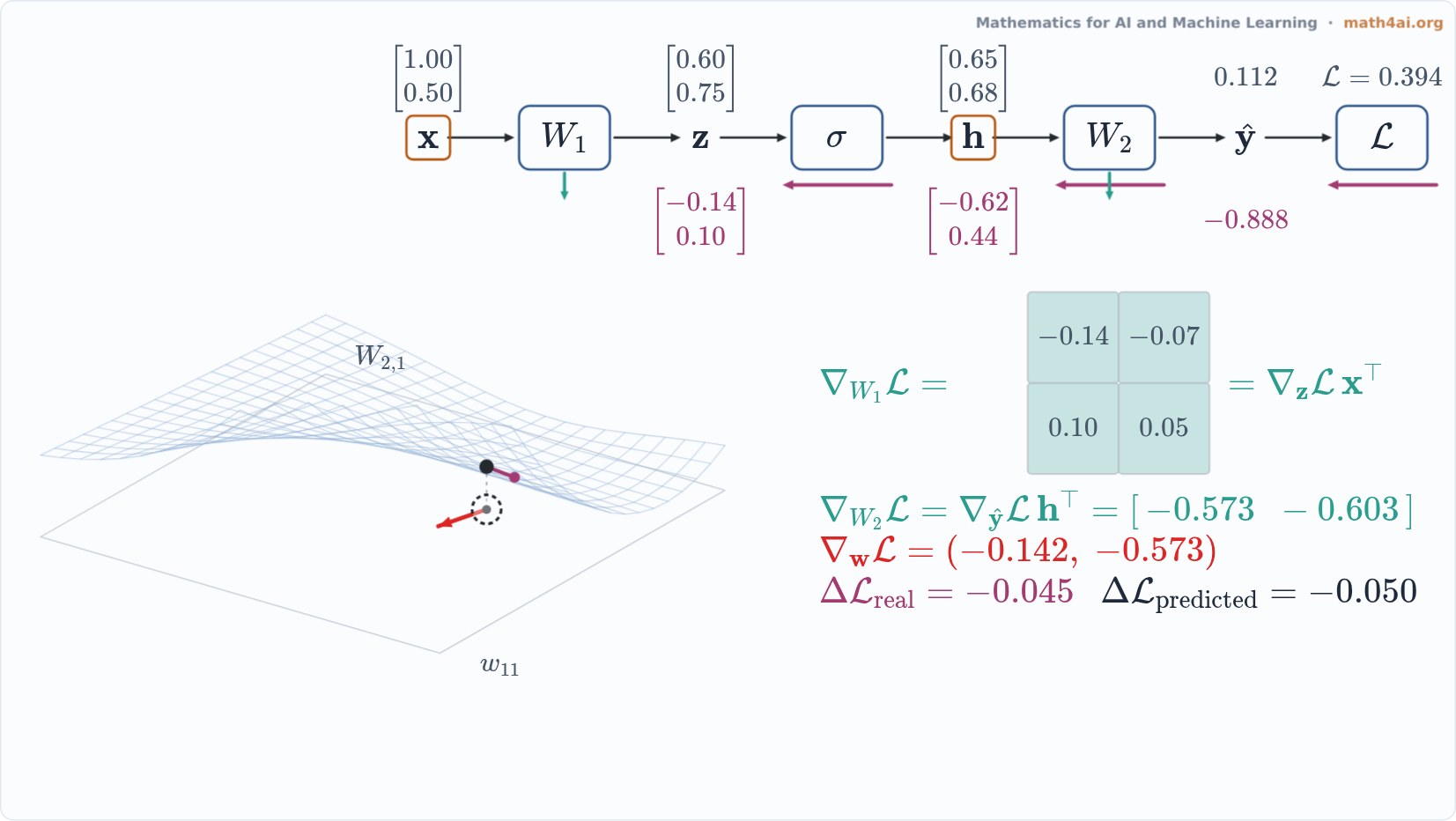 Interactive1:54Backpropagation, One VJP per LayerChapter 11
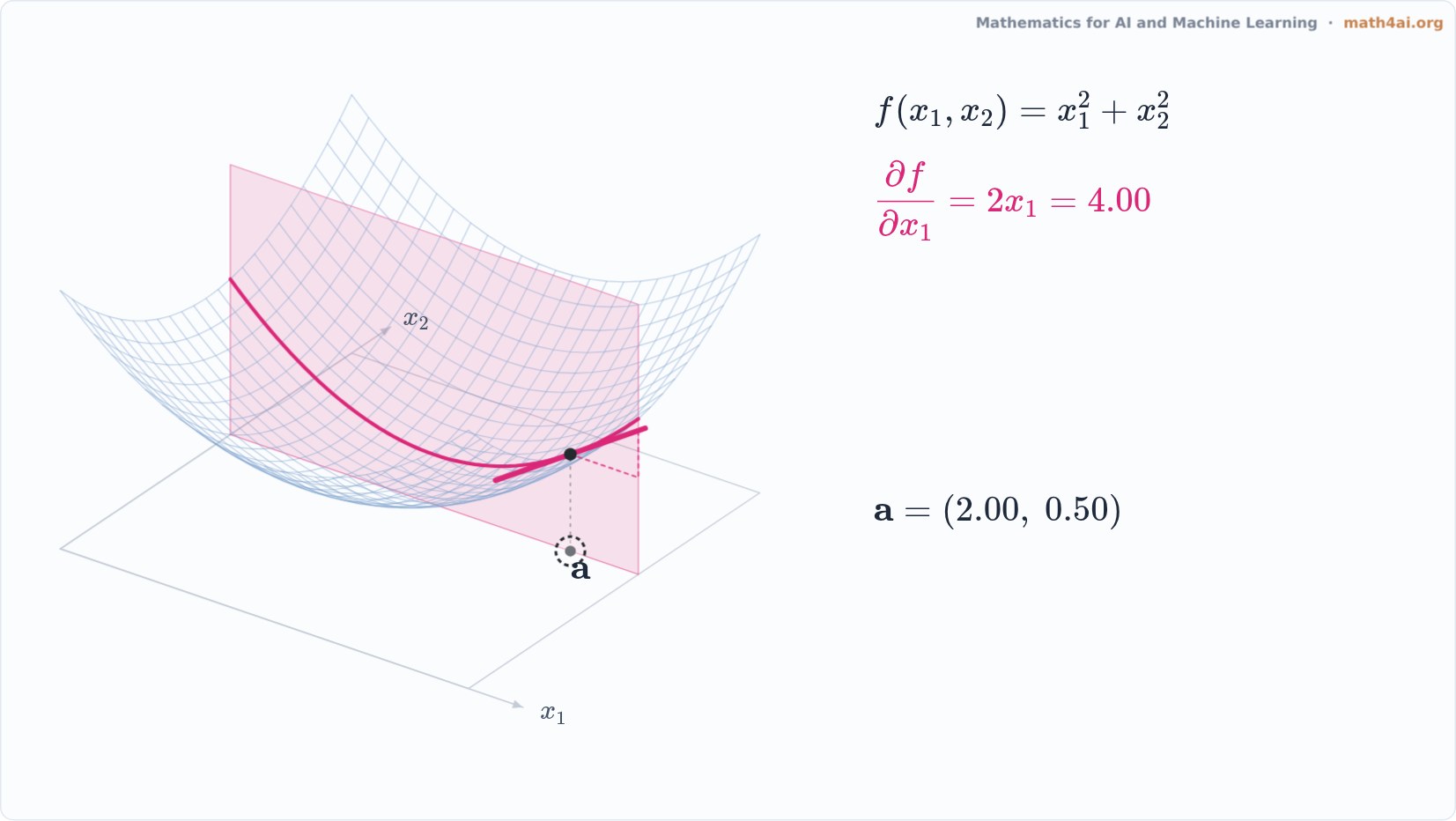 Preview1:27Partial Derivatives Are Two SlicesChapter 11
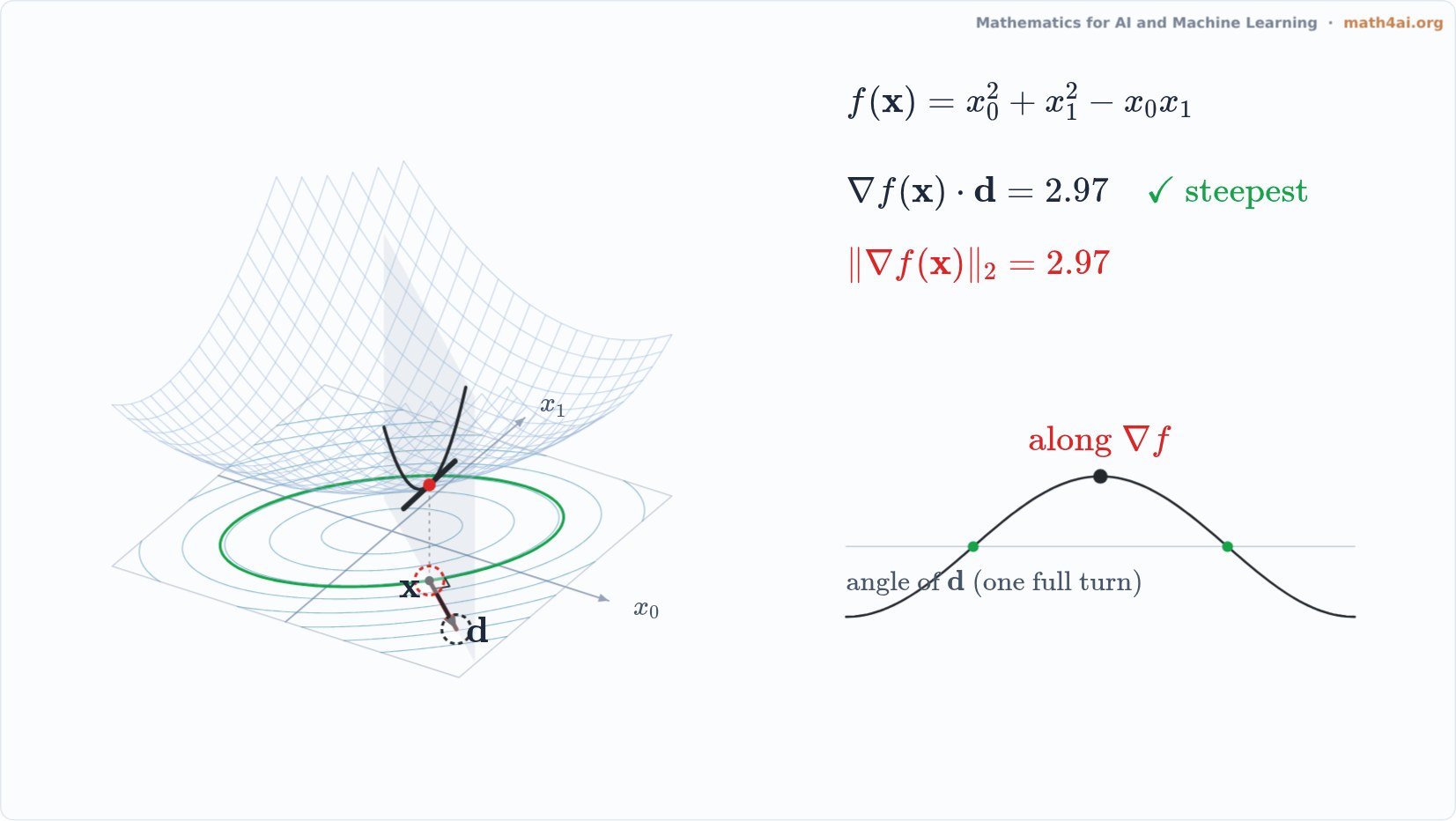 Preview1:34The Gradient Is the Steepest DirectionChapter 11
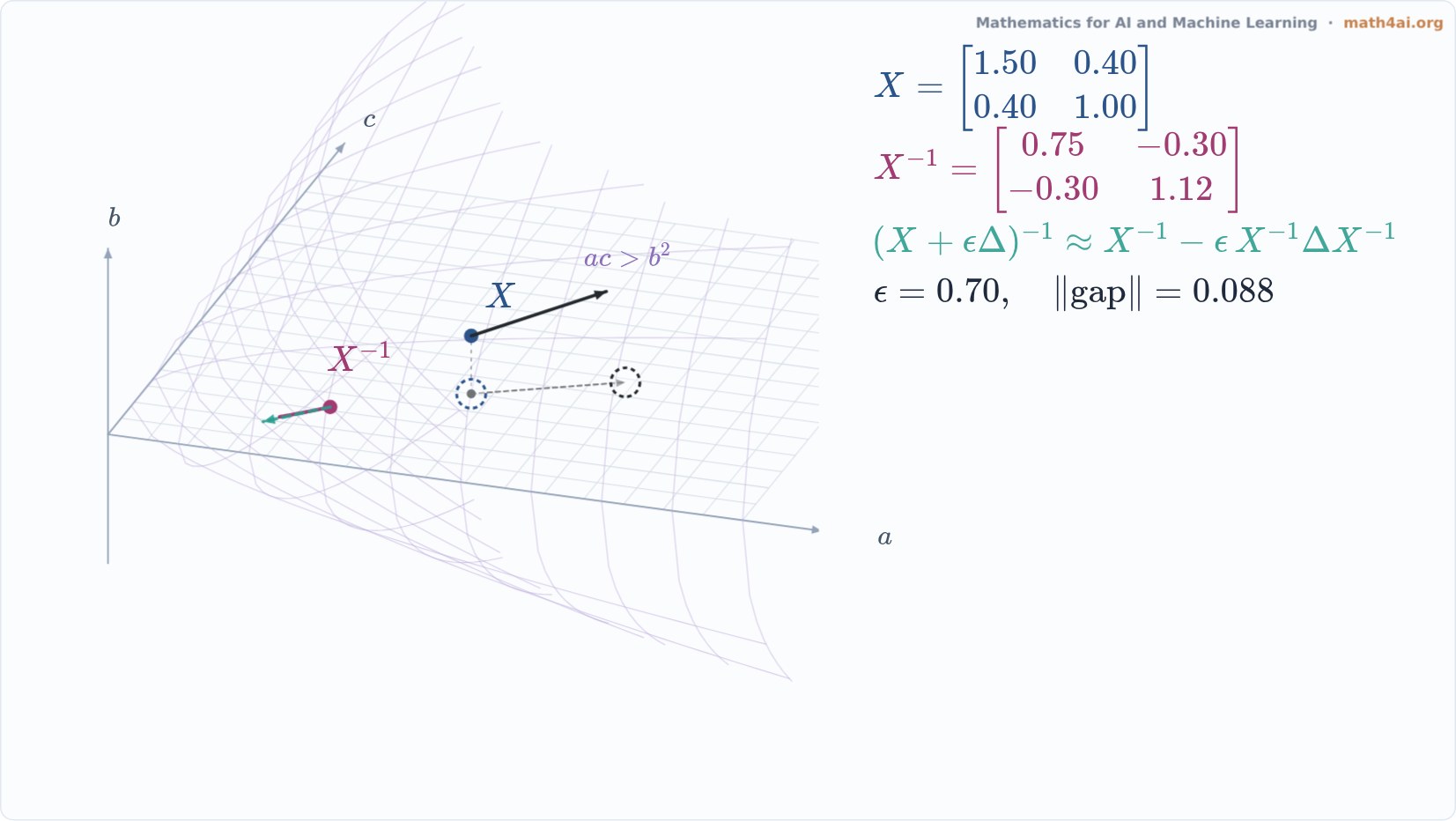 Preview1:43The Derivative of the Matrix InverseChapter 11
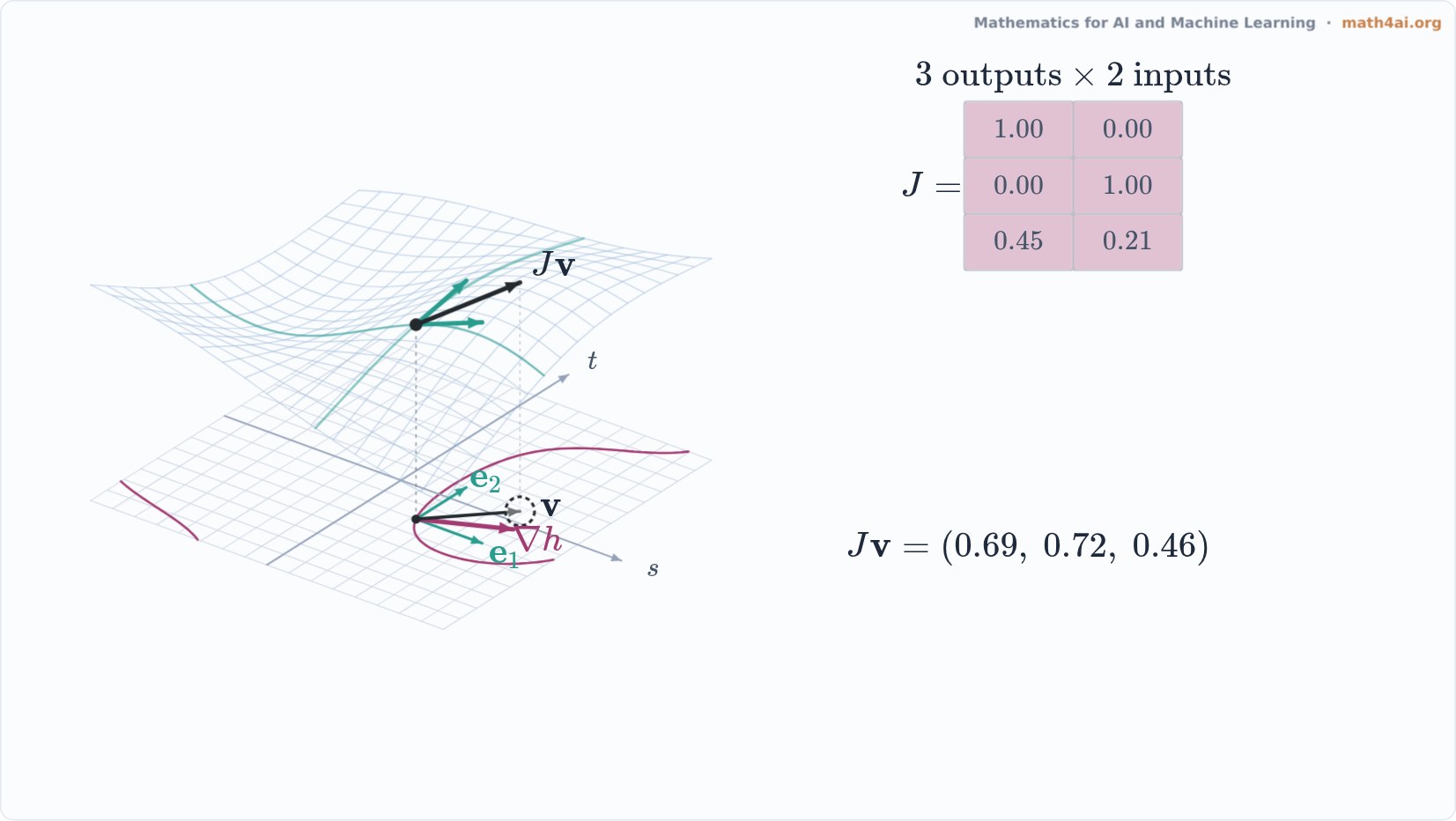 Preview1:54Forward or Reverse: Filling the JacobianChapter 11
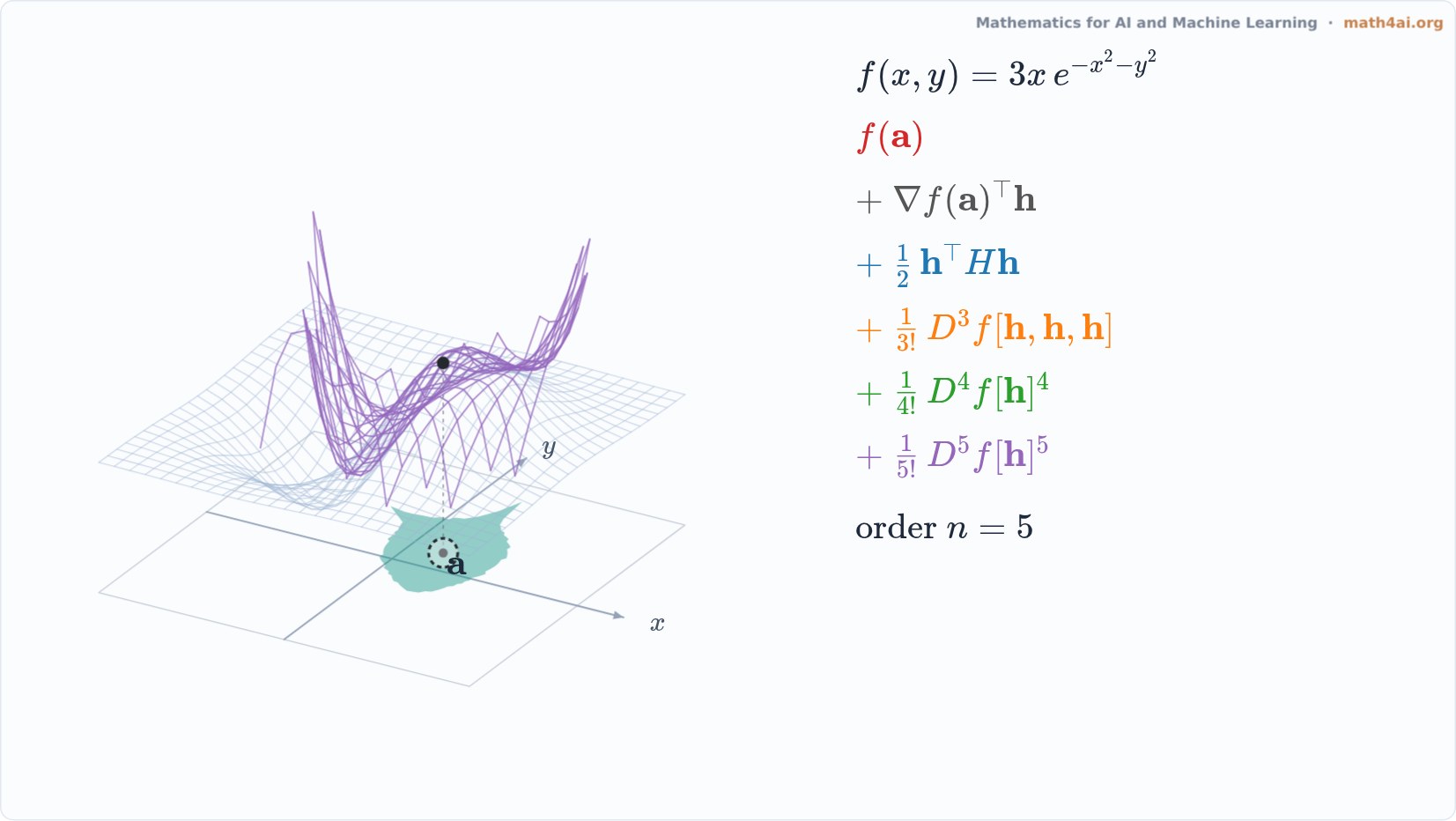 Preview1:32Taylor Expansion, One Term at a TimeChapter 11
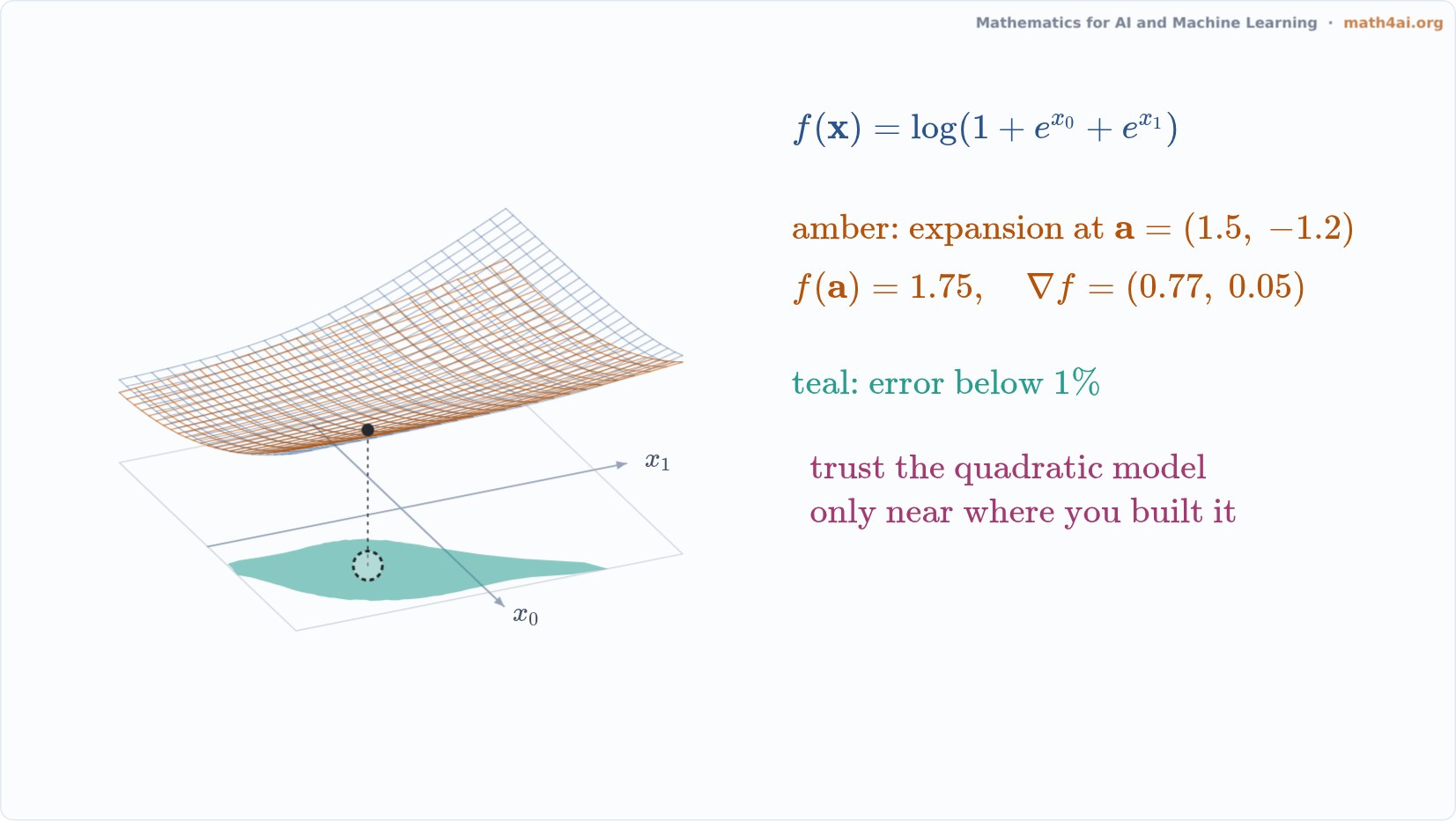 Preview1:30Second-Order Taylor: Where the Quadratic Model Can Be TrustedChapter 11
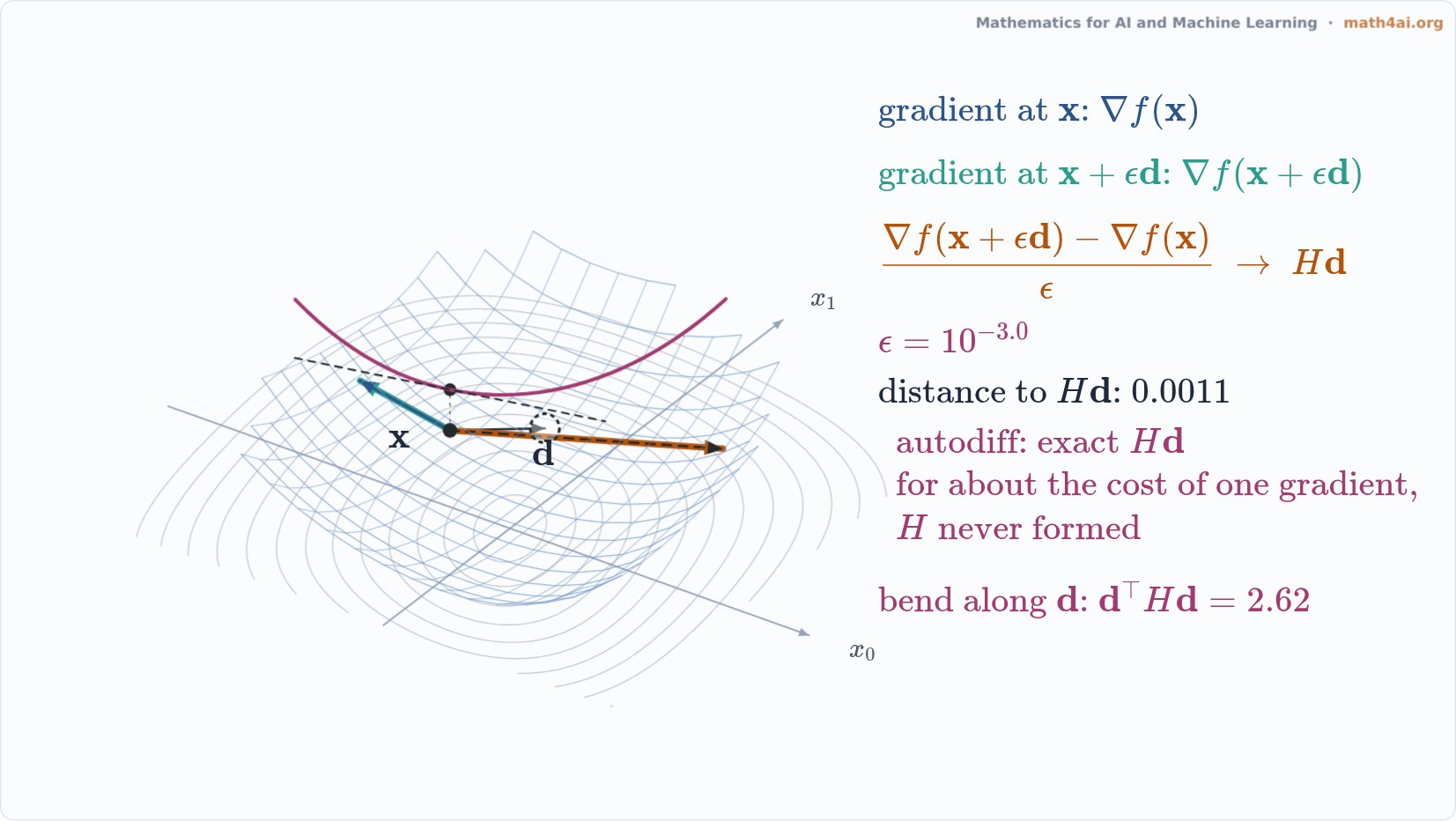 Preview1:38A Hessian-Vector Product from Two GradientsChapter 11
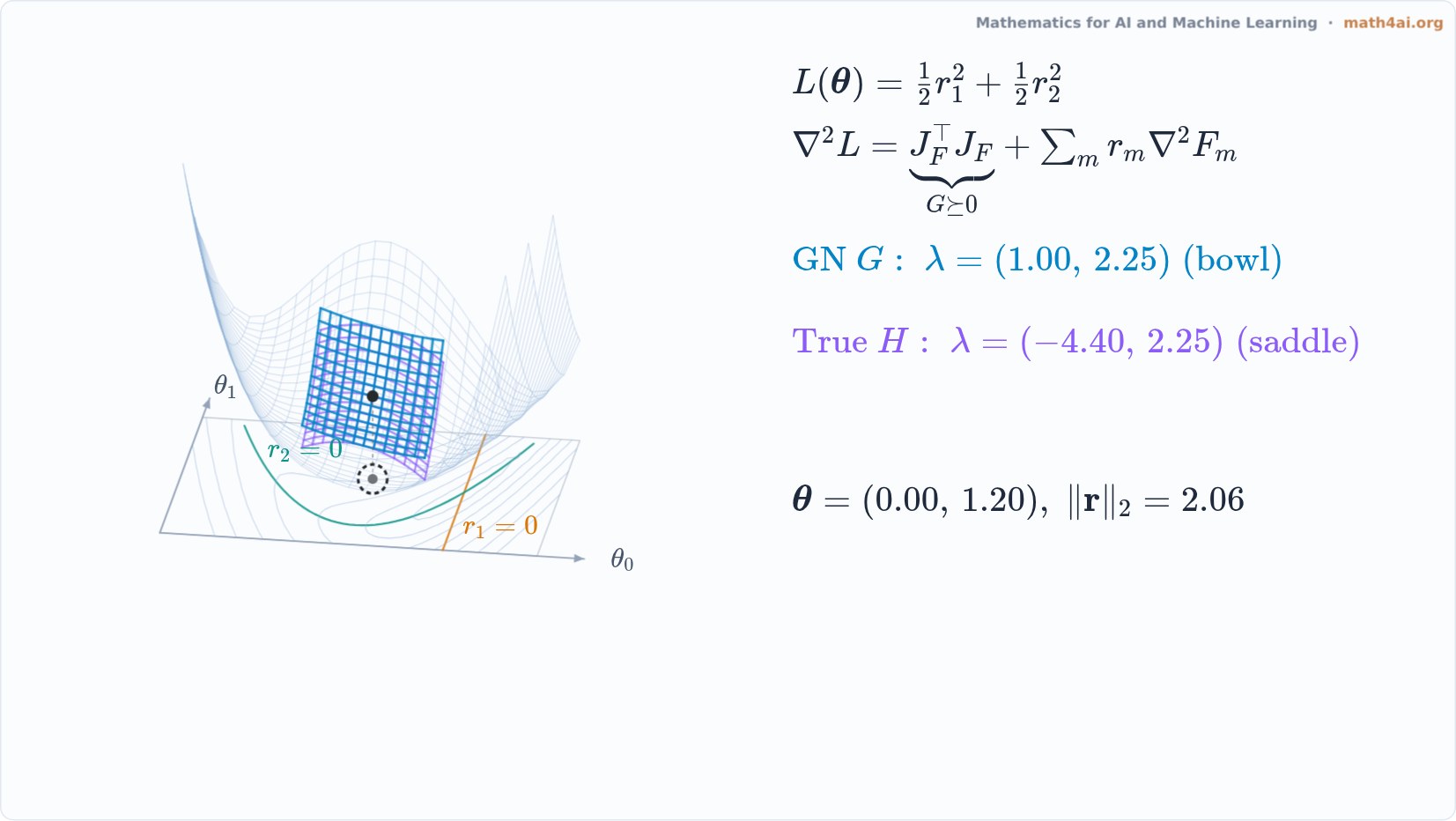 Preview1:34The Gauss–Newton MatrixChapter 11
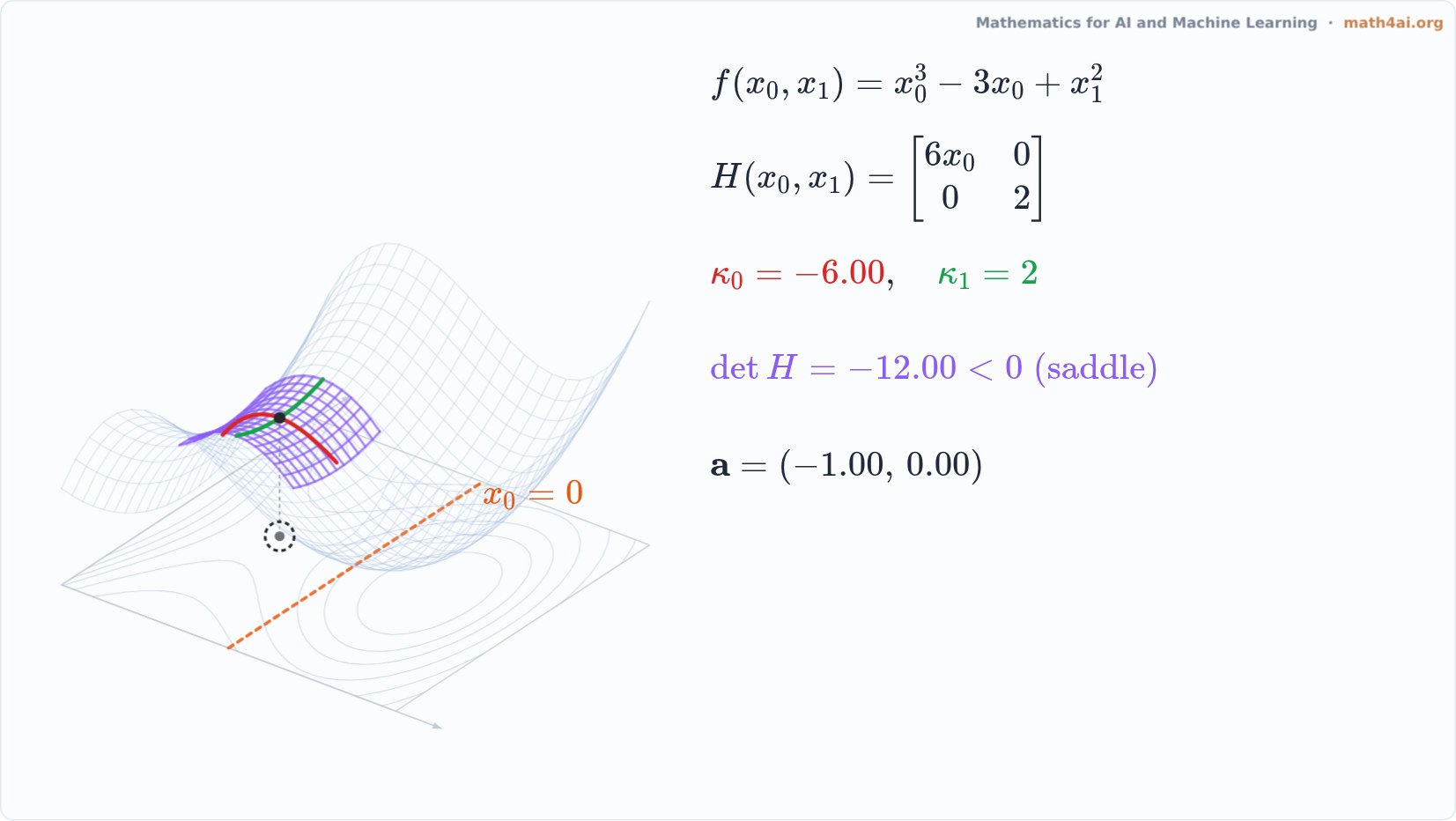 Preview1:44Hessian Matrix: Bowls, Saddles and Curvature DirectionsChapter 11
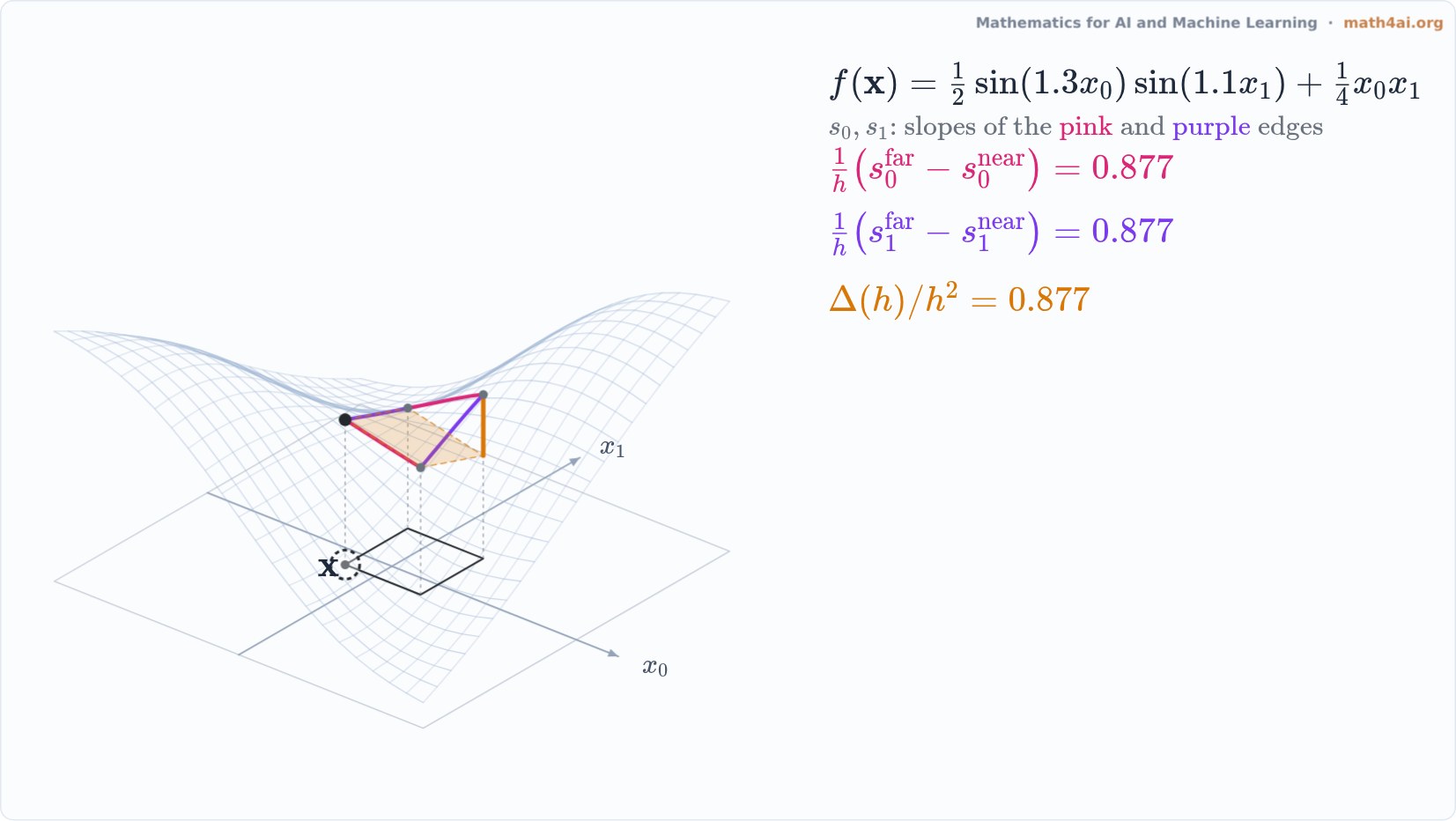 Preview1:37Why the Hessian Is SymmetricChapter 11
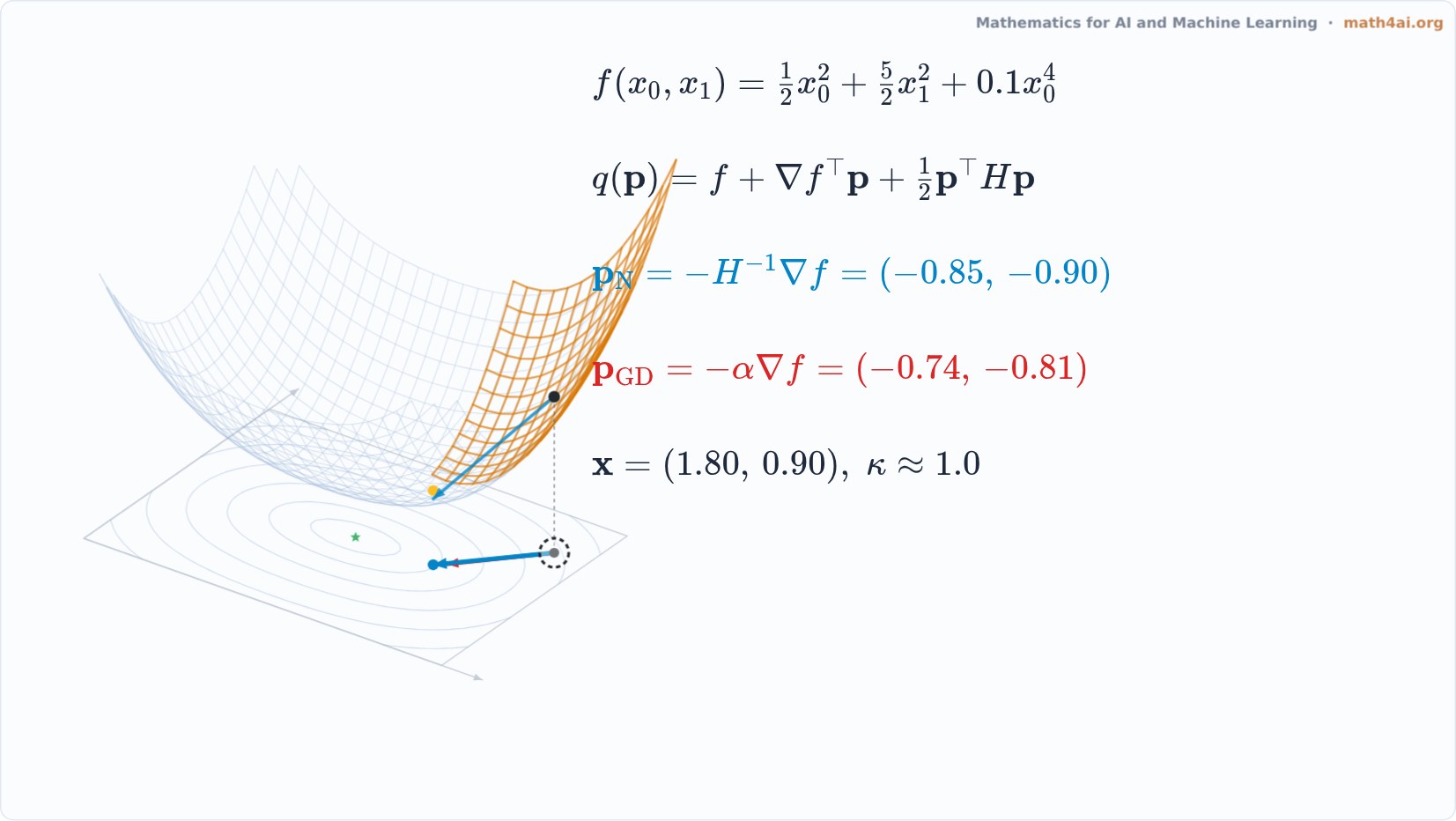 Preview1:26The Newton Step: Jumping to the Taylor Bowl's BottomChapter 11
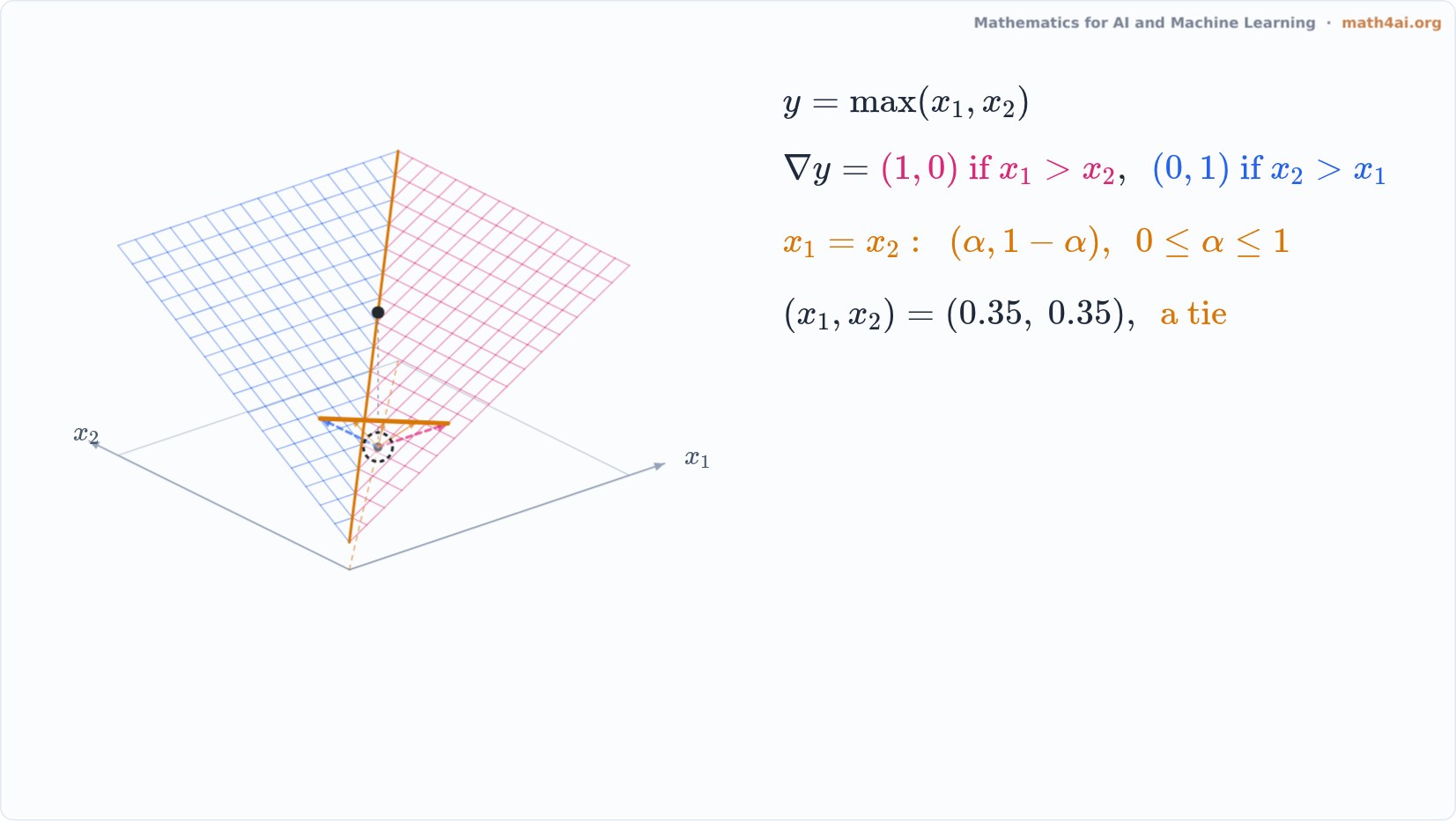 Preview2:36Corners, Maxima and Steps in the Chain RuleChapter 11
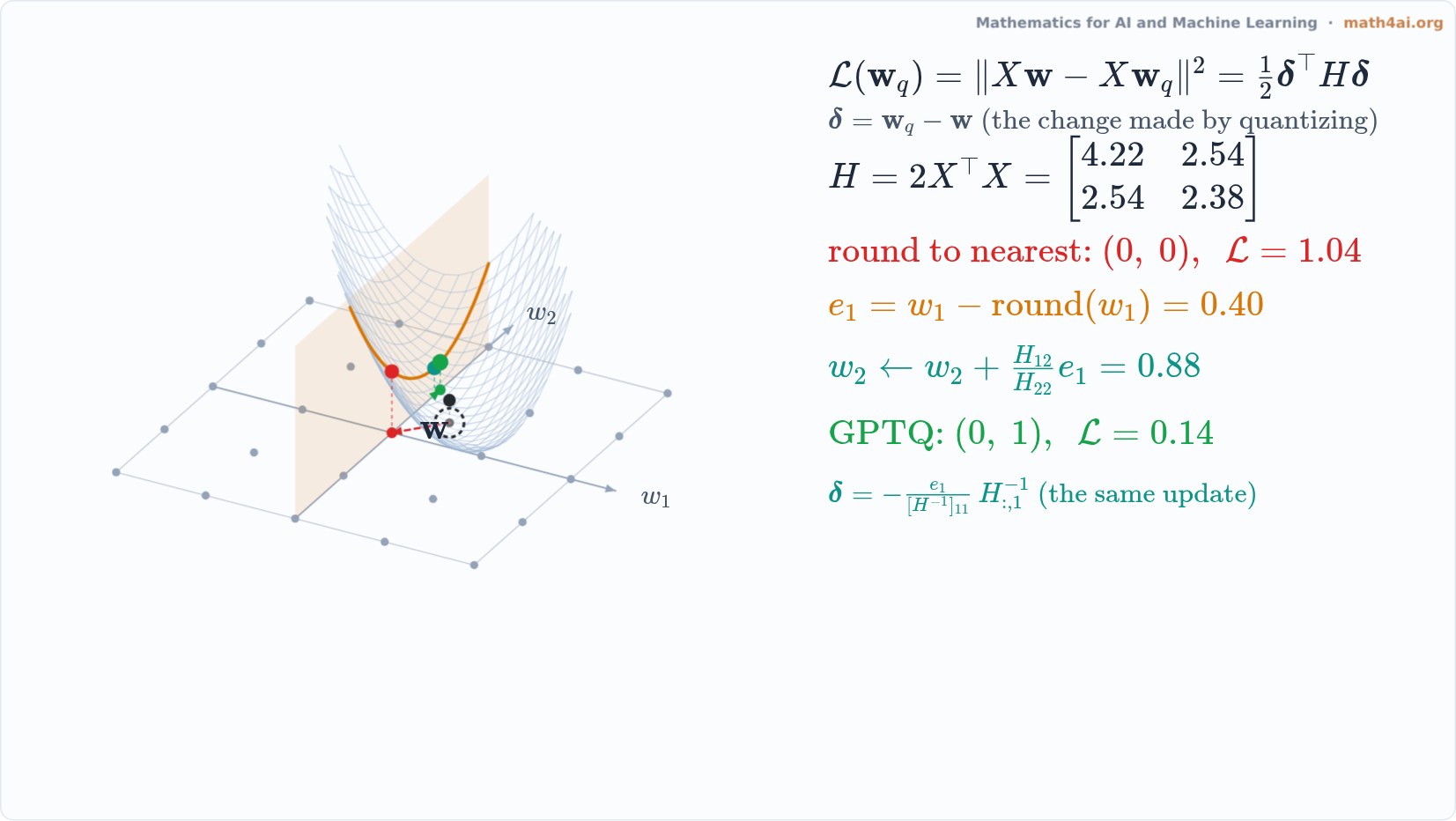 Preview1:59GPTQ: Rounding with the HessianChapter 11
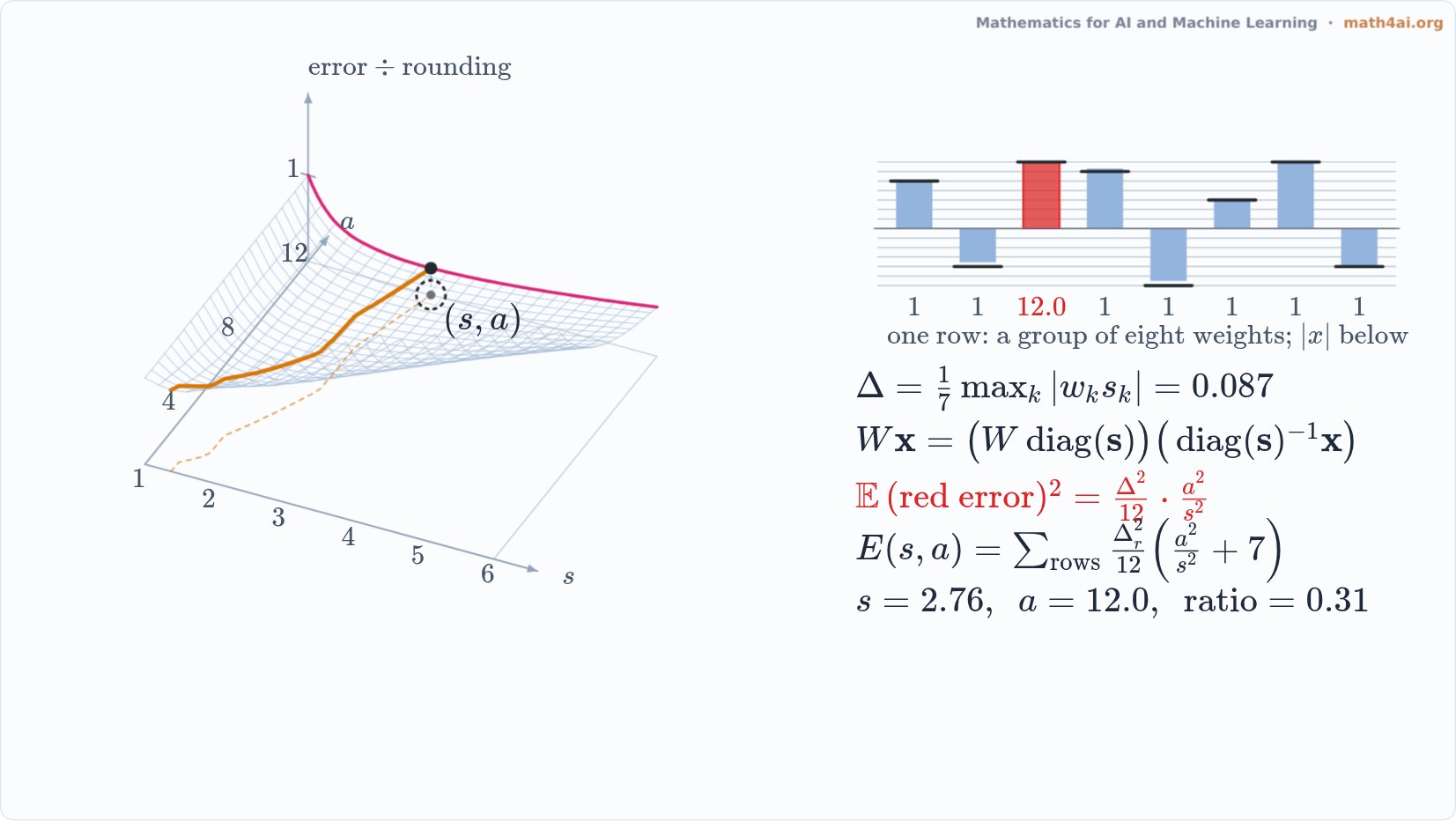 Preview2:12AWQ: Activation-Aware Weight QuantizationChapter 11
 Preview1:41The Implicit Function TheoremChapter 11