Change of Variables: Same Probability, Different Area
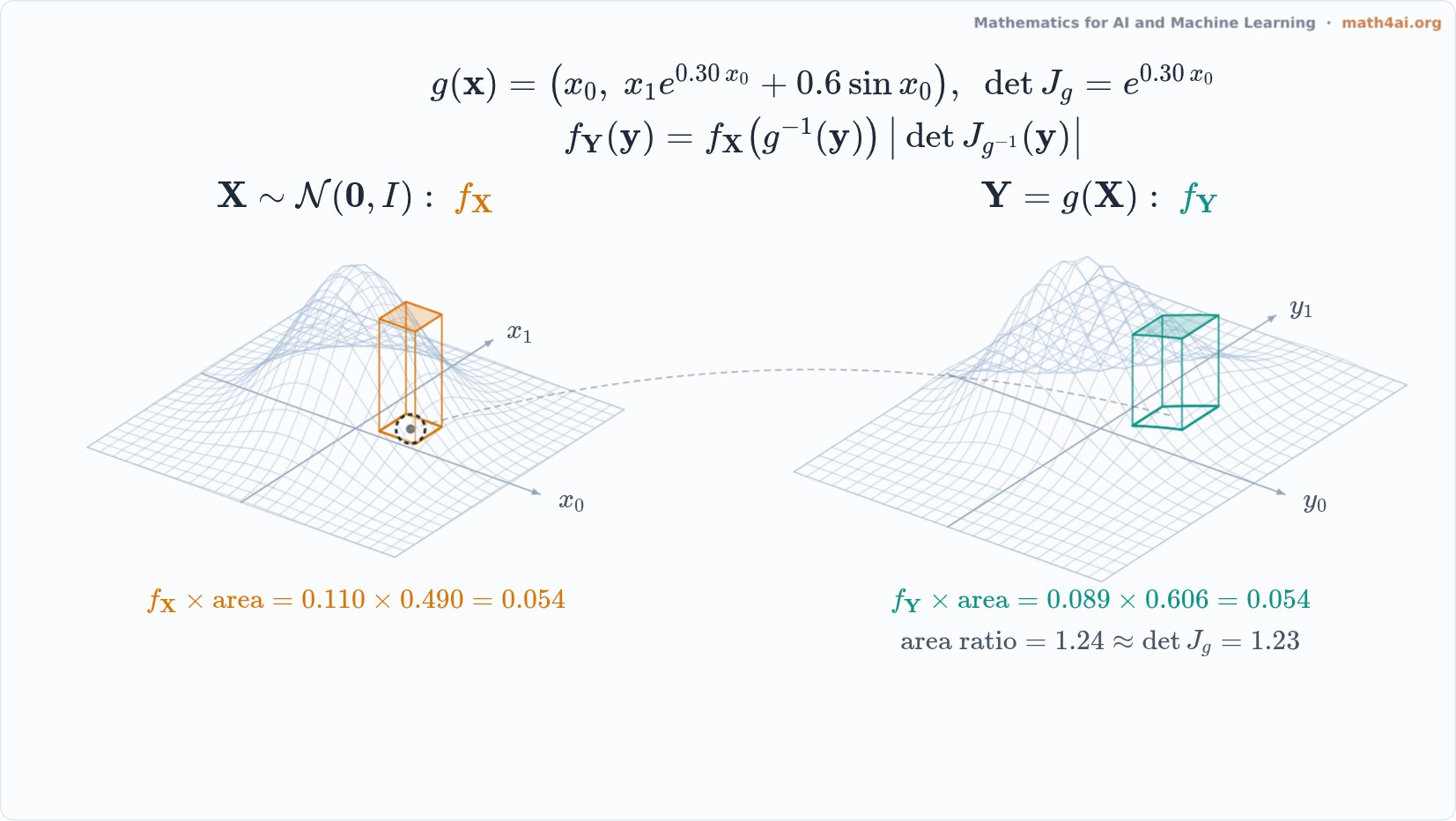
An interactive live film: a small square under the 2D Gaussian and its image under a stretching map stand side by side in 3D; the patch's area grows by det J while its density drops by the same factor, so the two columns hold the same probability.
Narration
On the left, X is a standard Gaussian in the plane, a round bell. On the right is Y equals g of X, for a map g that stretches the plane more and more toward one side, and bends it.
Take a small square on the left. The probability that X lands in it is the height of the bell times the area of the square: the volume of the amber column.
The rest of the narration is in the book's Companion.
More from Chapter 13
 Interactive1:35Normalizing Flows: Chaining Invertible MapsChapter 13
 Preview1:38Independence as an Outer ProductChapter 13
 Preview1:40Conditional Gaussian: A Slice of the BellChapter 13
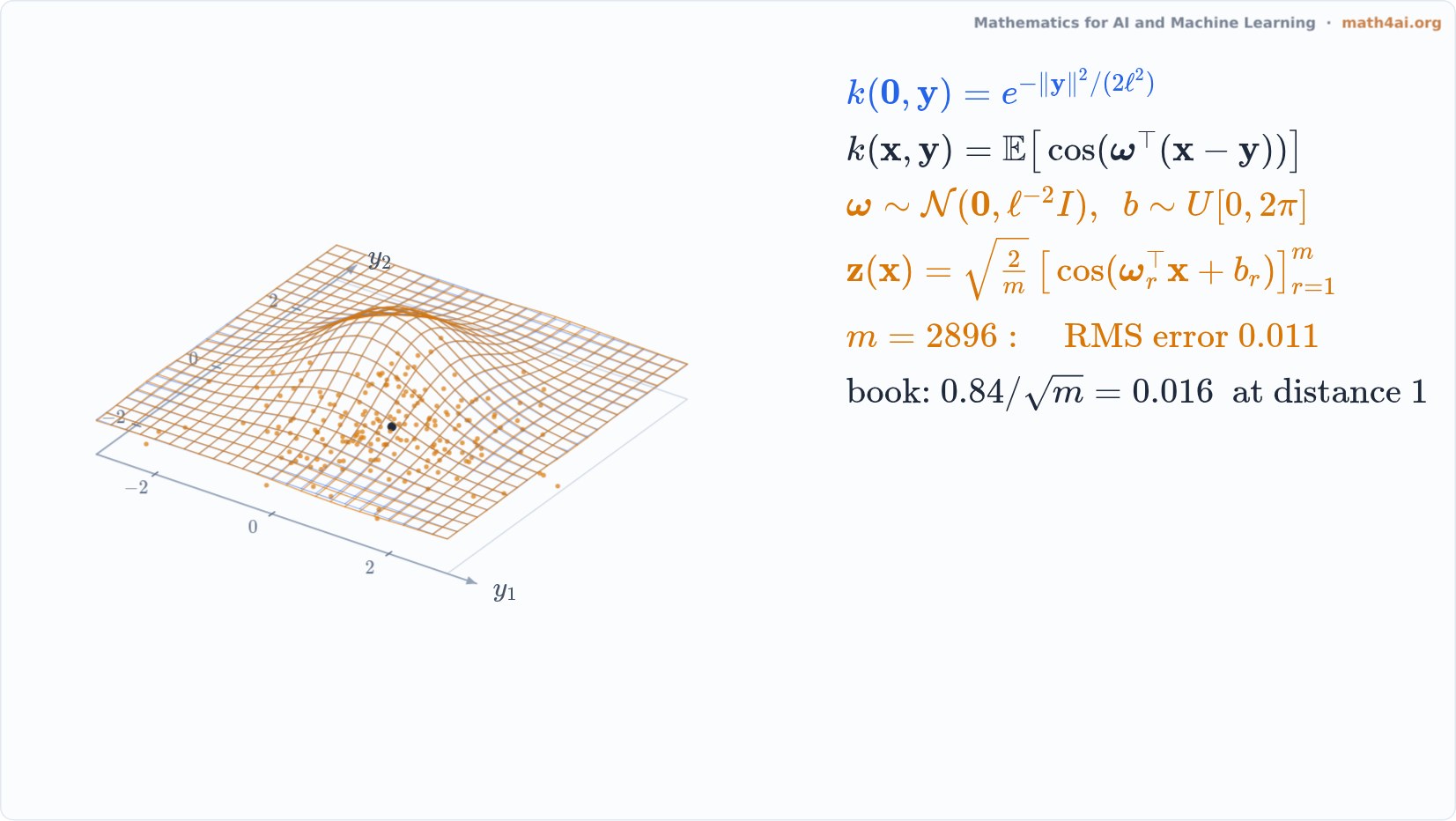 Preview1:22Random Fourier FeaturesChapter 13
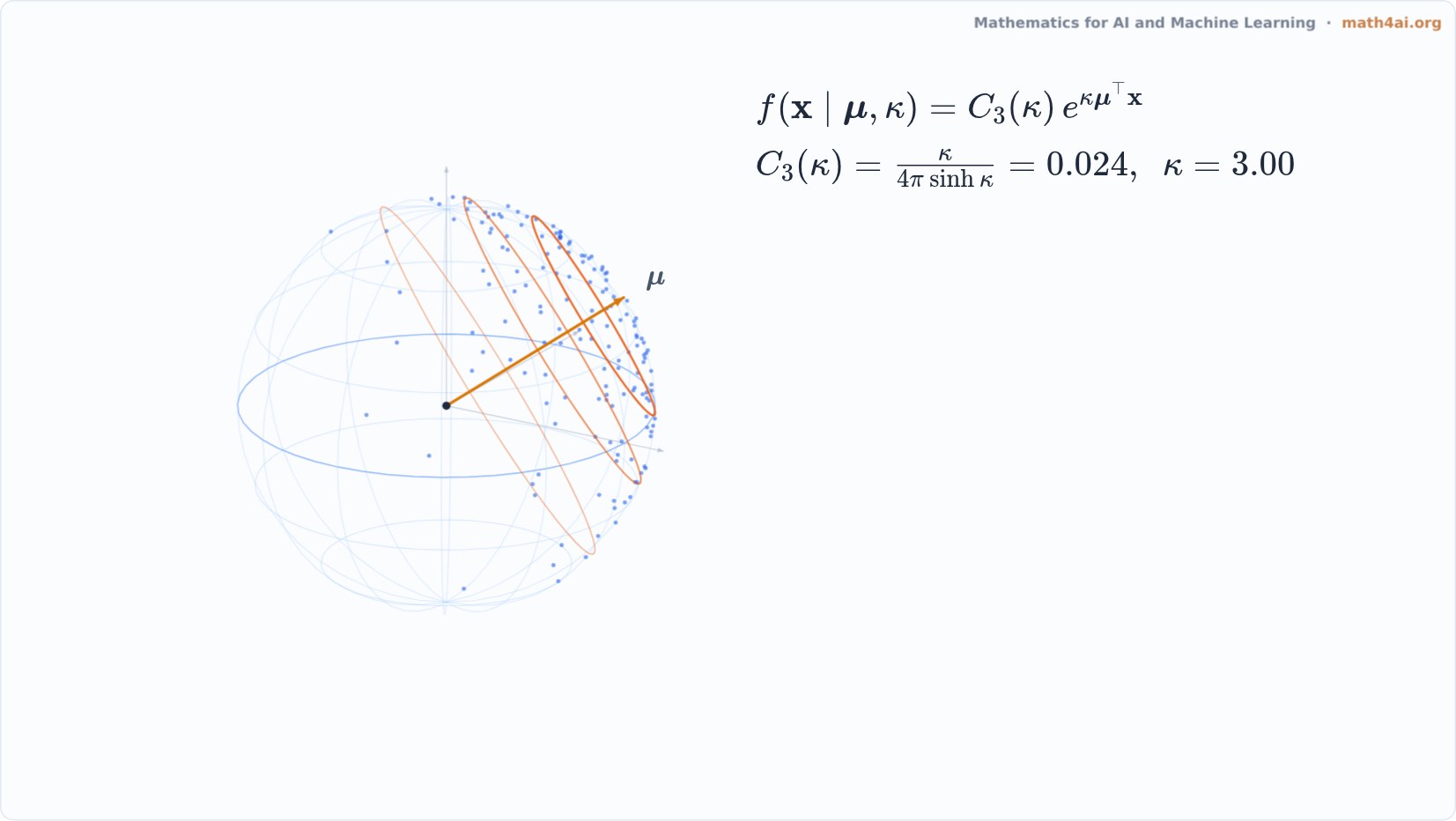 Preview1:35The von Mises-Fisher Distribution: A Gaussian for DirectionsChapter 13
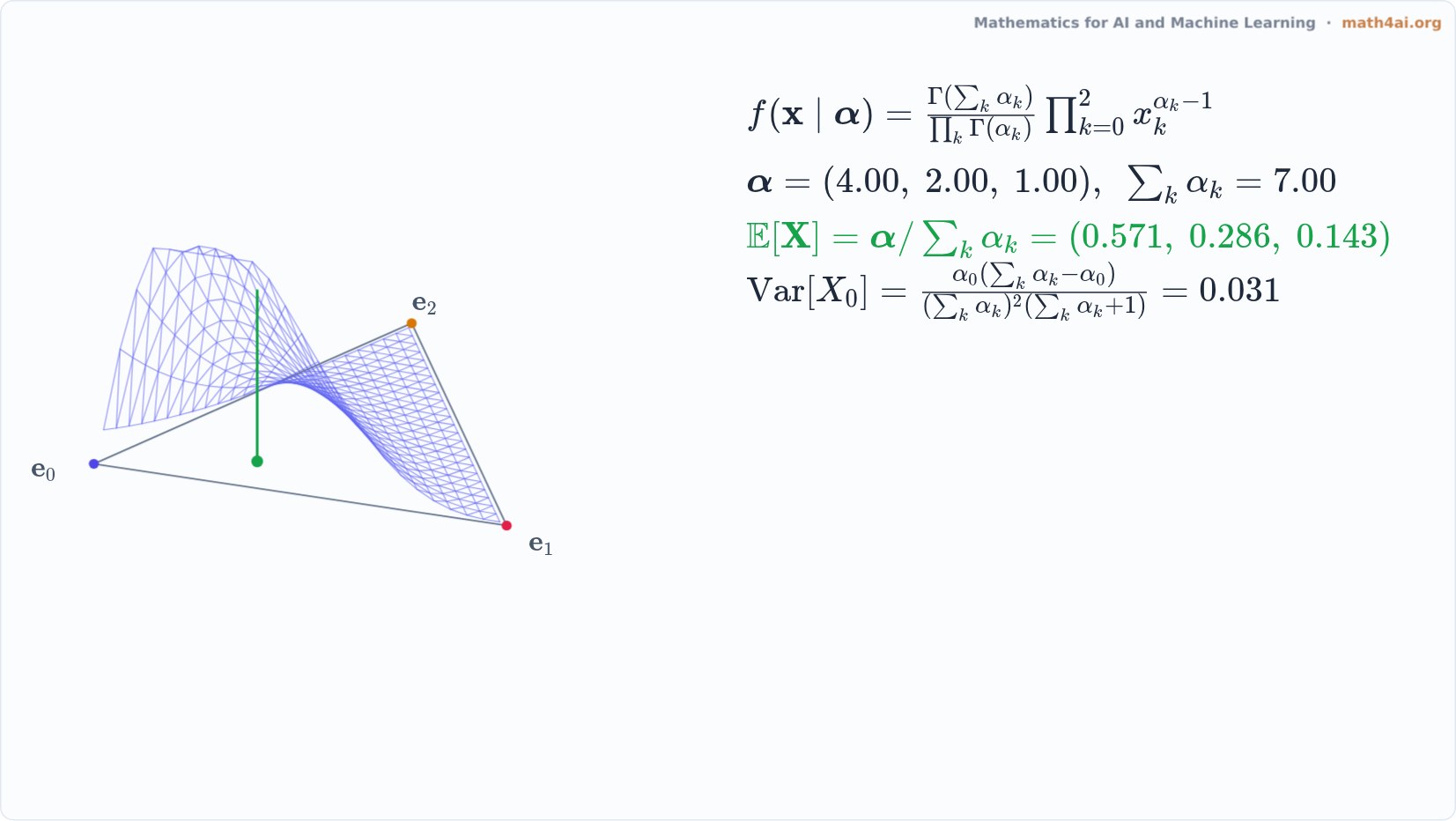 Preview1:42The Dirichlet Distribution: A Density on the SimplexChapter 13
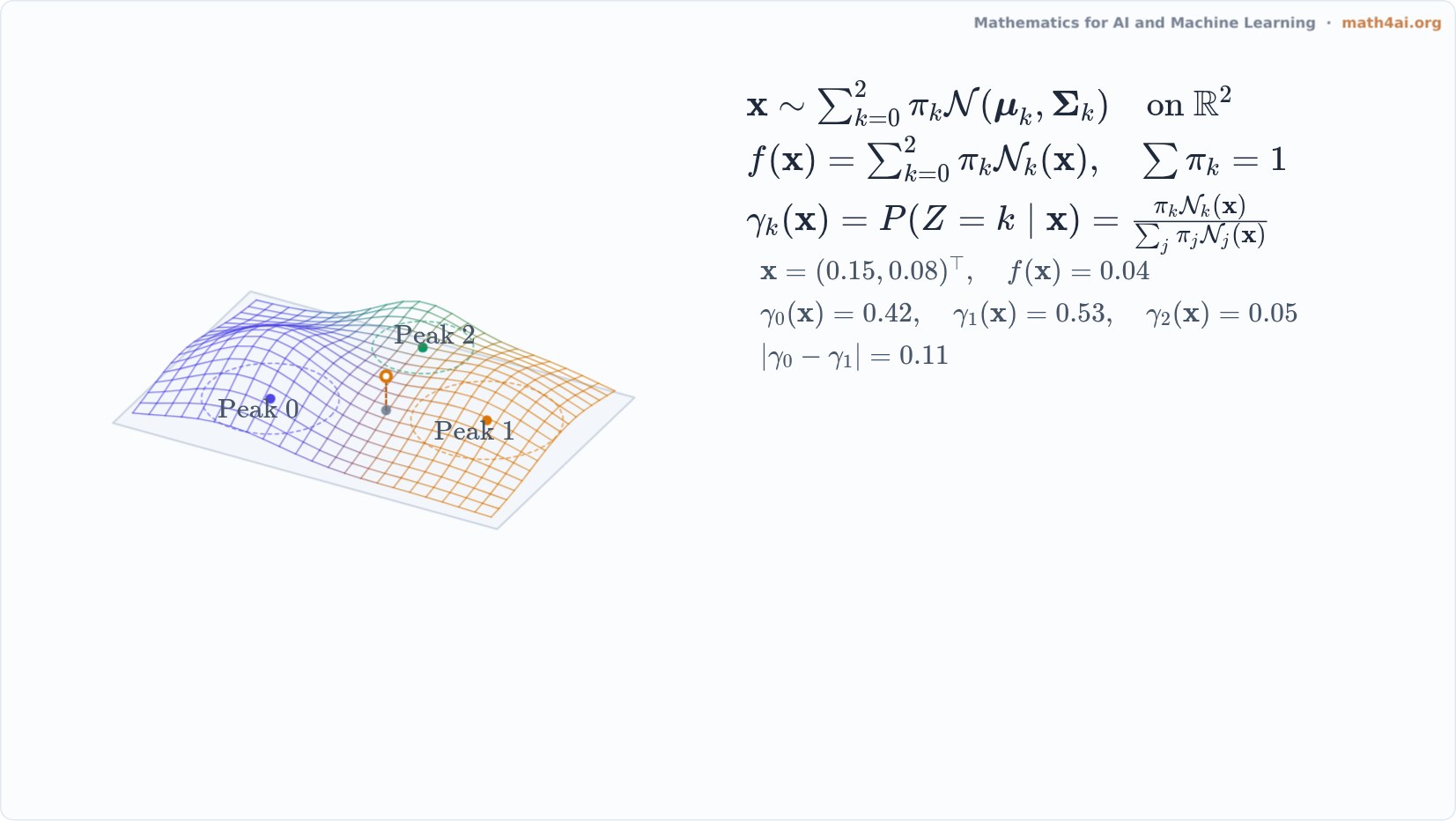 Preview1:14Gaussian Mixture Model: Multimodal TerrainChapter 13
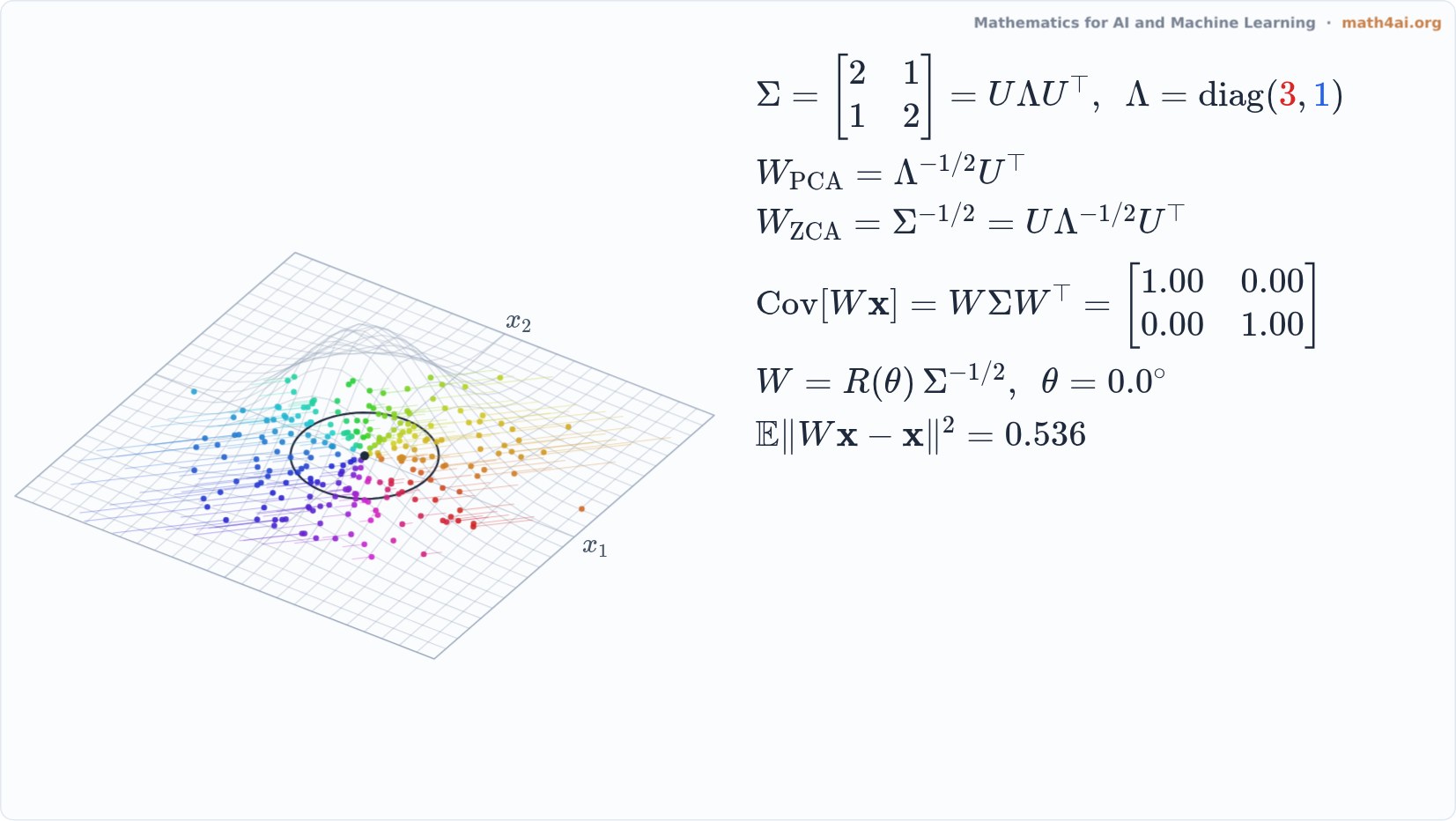 Preview1:41Whitening: PCA and ZCAChapter 13
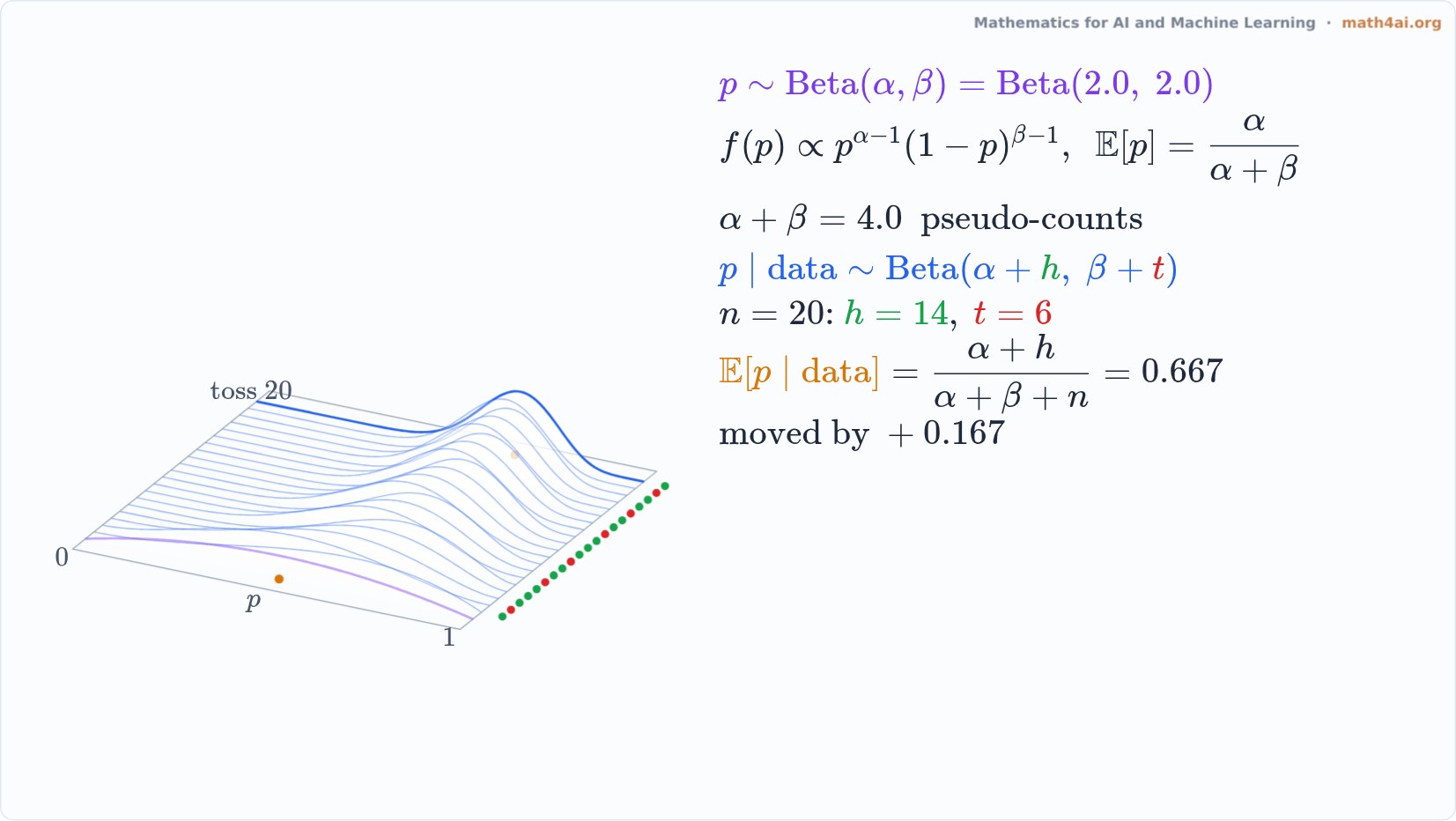 Preview1:36Beta and Bernoulli: Updating with Pseudo-CountsChapter 13
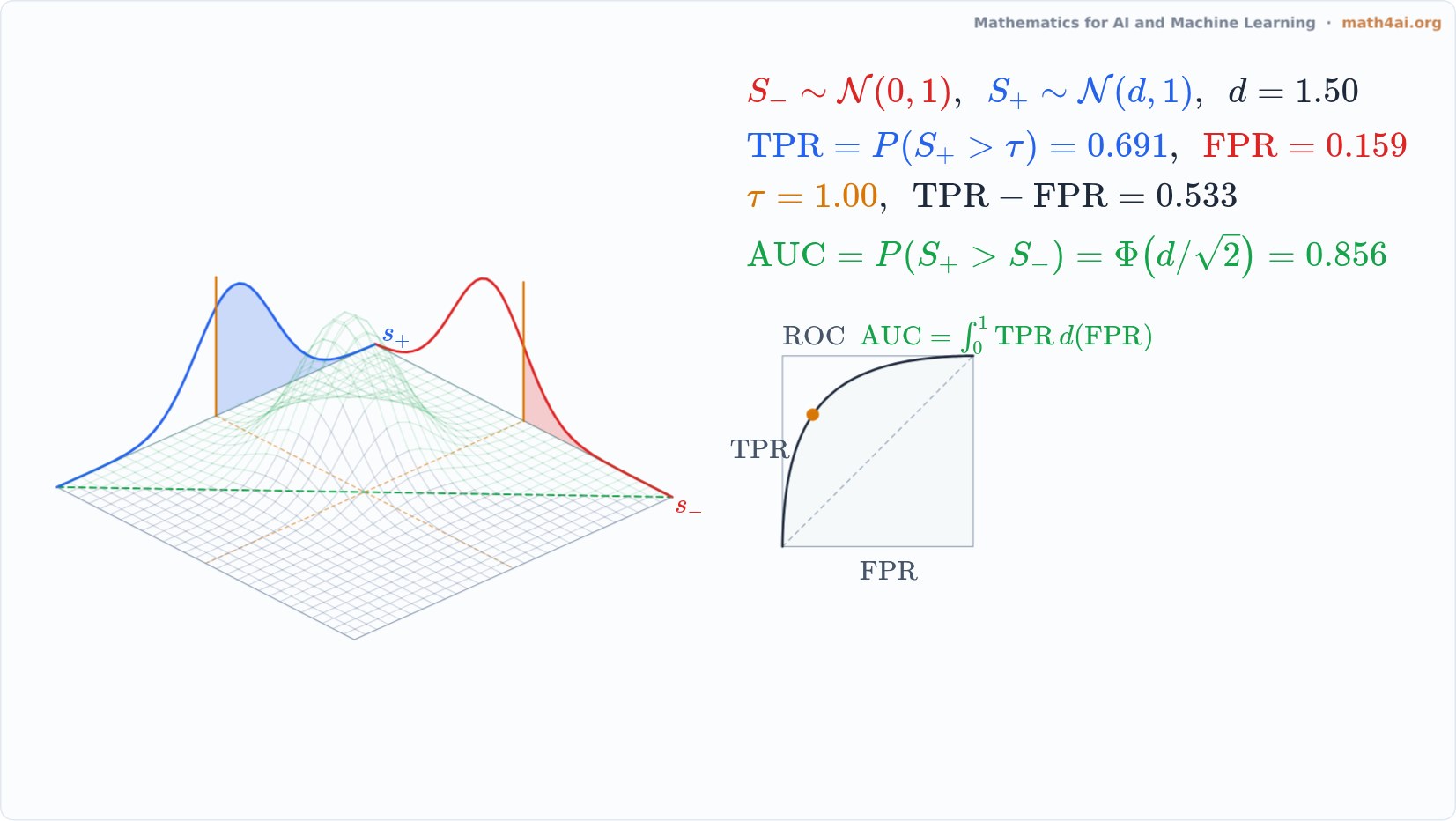 Preview1:43ROC Curve and AUC: the Mass Above the DiagonalChapter 13
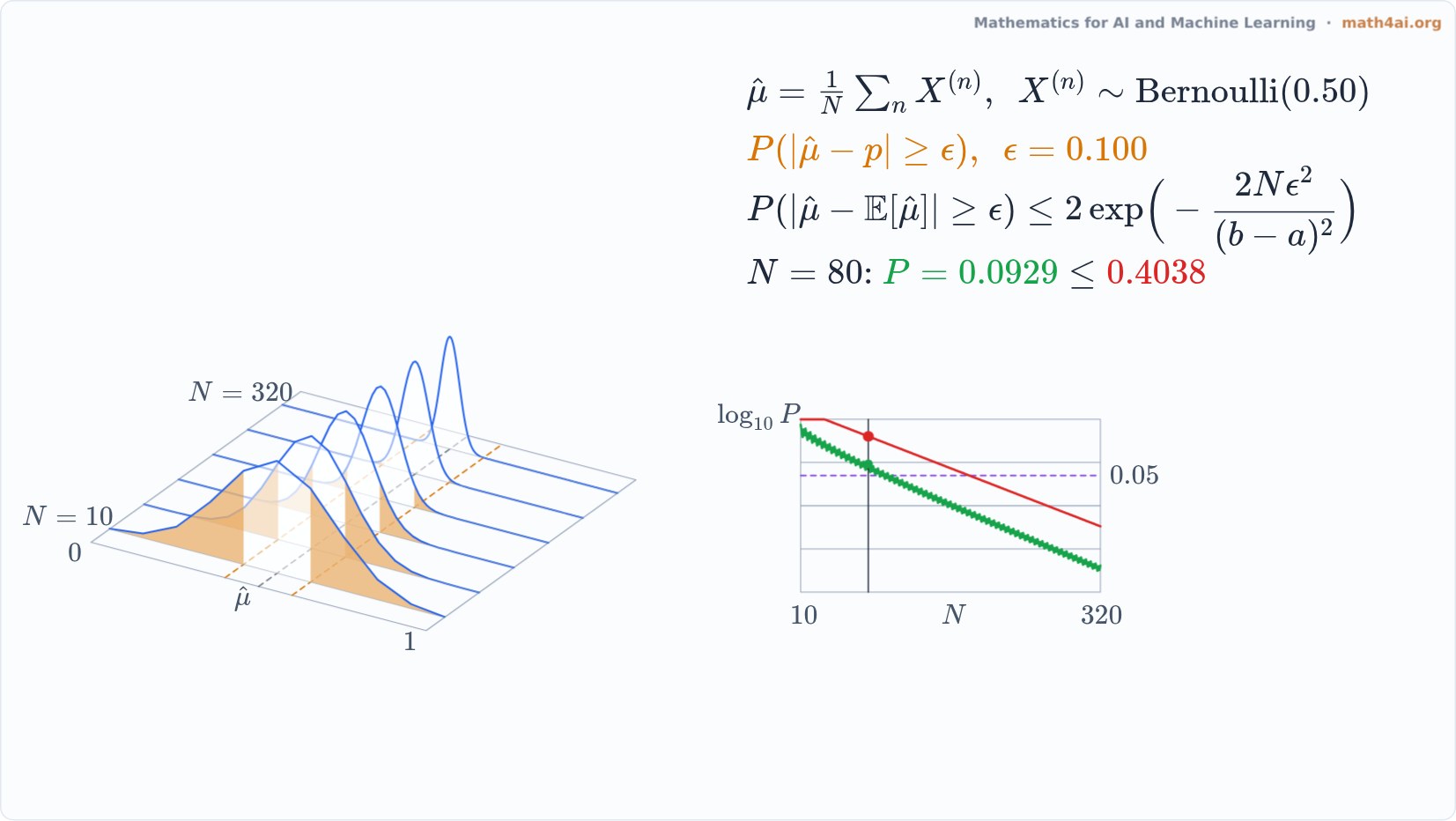 Preview1:40Hoeffding's Inequality: How Fast a Sample Mean SettlesChapter 13
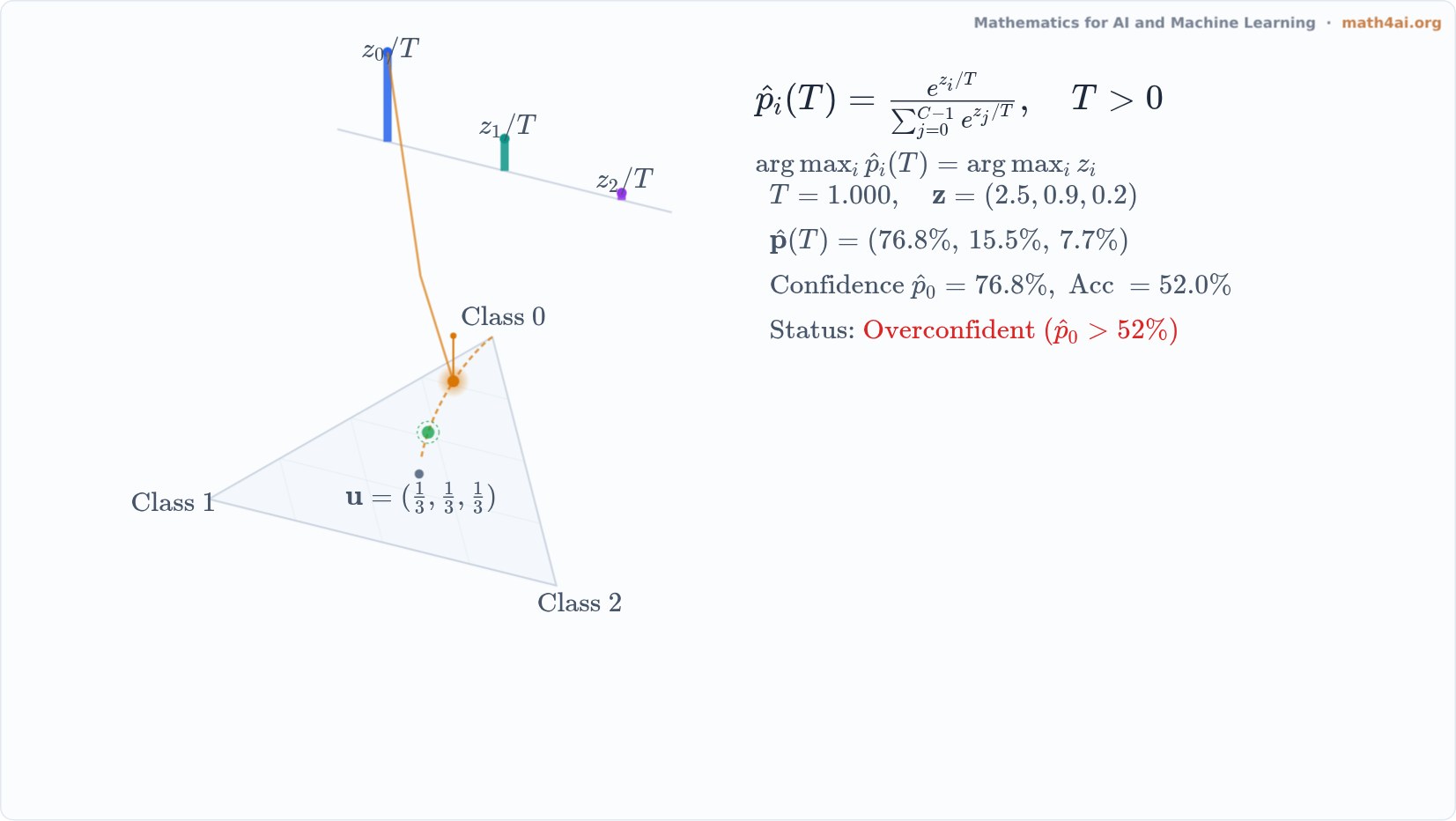 Preview1:25Temperature Scaling: Calibrating a SoftmaxChapter 13
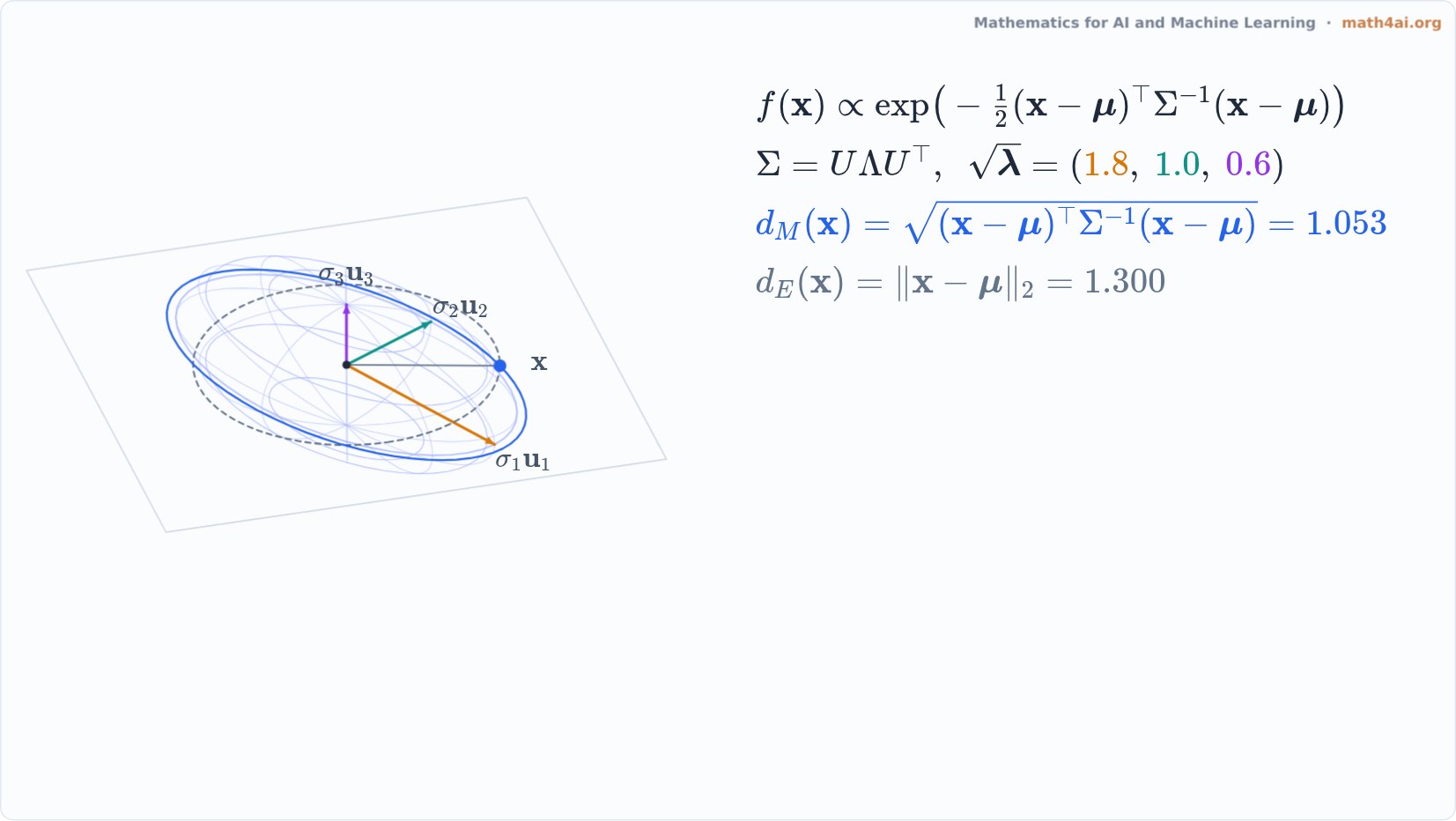 Preview1:34Mahalanobis Distance: The Ellipsoids of a GaussianChapter 13
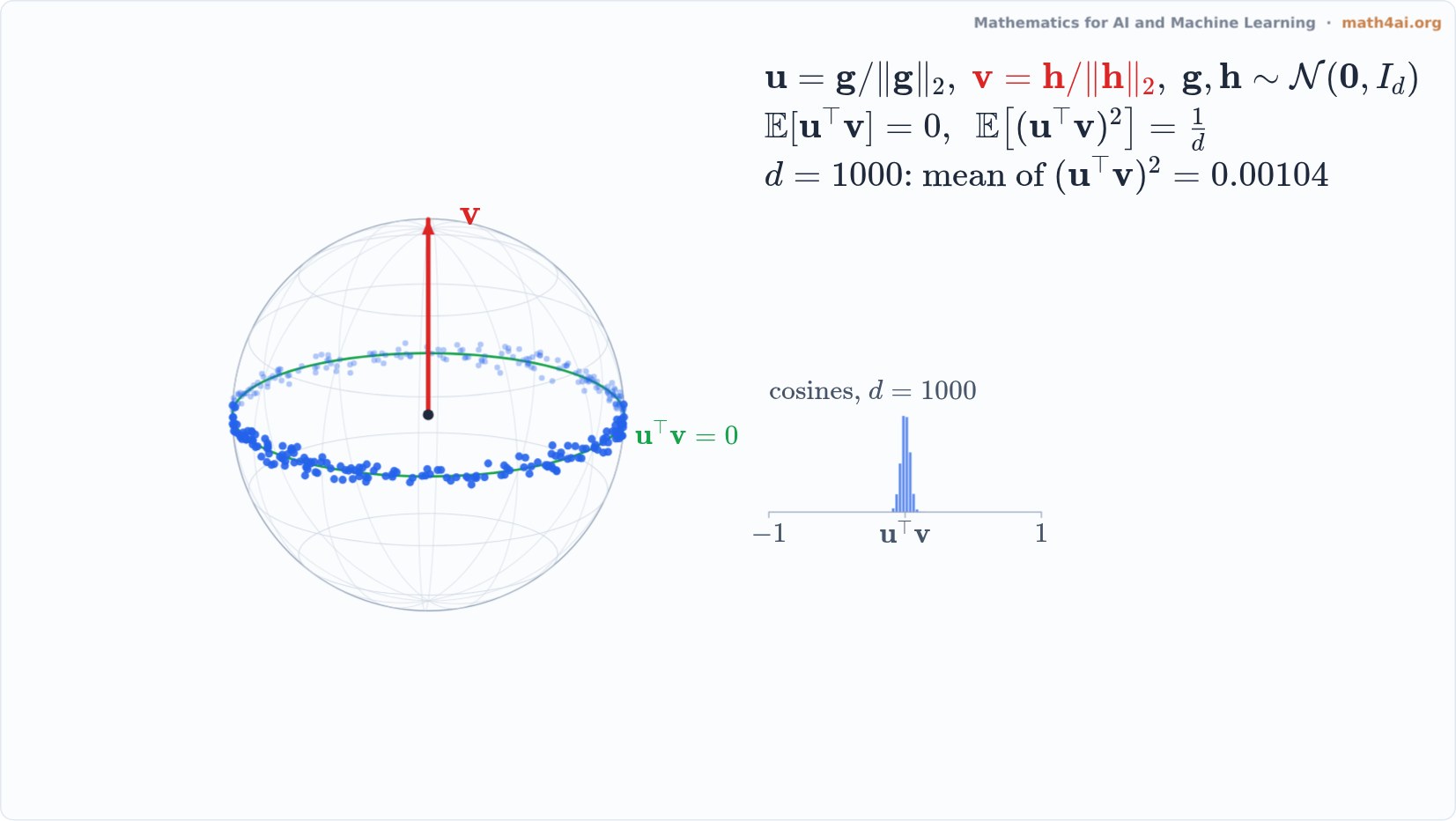 Preview2:09Random Directions Are Nearly OrthogonalChapter 13