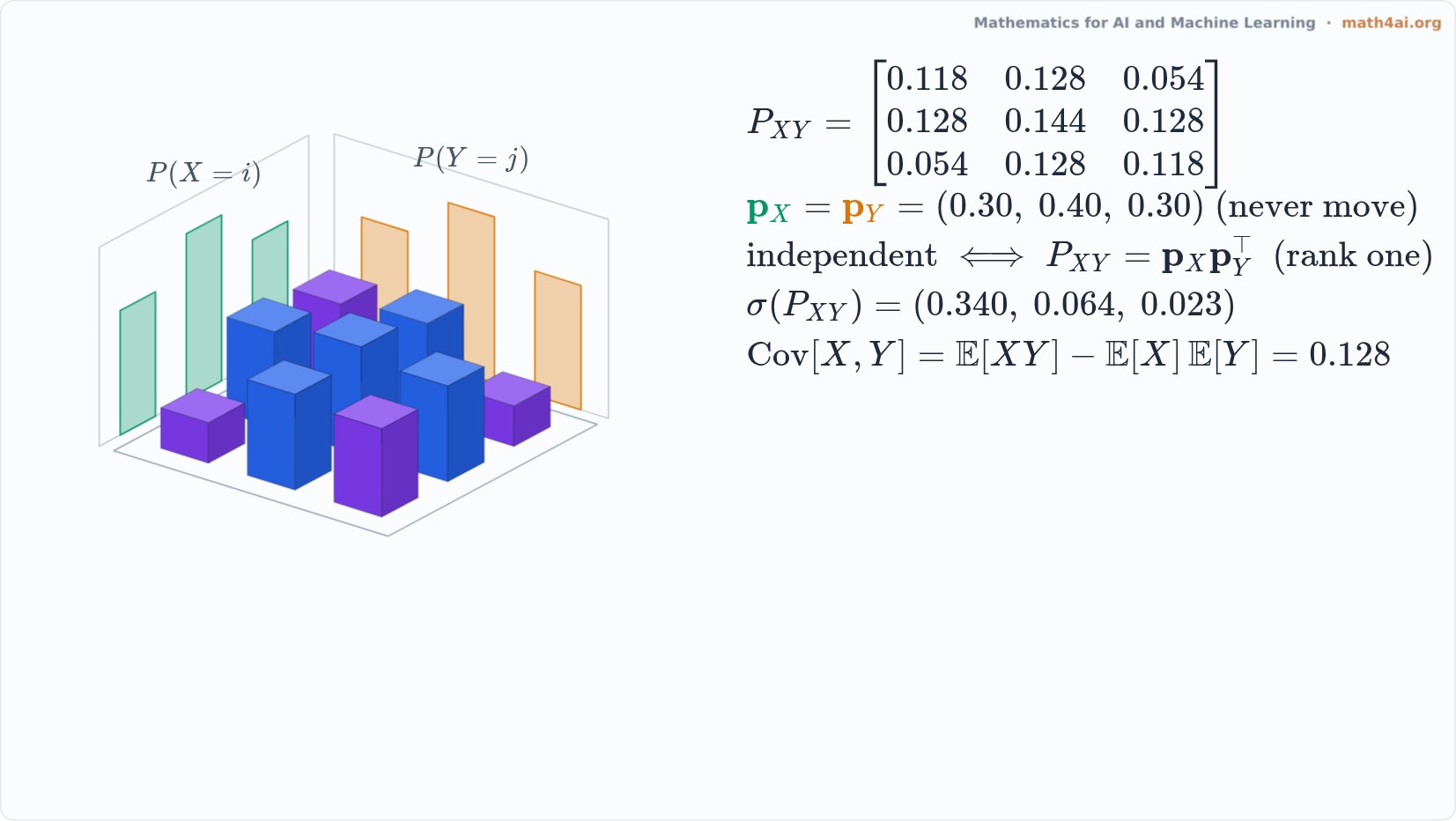
Independence as an Outer Product
An interactive live film: a 3x3 joint table as bars, its marginals as shadows on two walls; independence makes the table the rank-one outer product of the shadows. Move mass without moving the shadows and make X and Y uncorrelated but still dependent.
Narration
Two variables, X and Y, each taking the values zero, one and two. Their joint distribution is a three by three table of probabilities, drawn as bars on the floor.
Summing each row gives the marginal of X, the shadow on the left wall. Summing each column gives the marginal of Y, the shadow on the back wall.
The rest of the narration is in the book's Companion.
More from Chapter 13
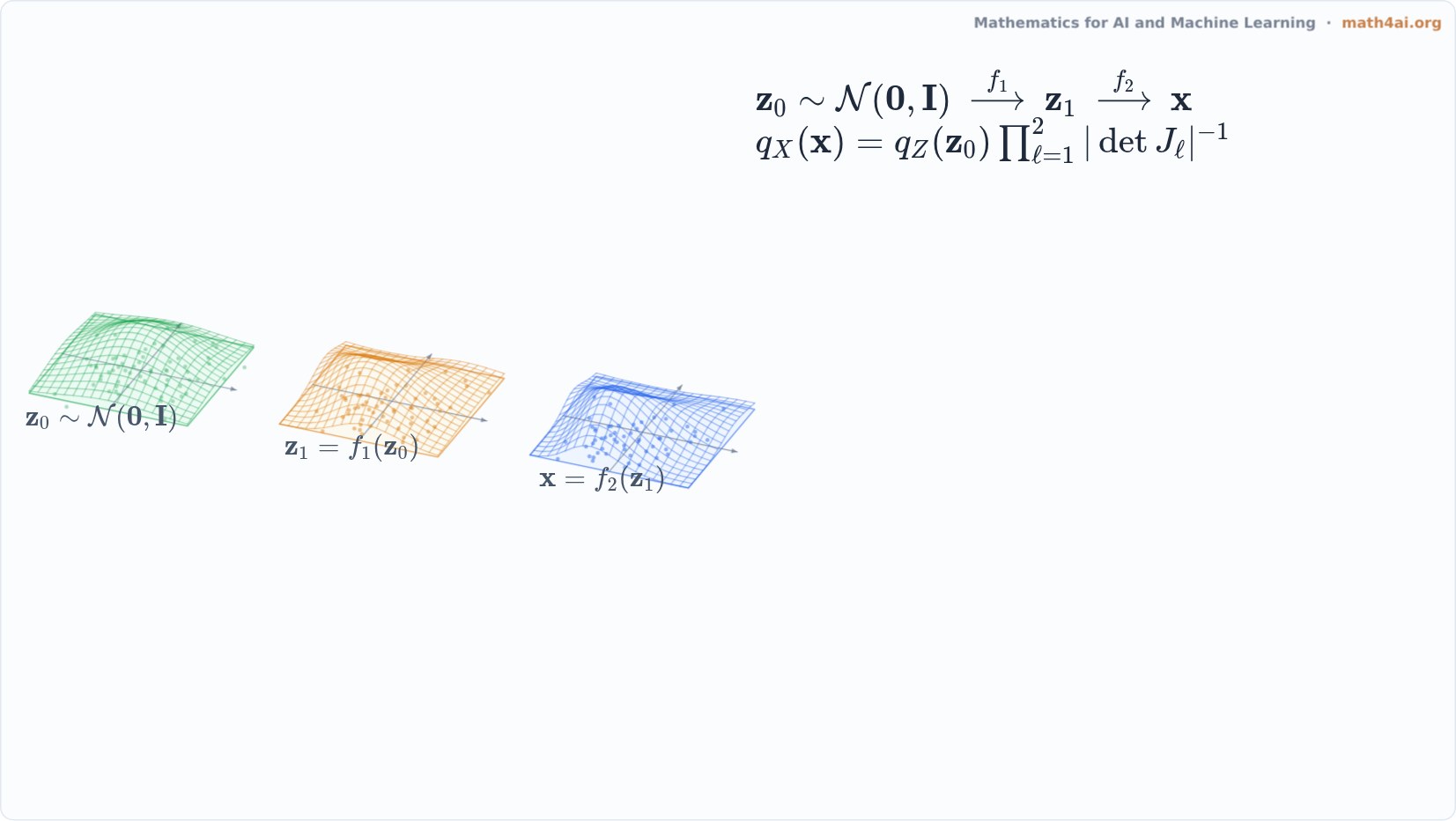 Interactive1:35Normalizing Flows: Chaining Invertible MapsChapter 13
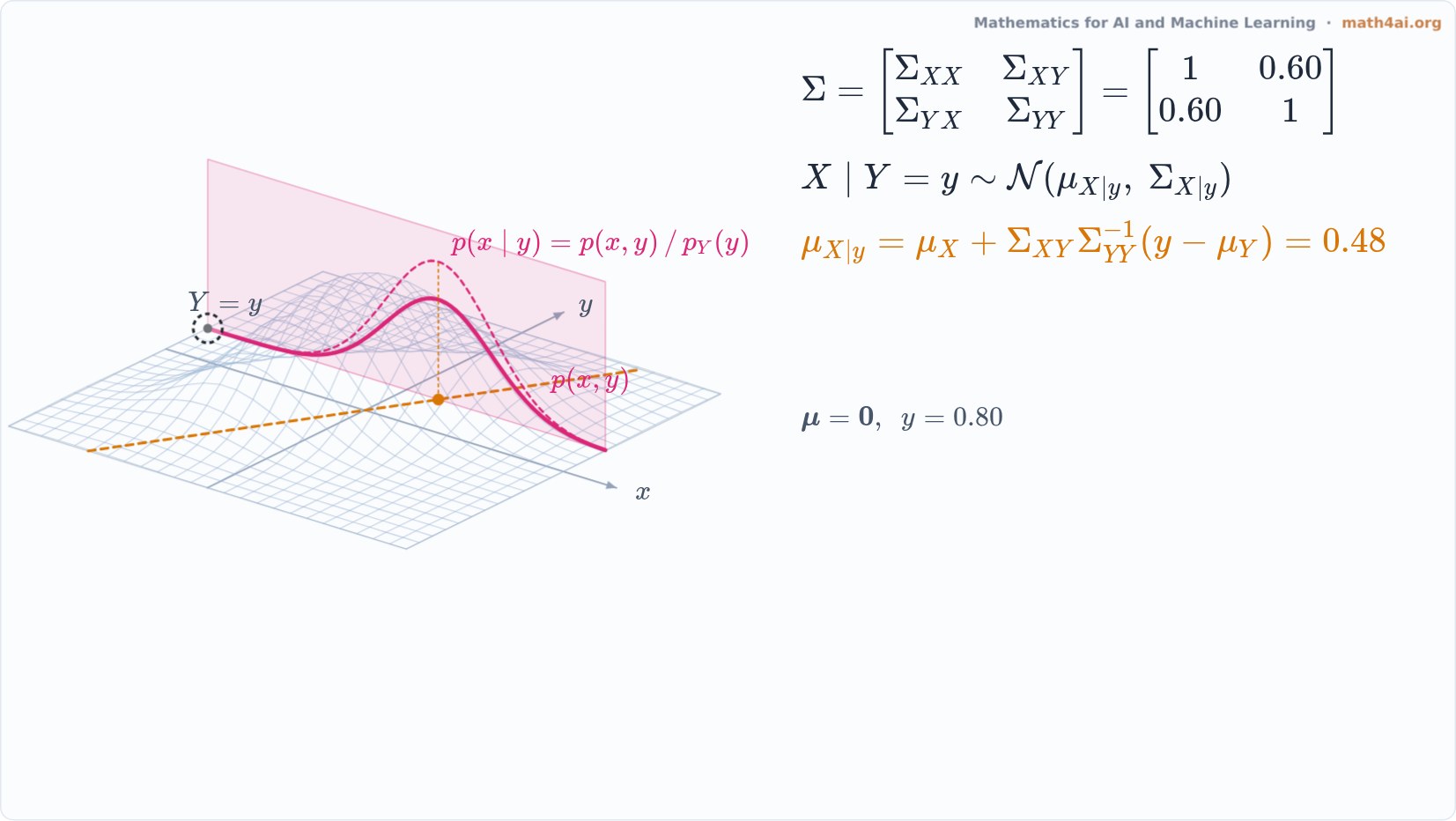 Preview1:40Conditional Gaussian: A Slice of the BellChapter 13
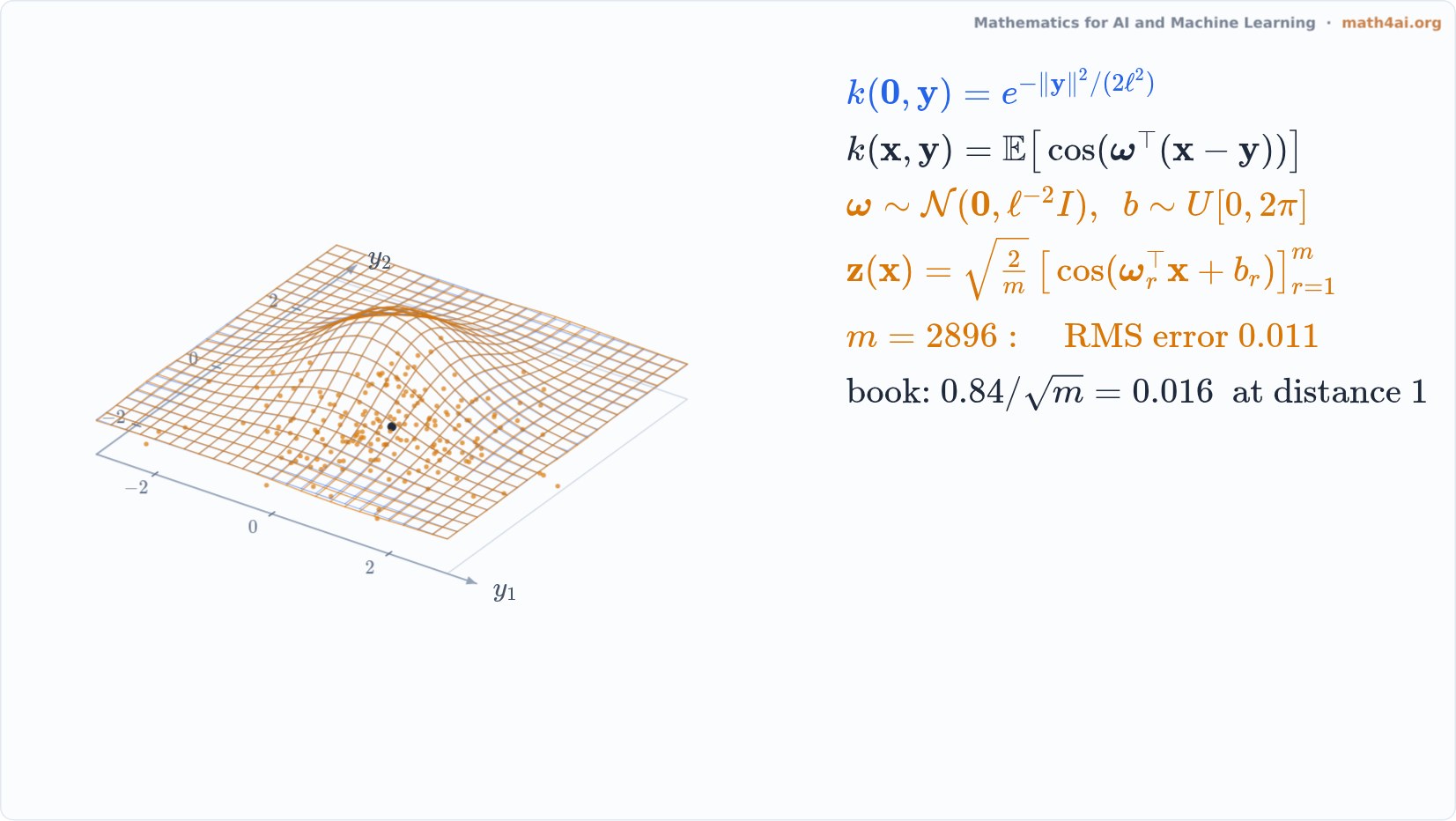 Preview1:22Random Fourier FeaturesChapter 13
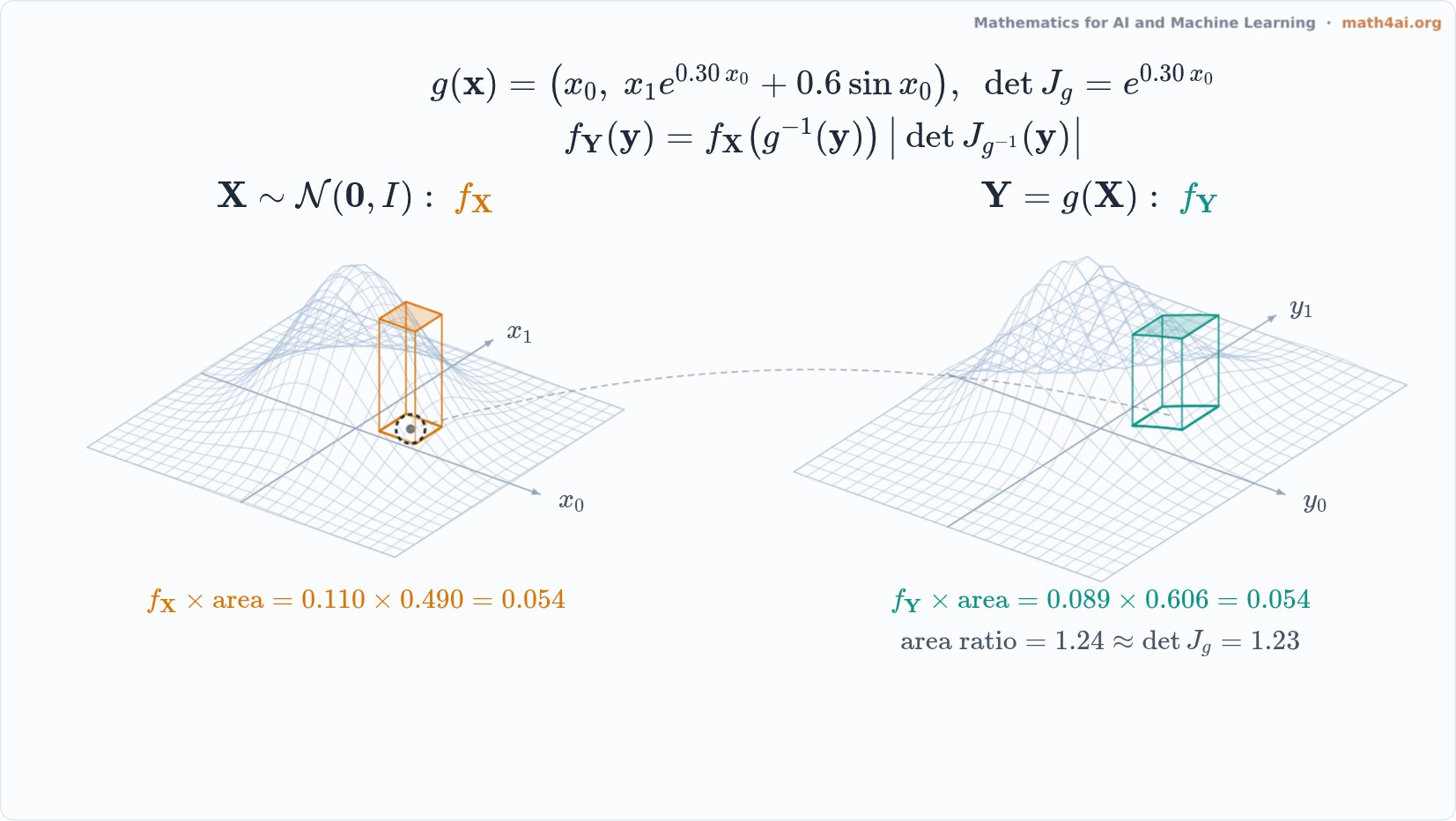 Preview1:46Change of Variables: Same Probability, Different AreaChapter 13
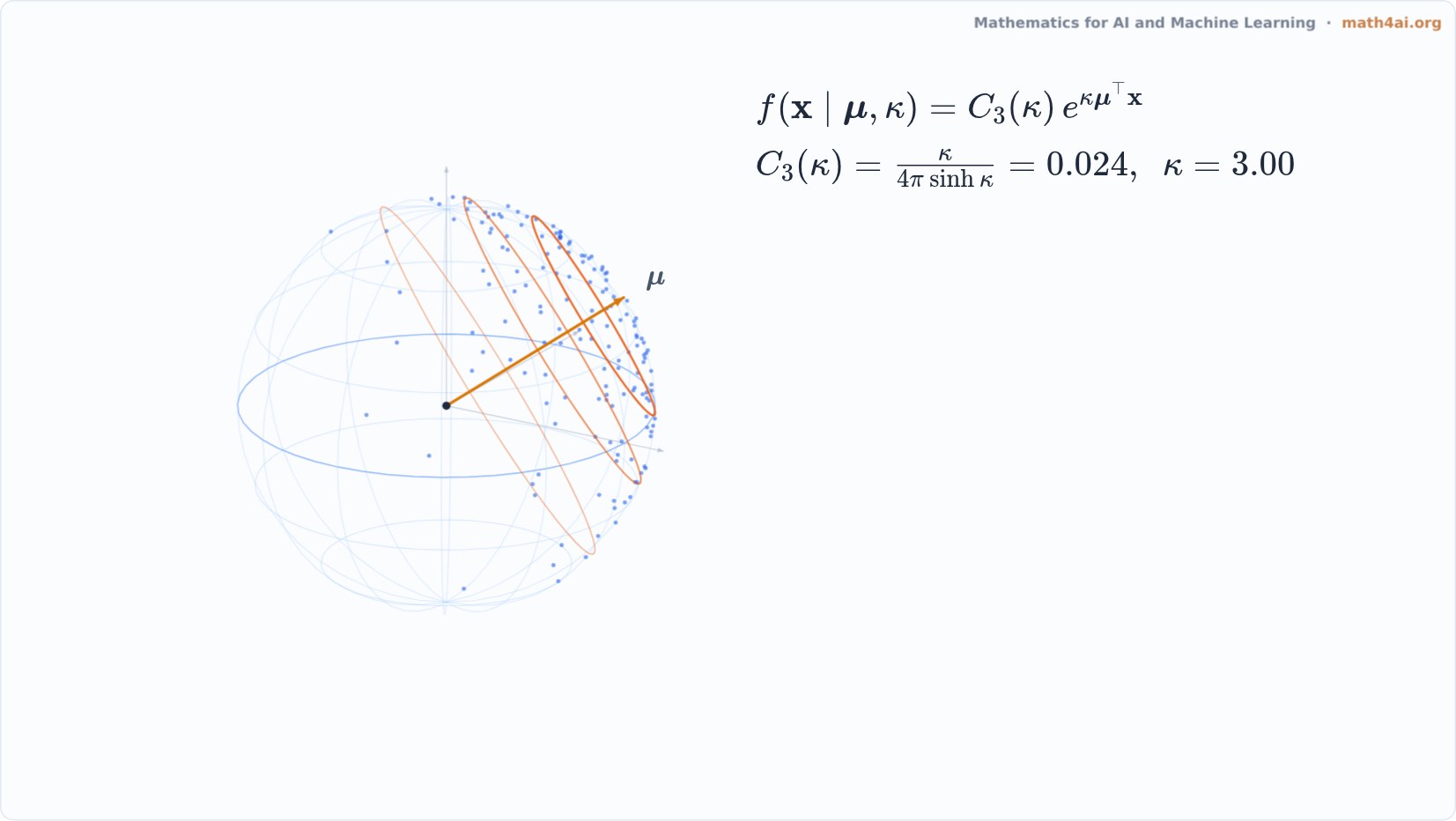 Preview1:35The von Mises-Fisher Distribution: A Gaussian for DirectionsChapter 13
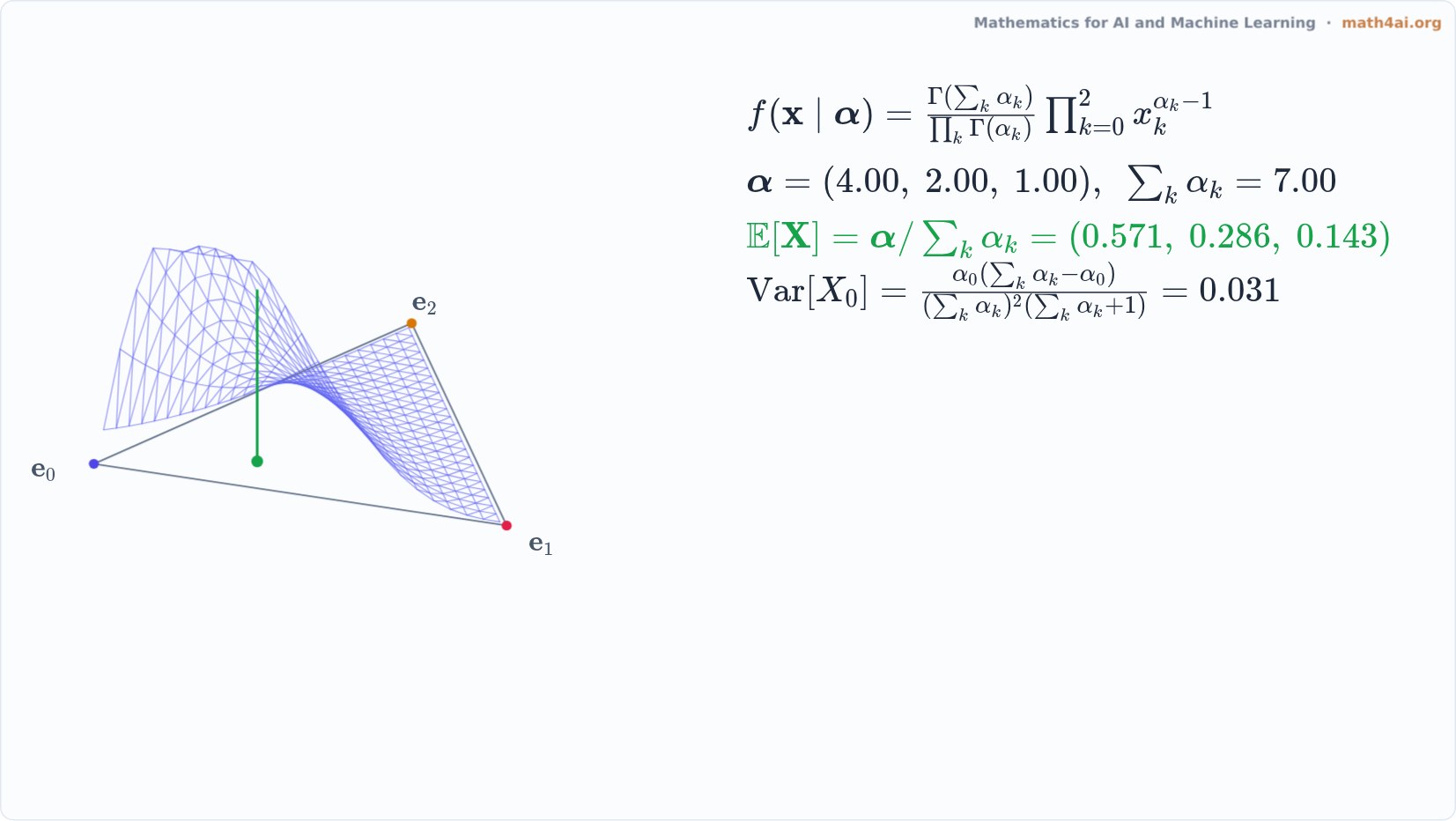 Preview1:42The Dirichlet Distribution: A Density on the SimplexChapter 13
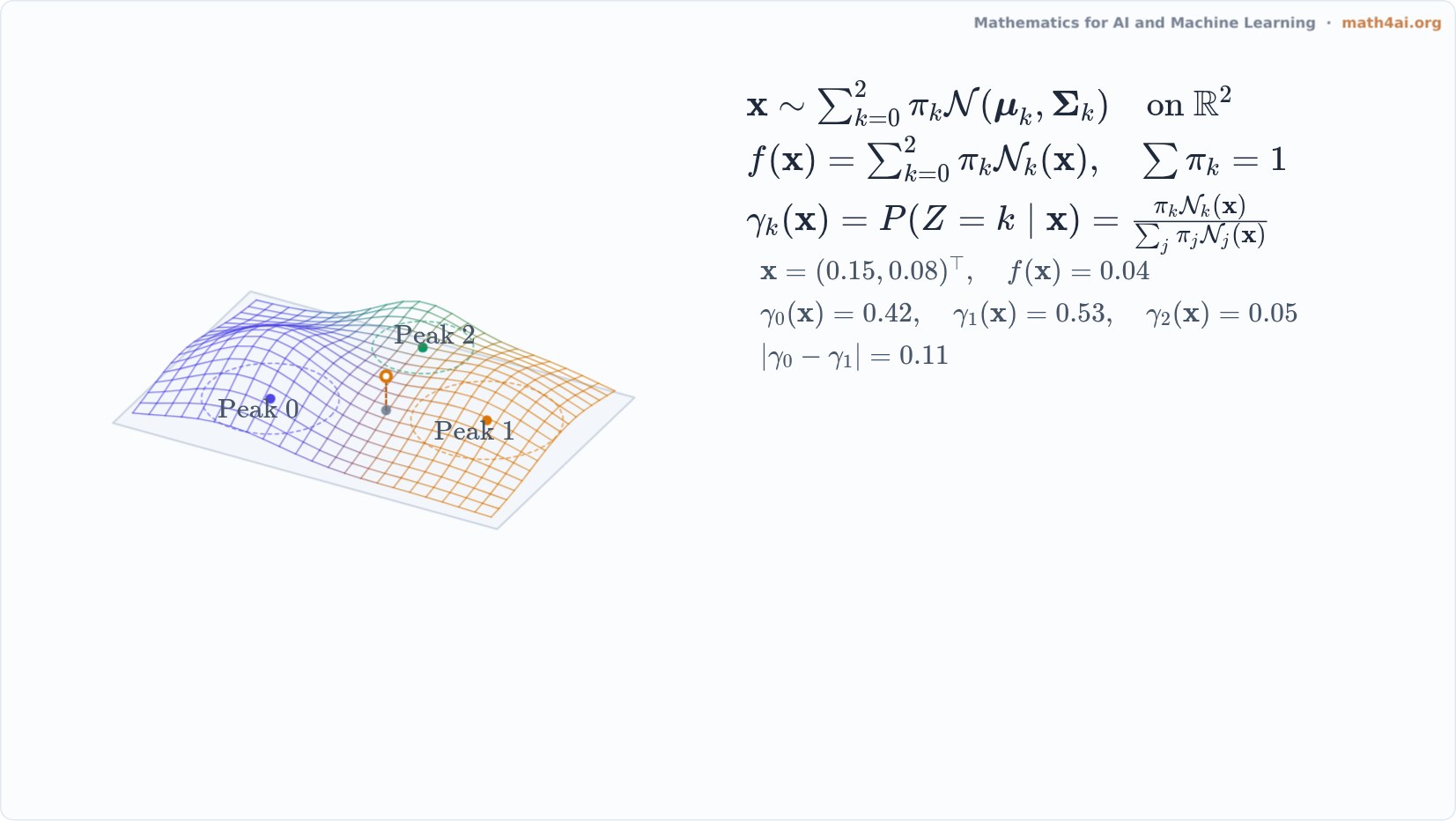 Preview1:14Gaussian Mixture Model: Multimodal TerrainChapter 13
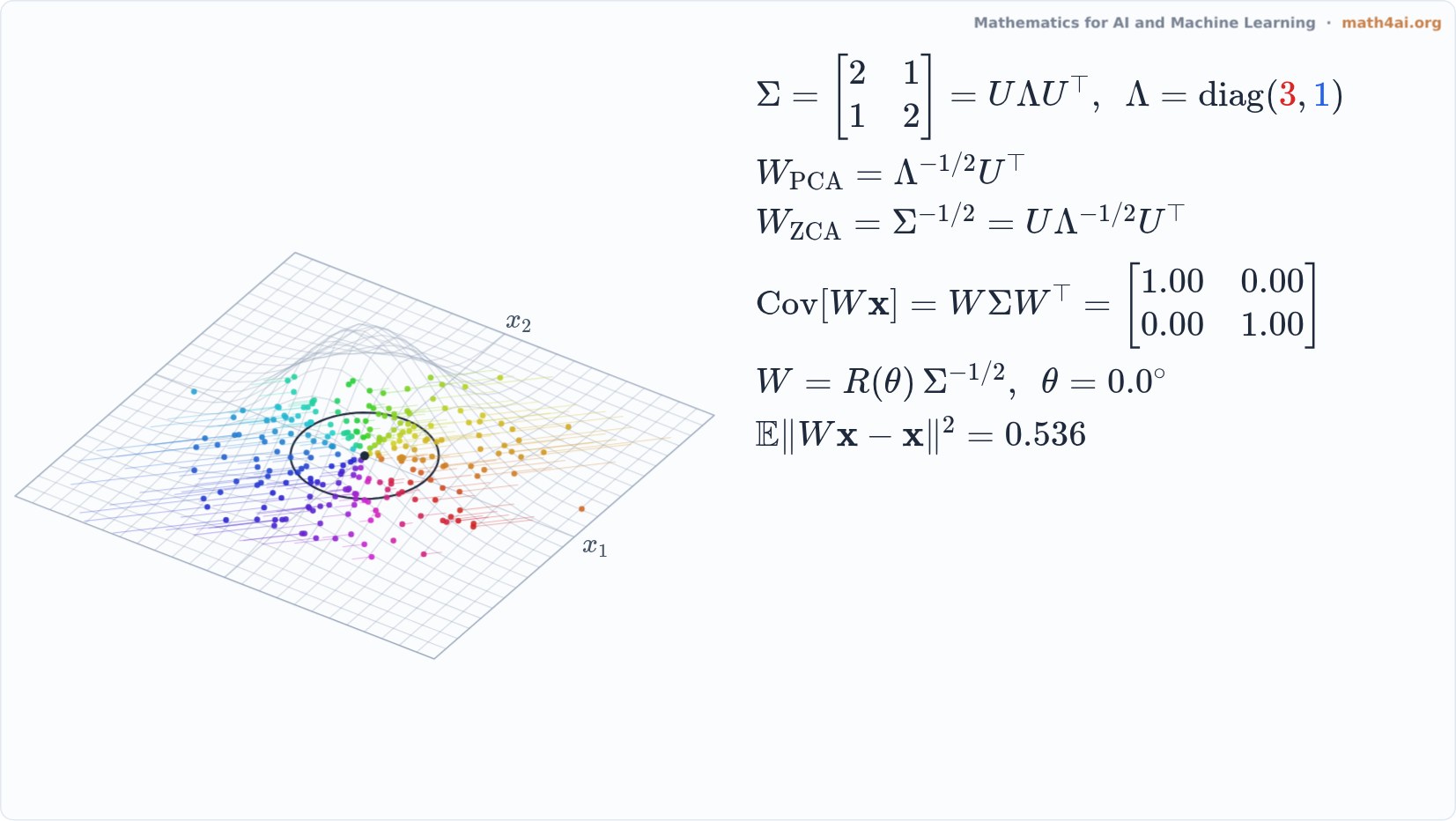 Preview1:41Whitening: PCA and ZCAChapter 13
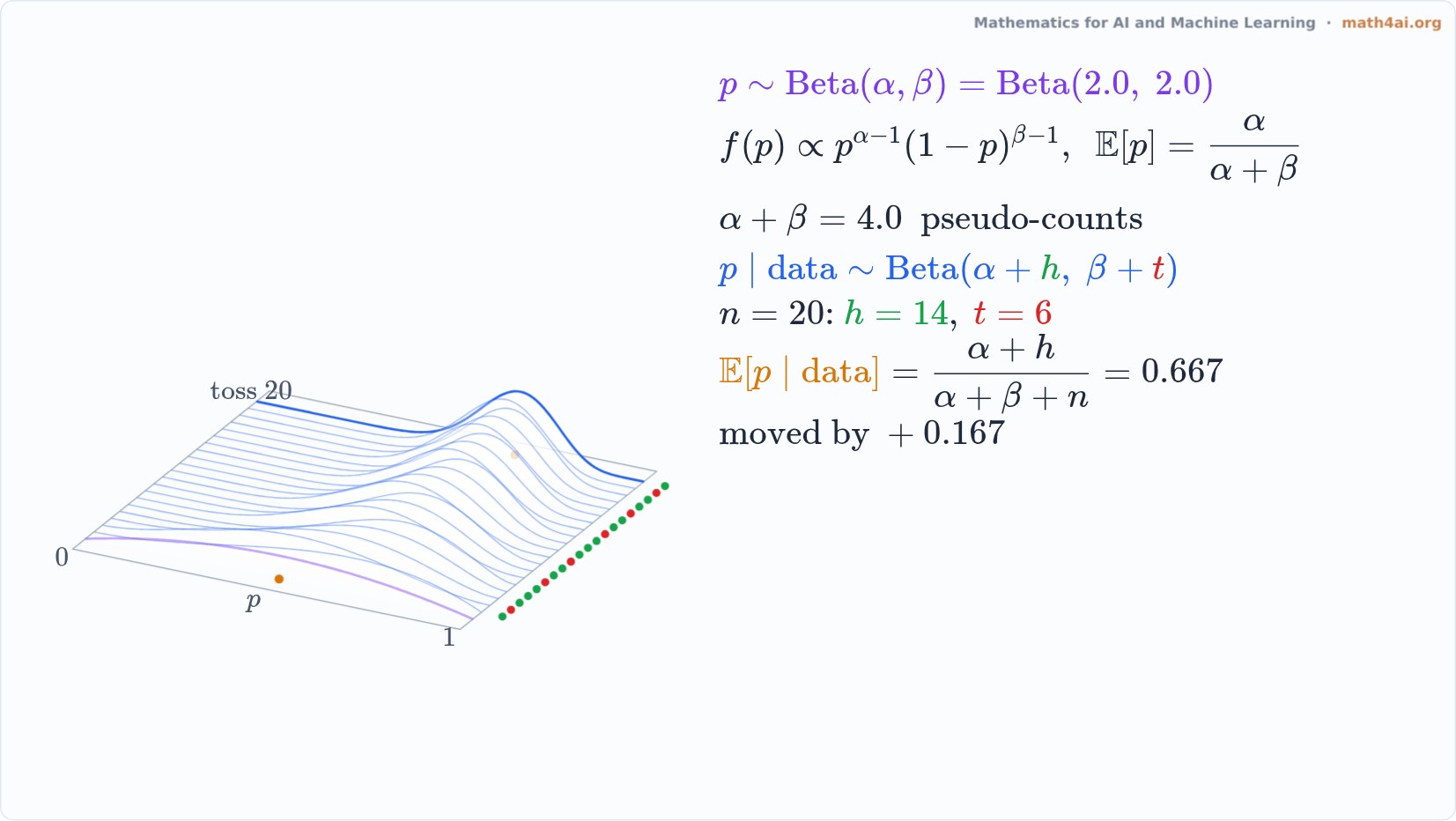 Preview1:36Beta and Bernoulli: Updating with Pseudo-CountsChapter 13
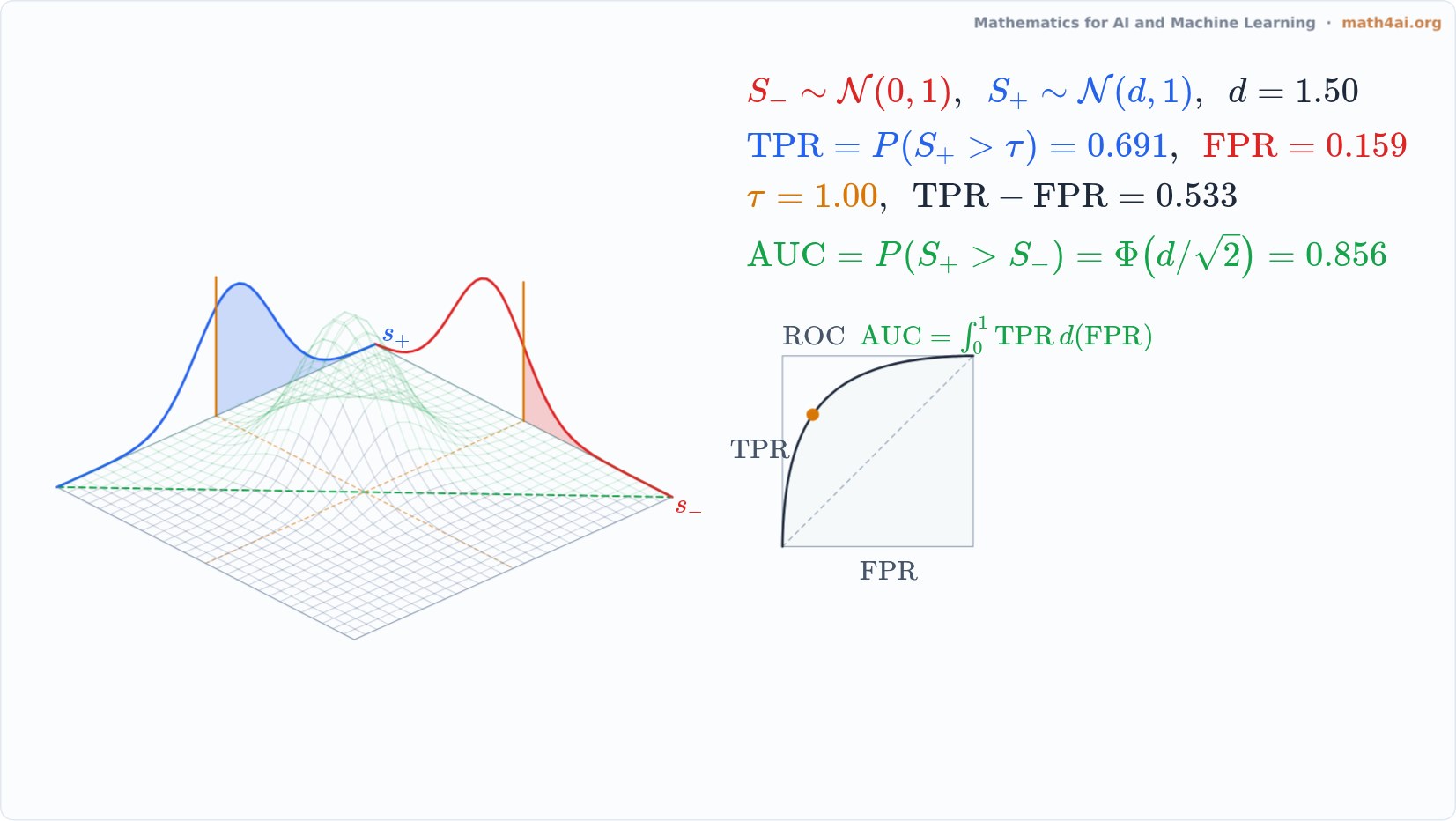 Preview1:43ROC Curve and AUC: the Mass Above the DiagonalChapter 13
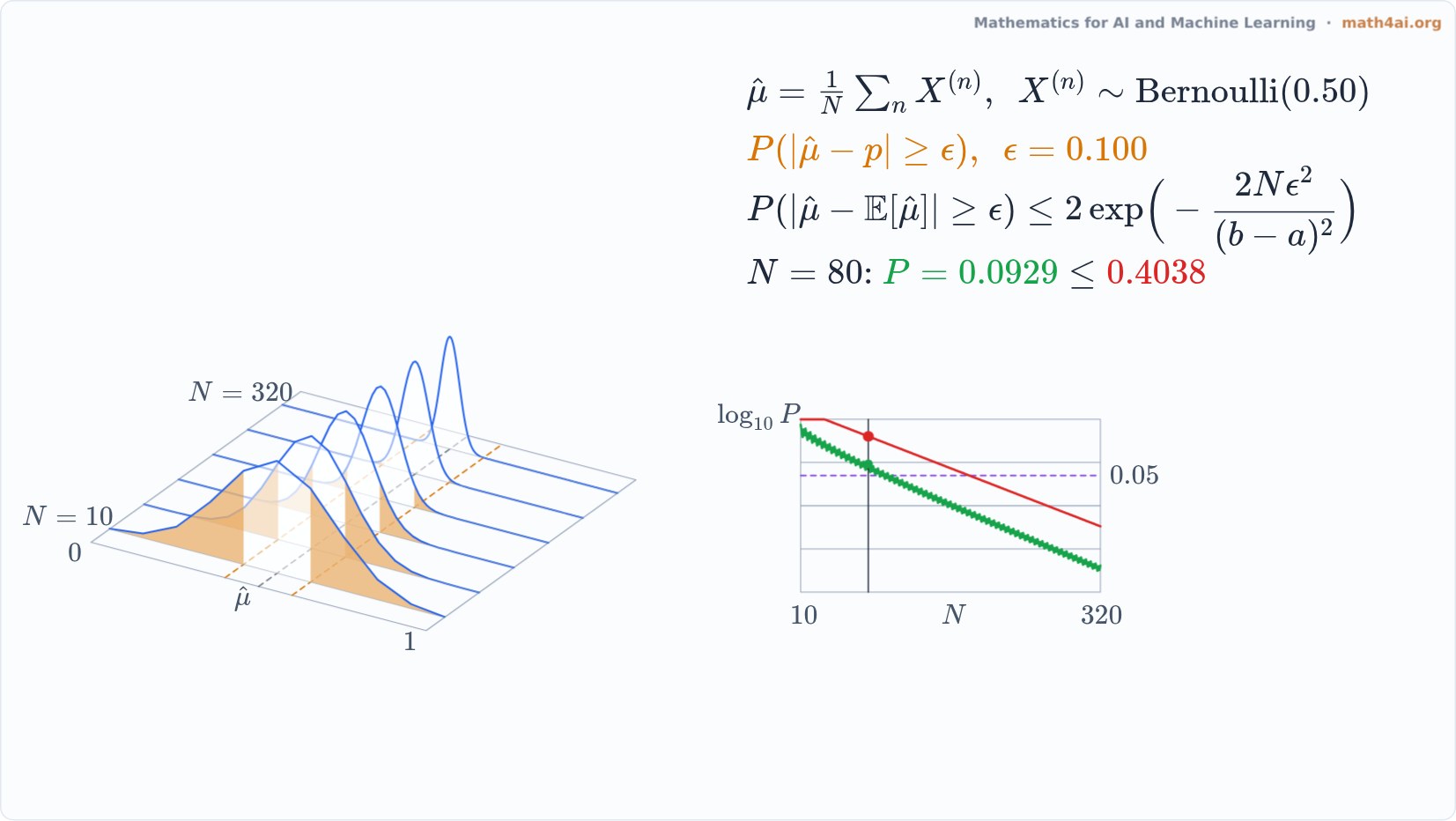 Preview1:40Hoeffding's Inequality: How Fast a Sample Mean SettlesChapter 13
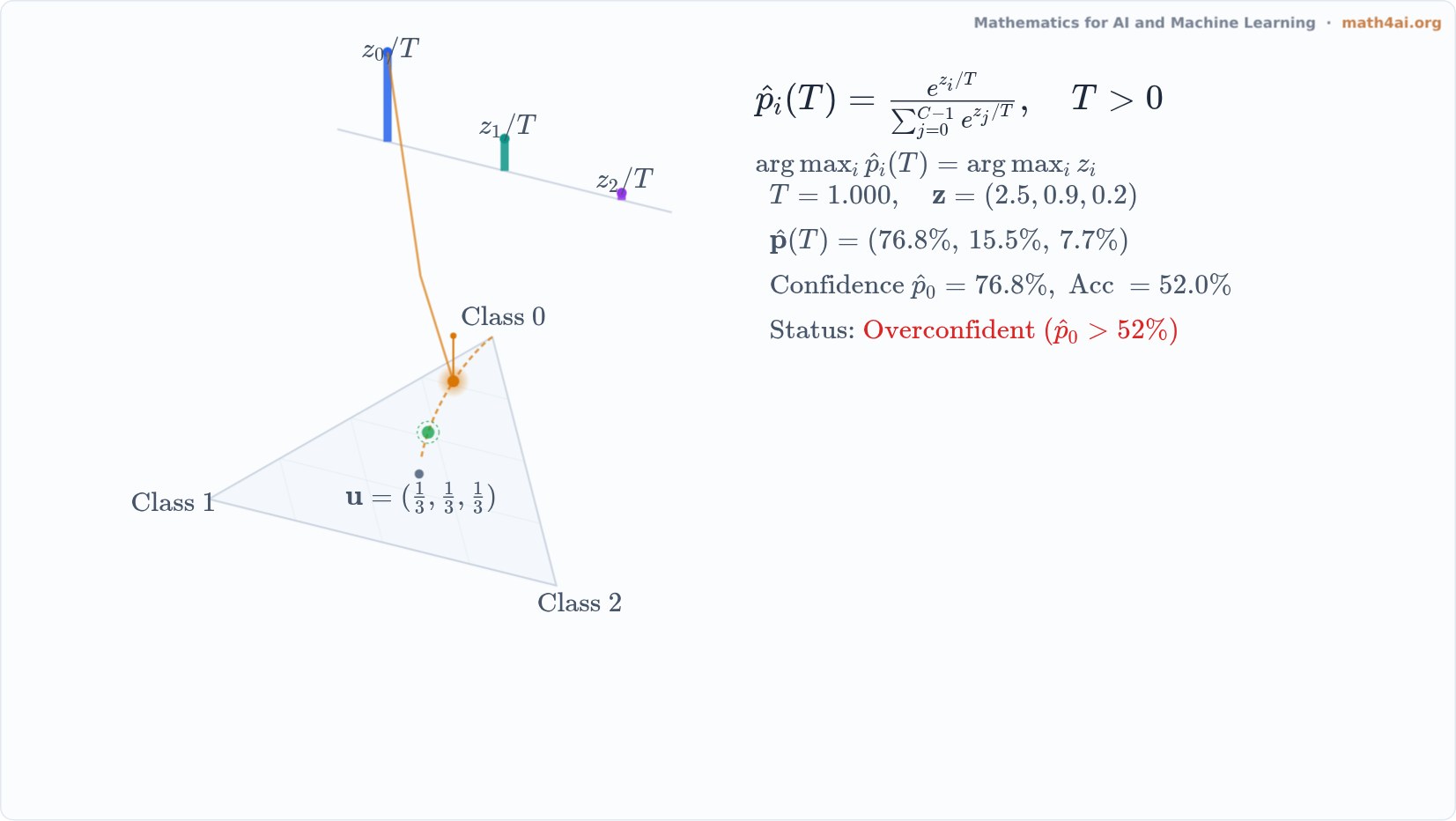 Preview1:25Temperature Scaling: Calibrating a SoftmaxChapter 13
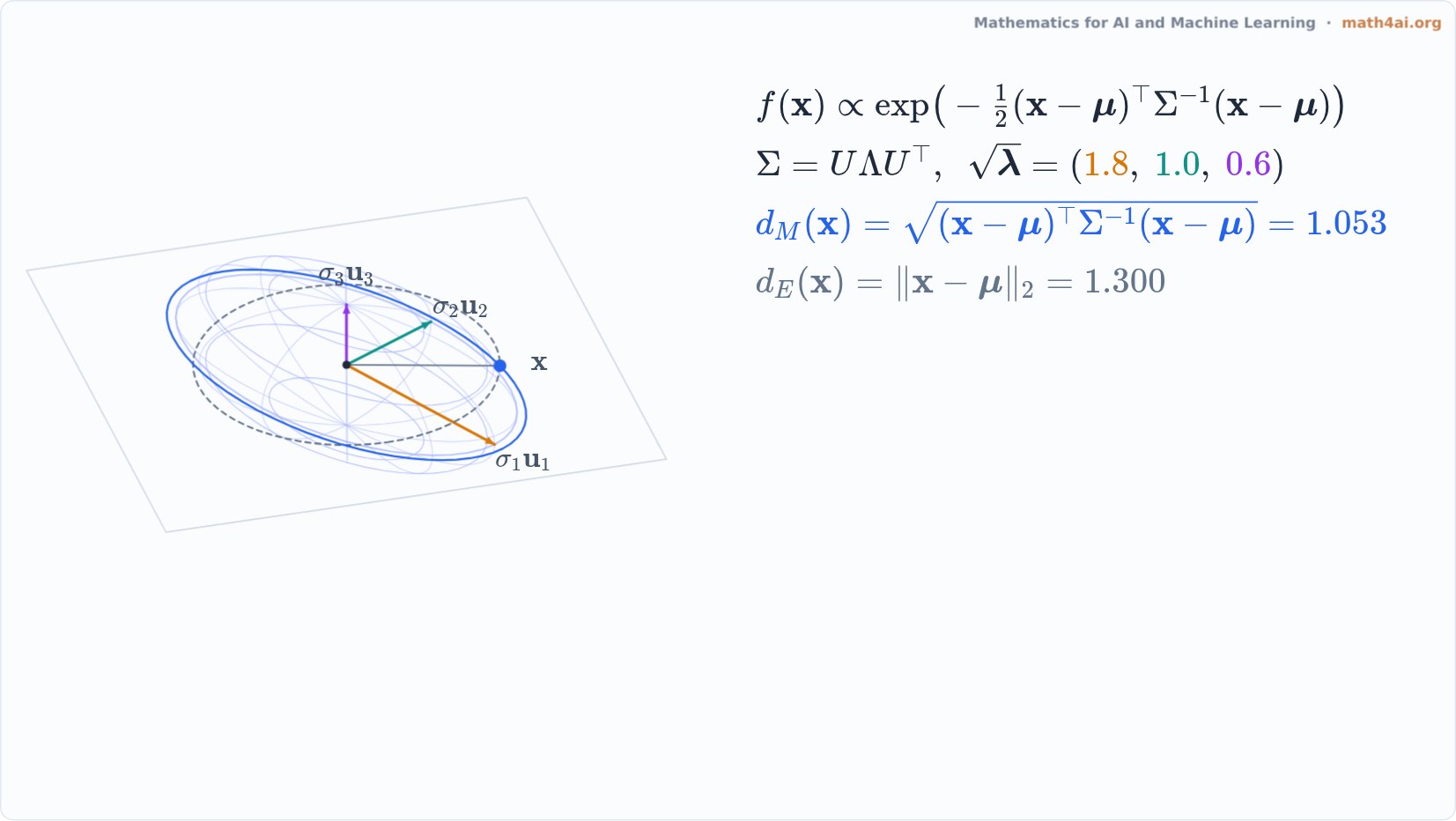 Preview1:34Mahalanobis Distance: The Ellipsoids of a GaussianChapter 13
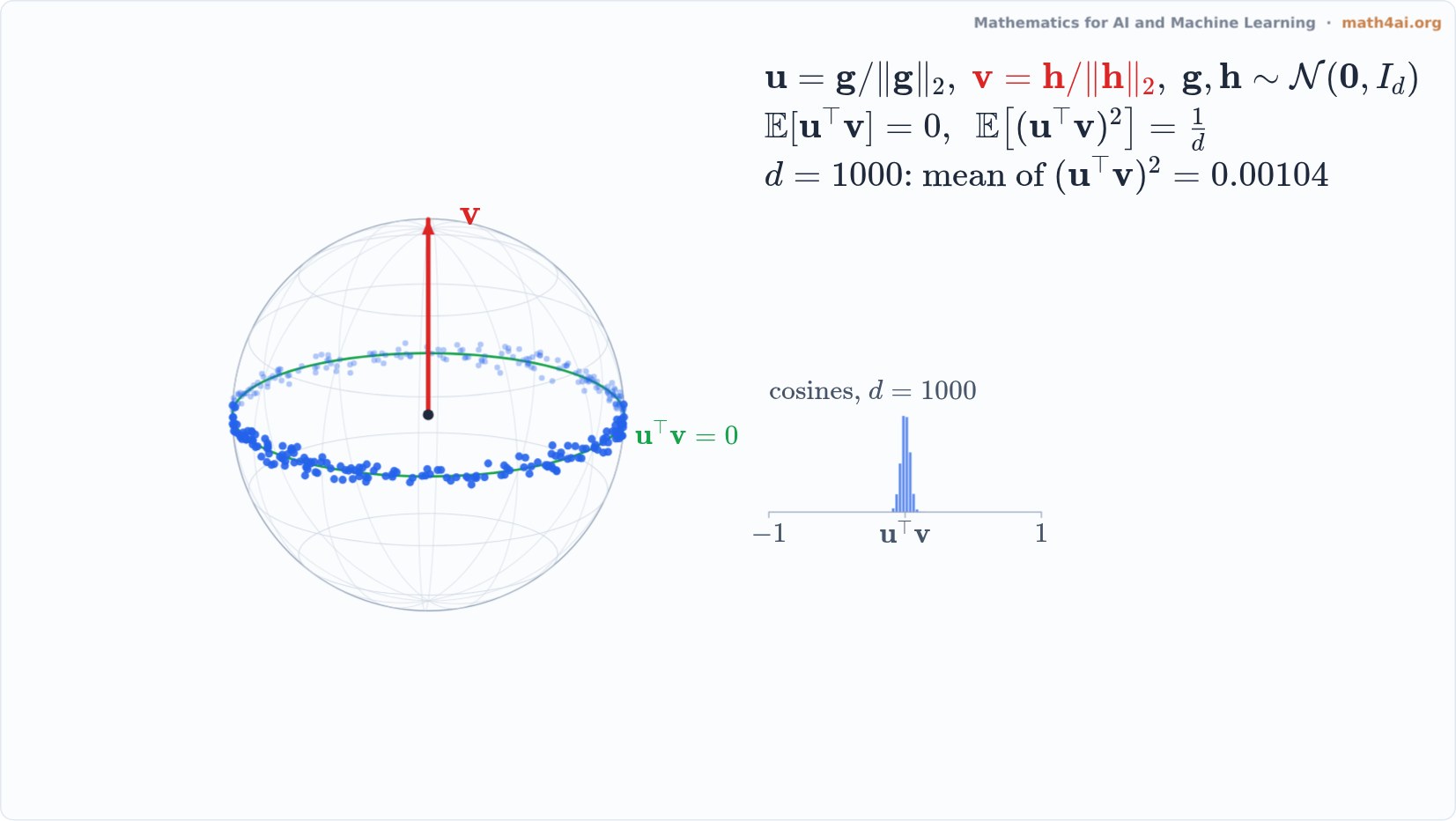 Preview2:09Random Directions Are Nearly OrthogonalChapter 13