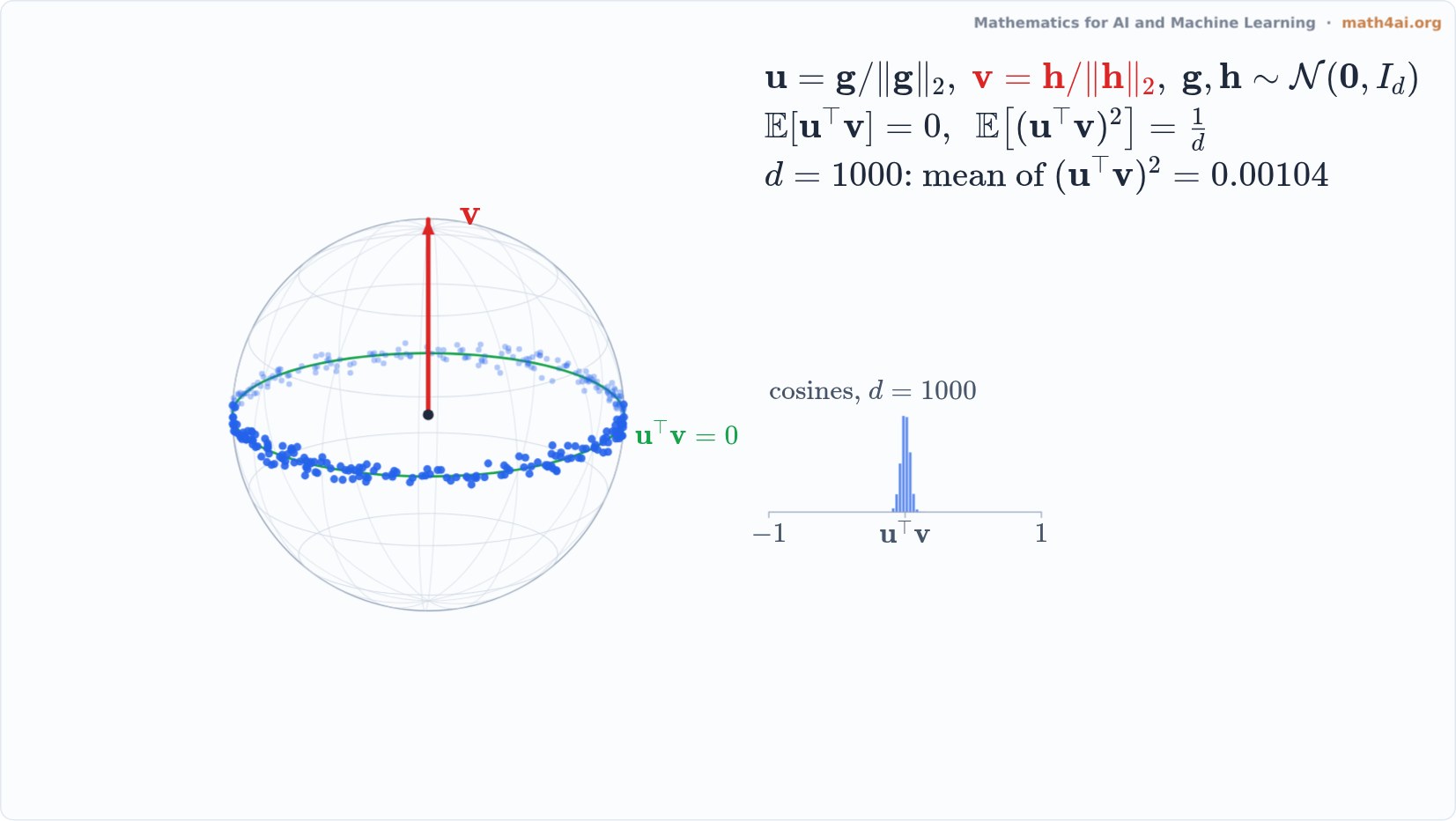
Random Directions Are Nearly Orthogonal
An interactive live film: random unit vectors on a sphere whose cosines with a fixed direction crowd onto the equator as the dimension grows (spread about one over the square root of d), and a Johnson-Lindenstrauss panel of squared-distance ratios after a random projection to k dimensions.
Narration
Take two random directions: Gaussian vectors scaled to unit length. Fix the red one, v, pointing up; by symmetry its direction does not matter. Each blue dot is a random unit vector u, at the height of its cosine with v.
In three dimensions the cosines spread from minus one to one, and the histogram on the right is flat. On the green equator, u is orthogonal to v.
The rest of the narration is in the book's Companion.
More from Chapter 13
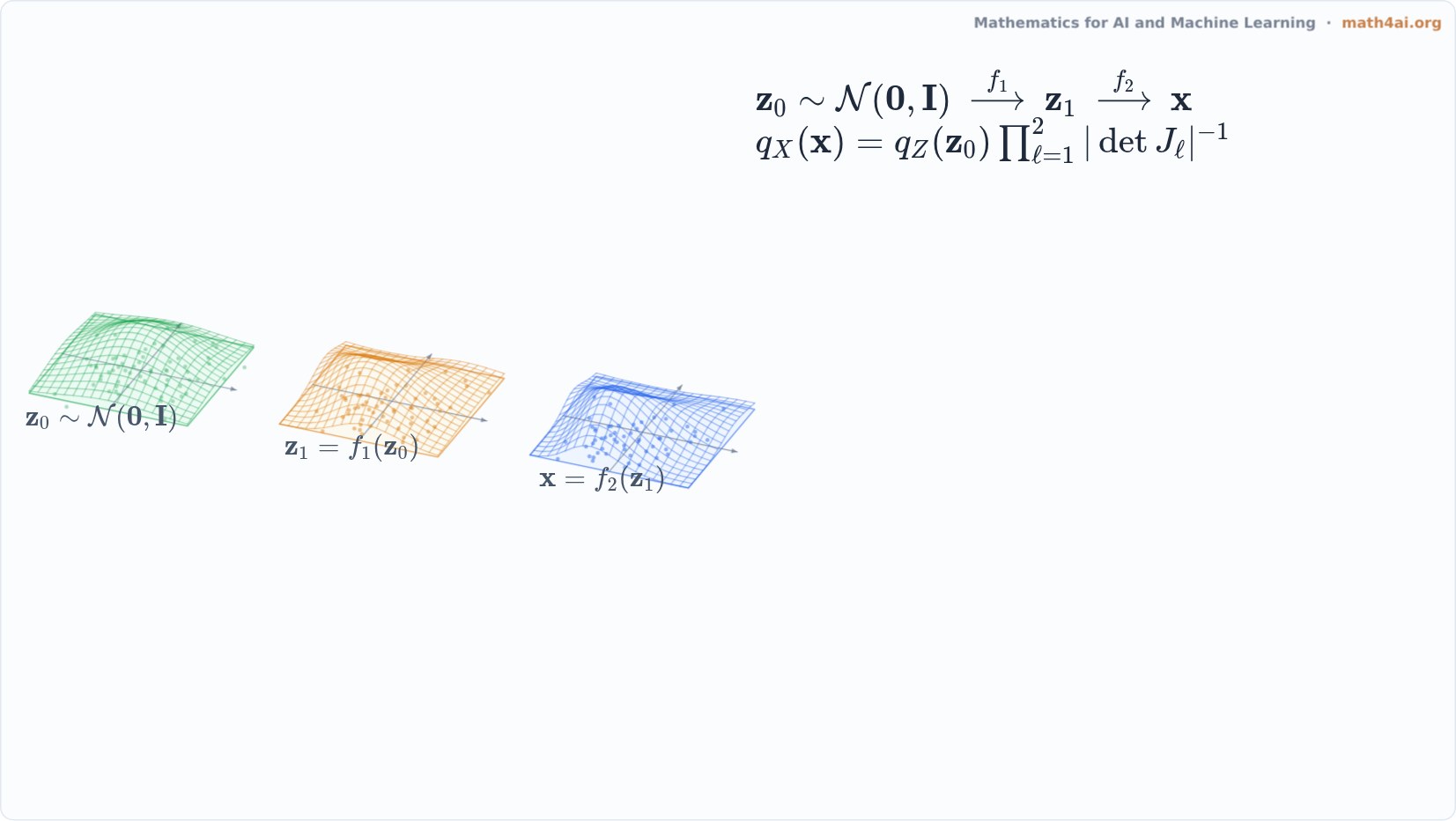 Interactive1:35Normalizing Flows: Chaining Invertible MapsChapter 13
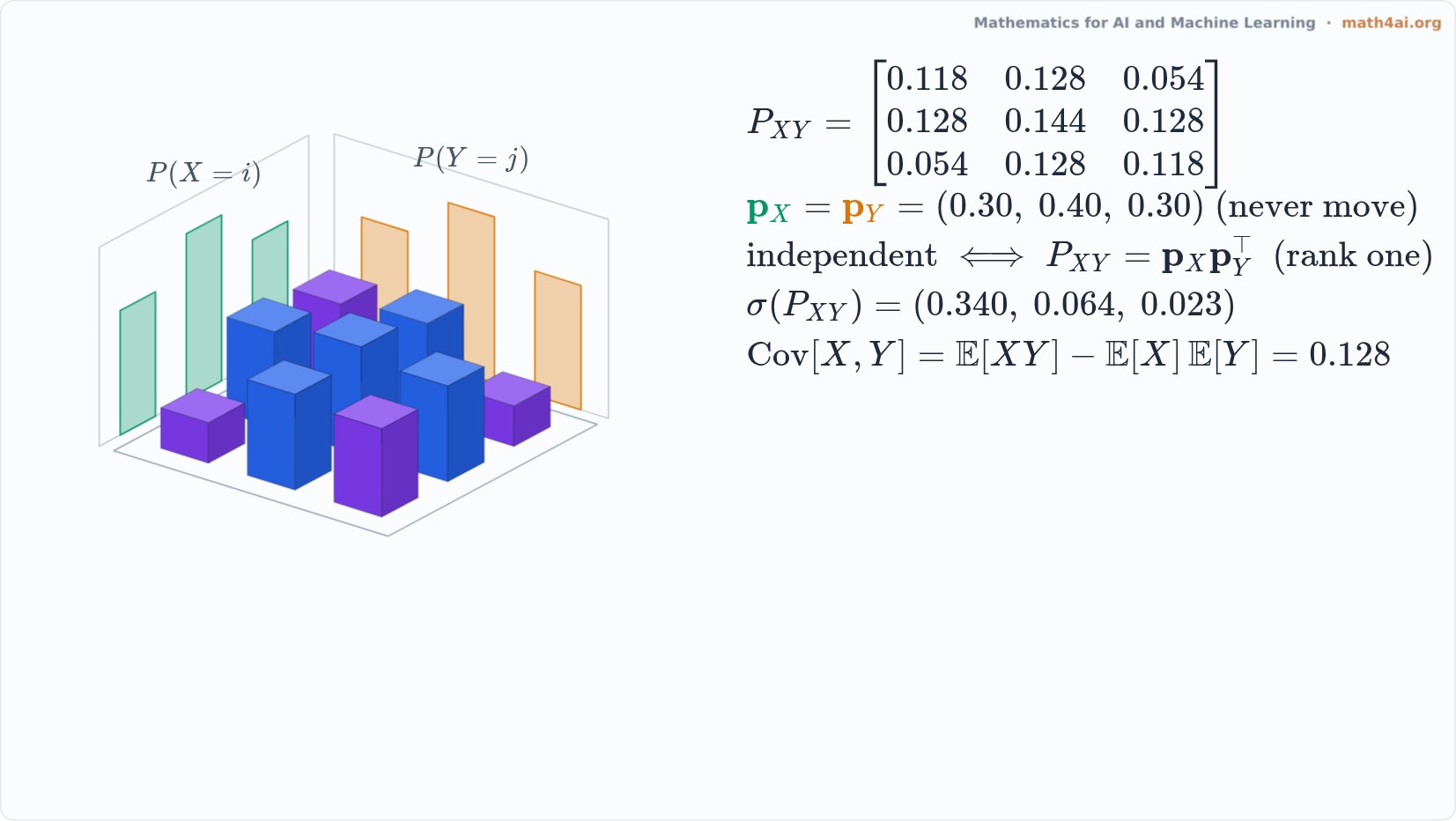 Preview1:38Independence as an Outer ProductChapter 13
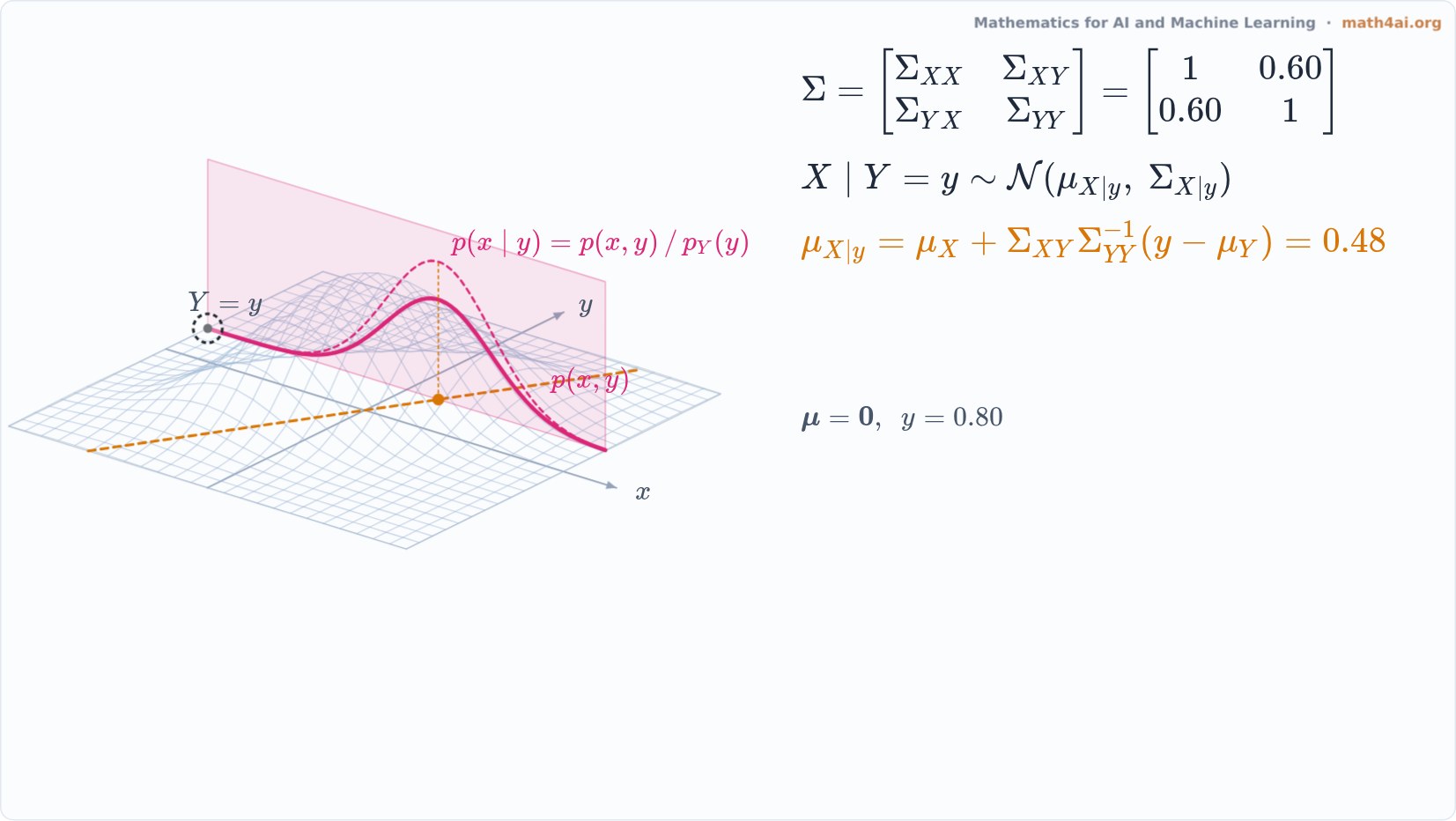 Preview1:40Conditional Gaussian: A Slice of the BellChapter 13
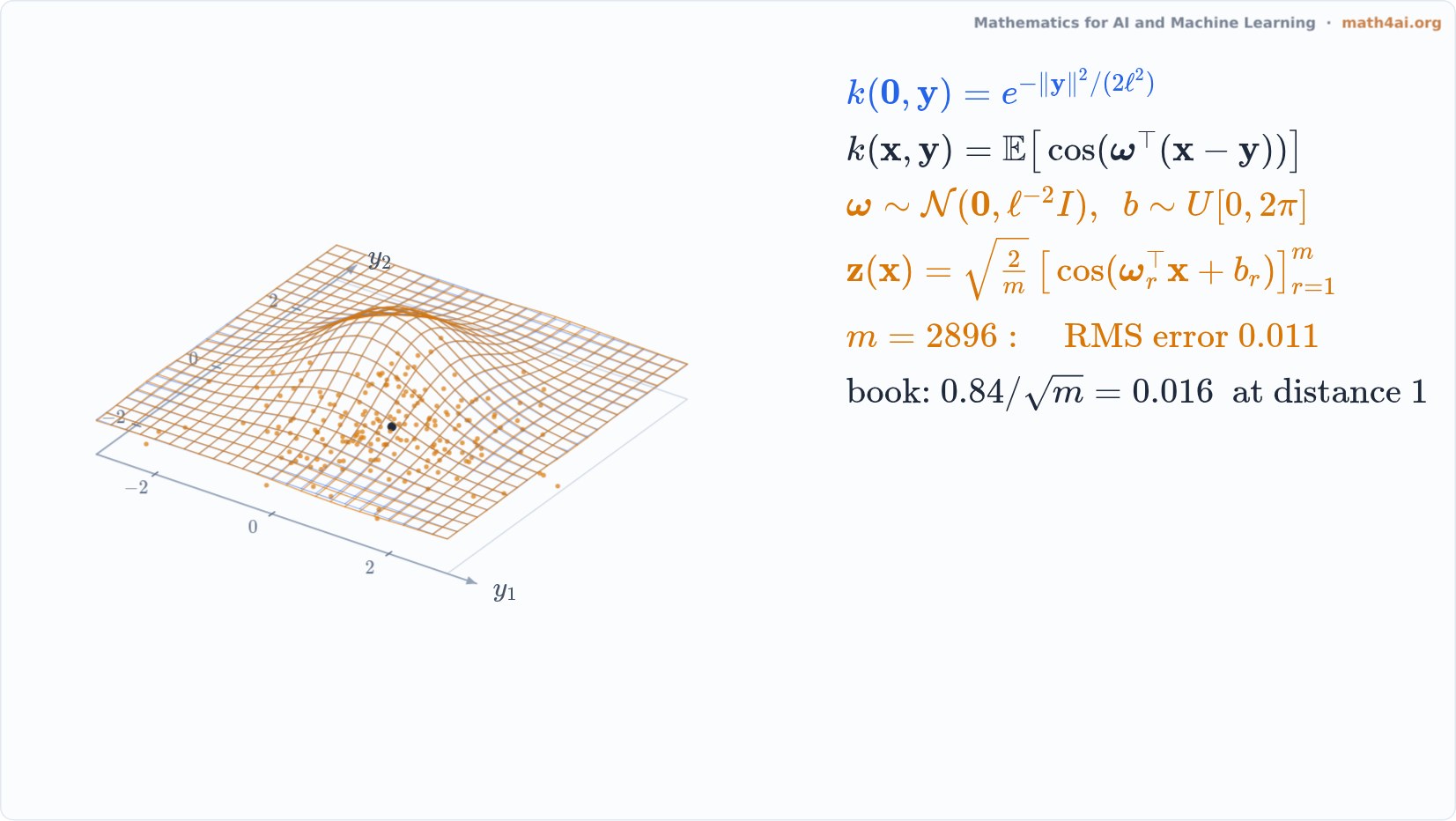 Preview1:22Random Fourier FeaturesChapter 13
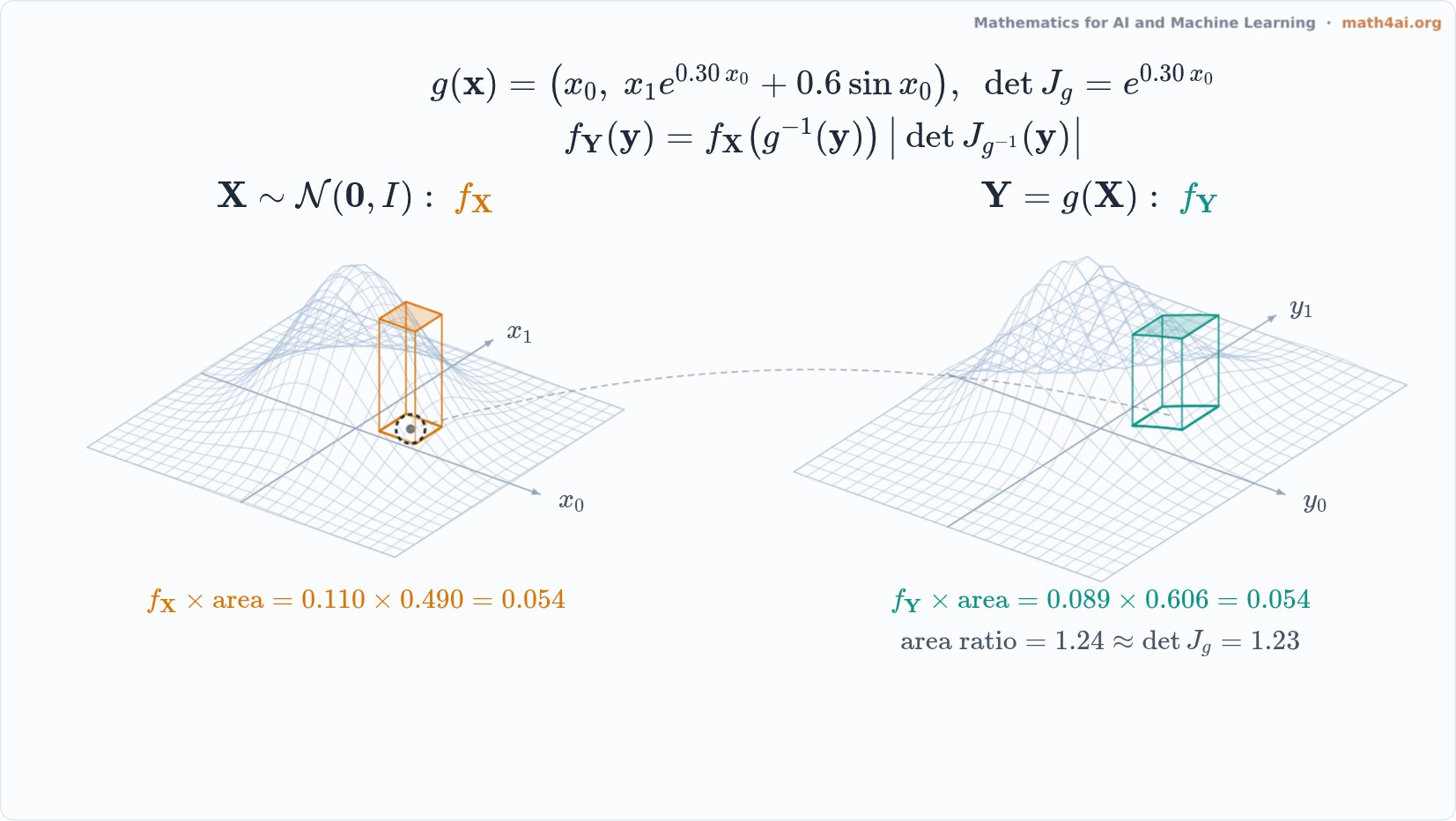 Preview1:46Change of Variables: Same Probability, Different AreaChapter 13
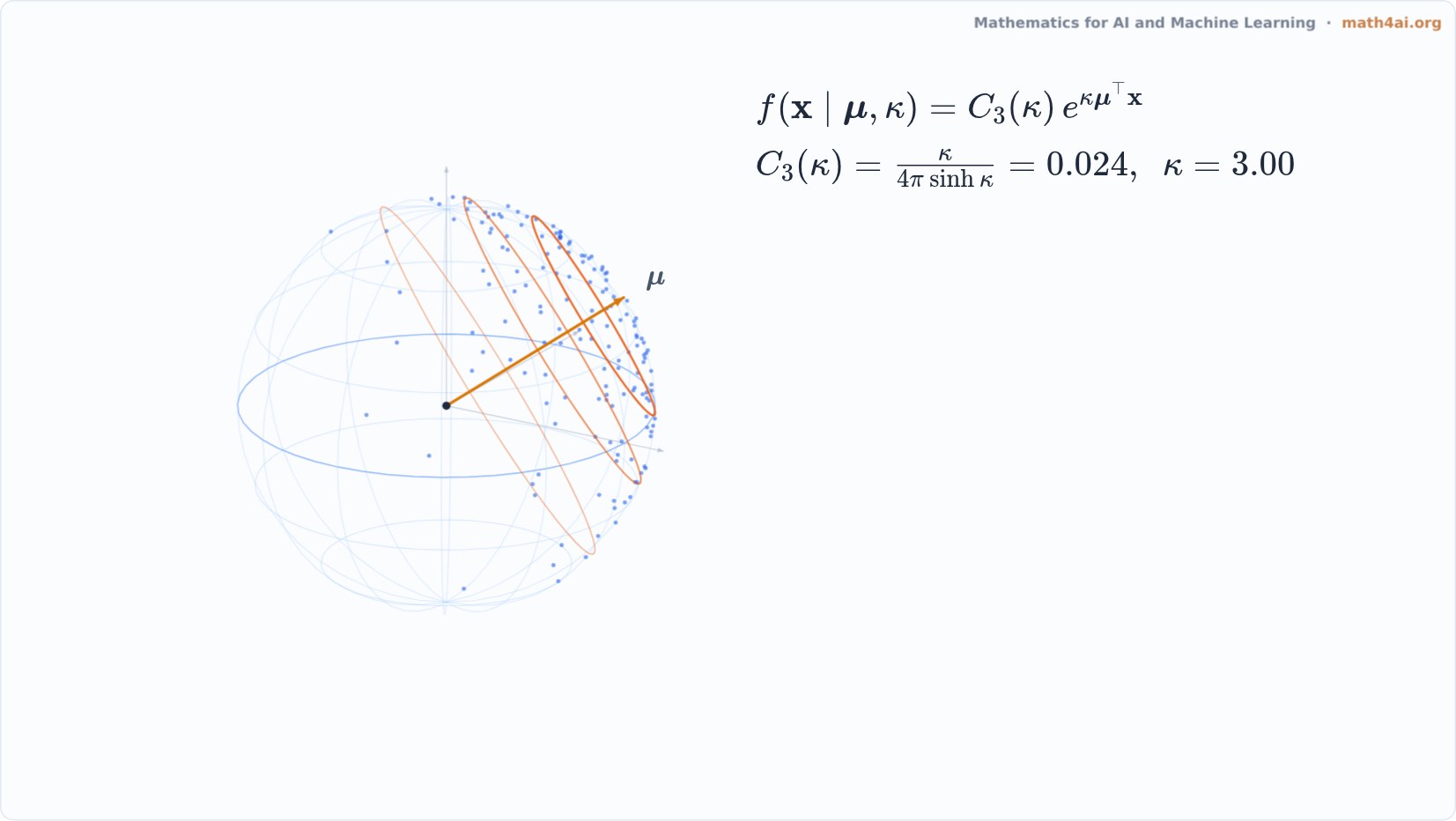 Preview1:35The von Mises-Fisher Distribution: A Gaussian for DirectionsChapter 13
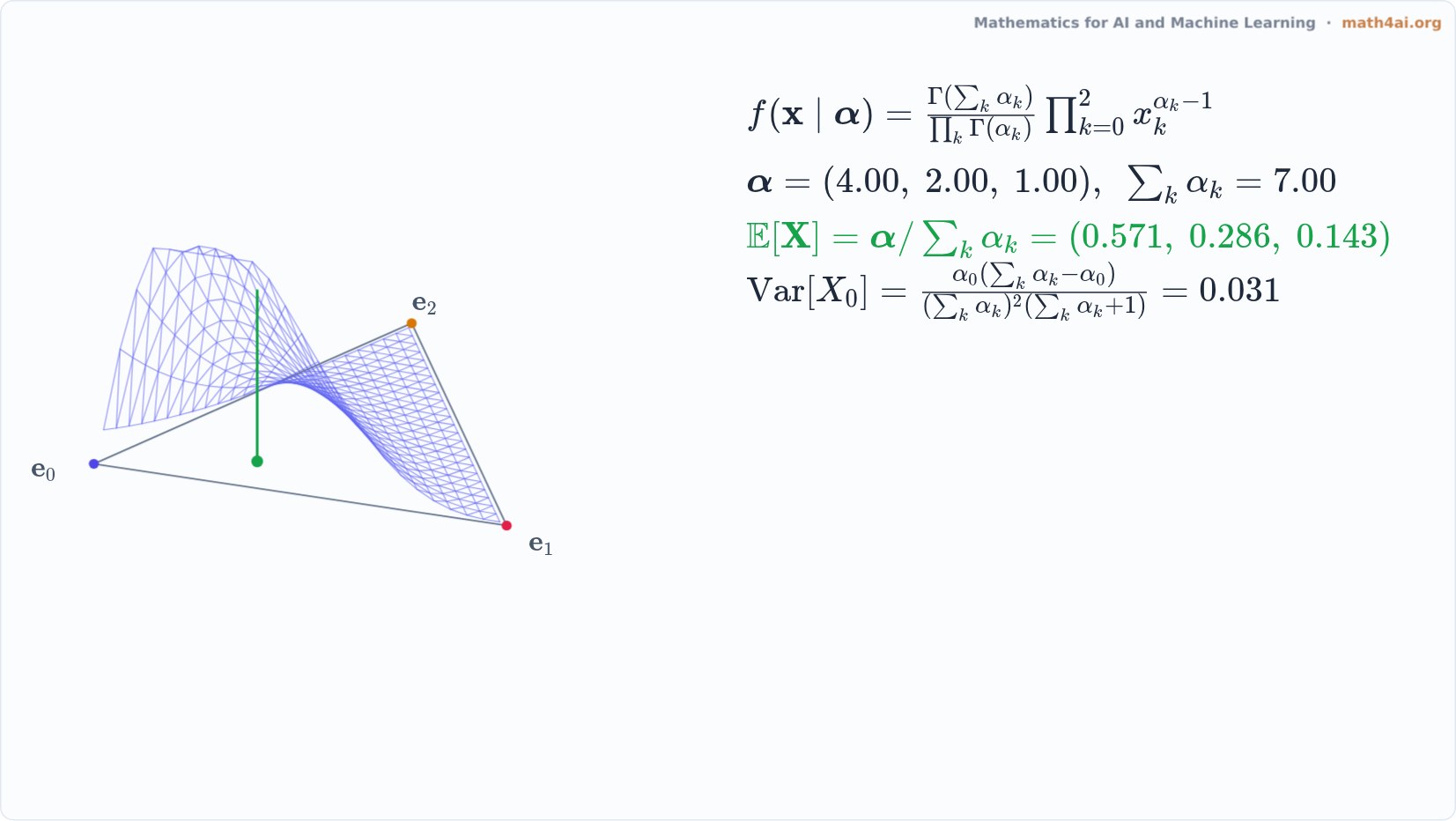 Preview1:42The Dirichlet Distribution: A Density on the SimplexChapter 13
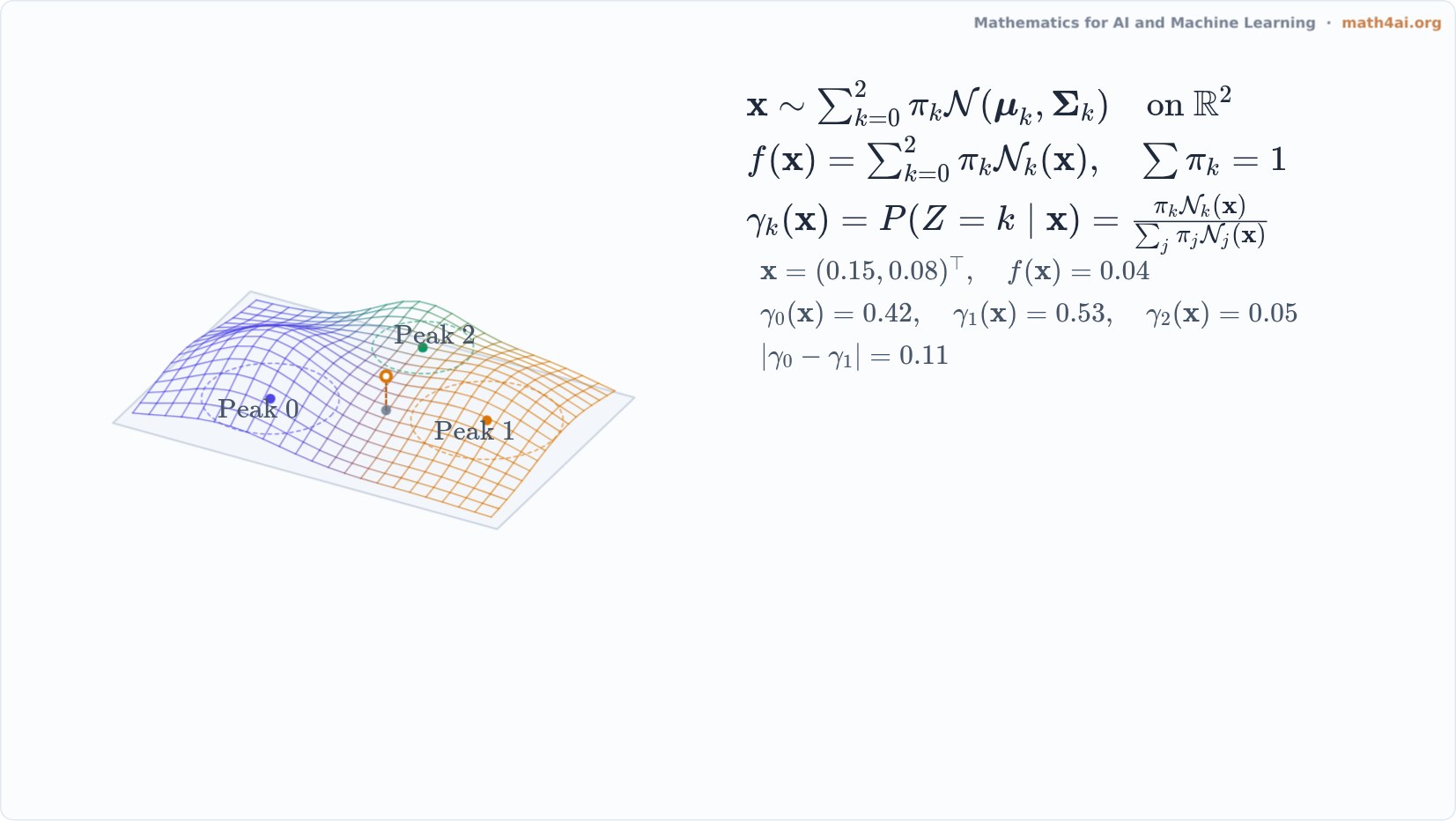 Preview1:14Gaussian Mixture Model: Multimodal TerrainChapter 13
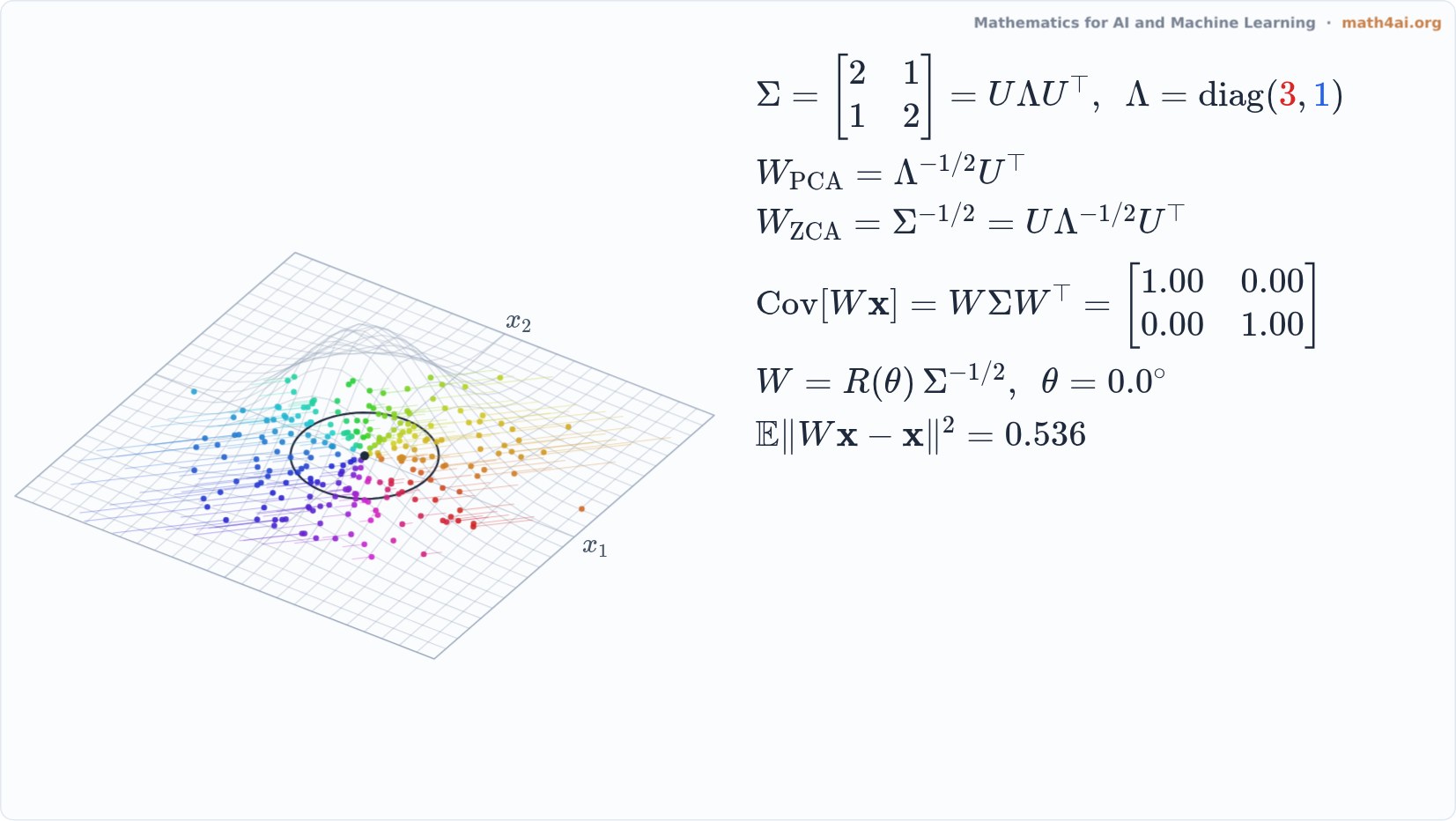 Preview1:41Whitening: PCA and ZCAChapter 13
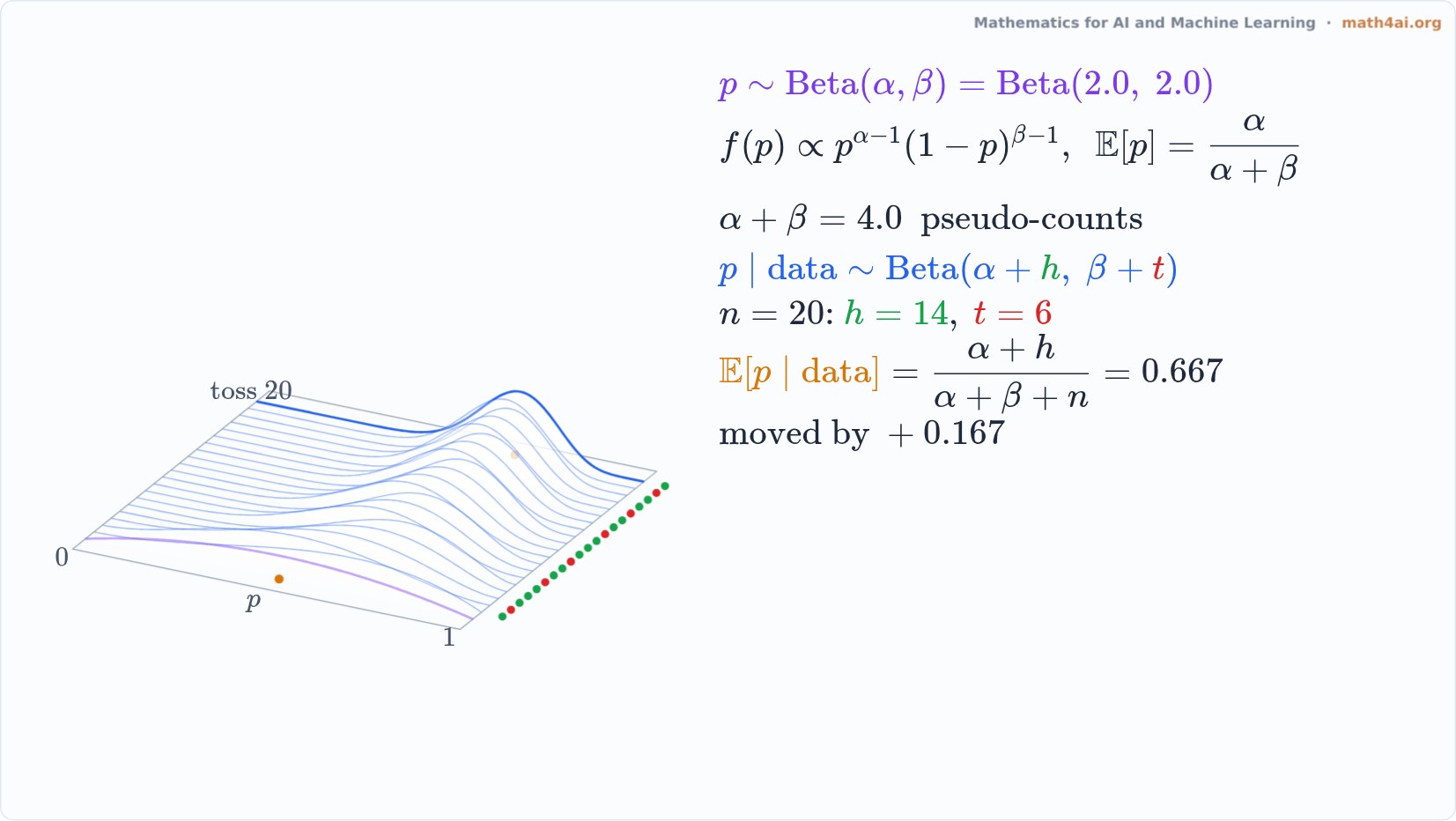 Preview1:36Beta and Bernoulli: Updating with Pseudo-CountsChapter 13
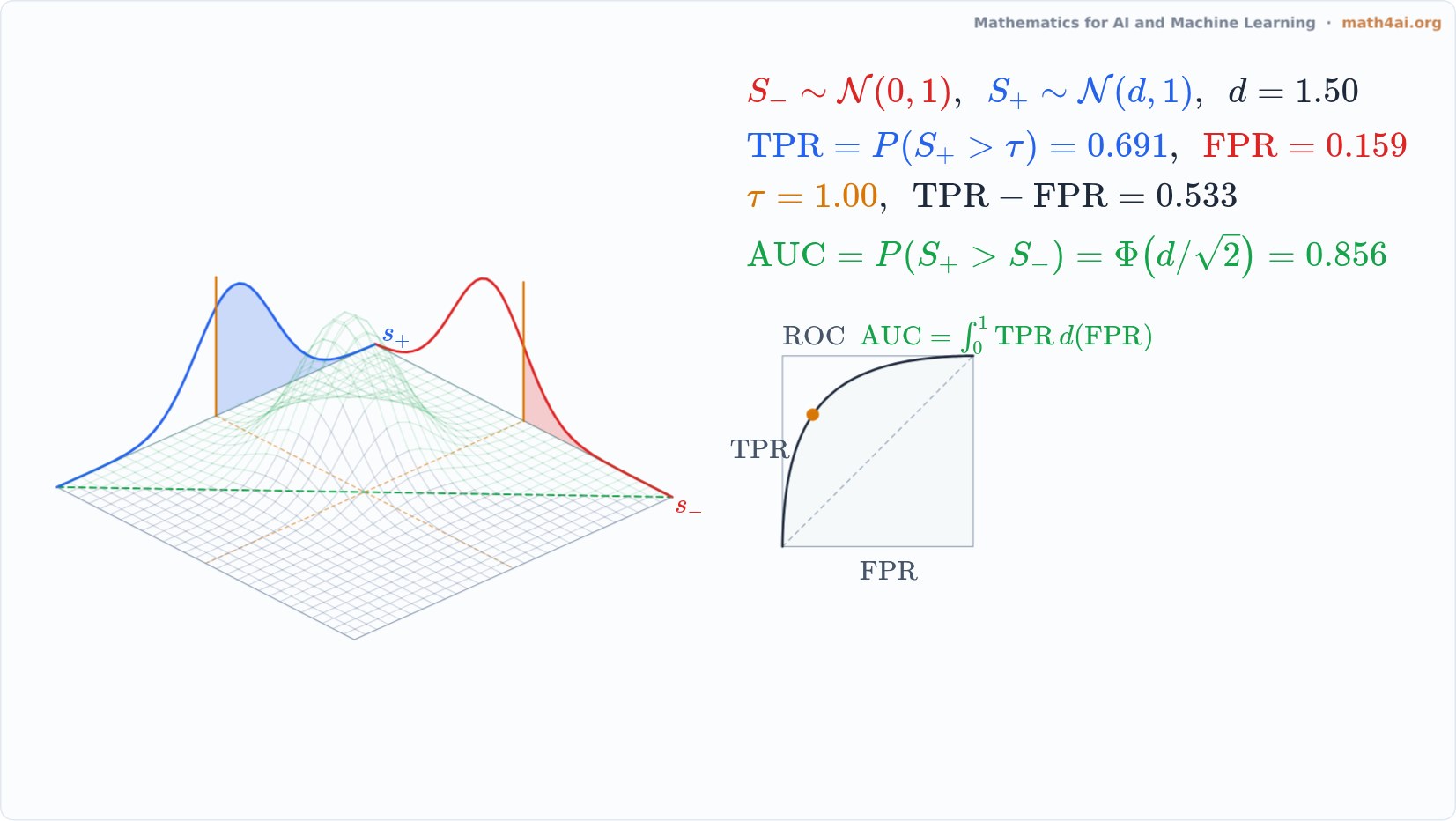 Preview1:43ROC Curve and AUC: the Mass Above the DiagonalChapter 13
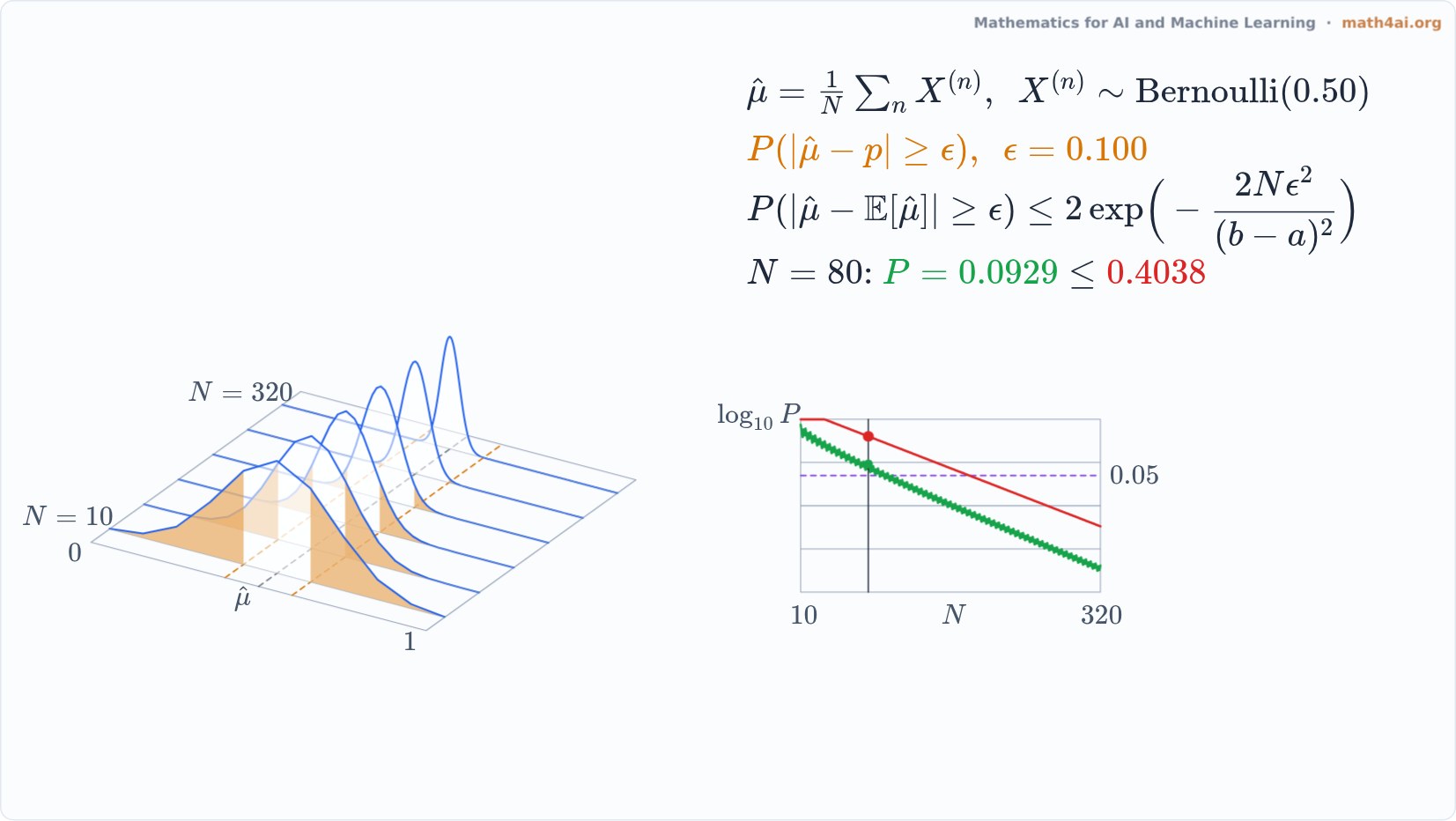 Preview1:40Hoeffding's Inequality: How Fast a Sample Mean SettlesChapter 13
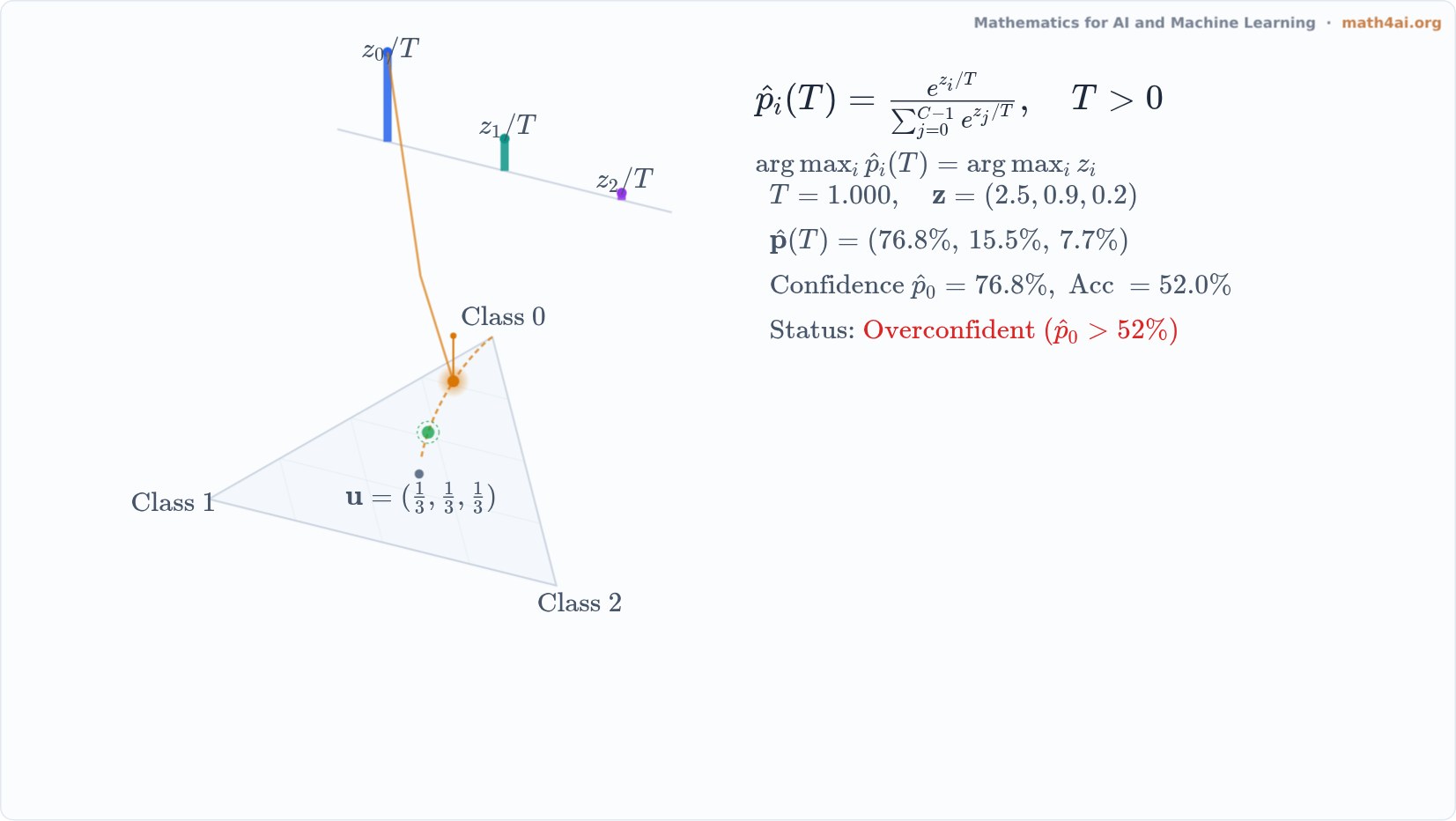 Preview1:25Temperature Scaling: Calibrating a SoftmaxChapter 13
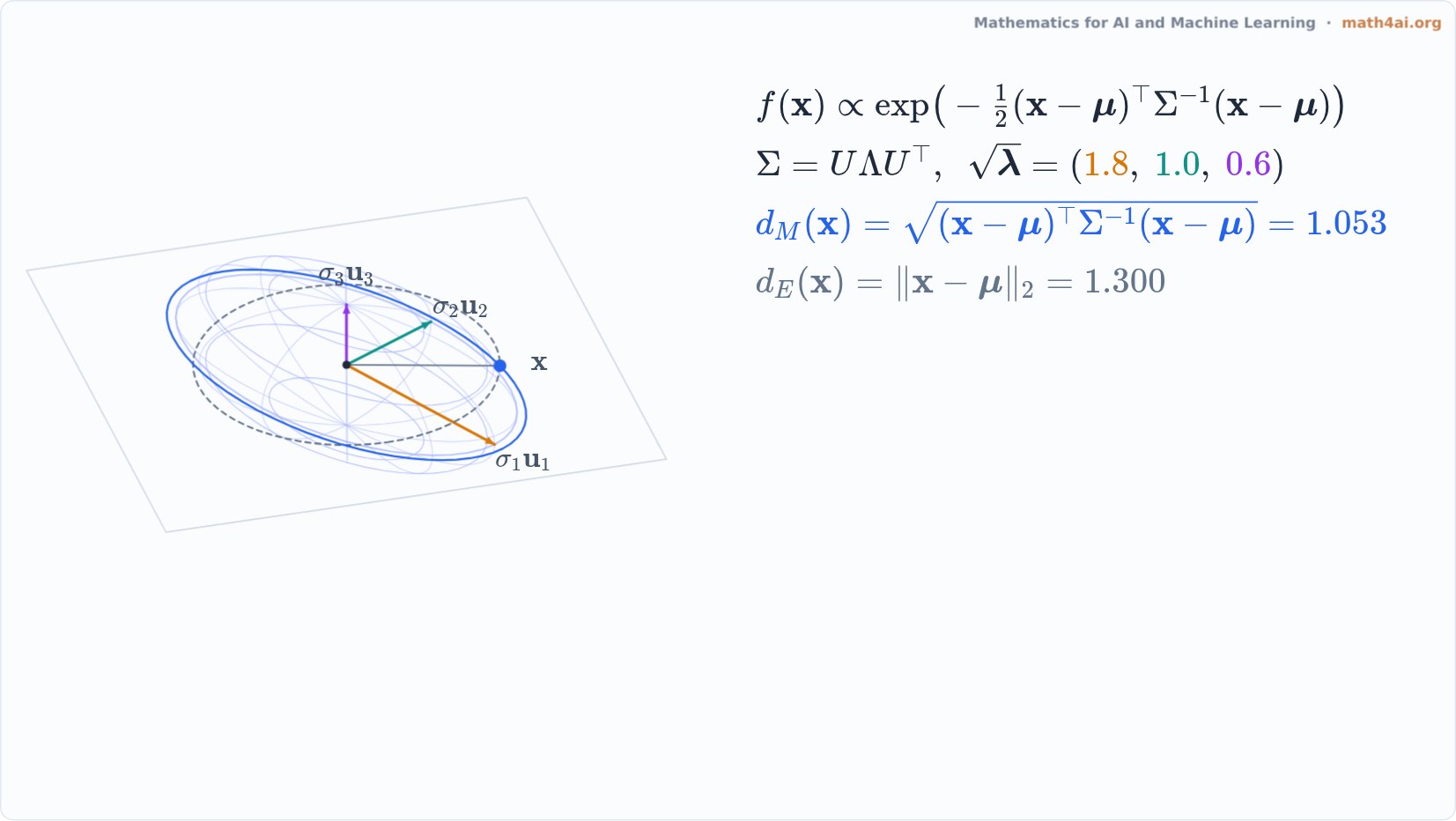 Preview1:34Mahalanobis Distance: The Ellipsoids of a GaussianChapter 13