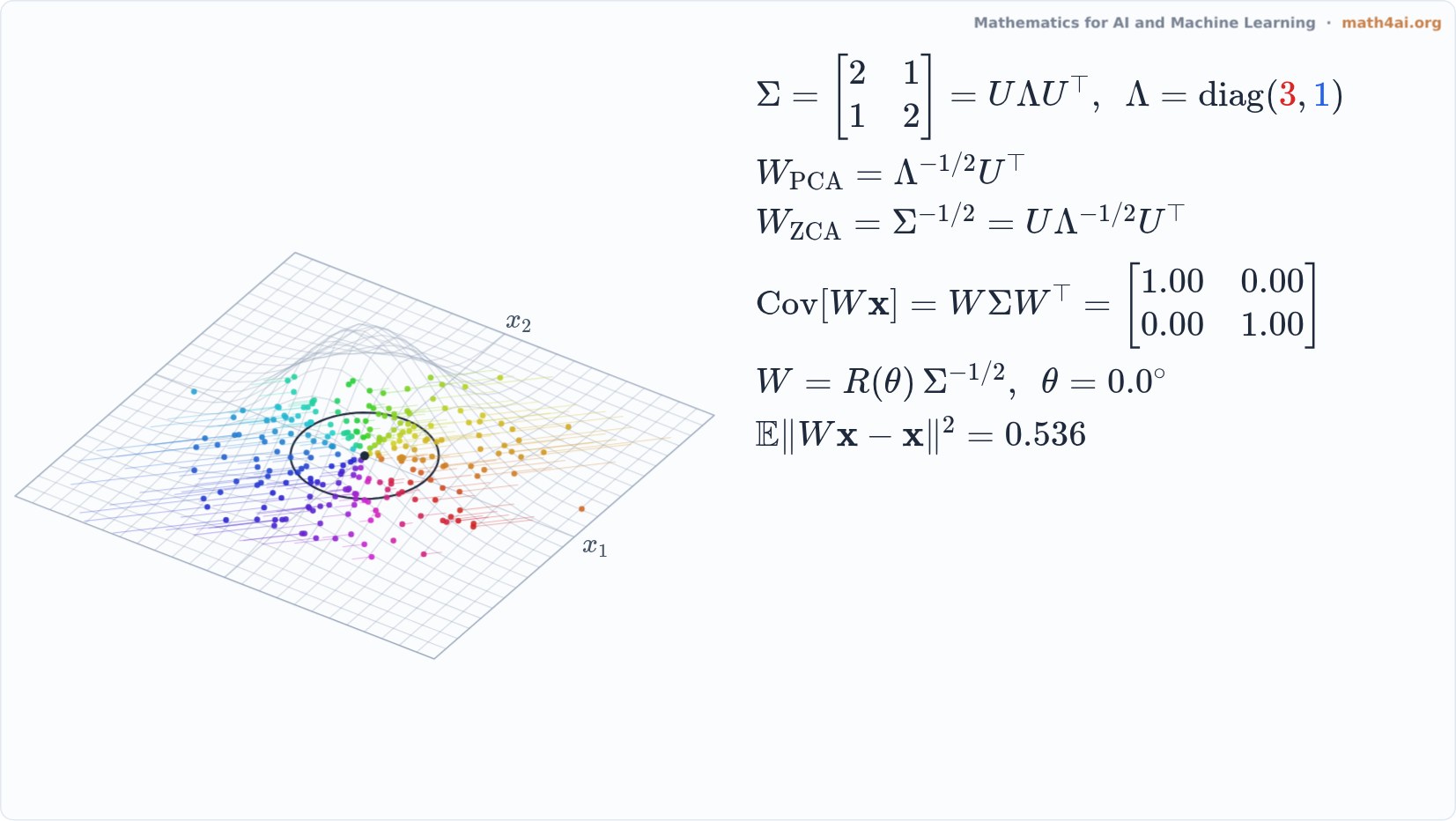
Whitening: PCA and ZCA
An interactive live film: a correlated Gaussian cloud and its bell are rotated into the eigenbasis, scaled to unit variance (PCA) and rotated back (ZCA). Rotate the white cloud and find the whitening that moves points least.
Narration
Here are samples of a Gaussian vector with covariance two, one, one, two, the example in the book. The two coordinates are correlated, so the cloud and its bell are tilted ellipses.
The spectral decomposition of the covariance gives its axes: the eigenvectors, with variances three and one along them.
The rest of the narration is in the book's Companion.
More from Chapter 13
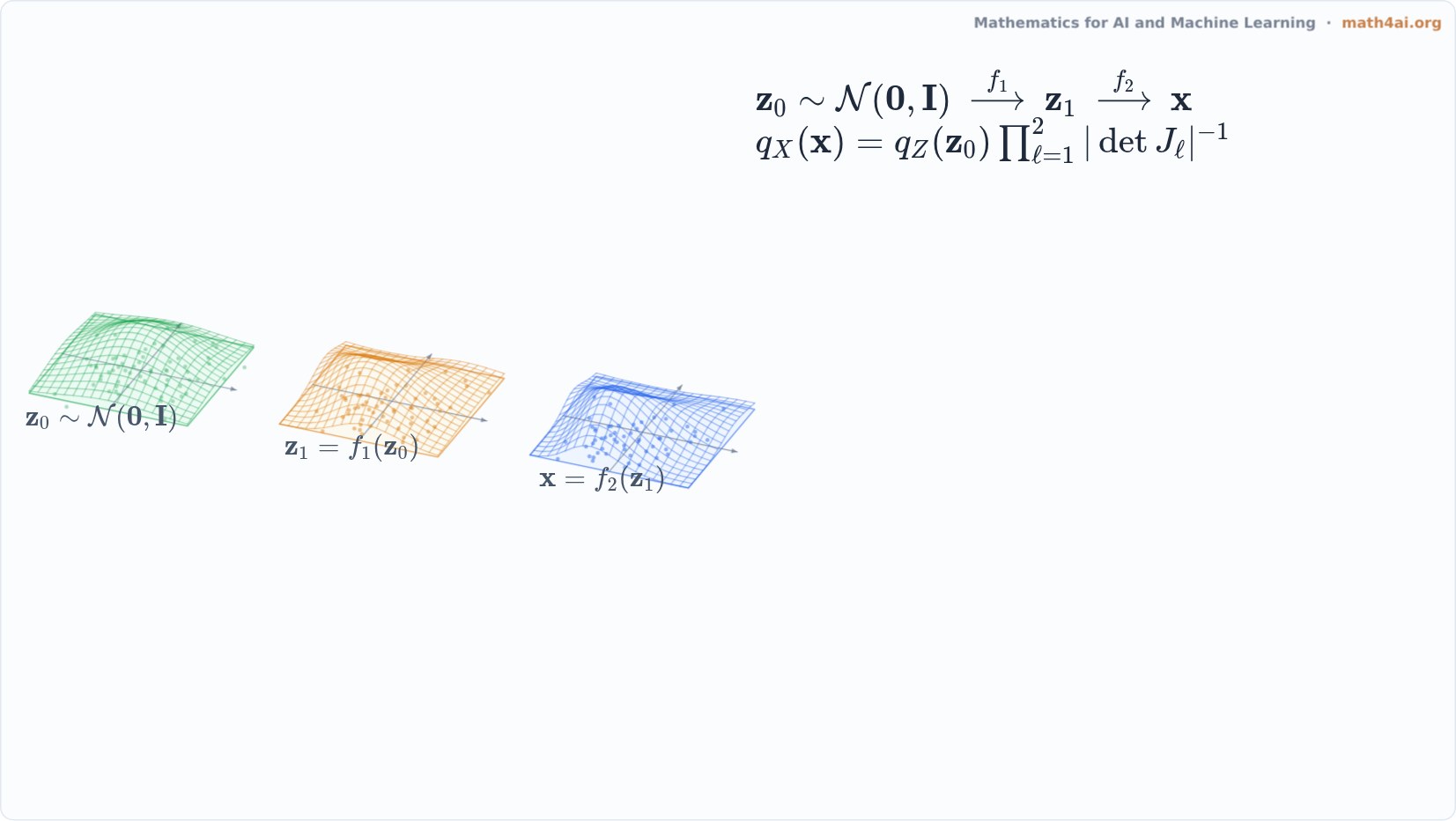 Interactive1:35Normalizing Flows: Chaining Invertible MapsChapter 13
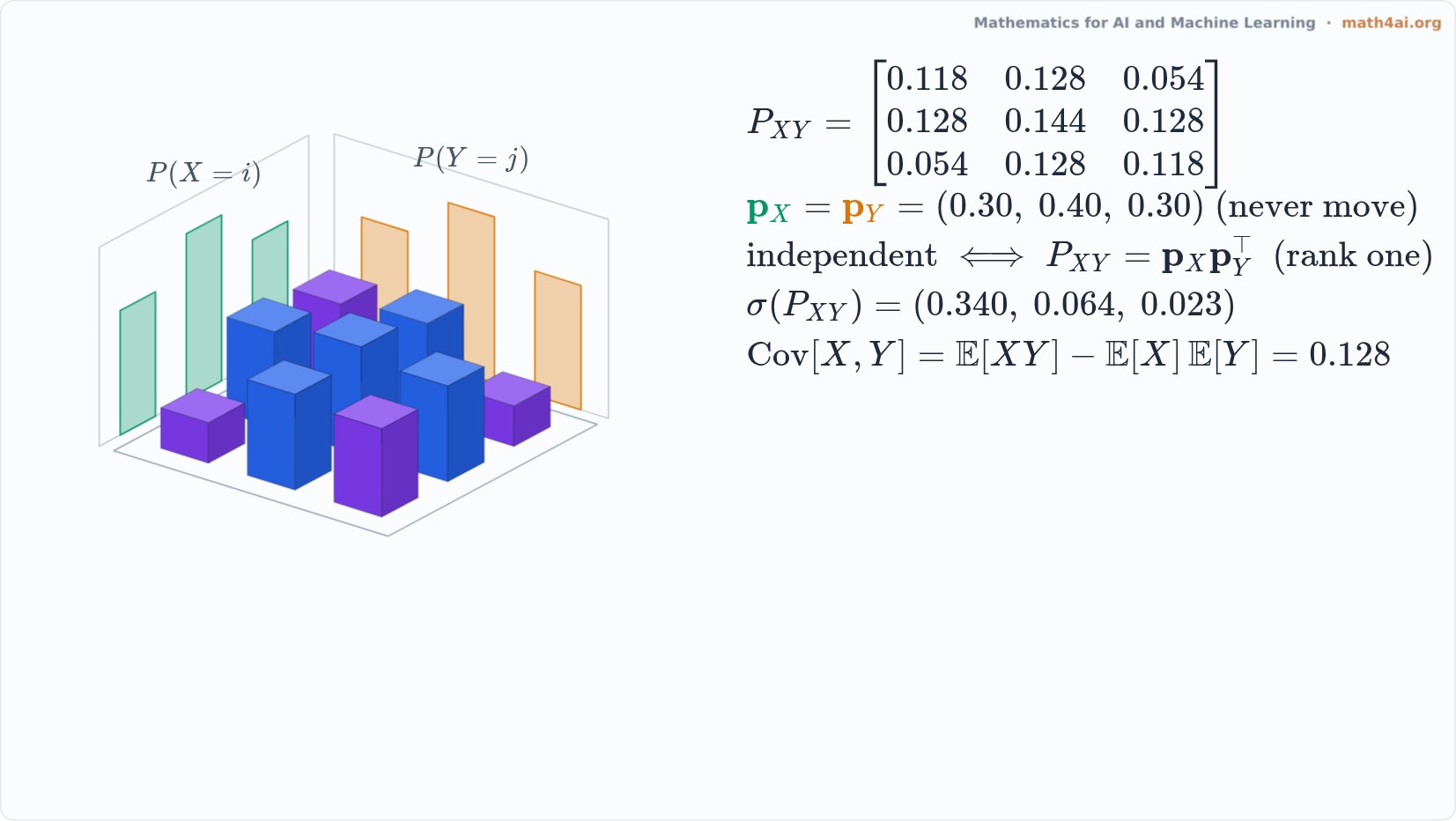 Preview1:38Independence as an Outer ProductChapter 13
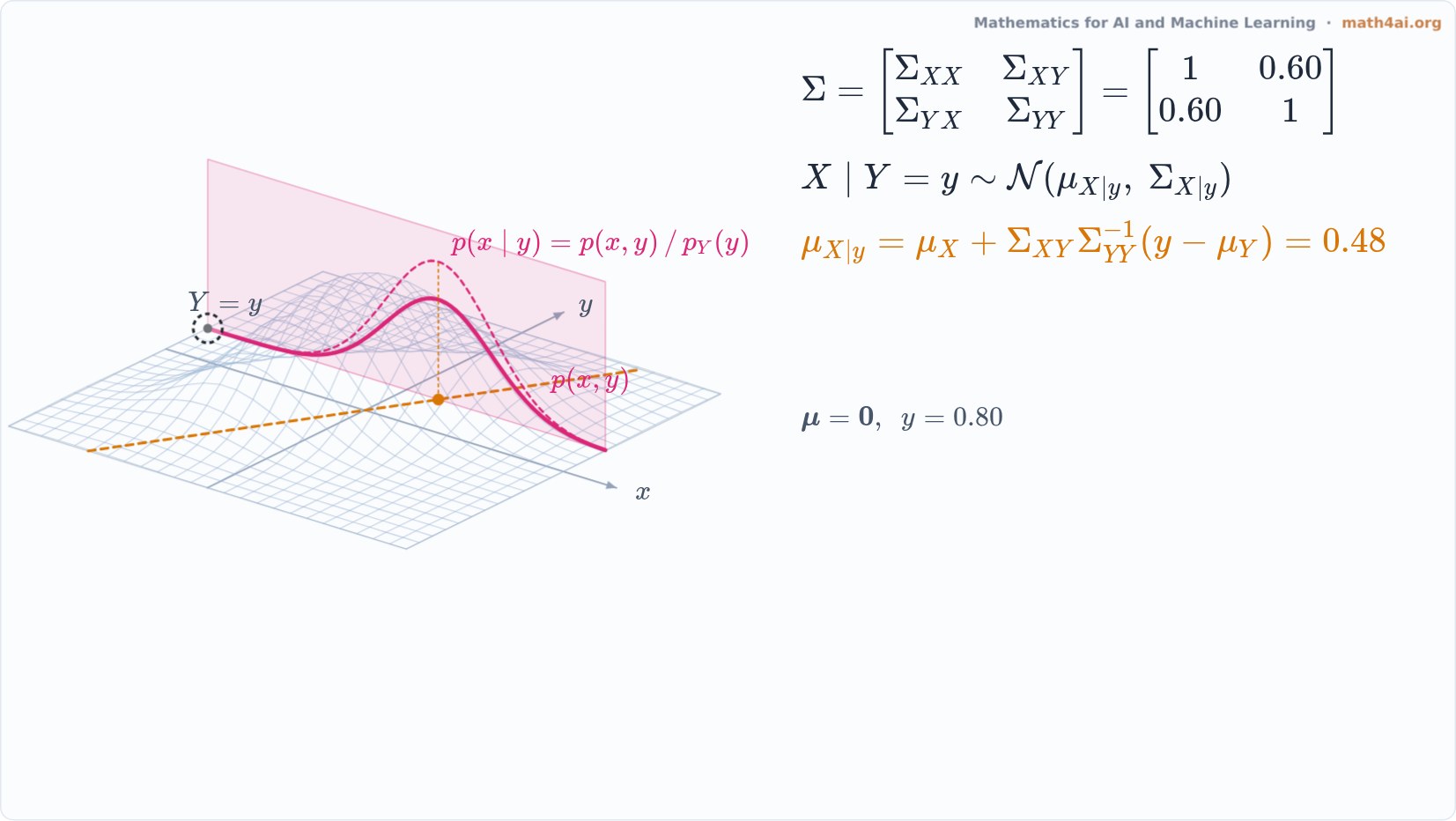 Preview1:40Conditional Gaussian: A Slice of the BellChapter 13
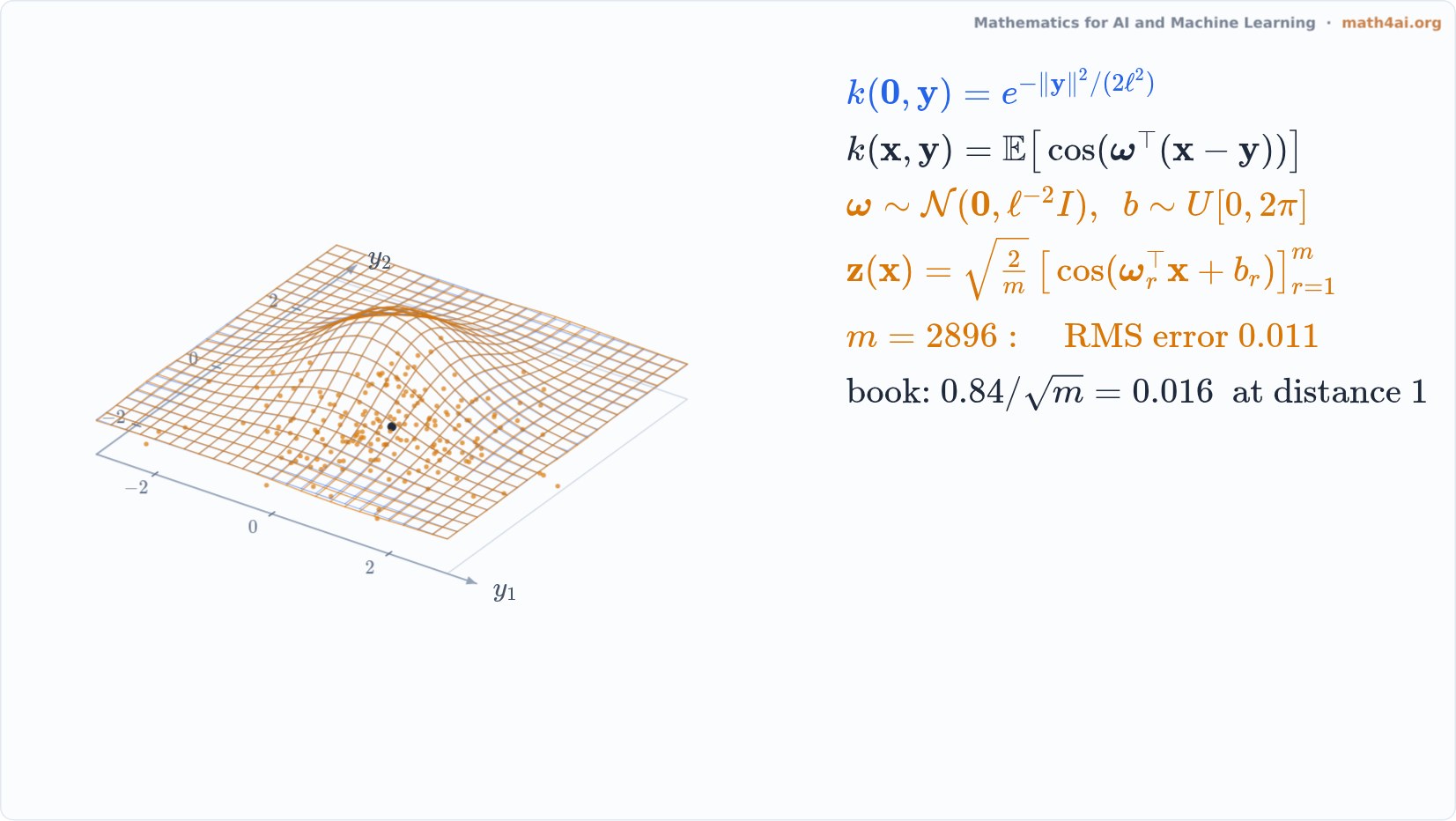 Preview1:22Random Fourier FeaturesChapter 13
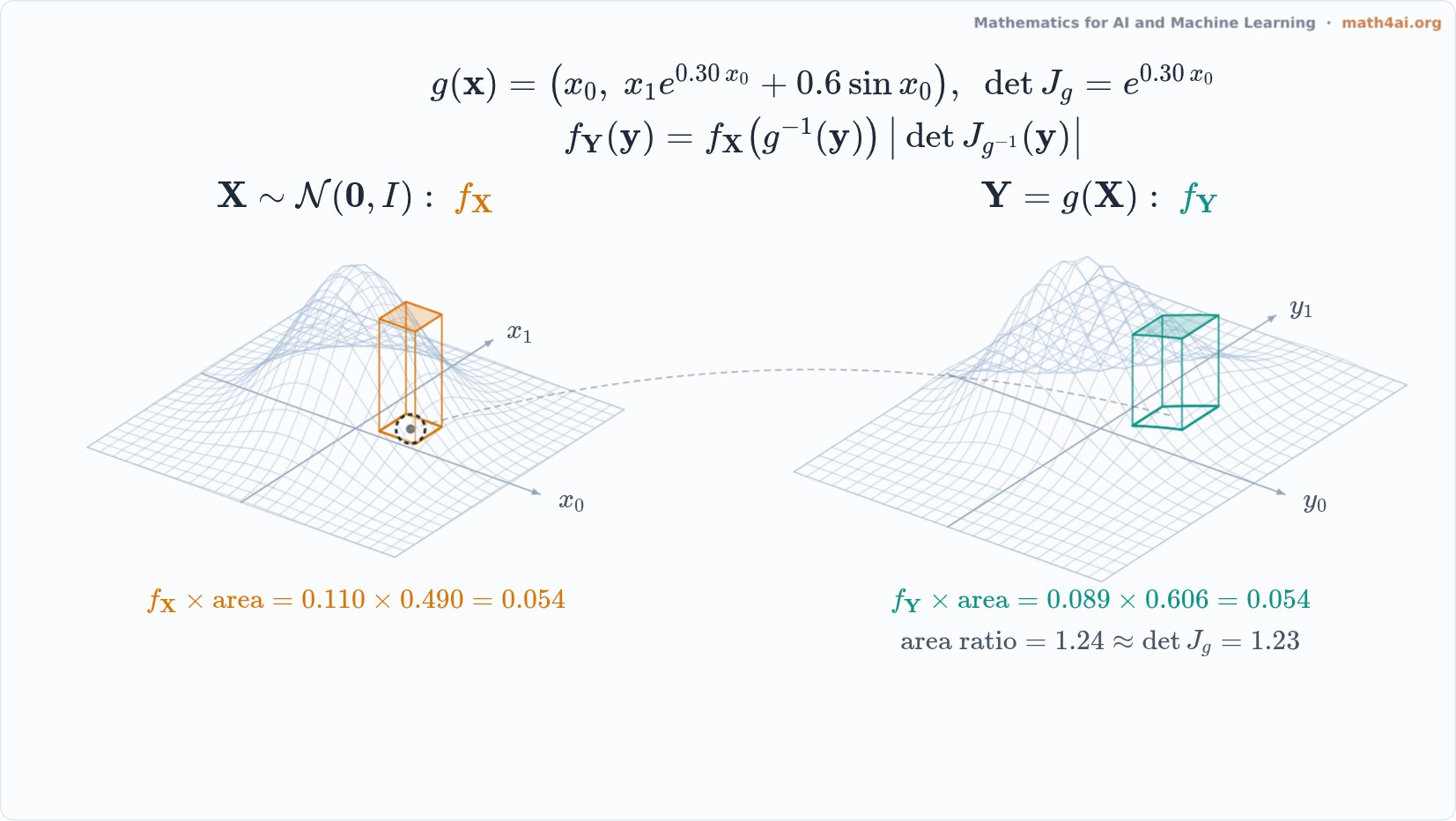 Preview1:46Change of Variables: Same Probability, Different AreaChapter 13
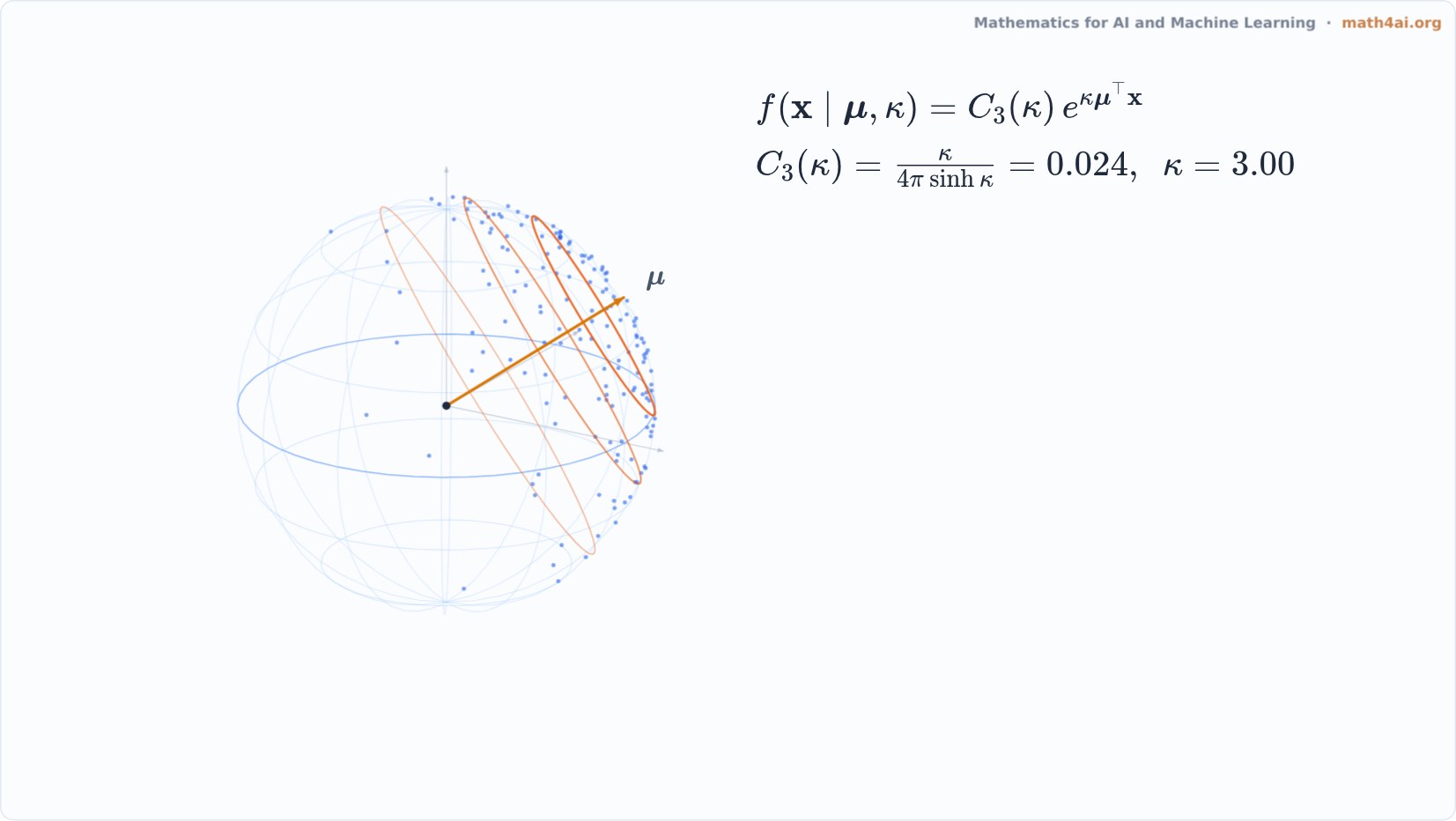 Preview1:35The von Mises-Fisher Distribution: A Gaussian for DirectionsChapter 13
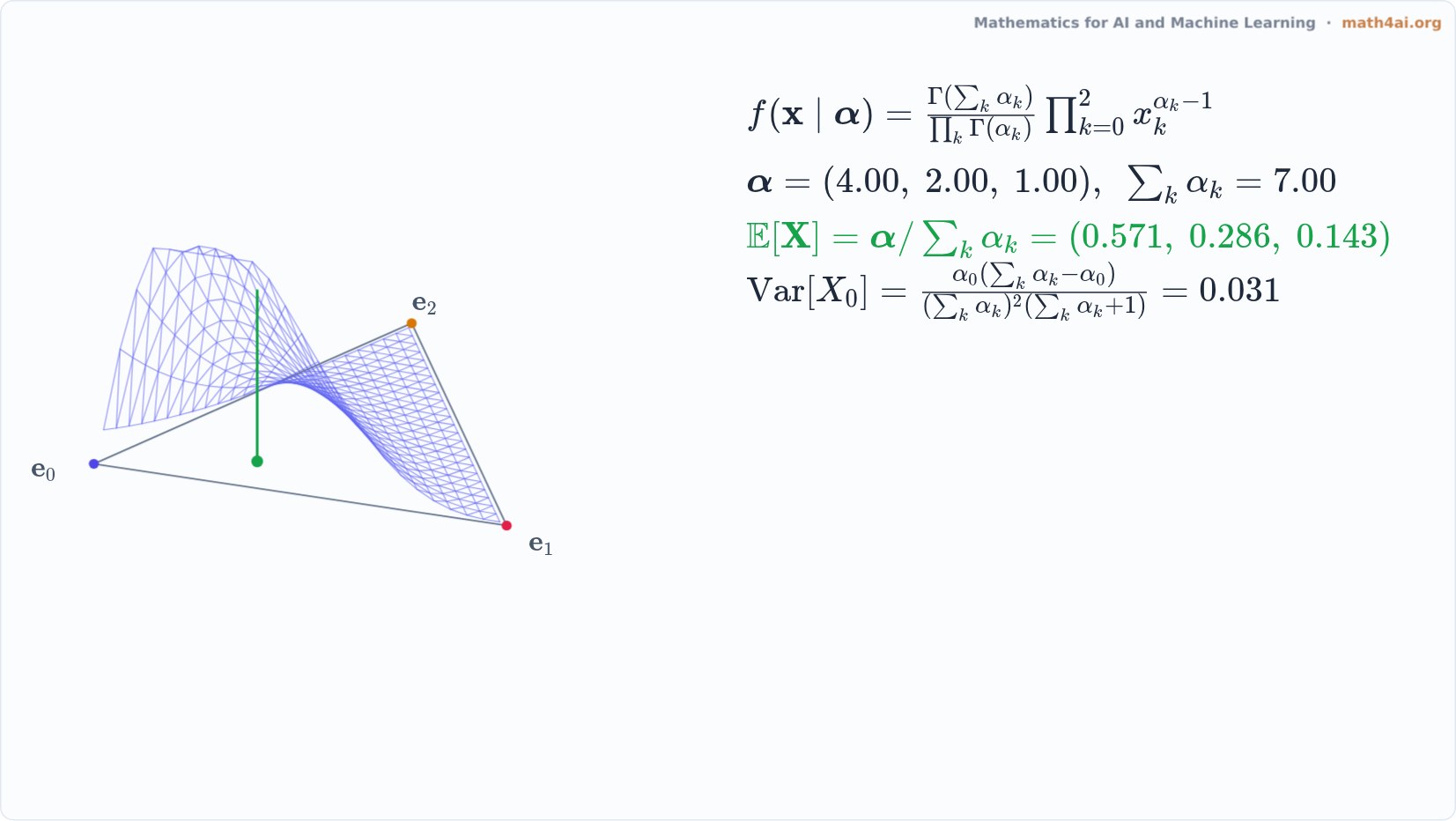 Preview1:42The Dirichlet Distribution: A Density on the SimplexChapter 13
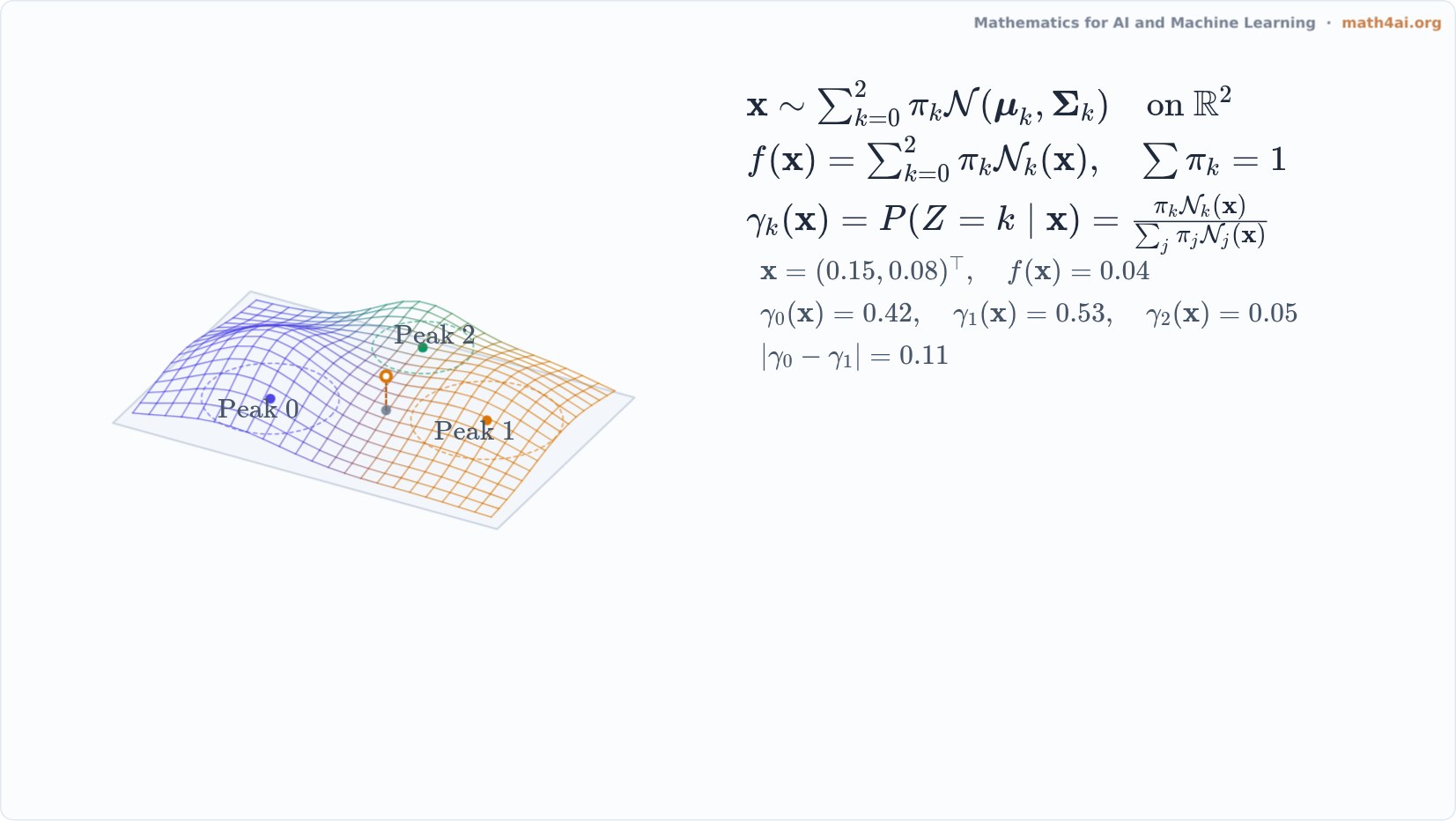 Preview1:14Gaussian Mixture Model: Multimodal TerrainChapter 13
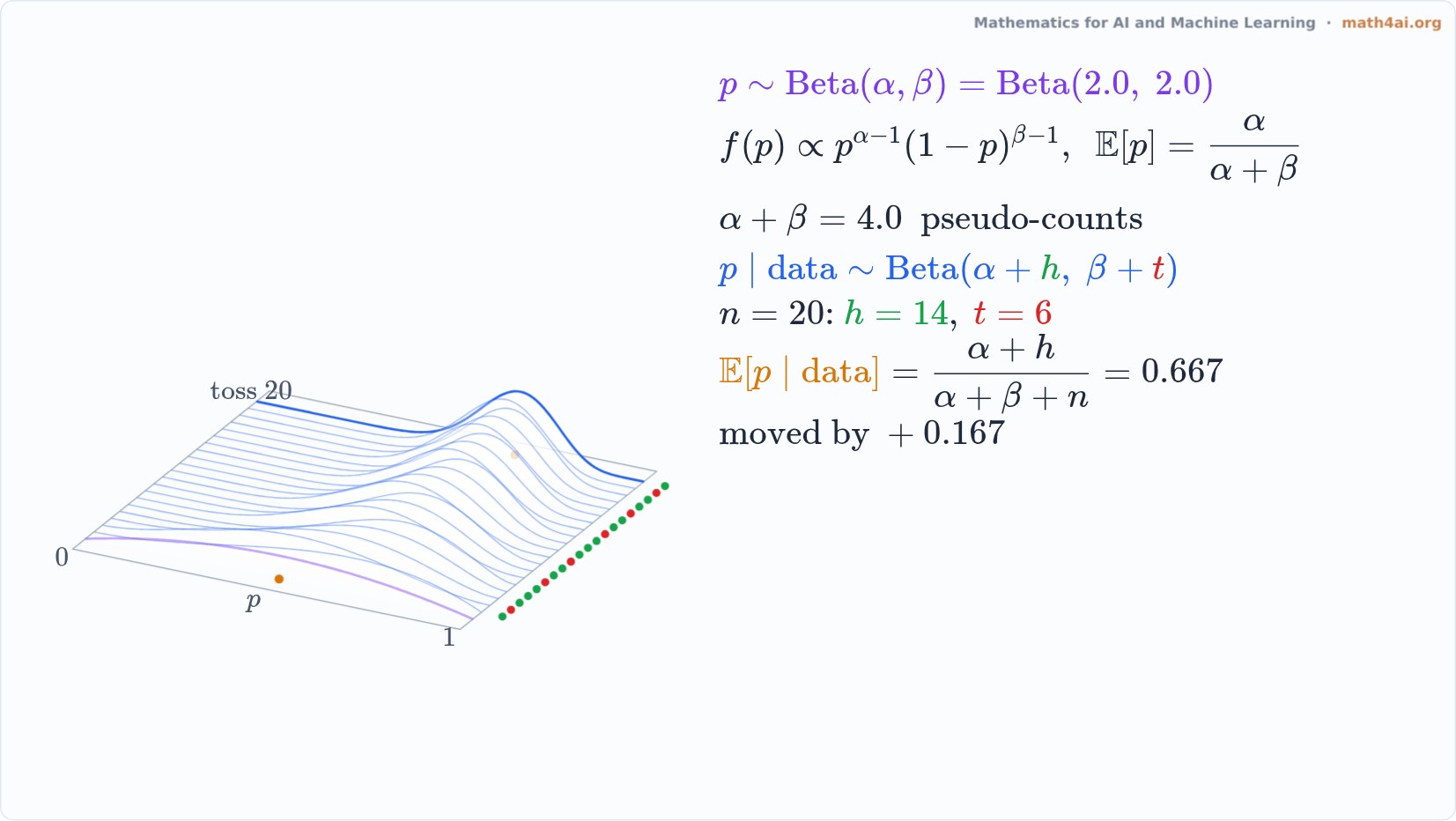 Preview1:36Beta and Bernoulli: Updating with Pseudo-CountsChapter 13
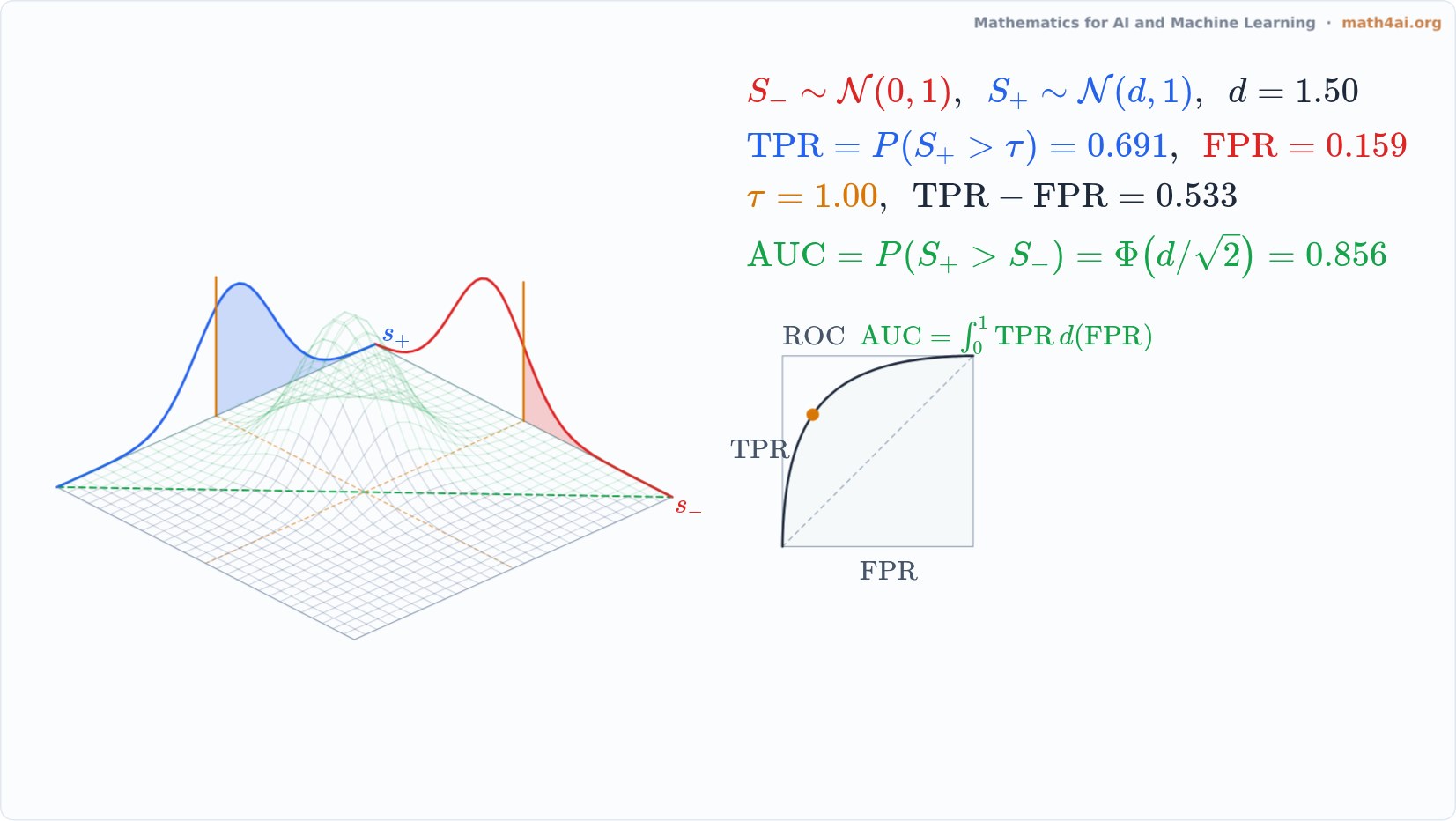 Preview1:43ROC Curve and AUC: the Mass Above the DiagonalChapter 13
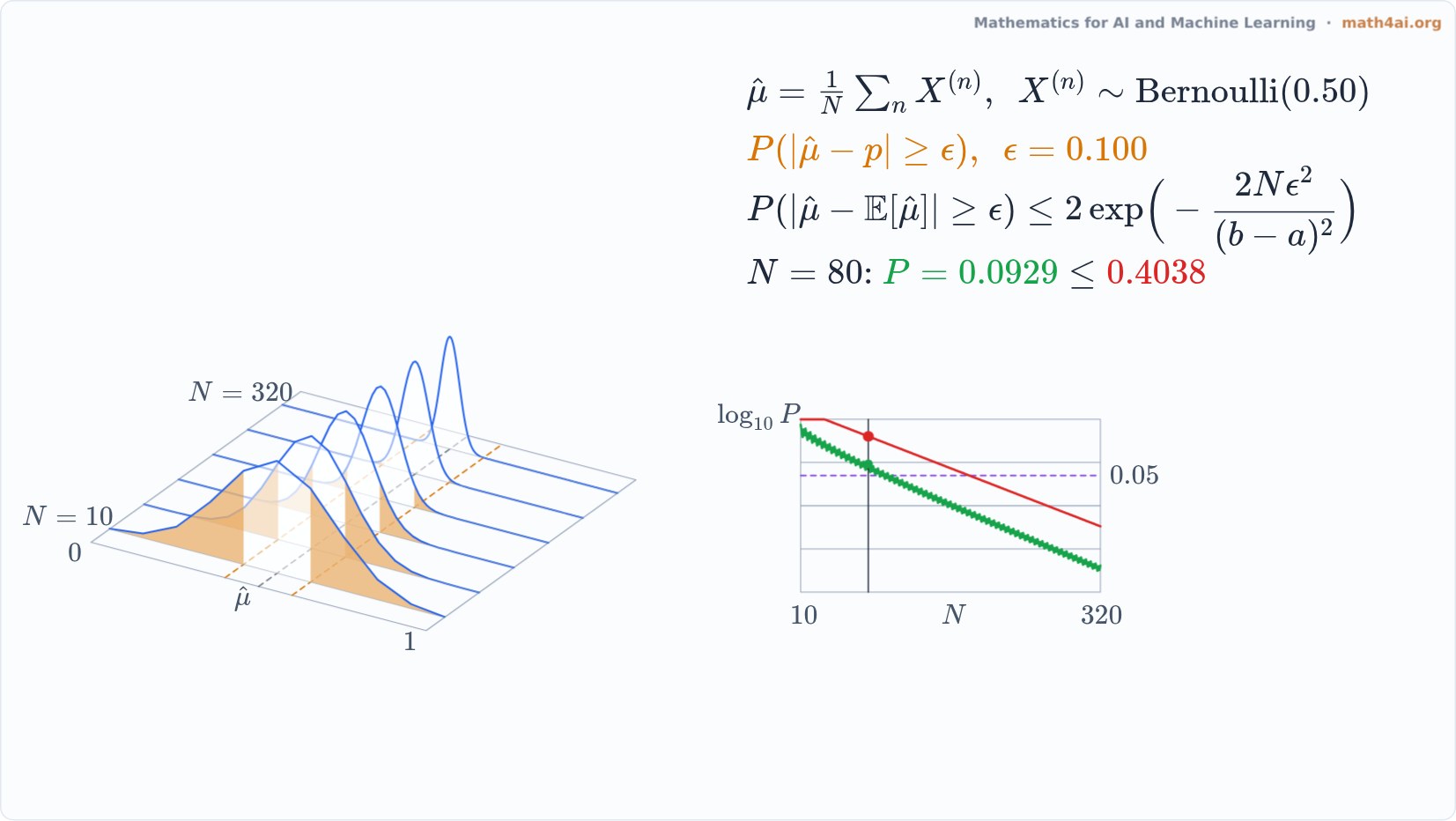 Preview1:40Hoeffding's Inequality: How Fast a Sample Mean SettlesChapter 13
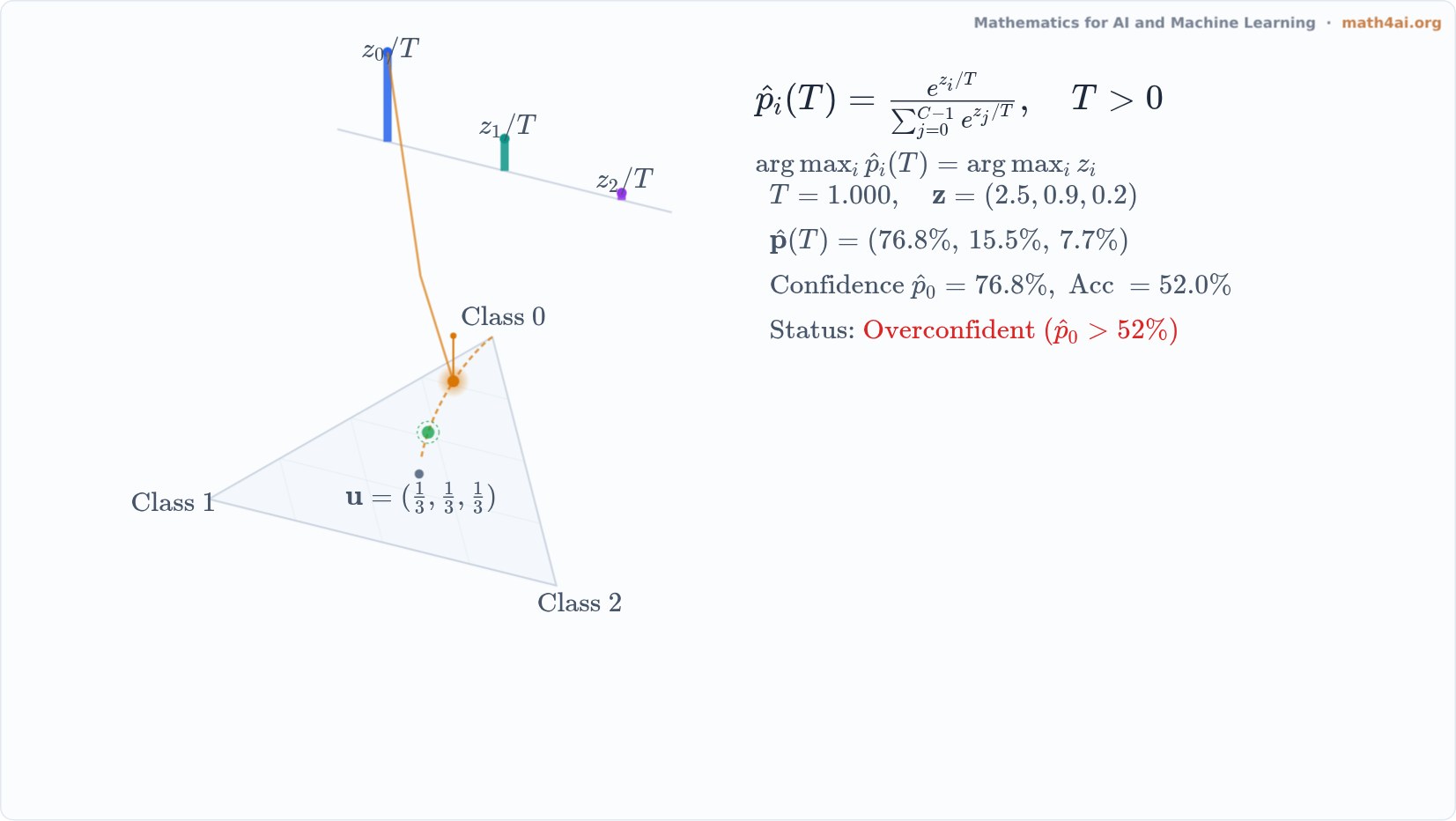 Preview1:25Temperature Scaling: Calibrating a SoftmaxChapter 13
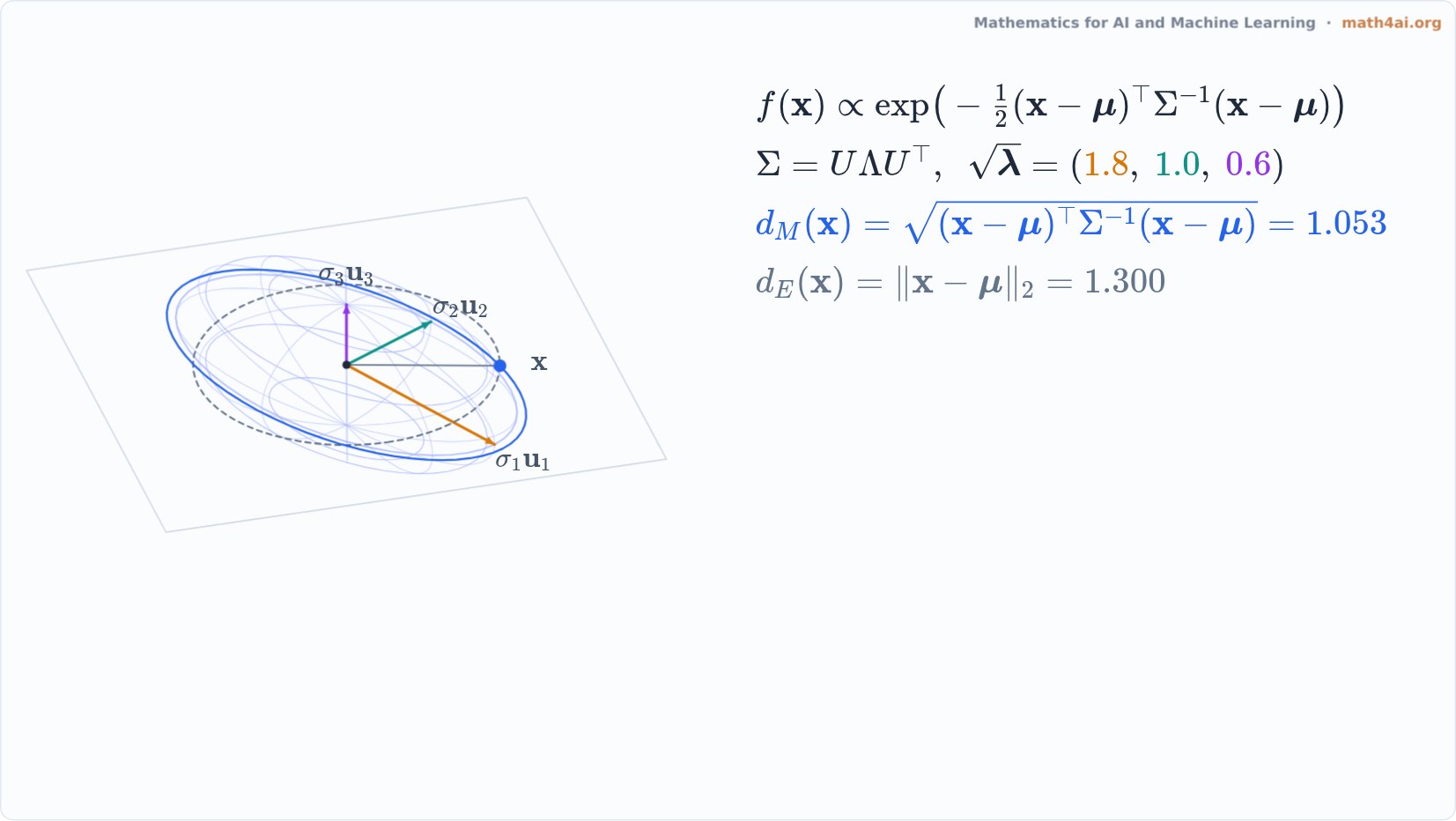 Preview1:34Mahalanobis Distance: The Ellipsoids of a GaussianChapter 13
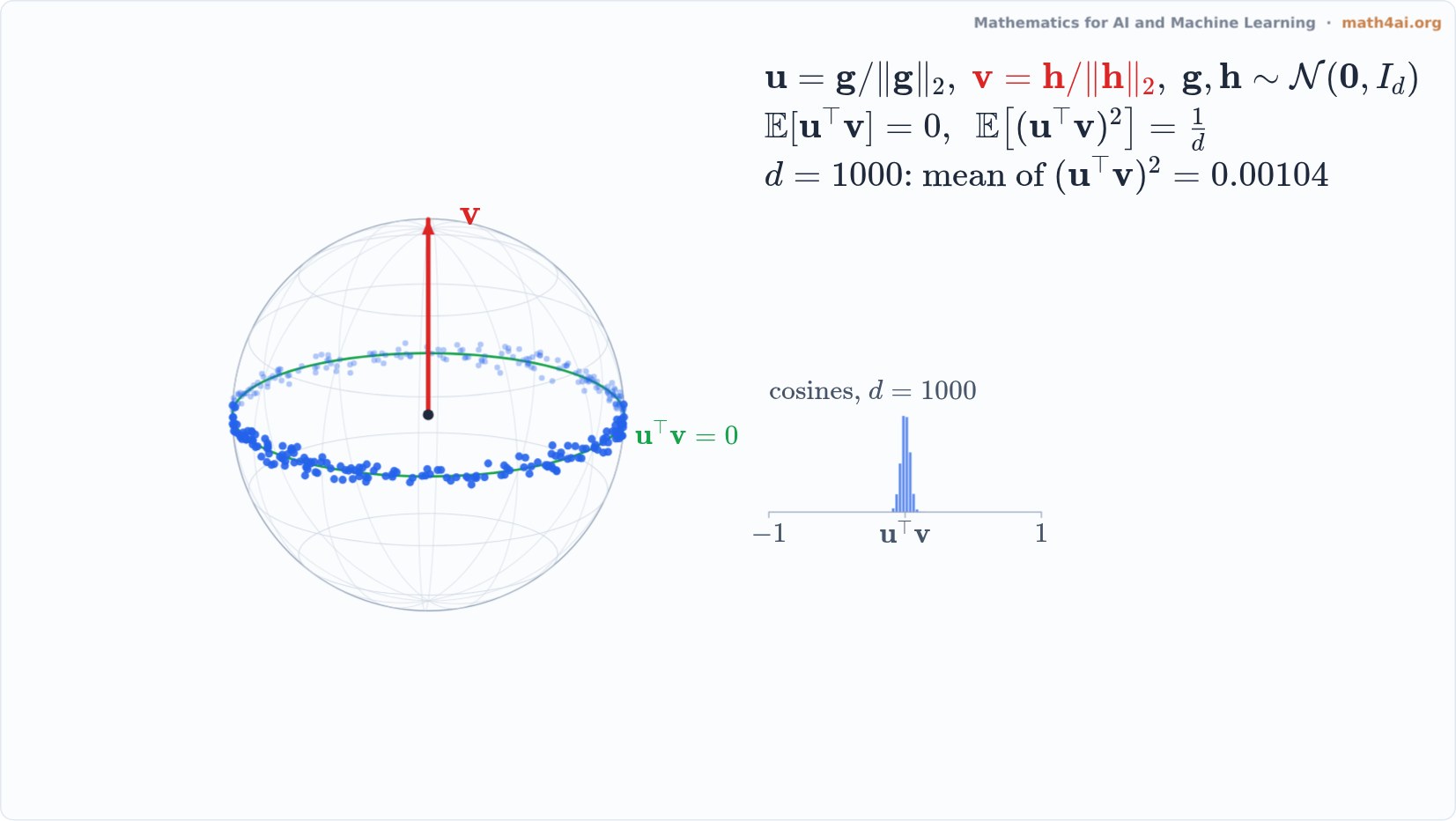 Preview2:09Random Directions Are Nearly OrthogonalChapter 13