Normalizing Flows: Chaining Invertible Maps
An interactive live film: three flow plates in 3D chain a standard Gaussian into a complex crescent; drag an orange sample point to pull it back layer by layer and evaluate its exact log density.
Narration
On the left, z zero is a standard Gaussian in the plane: a round green bell on the base plate. To its right stand two transparent flow plates.
The first map stretches and shears the plane, bending the green bell into the amber shape on the middle plate. The second map stretches the other coordinate, folding the density into a blue crescent.
Each layer is an invertible map with a triangular Jacobian, so its determinant is the product of the diagonal. The data density equals the base Gaussian density divided by both absolute determinants: where a layer stretches area, the density thins, and where it squeezes area, the density rises.
Inverting the flow evaluates likelihoods in reverse: take any data point x on the blue plate, pull it back layer by layer, and read its exact log density.
Your turn. Drag the orange sample point on the blue plate, and adjust the coupling slider. Find a spot where the flow squeezes area enough that the log density of x beats the base log density by at least one half.
By chaining simple invertible layers, normalizing flows transform a simple Gaussian into complex data distributions with exact density and sampling.
More from Chapter 13
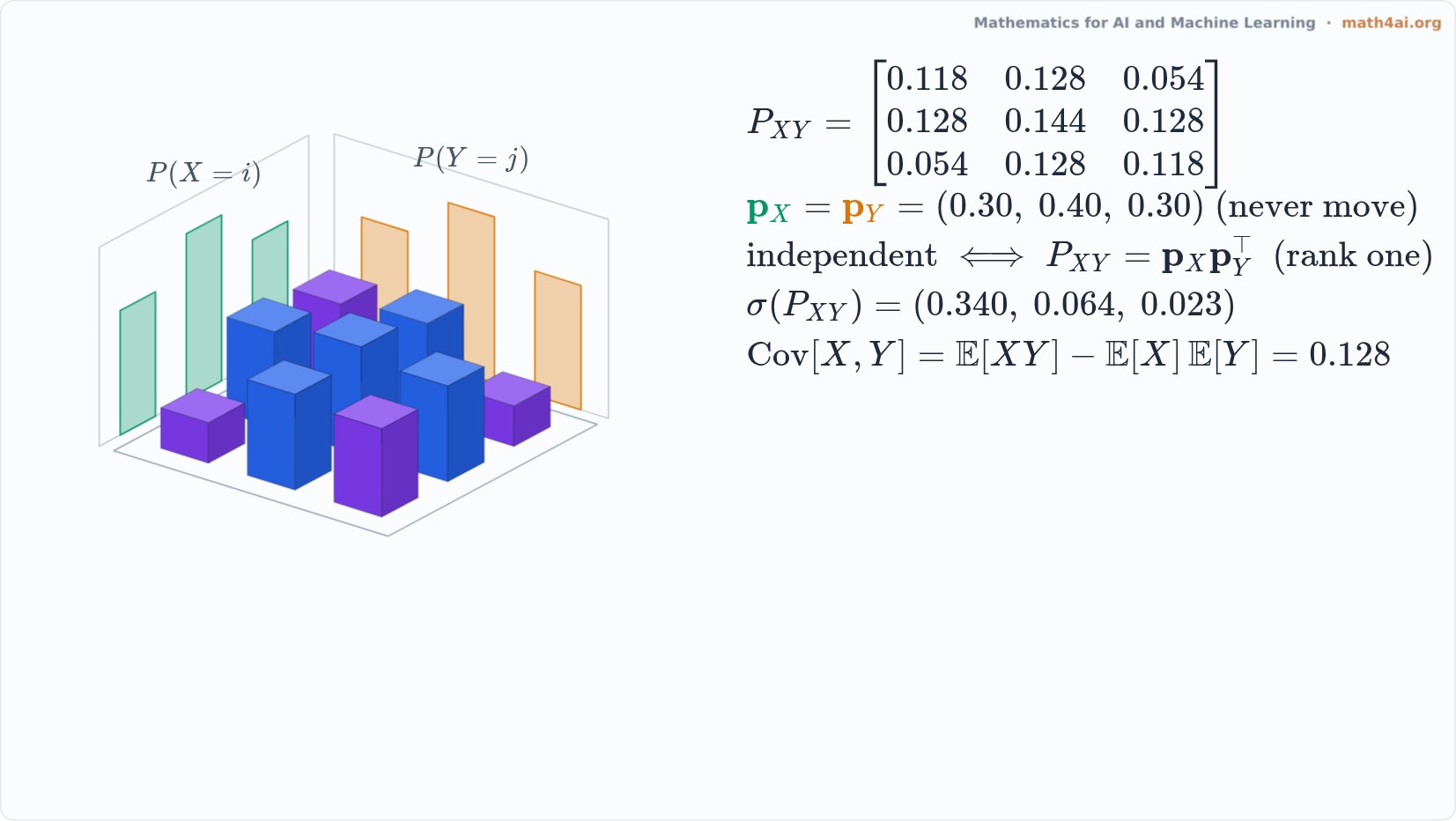 Preview1:38Independence as an Outer ProductChapter 13
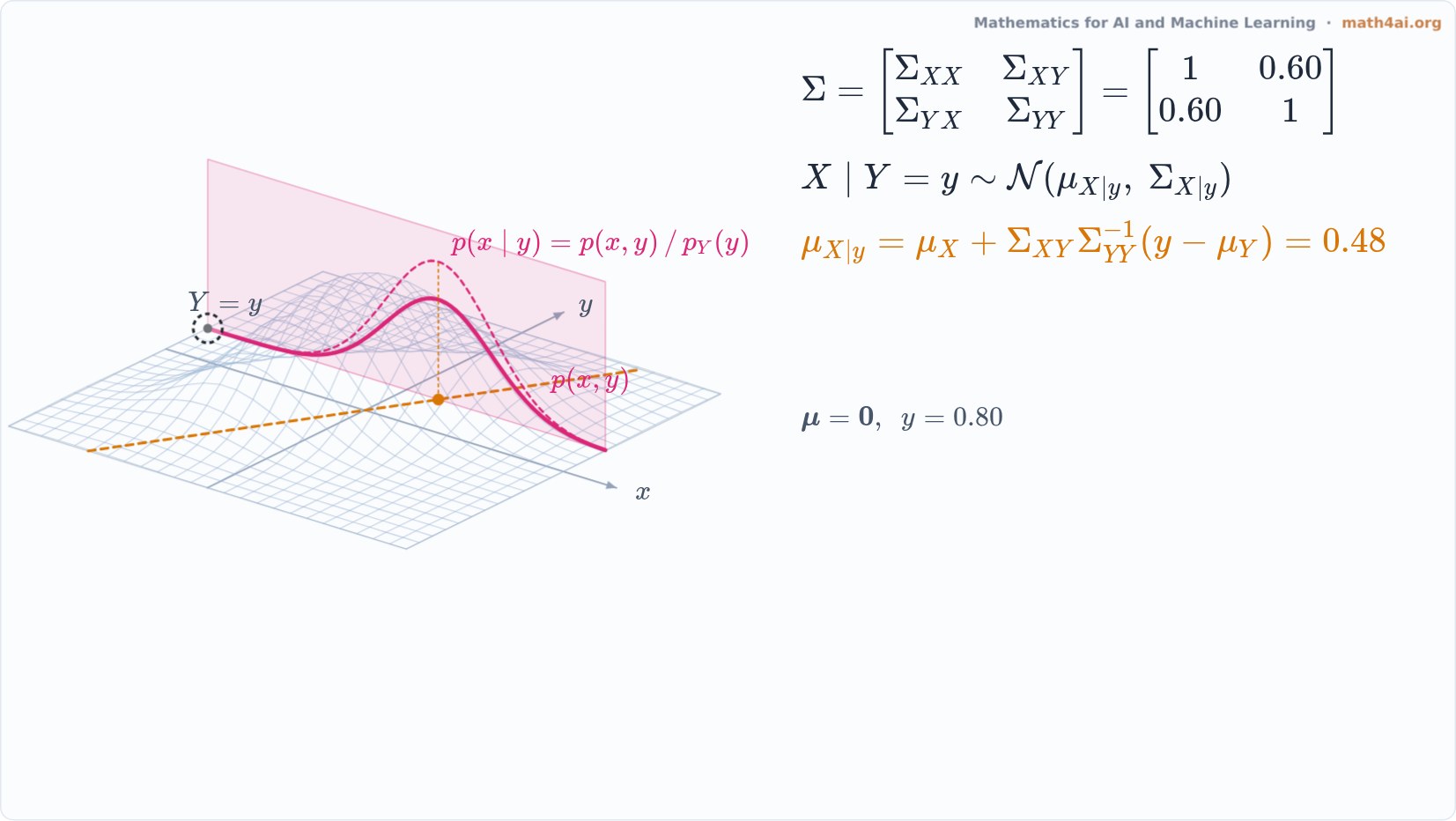 Preview1:40Conditional Gaussian: A Slice of the BellChapter 13
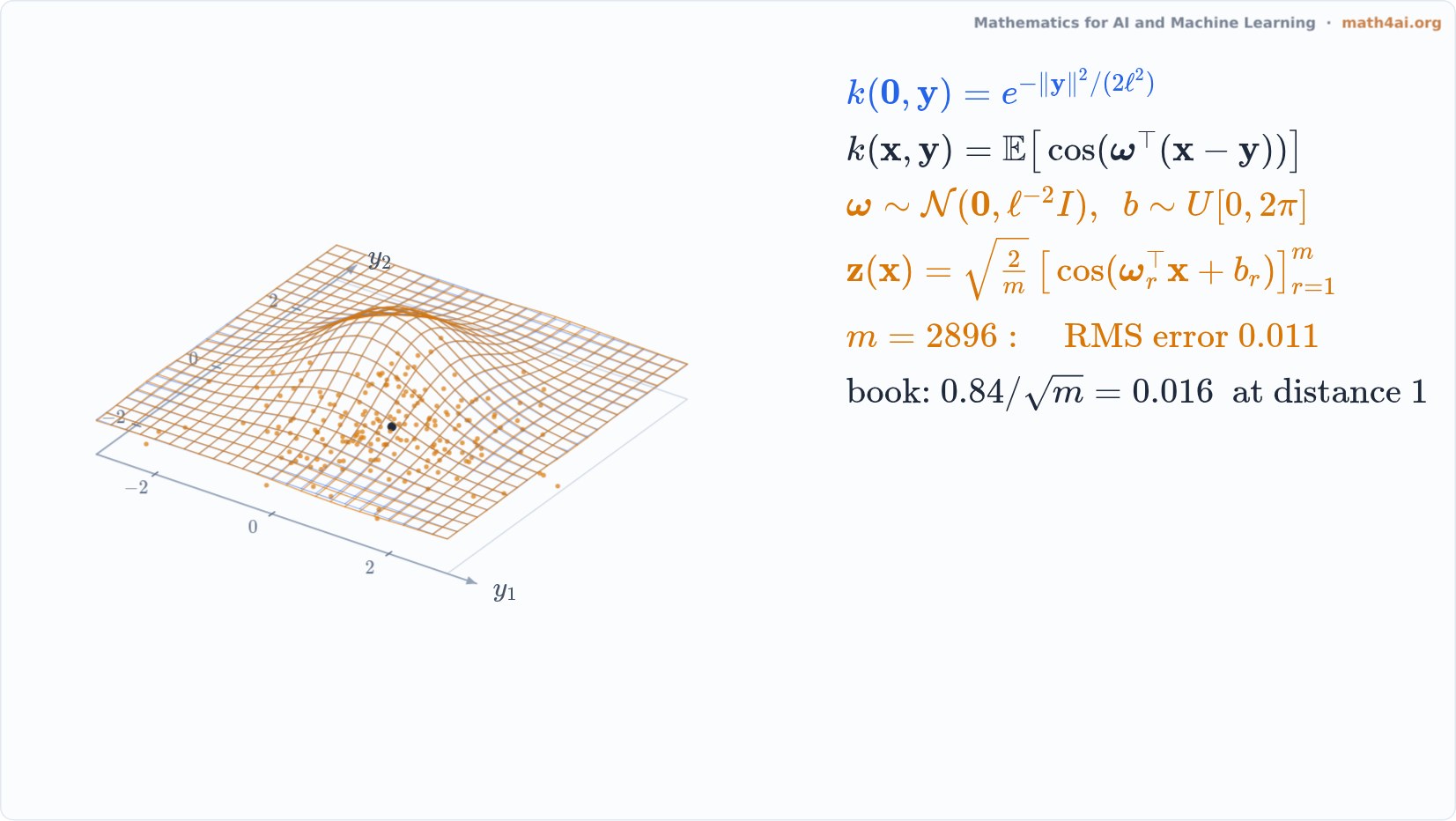 Preview1:22Random Fourier FeaturesChapter 13
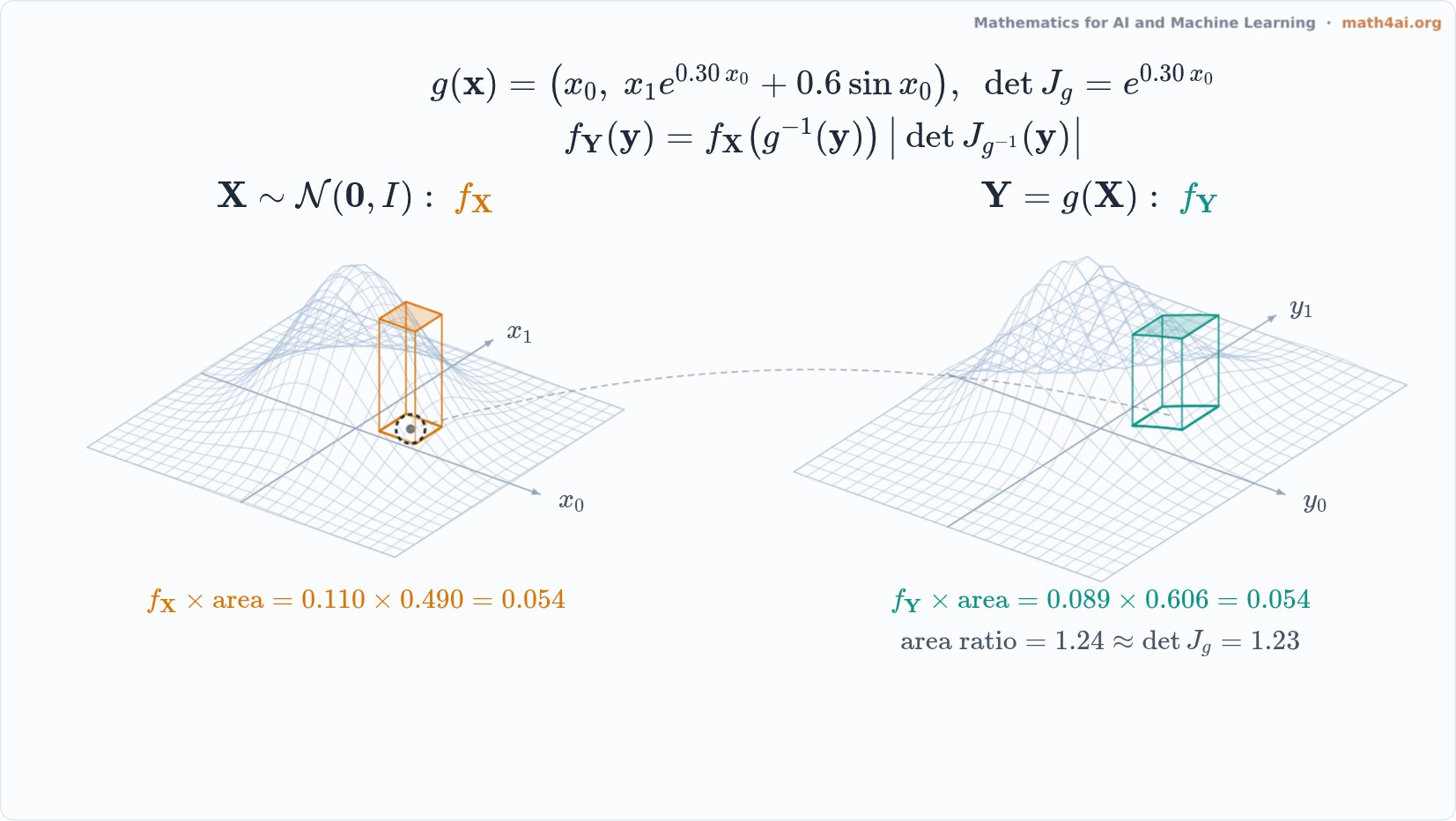 Preview1:46Change of Variables: Same Probability, Different AreaChapter 13
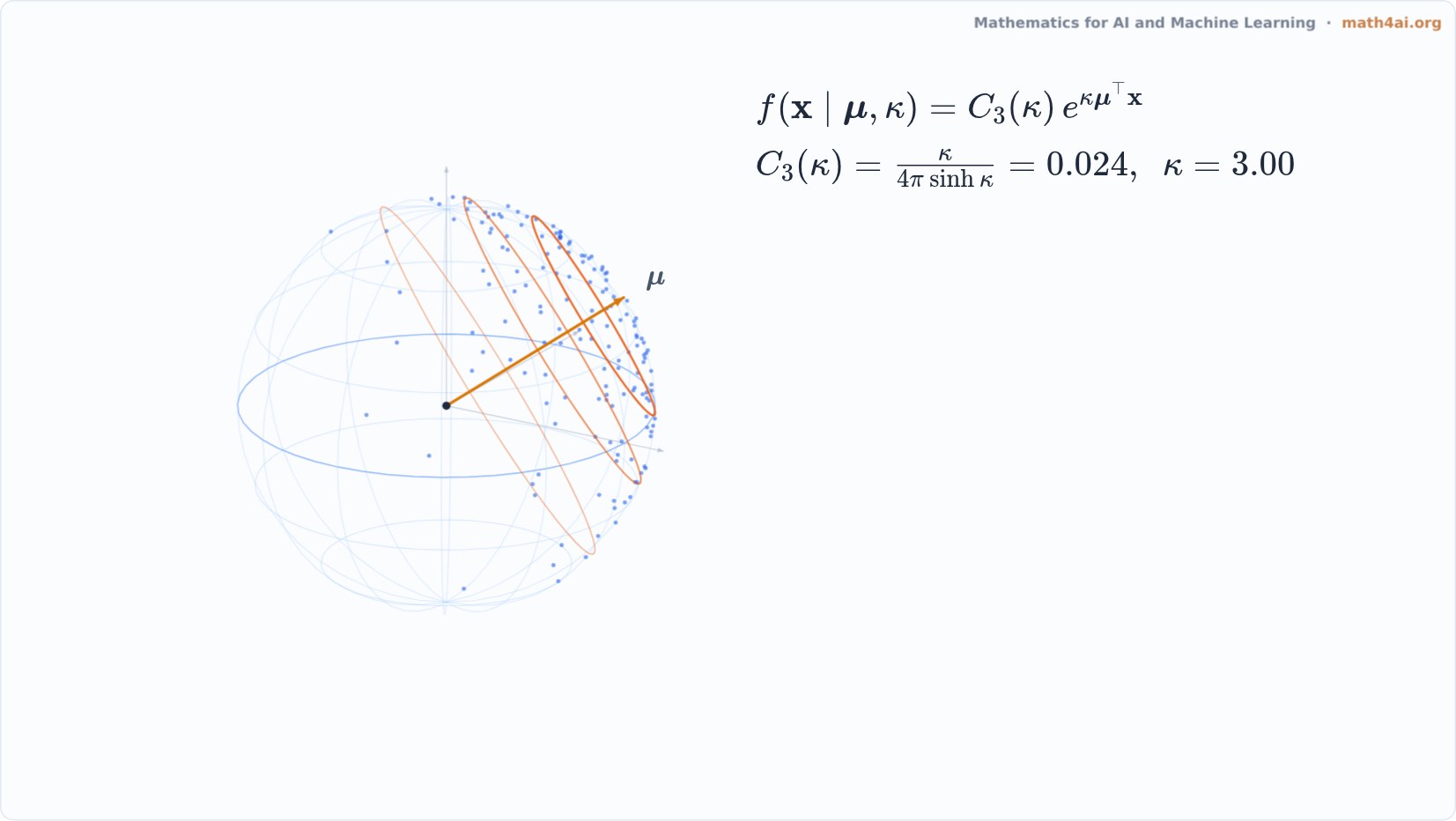 Preview1:35The von Mises-Fisher Distribution: A Gaussian for DirectionsChapter 13
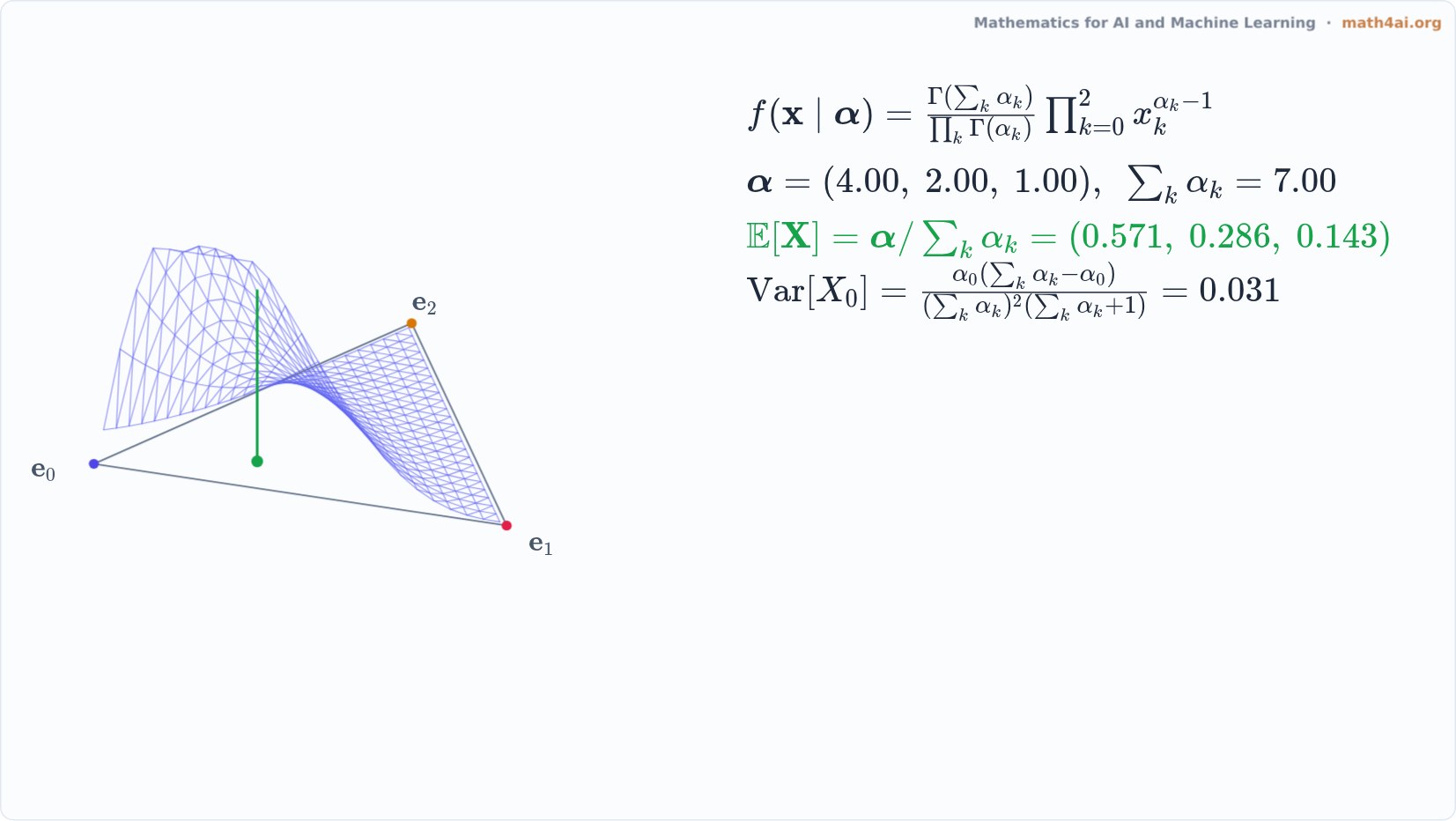 Preview1:42The Dirichlet Distribution: A Density on the SimplexChapter 13
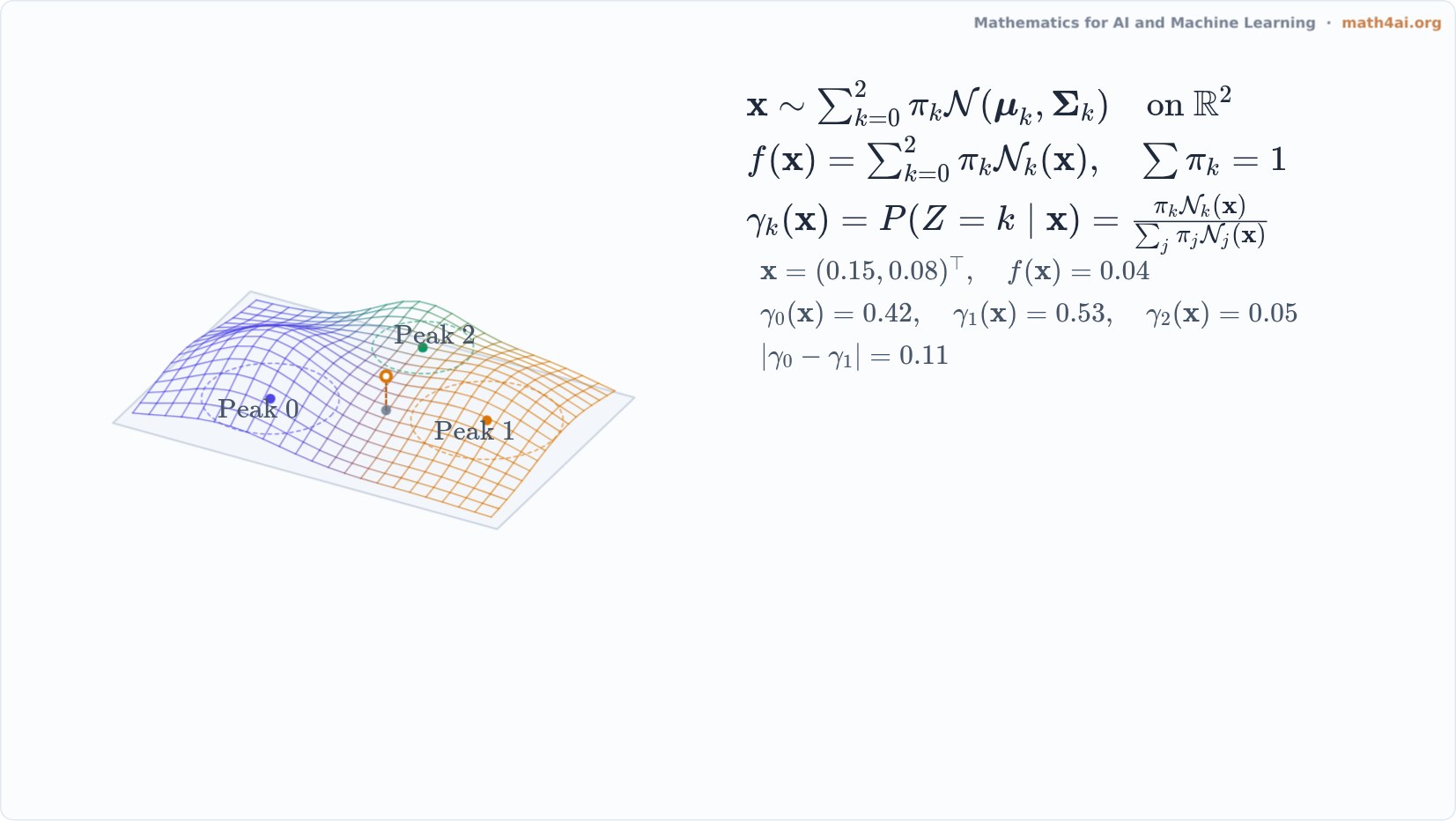 Preview1:14Gaussian Mixture Model: Multimodal TerrainChapter 13
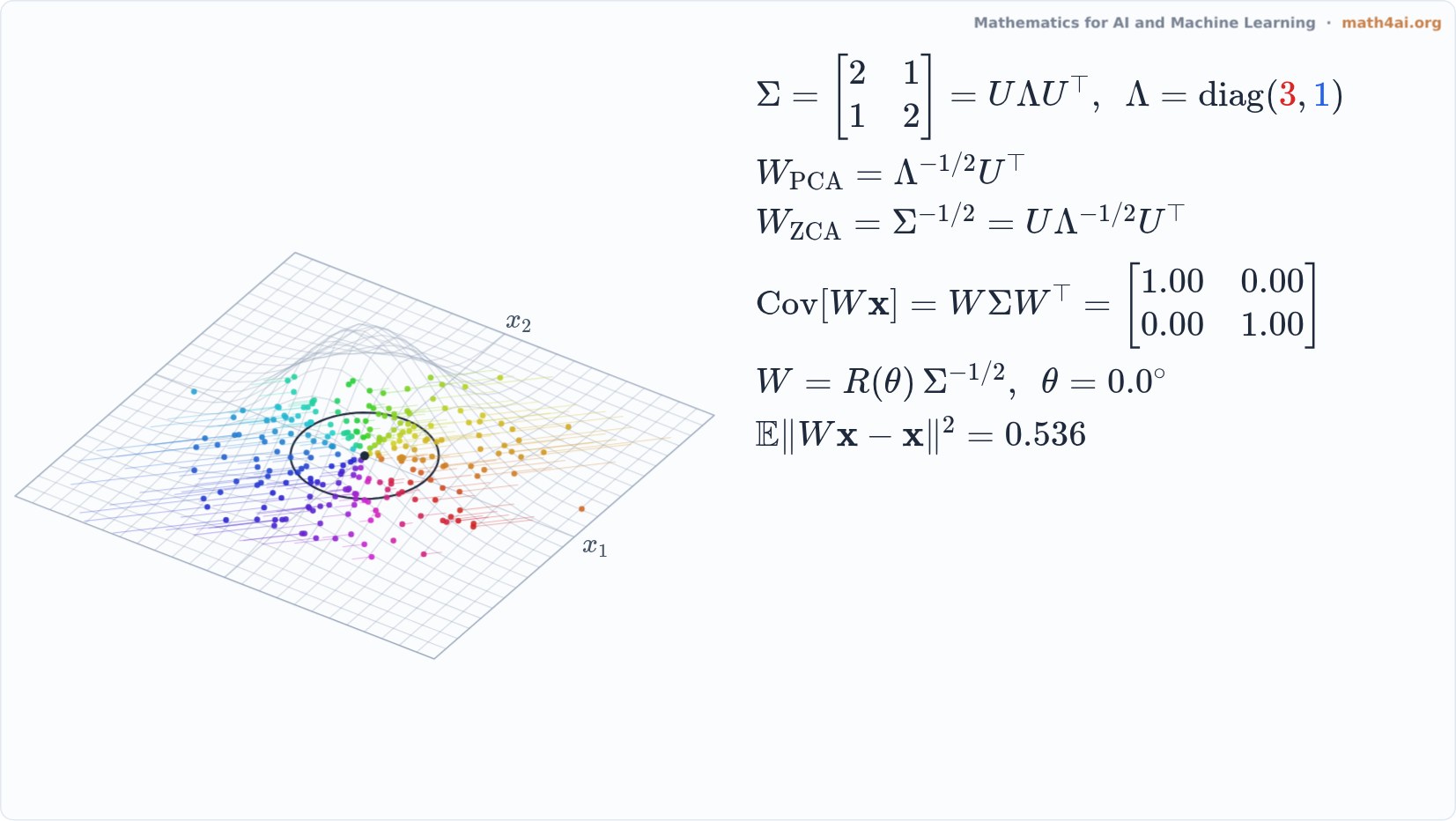 Preview1:41Whitening: PCA and ZCAChapter 13
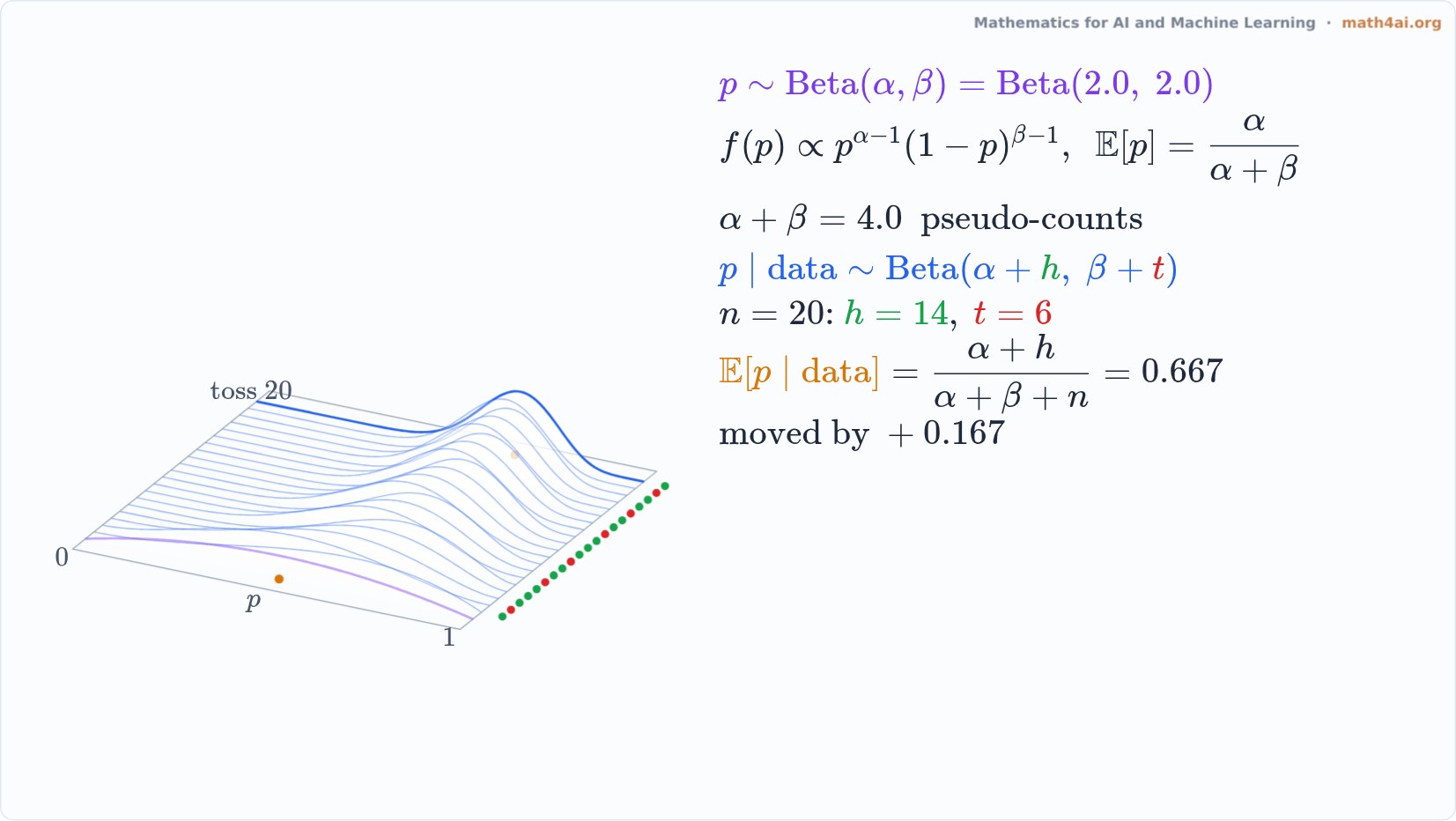 Preview1:36Beta and Bernoulli: Updating with Pseudo-CountsChapter 13
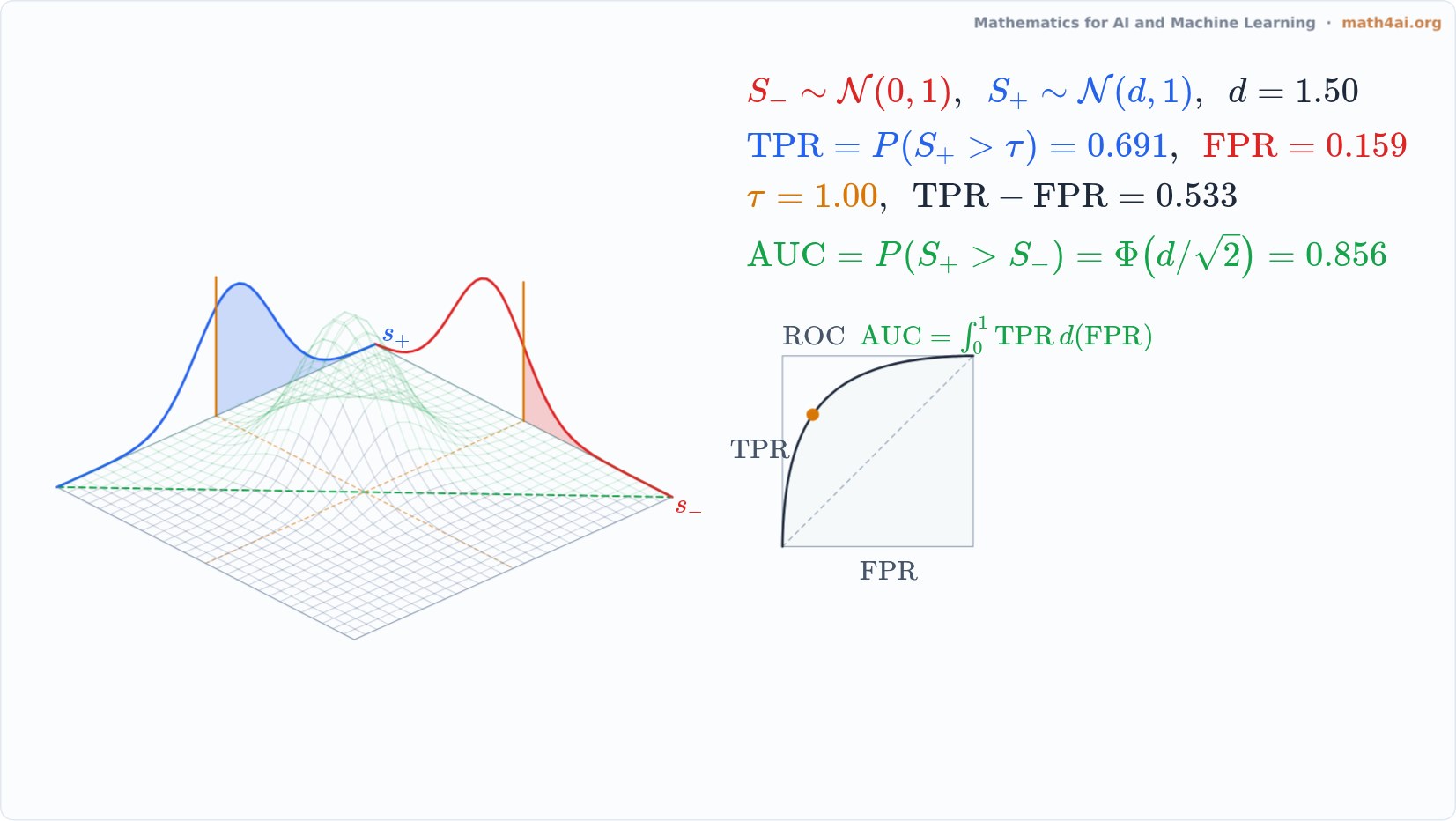 Preview1:43ROC Curve and AUC: the Mass Above the DiagonalChapter 13
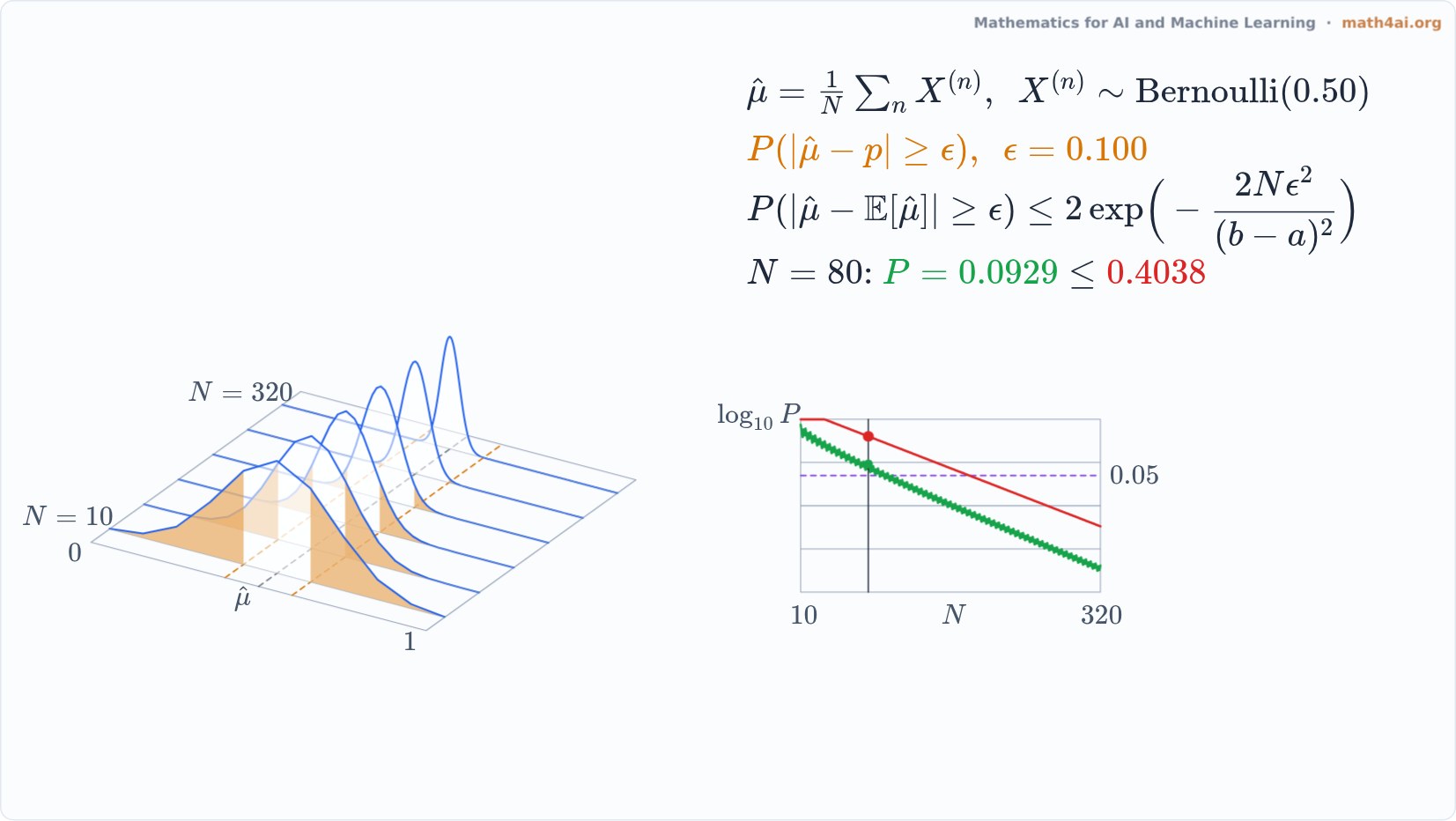 Preview1:40Hoeffding's Inequality: How Fast a Sample Mean SettlesChapter 13
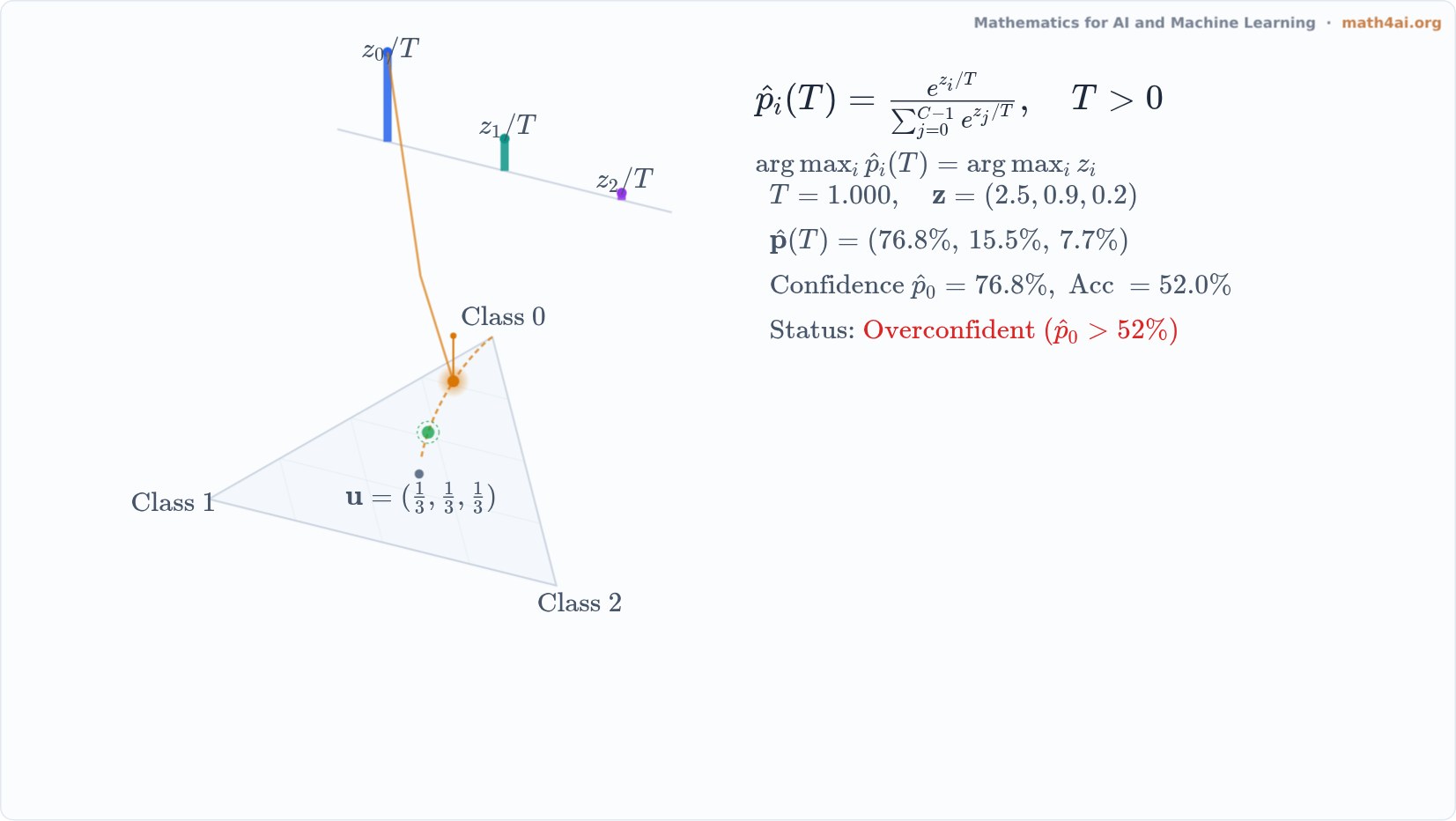 Preview1:25Temperature Scaling: Calibrating a SoftmaxChapter 13
 Preview1:34Mahalanobis Distance: The Ellipsoids of a GaussianChapter 13
 Preview2:09Random Directions Are Nearly OrthogonalChapter 13