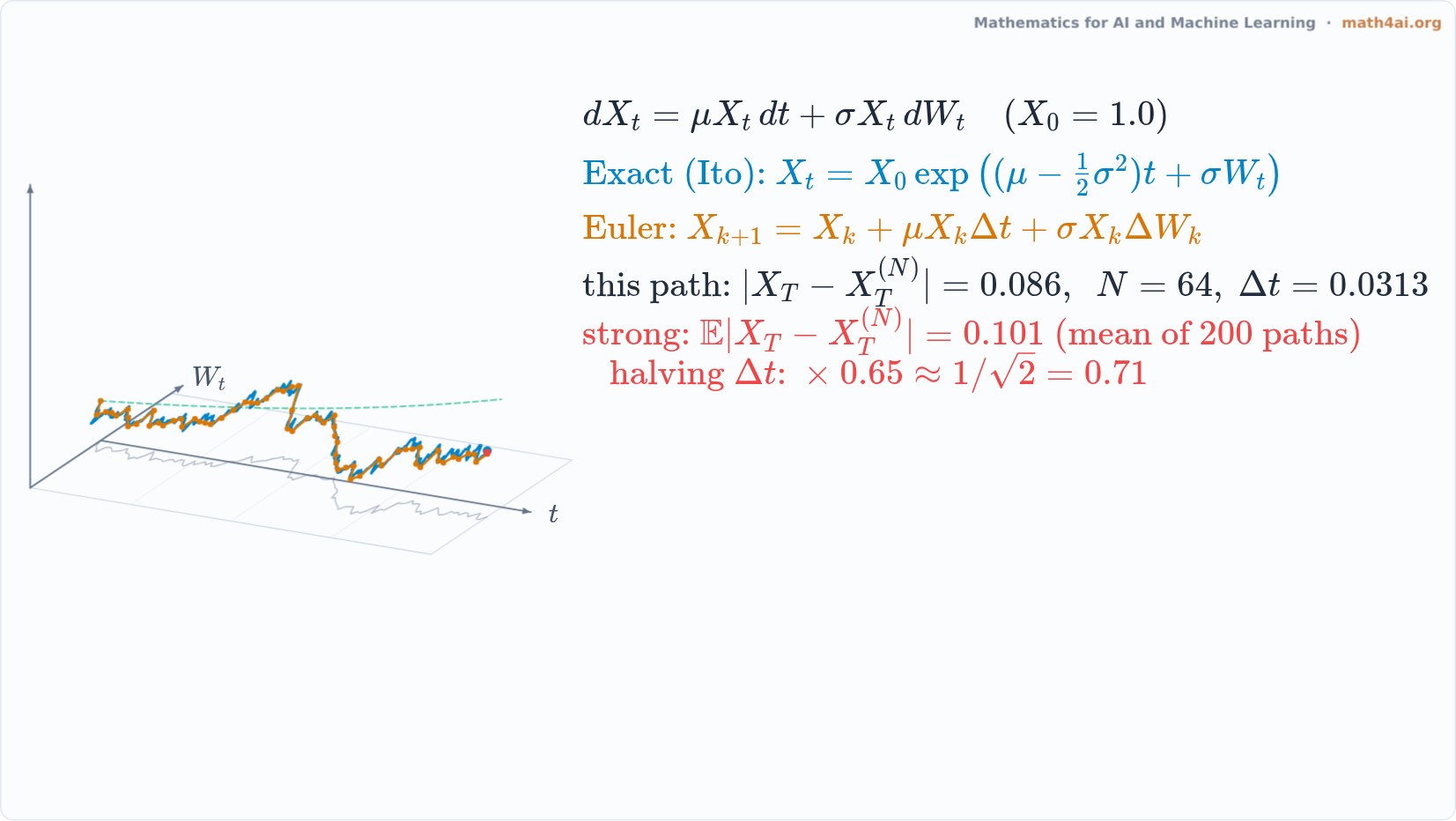
Euler–Maruyama: SDEs as Limits of Algorithms
An interactive live film: Geometric Brownian Motion solved exactly vs discretized with Euler–Maruyama under identical Brownian noise; strong error shrinks as the square root of delta t.
Narration
Stochastic differential equations cannot usually be solved with paper and pencil. We must discretize them in time, and the simplest approach is the Euler-Maruyama scheme.
At each step, we advance along the drift by delta t, and along the diffusion by root delta t times standard normal noise. Notice the square root: diffusion scales with the square root of time.
The rest of the narration is in the book's Companion.
More from Chapter 19
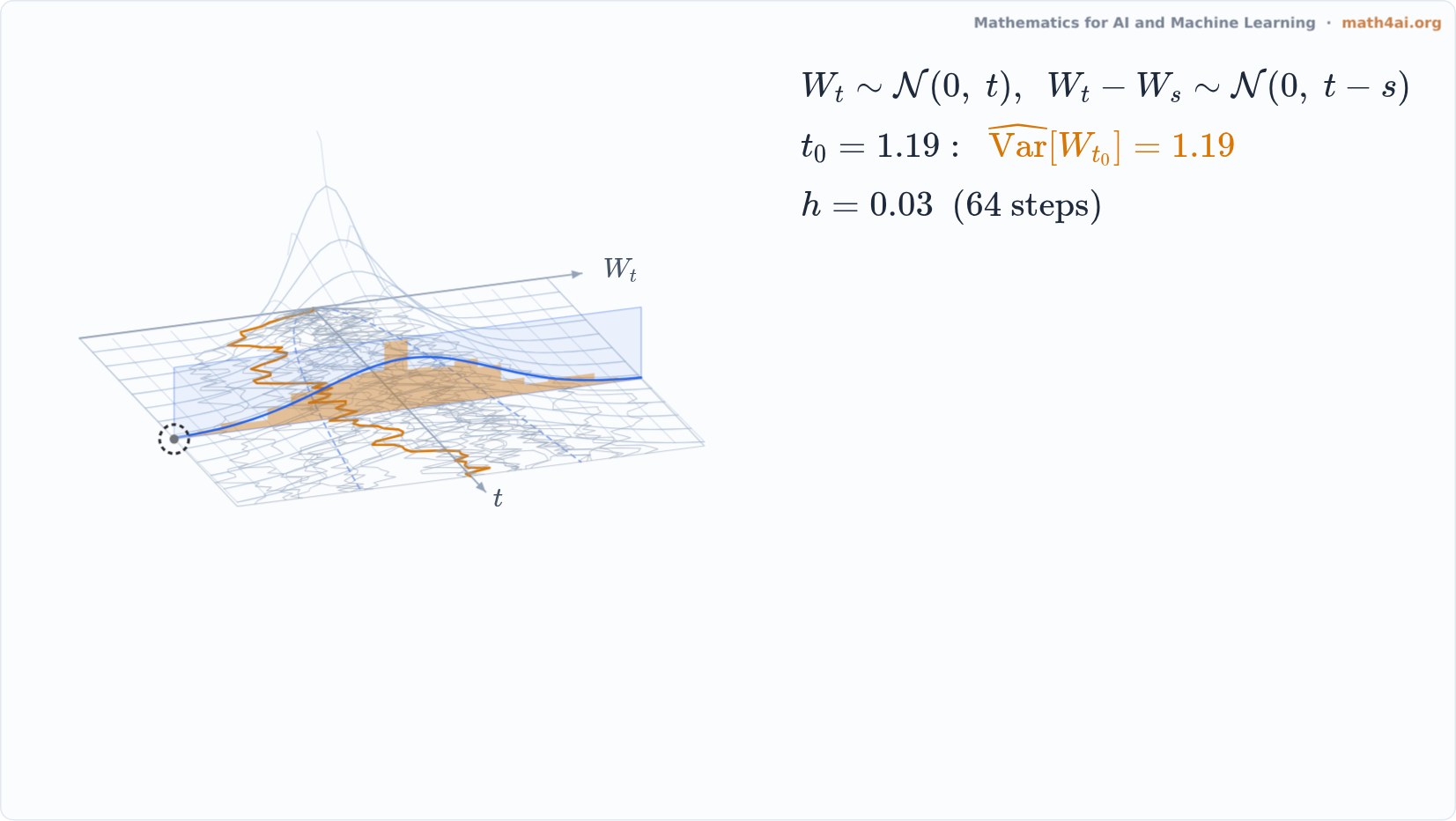 Interactive1:37Brownian Motion: Rough Paths, a Spreading Bell, and dW Squared Equals dtChapter 19
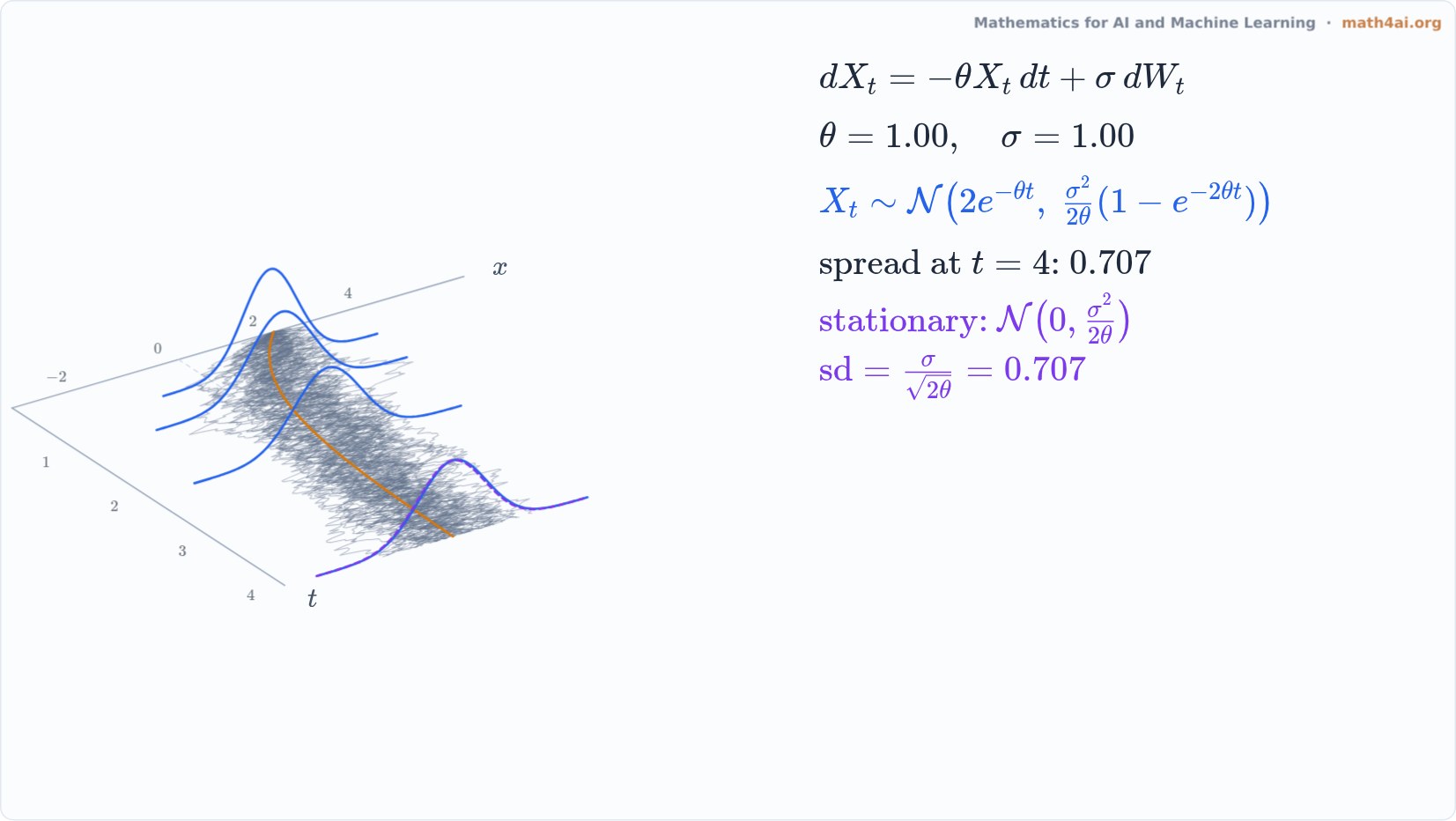 Preview1:17The Ornstein-Uhlenbeck Process: Brownian Motion on a SpringChapter 19
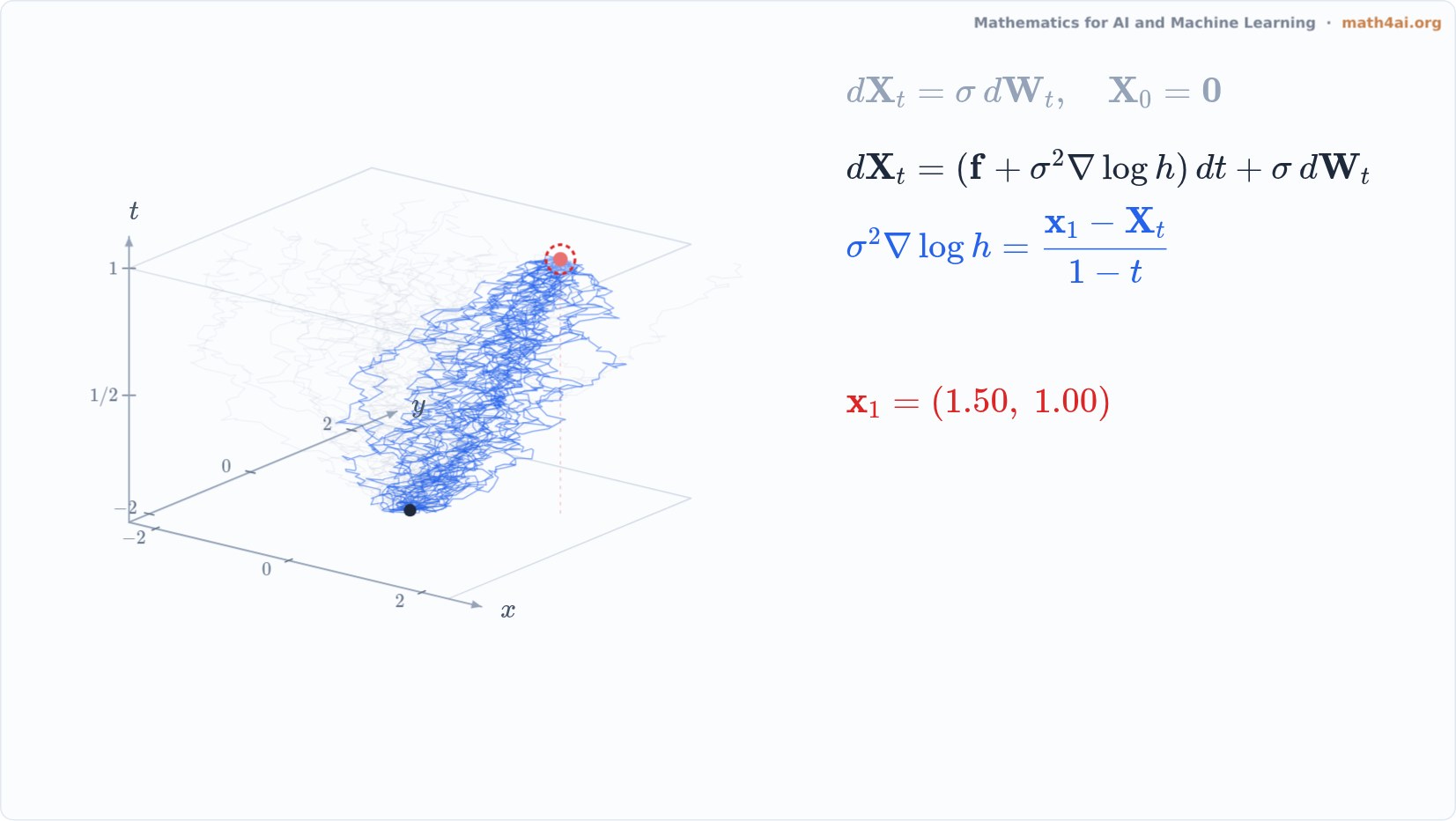 Preview1:29Conditioning a Diffusion on Its EndpointChapter 19
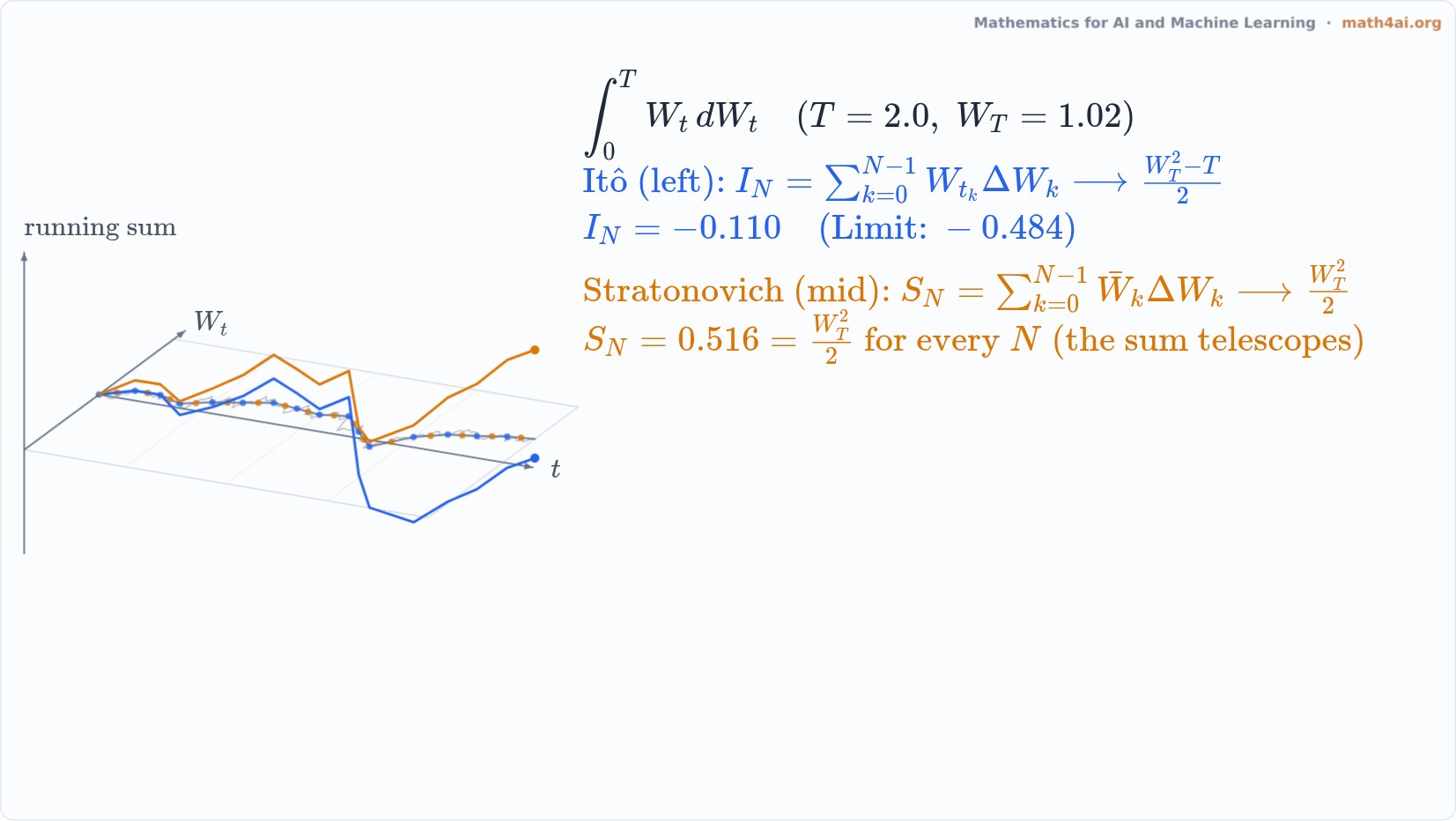 Preview1:46Itô vs Stratonovich: Left Endpoint or MidpointChapter 19
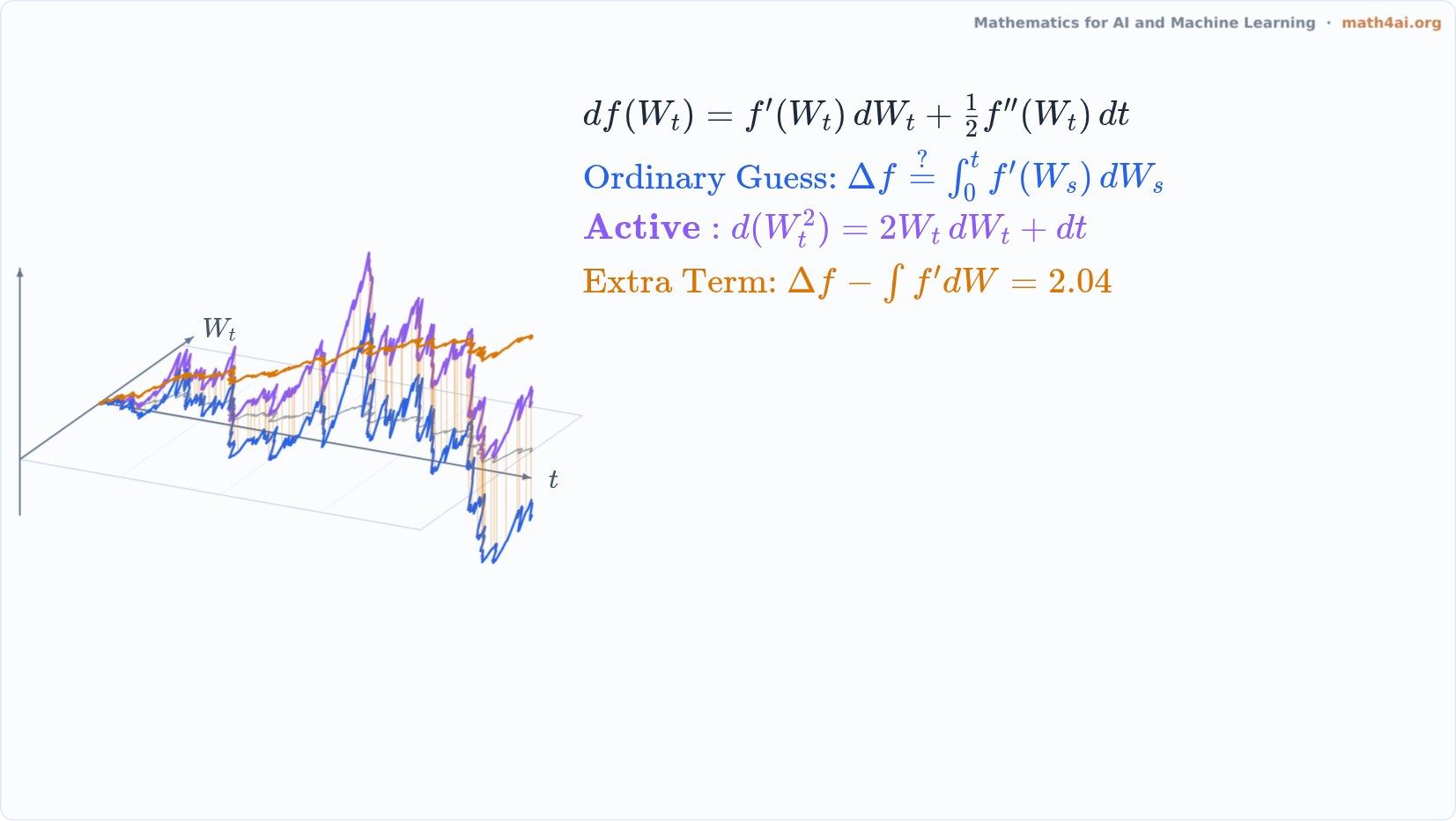 Preview2:01Itô's Lemma: The Extra Second-Order DriftChapter 19