SVD: Rotate, Stretch, Rotate
An interactive live film: the unit sphere goes through V^T, Sigma and U one step at a time in 3D and ends as an ellipsoid with half axes sigma_i u_i; shrinking the smallest singular value flattens it into the column space.
Narration
Every matrix A factors as U times sigma times V transpose. To see what that means, watch what A does to the unit sphere, with three special directions on it: v zero, v one and v two.
First, V transpose. It is orthogonal, so it only rotates. The sphere stays a sphere, and the three directions turn onto the coordinate axes.
Then sigma stretches each axis by its singular value: sigma zero, the largest, then sigma one, then sigma two. The sphere becomes an ellipsoid lined up with the axes.
Finally U rotates once more. The axes of the ellipsoid now point along u zero, u one and u two, and their half lengths are the singular values. A times v i equals sigma i times u i.
Now shrink the smallest singular value to zero. The ellipsoid flattens into an ellipse. A has rank two, and its outputs fill only a plane, the column space.
Your turn. Scrub through the three steps with the stage slider, and change the smallest singular value.
Rotate, stretch, rotate. Every matrix does just this, and its singular values say how much it stretches in each direction.
More from Chapter 8
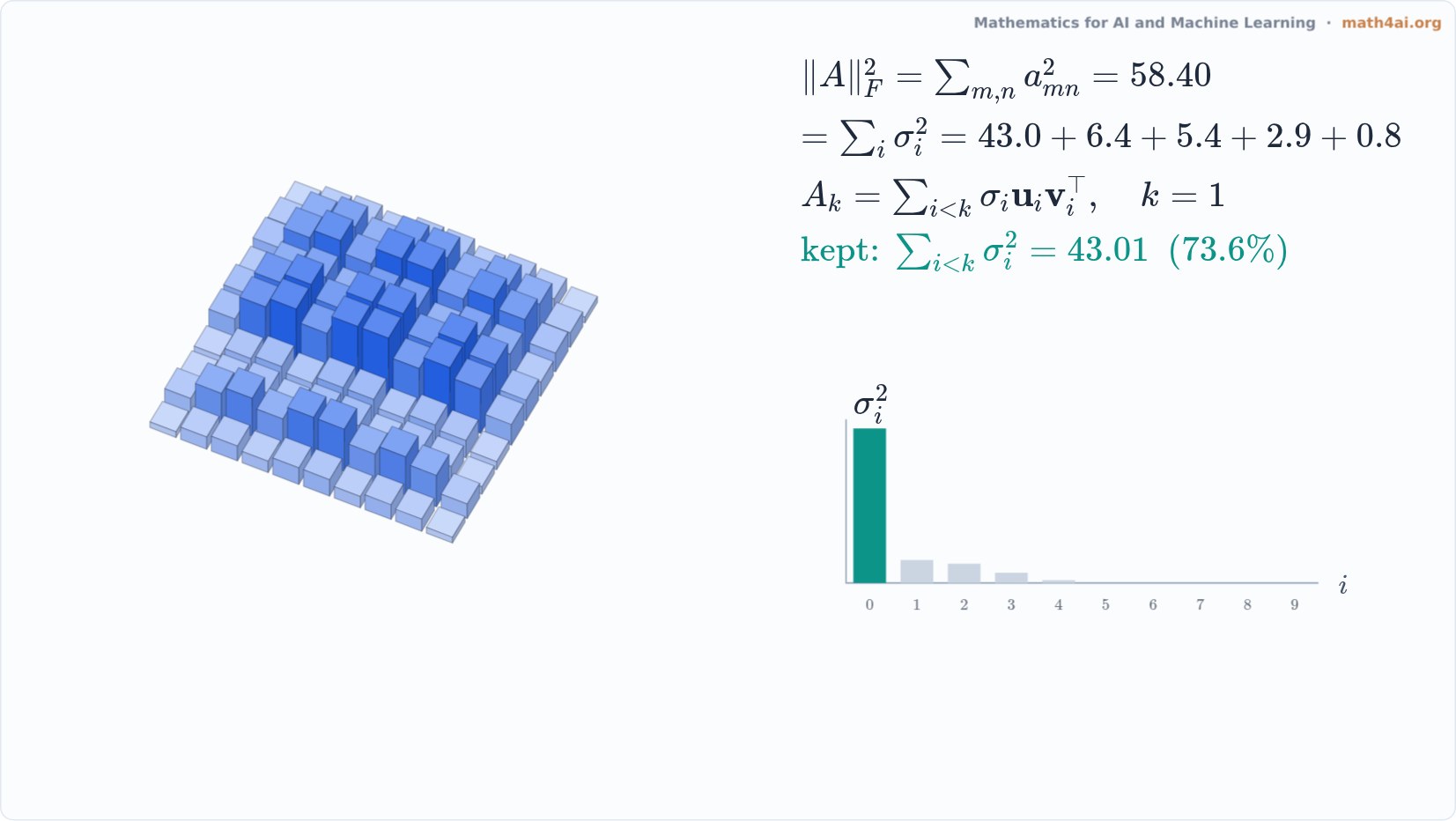 Preview1:31Energy from Singular Values: Rebuild a Picture Layer by LayerChapter 8
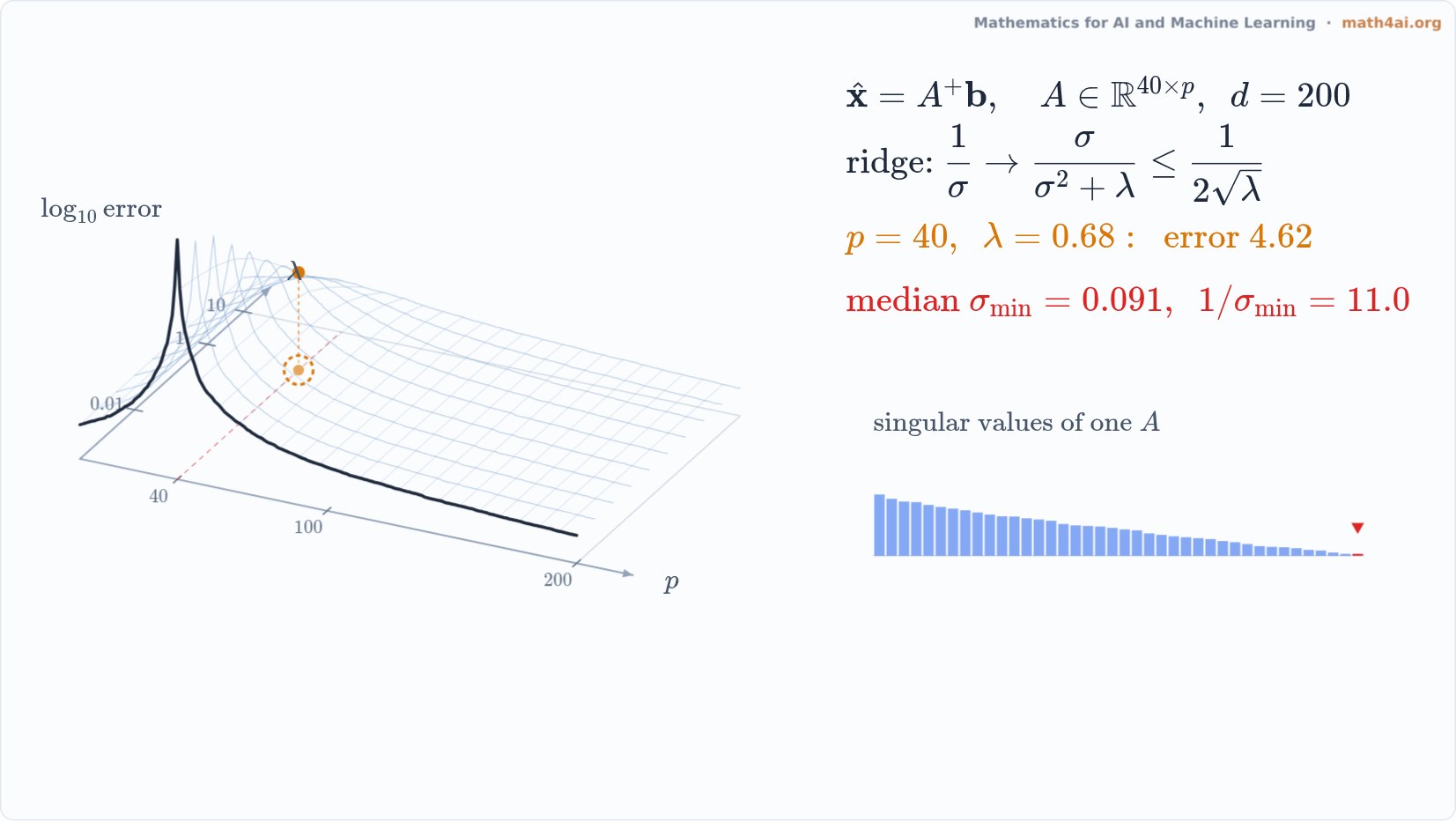 Preview1:33Double Descent at the Interpolation ThresholdChapter 8
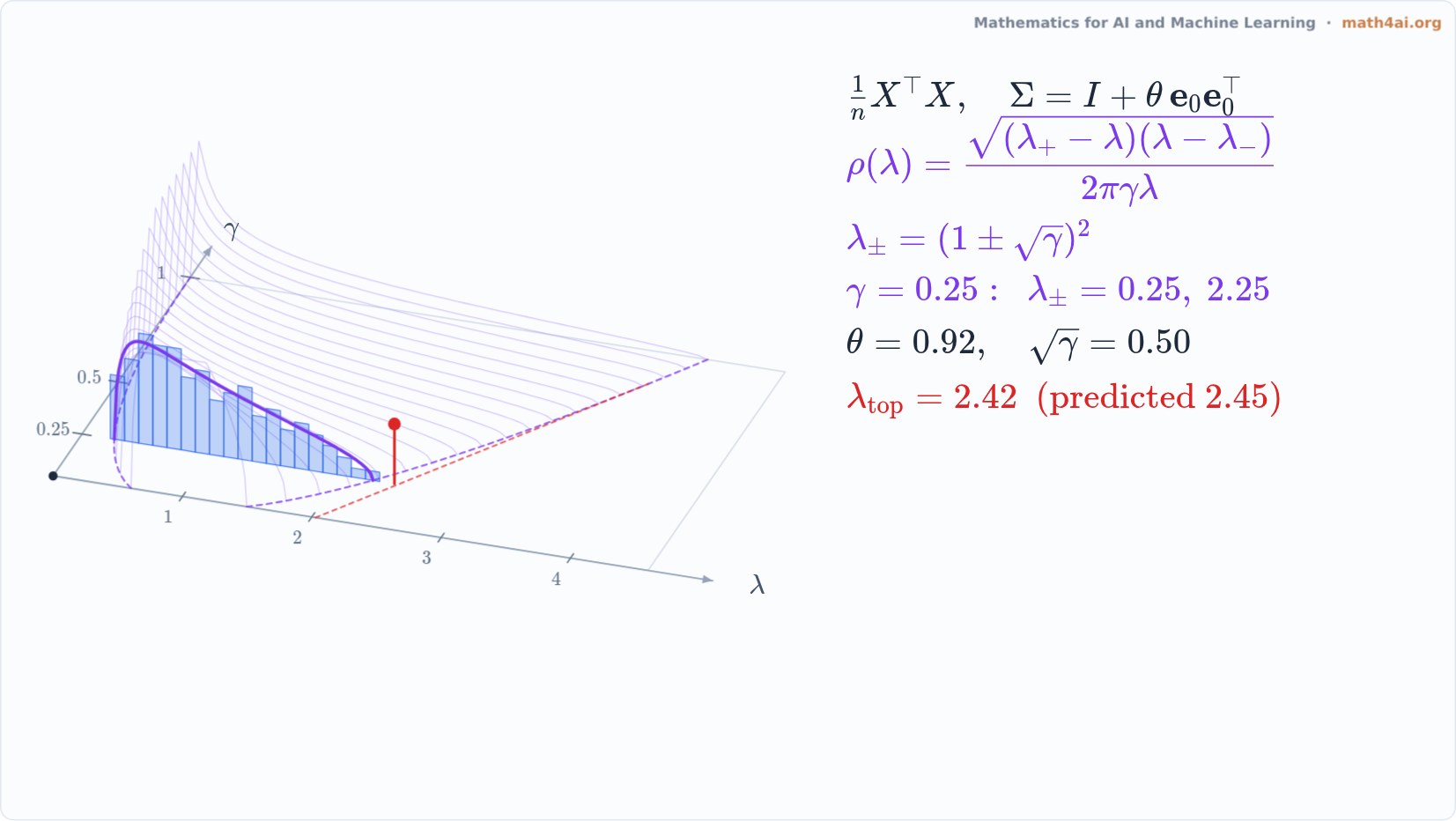 Preview1:32The Marchenko-Pastur Law and the Escaping EigenvalueChapter 8
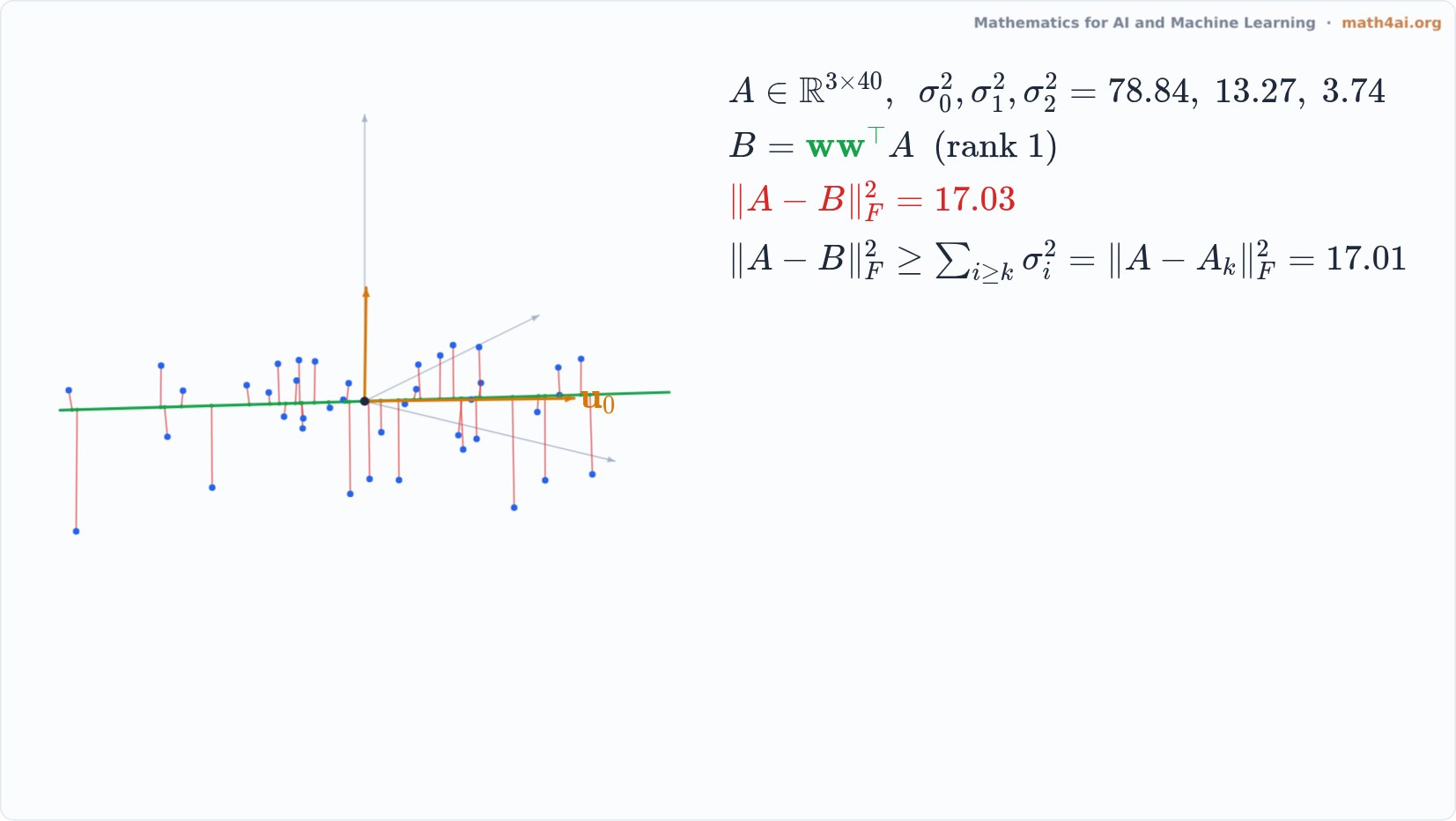 Preview1:43Eckart-Young: the Best Low-Rank ApproximationChapter 8
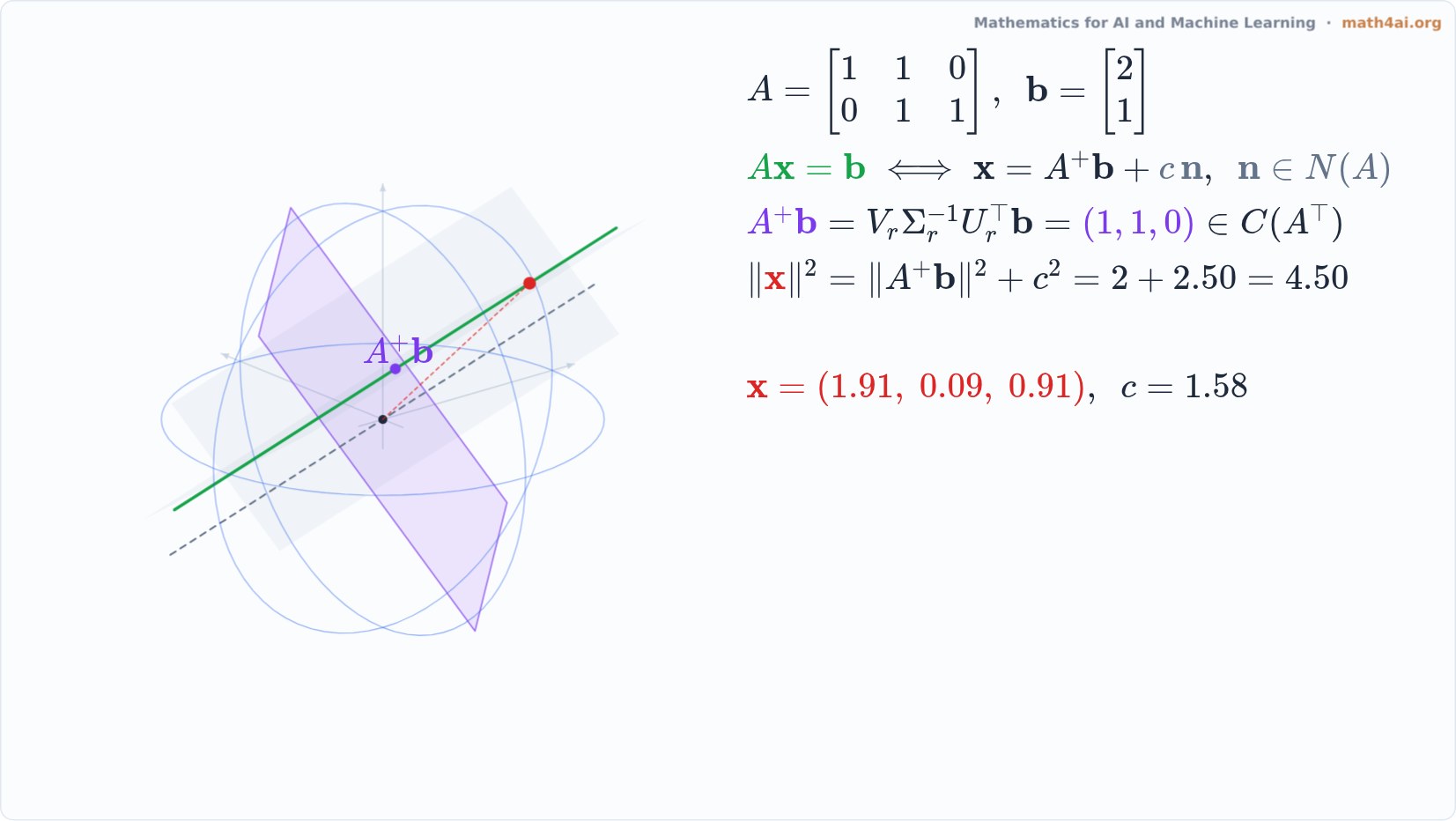 Preview1:46The Pseudoinverse: the Shortest SolutionChapter 8
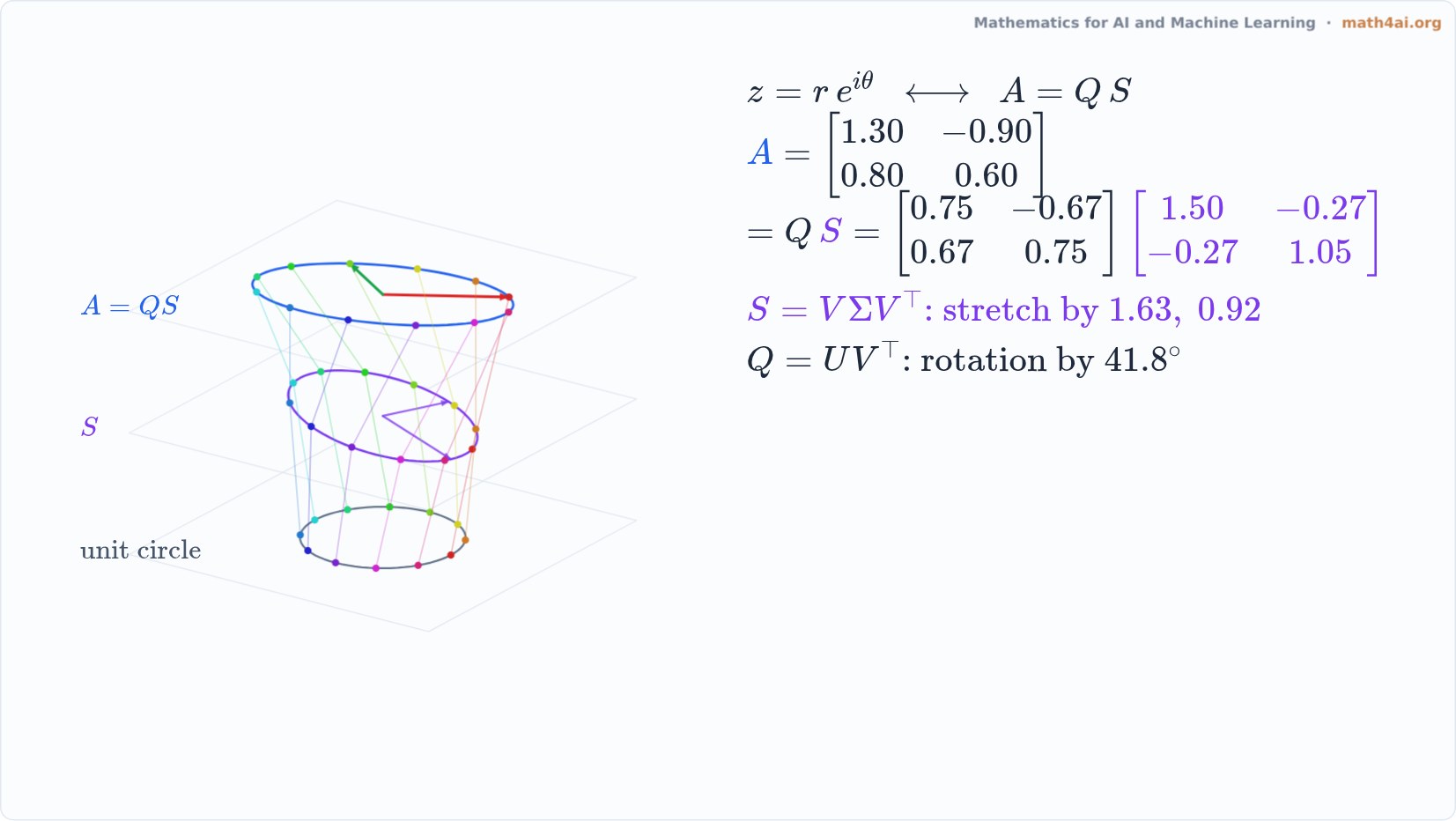 Preview1:31Polar Decomposition: Stretch, then RotateChapter 8
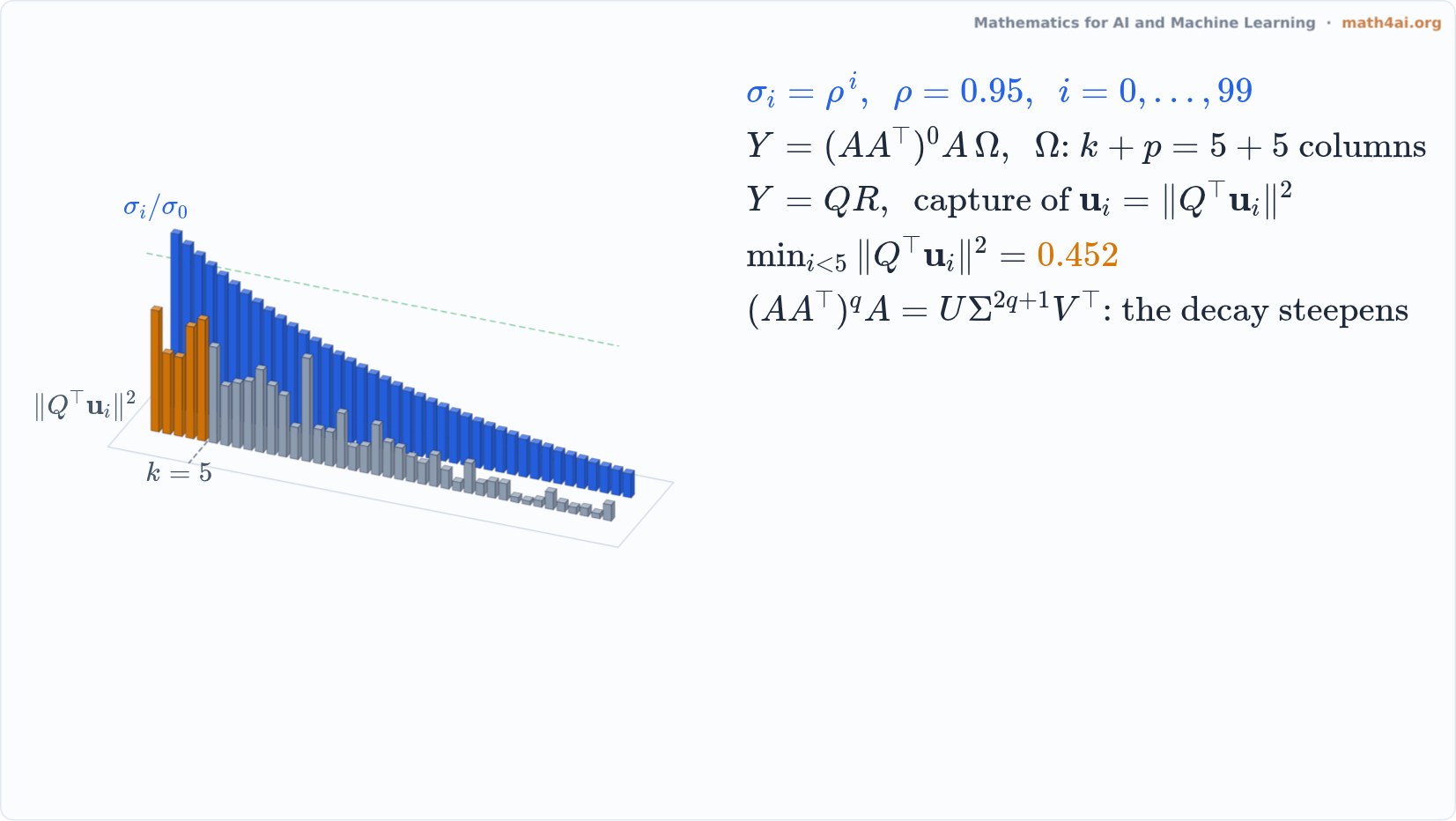 Preview1:47Randomized SVD: Catching the Top DirectionsChapter 8